Skip to Content Facebook Feature Image

Dragon boat races held in Hubei, Jiangxi to heat up for Duanwu Festival

China

China

China

Dragon boat races held in Hubei, Jiangxi to heat up for Duanwu Festival

2025-05-27 06:59 Last Updated At:07:17

Exhilarating dragon boat races were rolled out in several Chinese cities in the past weekend to celebrate the upcoming Dragon Boat Festival, warming up the festive atmosphere while encouraging the public to participate in sports.

Dragon Boat Festival, also known as the Duanwu Festival, is celebrated on the fifth day of the fifth month on the Chinese lunar calendar to commemorate ancient Chinese patriotic poet Qu Yuan (about 340-278 BC). The festival falls on May 31 this year.

In Huanggang City of central China's Hubei Province, a dragon boat race opened on Saturday, with 30 teams from the province splashing their oars in the water during the two-day event.

The race consists of three major events: 200-meter straight-course race, 500-meter straight-course race and an innovative dragon boat tug-of-war. Among them, the newly added tug-of-war is the biggest highlight, in which two groups of participants compete in the same boat, rowing at full strength towards opposite directions.

"I have been on the team for two years and have participated in many races. Dragon boat racing is a matter for all the people on the team. Each schoolmate coming on the boat is a member of our team, and everyone is responsible for each other, which is also the embodiment of team spirit," said Li Chengxi, a member of the dragon boat team of Huazhong University of Science and Technology in Wuhan.

After two days of fierce competition, the top six in each event were awarded on Sunday.

Another dragon boat race took place in Yichun City of east China's Jiangxi Province, attracting 18 dragon boat teams with a total of 432 participants.

The race officially started at 08:00. Amid the exciting drumbeats, the contestants swung their oars in unison, rushing towards the finish line with all the strength.

"We are all dragon boat lovers. We started training at 18:00 or 19:00 every day after getting off work since a month ago, just to show our fighting spirit and love for dragon boat," said Tang Shaowei, a participant of the dragon boat race.

The event adopts a 500-meter straight-course traditional race for 22-person standard dragon boats, which is highly entertaining, attracting tens of thousands of spectators.

The onlookers at the river banks roared in cheering to make the atmosphere more exciting.

"We supporters of the Xicun team arrived at 04:00. When I stood at the finish line and saw our Xicun dragon boat hit the line, I was very excited, my eyes filled with tears, and I was filled with passion," said Shu Hong, a local dragon boat enthusiast.

Dragon boat races held in Hubei, Jiangxi to heat up for Duanwu Festival

Dragon boat races held in Hubei, Jiangxi to heat up for Duanwu Festival

The conflict in the Middle East has disrupted traffic through the Strait of Hormuz, leading to a systemic economic shock that has reverberated through energy markets, industrial supply chains and critical maritime routes.

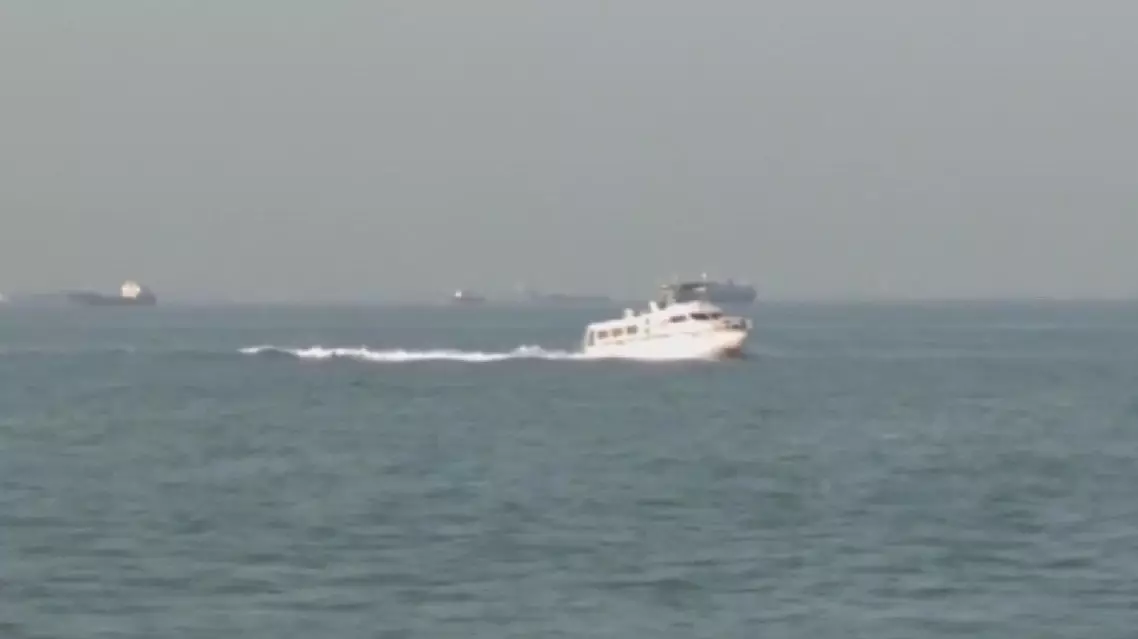
As part of its response to U.S. and Israeli attacks, Iran has restricted navigation through the Strait of Hormuz, targeting ships associated with the United States and Israel. The blockade of this vital global energy route has driven up oil and gas prices worldwide.

As a key energy shipping lane, the strait saw 20 million barrels crude and oil product flowing through per day, around 25 percent of the world's seaborne oil trade in 2025, according to a report released by the International Energy Agency (IEA) this March.

In addition, about 20 percent of global liquefied natural gas (LNG) trade transited Hormuz in 2024, primarily from Qatar, with a smaller volume from the United Arab Emirates (UAE).

Over 70 percent of the oil flowing through the strait is transported to the Asian market. Japan and Republic of Korea (ROK) import 90 percent and 95 percent of their respective oil consuption.

The IEA estimates that as of the end of March, Hormuz disruptions have led to an oil supply gap of roughly 10 million to 16 million barrels per day.

Though the IEA made 400 million barrels of emergency oil stocks available in March -- the largest-ever release coordinated by the agency, it still failed to curb the rapid rise in international oil prices.

Based on Fitch Ratings' March outlook, should the Middle East conflict persist until the end of June, it could see global real GDP growth shrink by approximately 0.8 percentage points.

"Shipping costs are rising because of insurance premiums, because of higher fuel costs, and because of longer trips as you have to avoid certain parts. Then that starts feeding through to higher prices of other goods as well. That could be food, commodities, etc. And then the other thing to think about is inventory and supply chain disruptions. And then when you combine all of these factors together, it feeds into producer price indices and consumer price indices," said Cedric Chehab, chief economist at BMI, a Fitch Solutions company.

Middle East tensions hit global economy

Middle East tensions hit global economy

Recommended Articles