China is actively working with neighboring countries in the South China Sea to combat illegal coral trade and implement fishing moratoriums, and joins the work of global coral reef protection, launching a series of climate strategies and actions in this regard.
Coral reefs play a vital role in sustaining marine life and protecting coastlines. Today, they face mounting threats, including warming oceans, destructive fishing, and pollution. As these challenges grow, global cooperation becomes more urgent.
The final episode of a four-installment CGTN special titled Coral Reefs Whisper, which was aired on Monday, dives into an XR-built seabed, and explores how global cooperation could give coral reefs a chance to recover and thrive.
Living by the South China Sea, generations of fishermen have relied on the ocean for their livelihoods, faithfully following the traditions passed down by their ancestors.
"I started going out to sea with my father in 1991, when I was just 15. We've always believed the South China Sea is our ancestral sea. Our forefathers have fished here for generations," said Wang Zhenfu, a fisherman from Tanmen Town, Qionghai City of south China's Hainan Province.
"The water in the South China Sea is crystal blue. The coral reefs below are clearly visible. The first time I saw them when I was 15 years old, I was stunned by their beauty," said Ding Zhifu, another fisherman from Tanmen.
Beneath the waves, coral reefs provide shelter and food for countless marine creatures, turning these waters into some of the richest fishing grounds on Earth. To fishermen here, a successful trip means a full catch. But they also understand the importance of harvesting wisely to protect the ecosystem’s future. Still, these waters haven't always remained so peaceful.
"Fishing in the Nansha Islands for about a month, we can usually bring back about five tons of fish. But compared to older generations, our catch has dropped. Coral bleaching is damaging the habitats, and some foreign fishermen using explosives are making it even worse," said Ding.
"I've seen some foreign fishermen use dynamite, blasting everything in sight. Some also use electric shock gear. I saw it with my own eyes, and it really upset me. This kind of destruction will ruin the livelihoods of the next generation," said Wang.
Protecting coral reefs isn't something a single fisherman or one country can do alone. It takes shared commitment from all coastal nations to exchange knowledge, technologies, and solutions. On the seabed of the South China Sea, moves are underway.
"China is actively working with neighboring countries in the South China Sea to combat illegal coral trade and implement fishing moratoriums. Scientists play a key role in these efforts, participating in global coral reef symposia and collaborating with international peers. China has also built strong partnerships with countries like the U.S., France, and Australia through lab exchanges and joint research projects," said Zhao Meixia, a professor at the South China Sea Institute of Oceanology of the Chinese Academy of Sciences.
She added that as a signatory to the Paris Agreement, China has launched a series of climate strategies and actions that contribute to coral reef protection.
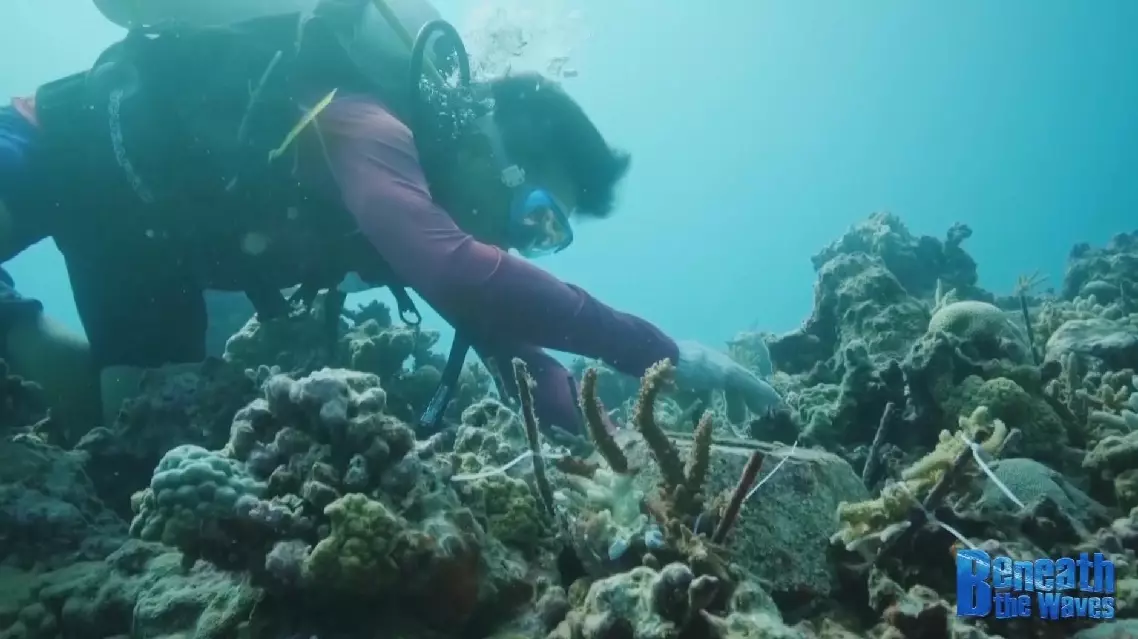
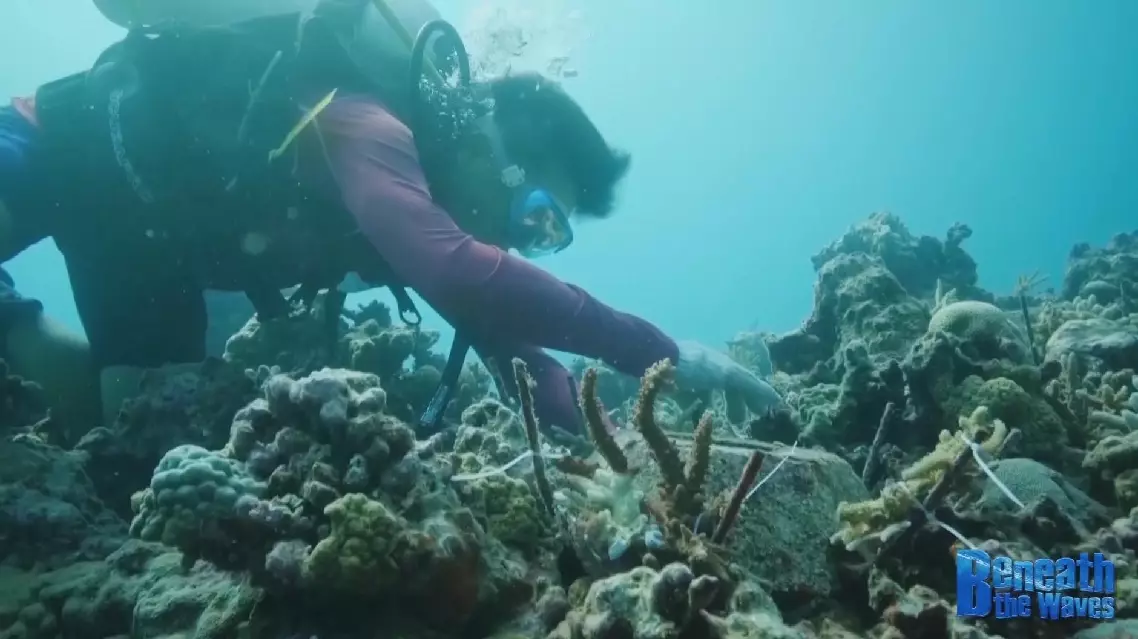
Scientists say they are doing their best to restore the reefs and work on a range of methods to help corals survive.
"We've strengthened foundational research on coral reef ecosystems and bleaching mechanisms. We're cultivating heat-resistant coral species and studying how corals co-evolve with symbiotic organisms. In reef restoration, we guide practitioners to use coral nurseries and transplantation techniques. New technologies, from underwater sensors to AI, are making coral reef monitoring and management more digital, intelligent, and scientific than ever before," said Zhao.
However, scientists worldwide acknowledge that their efforts alone are far from sufficient to preserve the reefs.
"We're not going to build entirely new reefs with just restoration techniques alone. We need to have immediate action on climate change, and significant action if we're going to save coral reefs," said Jennifer Matthews, a coral biologist from the University of Technology Sydney.
Coral reefs are more than just marine landscapes. They are nurseries of life, protectors of the coasts, and silent witnesses to humanity's choices. With every act of preservation, there is still a future where they thrive and generations to come can still hear their song.
China joins global coral reef protection
China joins global coral reef protection