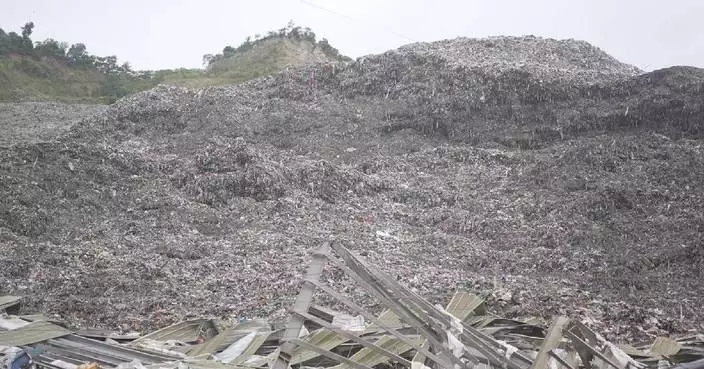
Discarded fishing nets and ropes that once polluted China's coastal waters are now being transformed into consumer products through an innovative recycling initiative in east China's Zhejiang Province.
The program, which pays fishermen premium prices for their worn-out gear, demonstrates how environmental protection can align with economic incentives as marine plastics get a new life, becoming products ranging from office furniture to power tools for export markets.
In Wenzhou's Pingyang fishing port, dozens of boats sit docked during the annual fishing moratorium as fishermen mend their worn nets.
"We use at least eight or nine trawl nets for one boat," said a fisherman. "Even the most durable lasts only two years before being discarded."
These discarded nets and ropes, traditionally abandoned at sea, now feed a growing recycling economy along Zhejiang's coast.
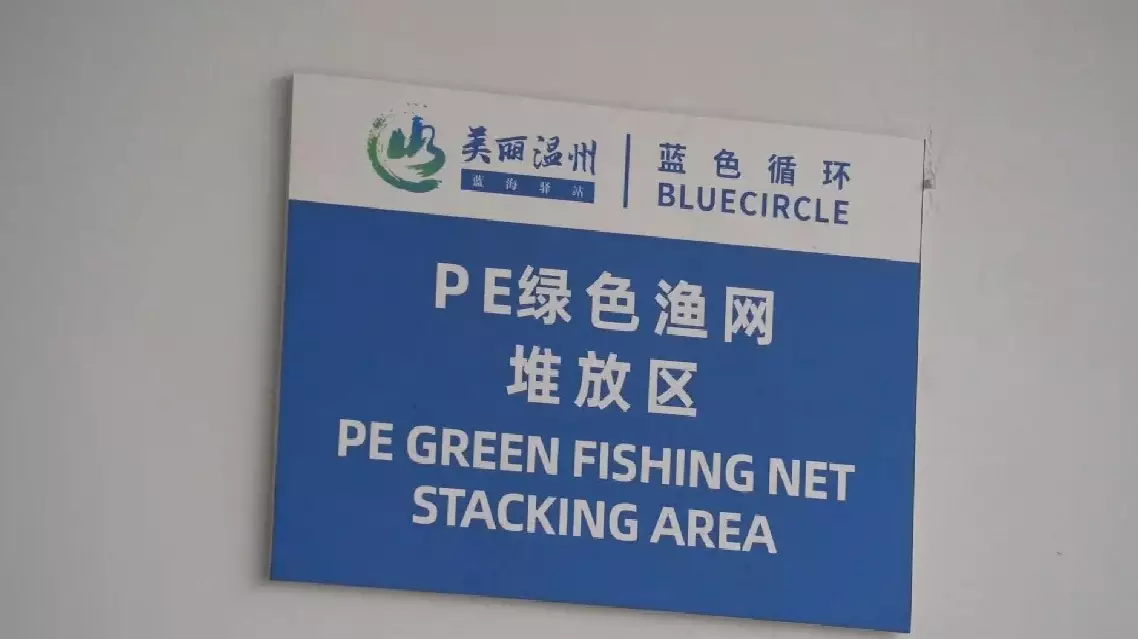
At a Blue Cycle Recycling Station, workers sort polyethylene nets from other marine plastics, paying fishermen premium prices for their waste.
"Just disposed of this whole batch for me," a fisherman said as he unloaded his unusable fishing net.
The collected plastic embarks on a remarkable transformation. In the factory of a local new materials company, polypropylene ropes become raw material for office chair armrests, power tool casings, and car cooling fans. A stockpile of marine plastic wastes weighing between 100 and 200 tonnes could only keep the workshop running up to two days, noted Wen Zhengtai, general manager of the company.
There are government subsidies for companies when the recycling costs exceed producing new plastic. The system also thrives through international demand.
"For example, when we export to some countries in Europe and America, with the recycling certificates, our clients pay far less tariffs, which helps them save costs. Our orders are visibly growing," said Zhao Wenya, executive director and general manager of a stationery company.
Each product carries a traceable history from the fisherman who collected it to the factory that processed it - a transparency that makes the entire cycle traceable, sustainable and replicable. As European-bound shipments leave the docks, what was once ocean trash now holds new value in the global circular economy.
Ocean plastic finds new life in China's circular economy push
From cutting-edge technology exhibitions to retail stores thousands of kilometers away from Europe and Southeast Asia, China-made robot vacuum cleaners are increasingly becoming a popular choice among consumers worldwide.
At electronics retailers in Berlin, Germany, Chinese brands such as Roborock and Dreame occupy prominent positions in dedicated robot vacuum sections, offering a wide range of products priced between 200 and 2,000 euros.
Many local consumers said that when purchasing smart home appliances including robot vacuum cleaners, they tend to give priority to Chinese-made products.
"It's a good price and good quality. It's also the innovation. I have a feeling that the European brands are not innovating enough," said one customer.
"I think they're always on top of the other technologies. They are getting them out faster. A lot of us are switching to the Chinese technology," another consumer said.
Germany is one of the most important overseas markets for China's floor-cleaning robots.
According to data from market research firm GfK, from January to November 2025, more than six out of 10 robot vacuum cleaners sold in Western Europe were Chinese brands.
Industry data also point to a strong global momentum.
According to the International Data Corporation (IDC), global shipments of smart robot vacuum cleaners reached 17.424 million units in the first three quarters of 2025, representing a year-on-year increase of 18.7 percent.
Chinese brands including Roborock, Ecovacs, Dreame, Xiaomi and Narwal ranked among the world's top five in terms of shipment volume, with a combined share of nearly 70 percent of the global market.
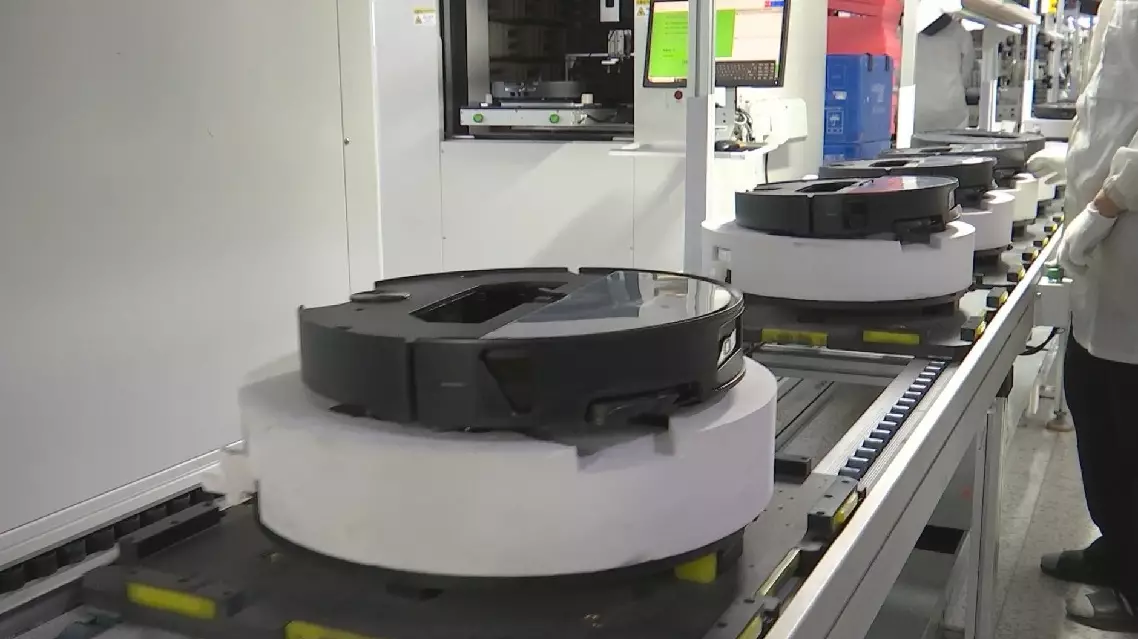
At a robot vacuum cleaner manufacturing plant in Huizhou, south China's Guangdong Province, workers were seen stepping up production of newly launched models that recently debuted at the Consumer Electronics Show in the United States, which concluded Friday in Las Vegas, Nevada.
The factory adjusted its production lines as early as December 2025 and stocked inventory in advance for overseas markets to ensure that new products could be delivered to global consumers at the earliest possible time.
"In 2025, Roborock's global shipments exceeded 7.2 million units. Since 2024, overseas revenue has accounted for more than 50 percent of our total revenue. Our products have now been sold to more than 170 countries and regions, serving more than 20 million households worldwide," said Quan Gang, president of Roborock.
At another robot vacuum cleaner manufacturing facility in Dongguan, Guangdong, rising overseas orders have prompted the company to upgrade its production lines with intelligent technologies to further boost capacity. The factory is currently operating at full load to meet a growing demand.
"For 2026, we have already obtained overseas orders worth at least 300 million to 400 million yuan (around 43 million to 57.3 million U.S. dollars). In addition, we've engaged in strategic cooperation with European home appliance group Cebos Group, and our total confirmed orders have exceeded 600 million yuan (around 86 million U.S. dollars)," said Zhang Junbin, founder and CEO of Narwal Robotics.
Chinese robot vacuum brands gain strong global traction