LONDON (AP) — Amazon has pledged to beef up fight against fake reviews, Britain's competition regulator said Friday after an investigation into whether big online platforms are doing enough to crack down on phony online ratings for products and services.
The Competition and Markets Authority said it secured the “undertakings” from Amazon, after getting a similar agreement earlier this year from Google to clamp down on rogue reviews plaguing the internet.
The company promised to strengthen its existing systems for fighting fake reviews. It will also tackle catalog abuse, which involves sellers boosting star ratings for a product by hijacking good reviews from a completely different one.
As an example, a shopper might come across a pair of headphones with a five-star rating. But, after looking closer, most of the reviews are for a mobile phone charger, the watchdog said.
As part of its commitments, Amazon has agreed to sanction anyone caught using these tactics. Businesses could be banned from selling on the Amazon website and users posting fake reviews could be banned from posting them, the CMA said.
The watchdog's chief executive, Sarah Cardell, said that so many people shop on Amazon and “star ratings and reviews have a huge impact on their choices.”
Amazon's pledges “mean people can make decisions with greater confidence – knowing that those who seek to pull the wool over their eyes will be swiftly dealt with.”
The pledges apply to Amazon's U.K. website. The company said in a statement that it has zero tolerance for fake reviews and that the measures build on Amazon's existing efforts to tackle them.
“We invest significant resources to proactively stop fake reviews ever appearing on our store, including on expert human investigators and machine learning models that analyse thousands of data points to detect risk," the company said.
The CMA opened its investigations into Amazon and Google in 2021 to examine whether the two companies broke U.K. consumer law by failing to protect shoppers. It began looking into phony reviews on some big websites amid the boom in online shopping fueled by the coronavirus pandemic.

FILE - The Amazon logo is displayed, Sept. 6, 2012, in Santa Monica, Calif. (AP Photo/Reed Saxon, File)
NEW YORK (AP) — Wall Street is hanging near its records on Tuesday following a mixed start to the latest profit reporting season for big U.S. companies. An update on inflation is meanwhile offering little momentum, either upward or downward, after coming in close to expectations.
The S&P 500 edged down by 0.1% after drifting between small gains and losses during the morning. The Dow Jones Industrial Average was down 287 points, or 0.6%, as of 11:45 a.m. Eastern time, and the Nasdaq composite was up 0.1%. Both the S&P 500 and Dow are coming off all-time highs.
U.S. companies are under pressure to deliver strong growth in profits for the last three months of 2025 to justify the record-breaking runs for their stock prices. Analysts expect companies in the S&P 500 to deliver overall earnings per share that are 8.3% higher than a year earlier, according to FactSet.
JPMorgan Chase helped kick off the latest reporting season by delivering weaker profit and revenue than analysts expected. Its stock fell 3.1% and was one of the heaviest weights on the market, but the shortfall may have been partly because some analysts hadn't updated their estimates to account for the earnings hit taken due to the bank's purchase of the Apple Card credit card portfolio.
CEO Jamie Dimon sounded relatively optimistic about the U.S. economy, saying “consumers continue to spend, and businesses generally remain healthy.”
Delta Air Lines lost 3.2% despite reporting a stronger profit for the end of 2025 than analysts expected. Its revenue came up short of Wall Street’s expectations, as did the midpoint of its forecasted range for profit in 2026.
Chipotle Mexican Grill fell 3% after saying it's looking for a new chief marketing officer, a move that analysts said was a surprise.
On the winning side of Wall Street were several health care companies after they raised their financial forecasts at an industry conference with analysts.
Moderna jumped 12.1% for the biggest gain in the S&P 500 after saying it expects to report revenue for 2025 that's above the midpoint of the range it had forecast in November. It also offered updates on several products, including a seasonal flu vaccine that could see potential approvals beginning later this year.
Revvity rose 4.6% after life sciences company said it expects to report profit for 2025 that's above the top end of the forecasted range it had earlier given. Its forecast for revenue in the fourth quarter also topped analysts' expectations.
Outside of health care, L3Harris Technologies rose 2.2% after the defense company said it’s planning to break off its Missile Solutions business into a separate company through an initial public offering. As part of the plan, the U.S. government agreed to invest $1 billion in the business, which will convert into common stock in the IPO.
L3 Harris will keep a controlling interest in the Missile Solutions business following the IPO.
In the bond market, yields held relatively steady after Tuesday's inflation report strengthened expectations that the Federal Reserve may be able to cut its main interest rate at least twice in 2026 to shore up the job market.
Lower interest rates could make borrowing cheaper for U.S. households and boost prices for investments, but they could also worsen inflation at the same time. Tuesday’s report showed that U.S. consumers paid prices last month for gasoline, food and other costs of living that were 2.7% higher overall than a year earlier. That’s a touch worse than economists expected and above the Fed’s 2% target for inflation.
But, more encouragingly, an important underlying trend of inflation wasn’t as bad last month as economists expected. That could give the Fed more leeway to lower interest rates later.
“We’ve seen this movie before—inflation isn’t reheating, but it remains above target,” according to Ellen Zentner, chief economic strategist for Morgan Stanley Wealth Management.
The data helped the 10-year Treasury ease to 4.18% from 4.19% late Monday. The two-year Treasury yield, which more closely tracks expectations for what the Fed will do, inched down to 3.53% from 3.54%.
A day earlier, Treasury yields swung amid worries about the Federal Reserve's worsening feud with President Donald Trump. The concern is that the president's attacks on the Fed could result in a central bank that's less independent and more subservient to the White House. Experts say that in turn could lead to higher inflation over the long term.
In stock markets abroad, indexes were mixed in Europe and Asia.
Japan’s Nikkei 225 soared 3.1% for one of the world’s biggest moves and set a record, thanks in part to gains for technology-related stocks.
Investors expect Japanese Prime Minister Sanae Takaichi, who took office in October, to try to capitalize on her relatively high popularity to call a snap election, hoping to strengthen her mandate for higher government spending.
AP Business Writers Chan Ho-him and Matt Ott contributed.
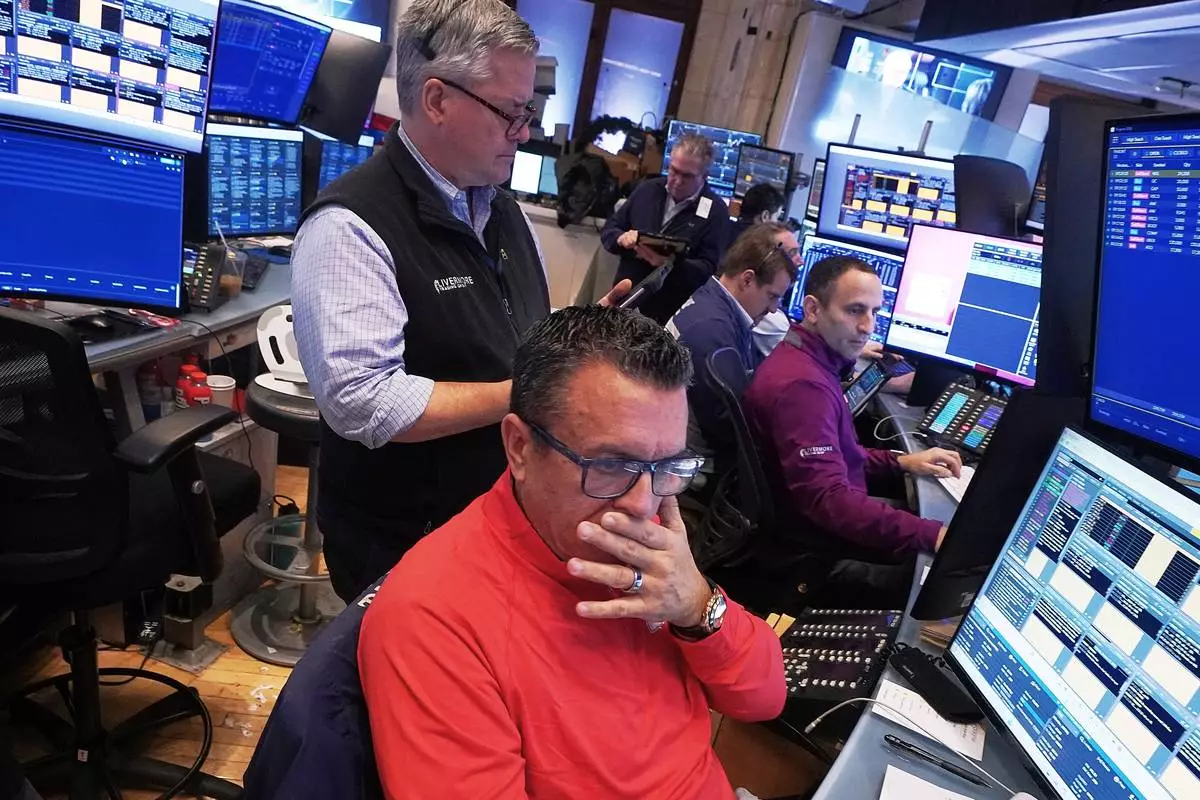
Trader Robert Finnerty Jr., foreground, works with colleagues on the floor of the New York Stock Exchange, Monday, Jan. 12, 2026. (AP Photo/Richard Drew)
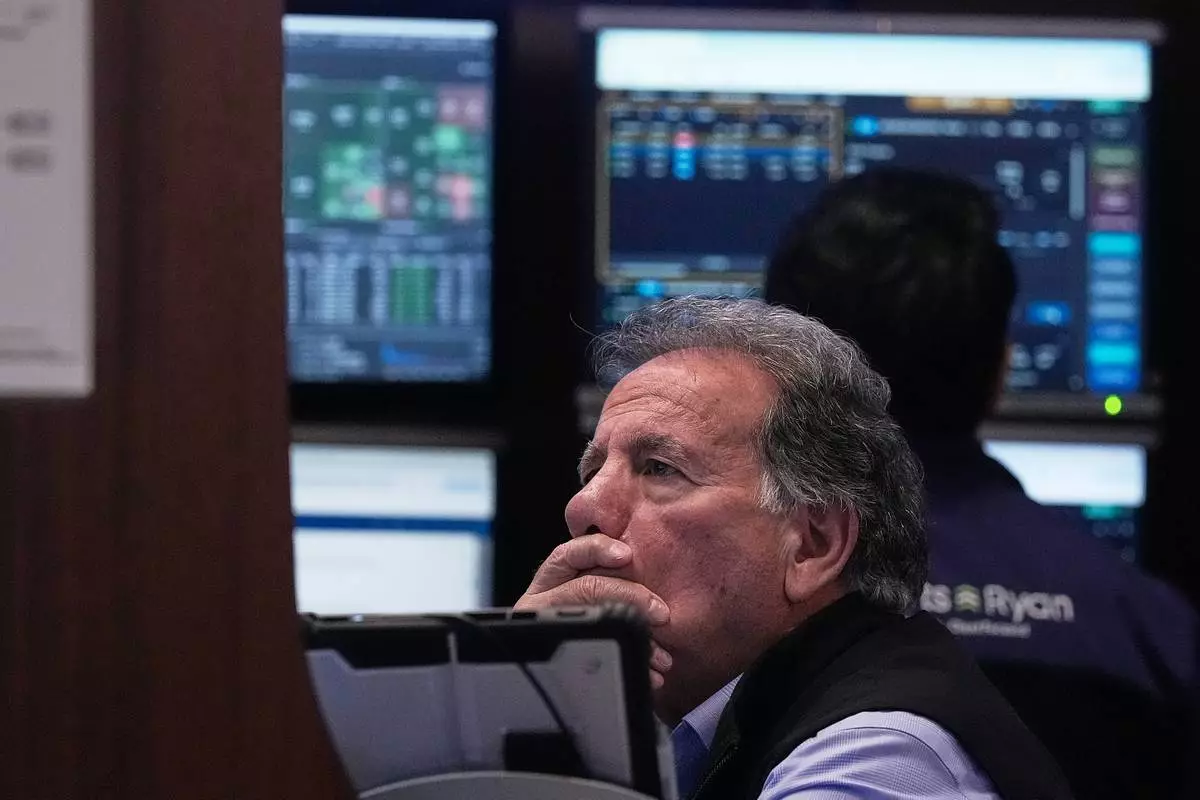
Trader Sal Suarino works on the floor of the New York Stock Exchange, Monday, Jan. 12, 2026. (AP Photo/Richard Drew)
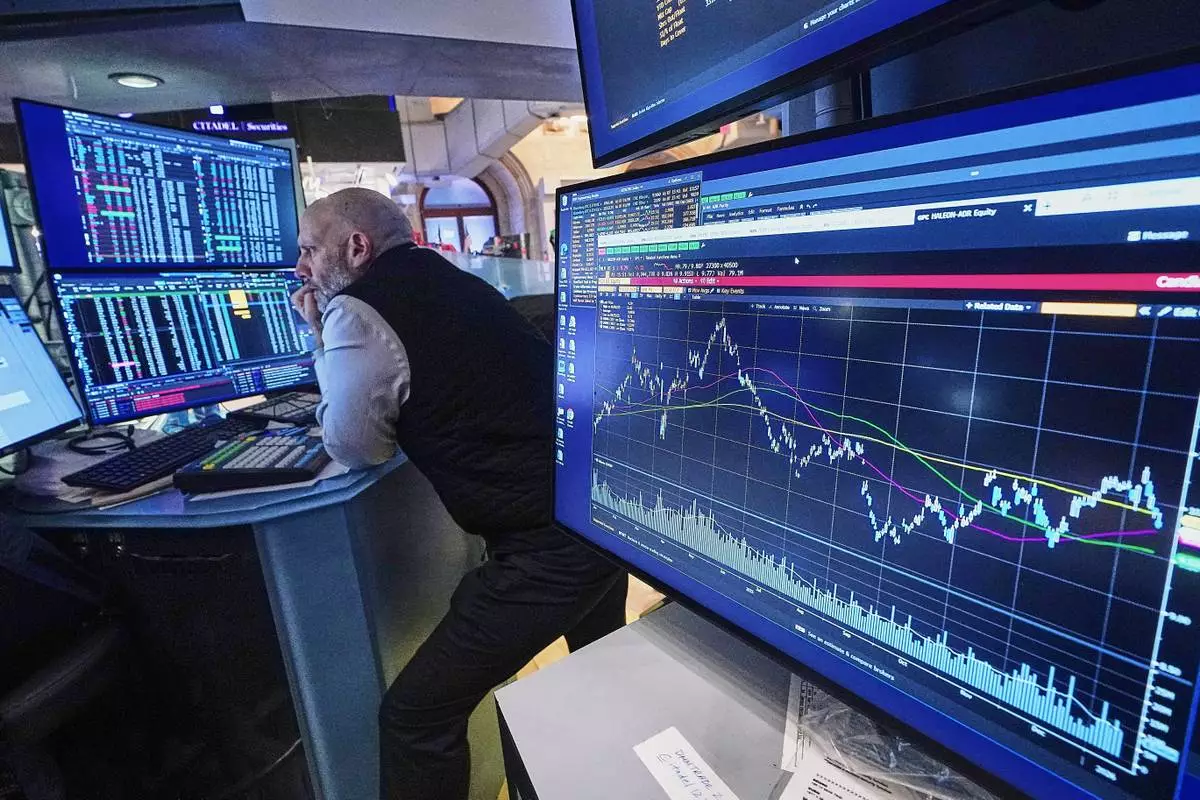
Specialist Meric Greenbaum works at his post on the floor of the New York Stock Exchange, Monday, Jan. 12, 2026. (AP Photo/Richard Drew)
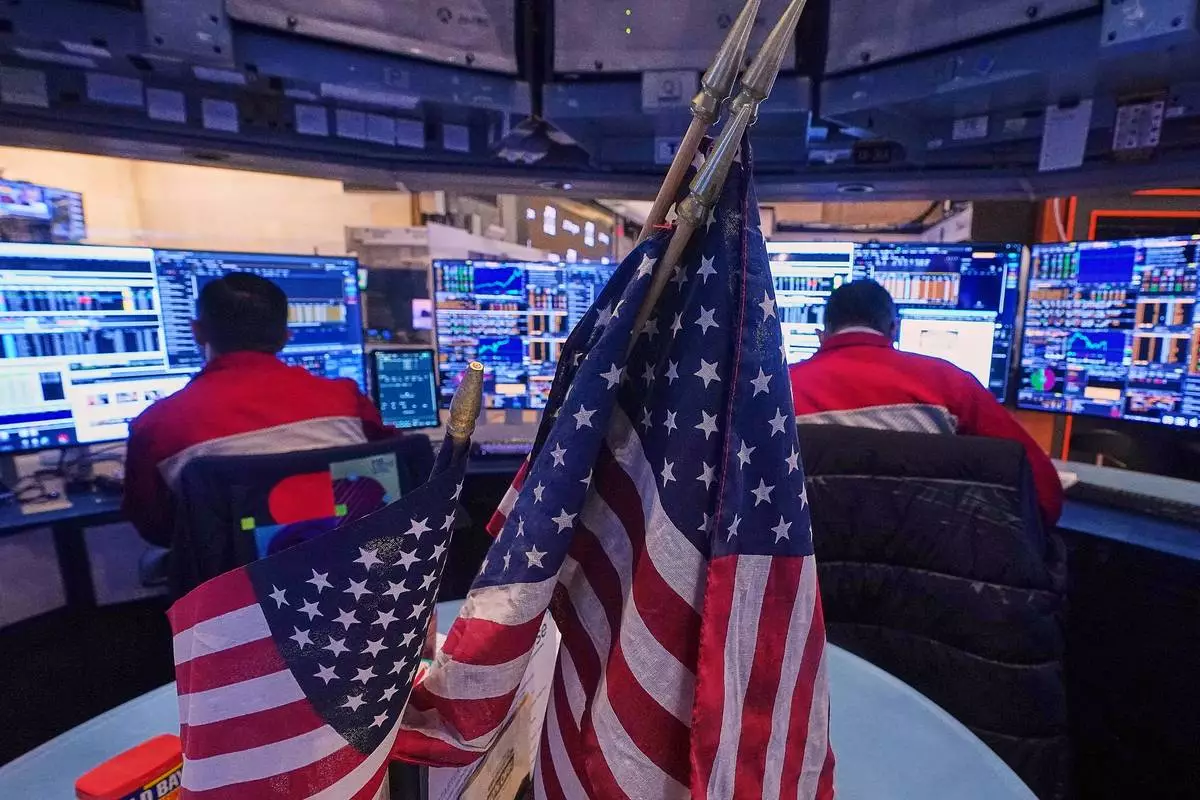
A pair of traders work on the floor of the New York Stock Exchange, Monday, Jan. 12, 2026. (AP Photo/Richard Drew)

A dealer walks near the screens showing the foreign exchange rates at a dealing room of Hana Bank in Seoul, South Korea, Monday, Jan. 12, 2026. (AP Photo/Lee Jin-man)
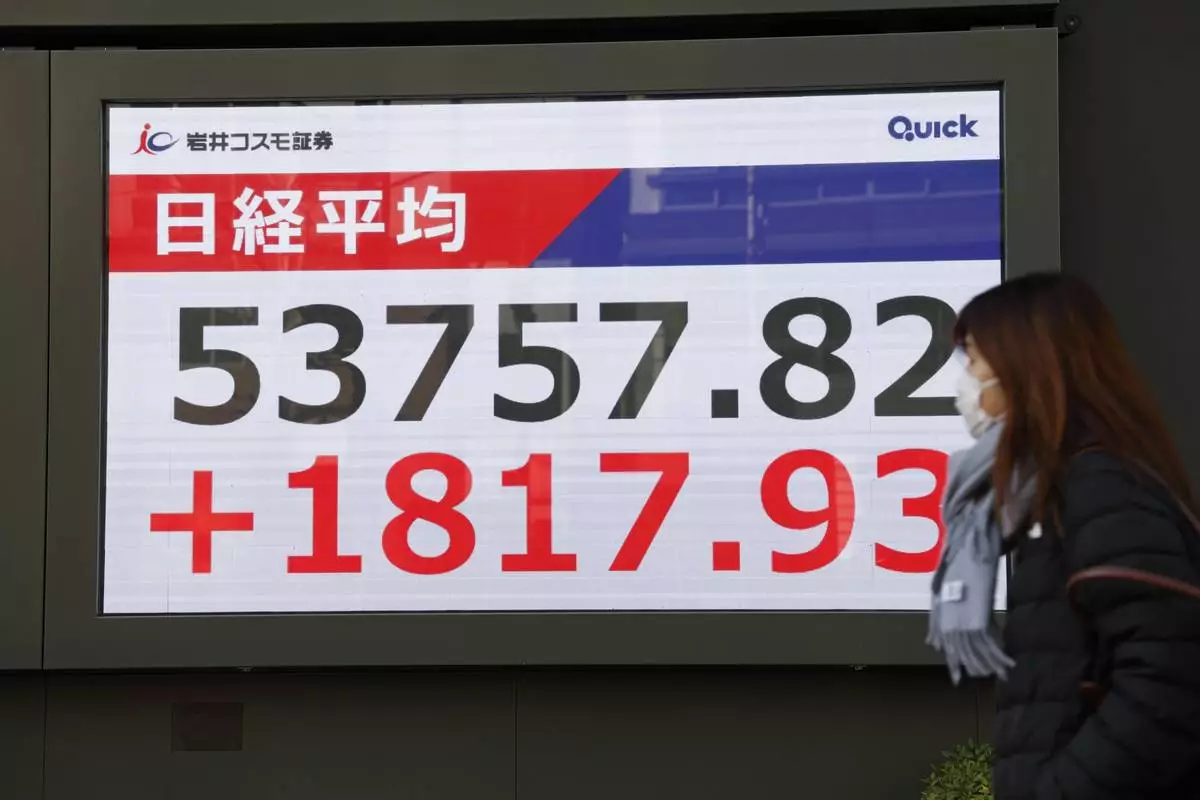
A person walks in front of an electronic stock board showing Japan's Nikkei index at a securities firm Tuesday, Jan. 13, 2026, in Tokyo. (Kyodo News via AP)