Skip to Content Facebook Feature Image

Planet-warming emissions dropped when companies had to report them. EPA wants to end that

News

Planet-warming emissions dropped when companies had to report them. EPA wants to end that
News

News

Planet-warming emissions dropped when companies had to report them. EPA wants to end that

2025-06-07 03:56 Last Updated At:04:00

LEOPOLD, Ind. (AP) — On the ceiling of Abbie Brockman’s middle school English classroom in Perry County, the fluorescent lights are covered with images of a bright blue sky, a few clouds floating by.

Outside, the real sky isn’t always blue. Sometimes it’s hazy, with pollution drifting from coal-fired power plants in this part of southwest Indiana. Knowing exactly how much, and what it may be doing to the people who live there, is why Brockman got involved with a local environmental organization that’s installing air and water quality monitors in her community.

More Images
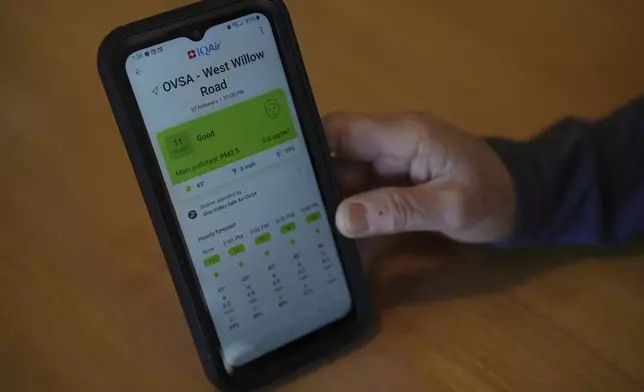
Mary Hess displays air quality data on the IQAir app on her phone Tuesday, April 8, 2025, in Dale, Ind. (AP Photo/Joshua A. Bickel)
Mary Hess displays air quality data on the IQAir app on her phone Tuesday, April 8, 2025, in Dale, Ind. (AP Photo/Joshua A. Bickel)

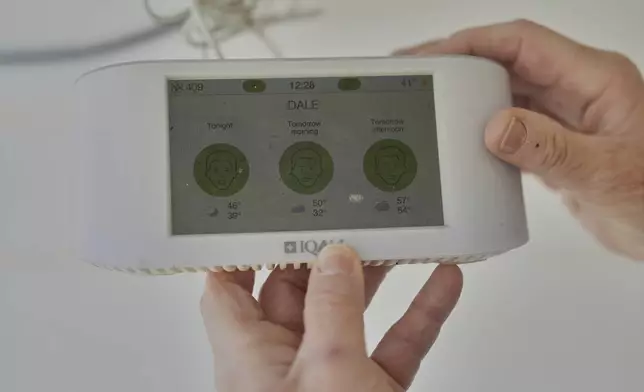
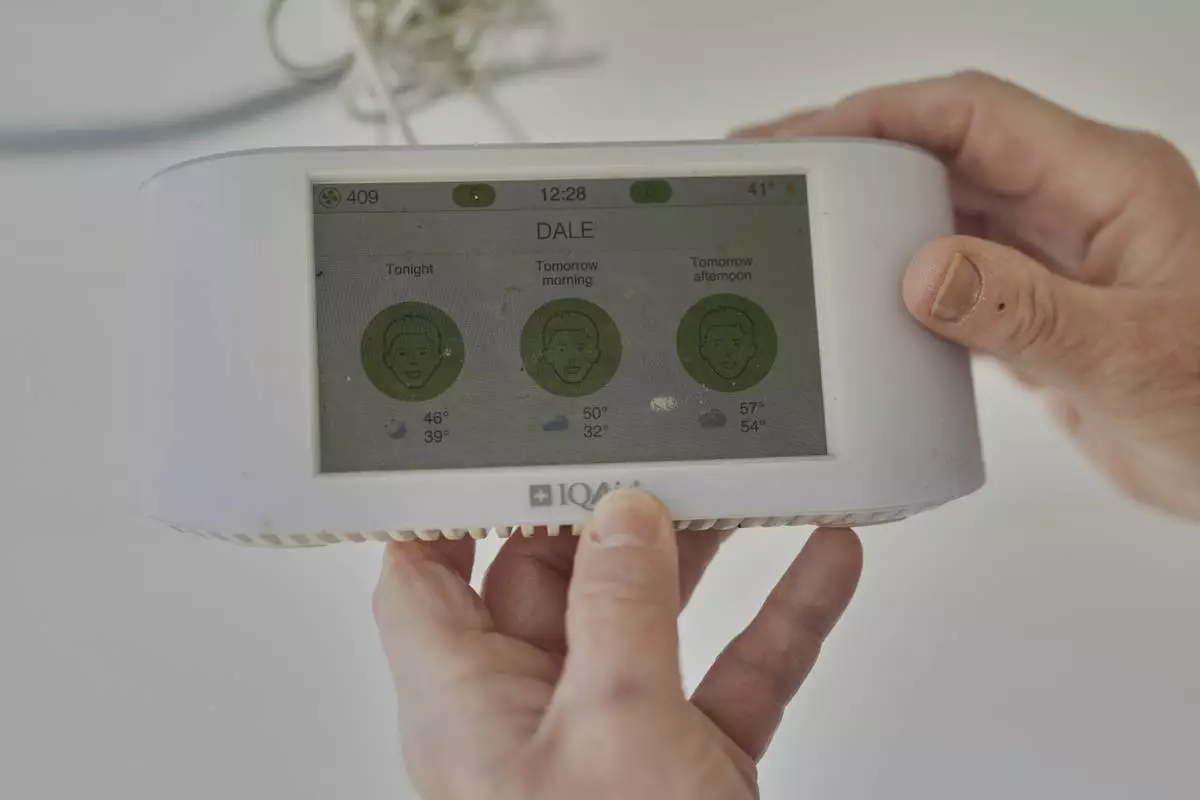
Mary Hess displays an air monitor outside her home Tuesday, April 8, 2025, in Dale, Ind. (AP Photo/Joshua A. Bickel)
Mary Hess displays an air monitor outside her home Tuesday, April 8, 2025, in Dale, Ind. (AP Photo/Joshua A. Bickel)

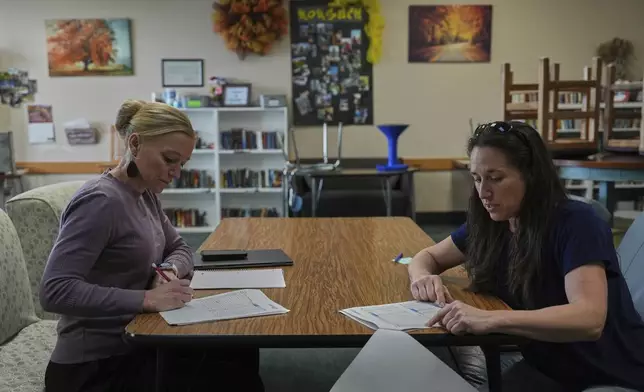
Abbie Brockman, right, goes through the results of a water quality test with colleague Karen LaMar, left, Thursday, April 10, 2025, in Leopold, Ind. (AP Photo/Joshua A. Bickel)
Abbie Brockman, right, goes through the results of a water quality test with colleague Karen LaMar, left, Thursday, April 10, 2025, in Leopold, Ind. (AP Photo/Joshua A. Bickel)

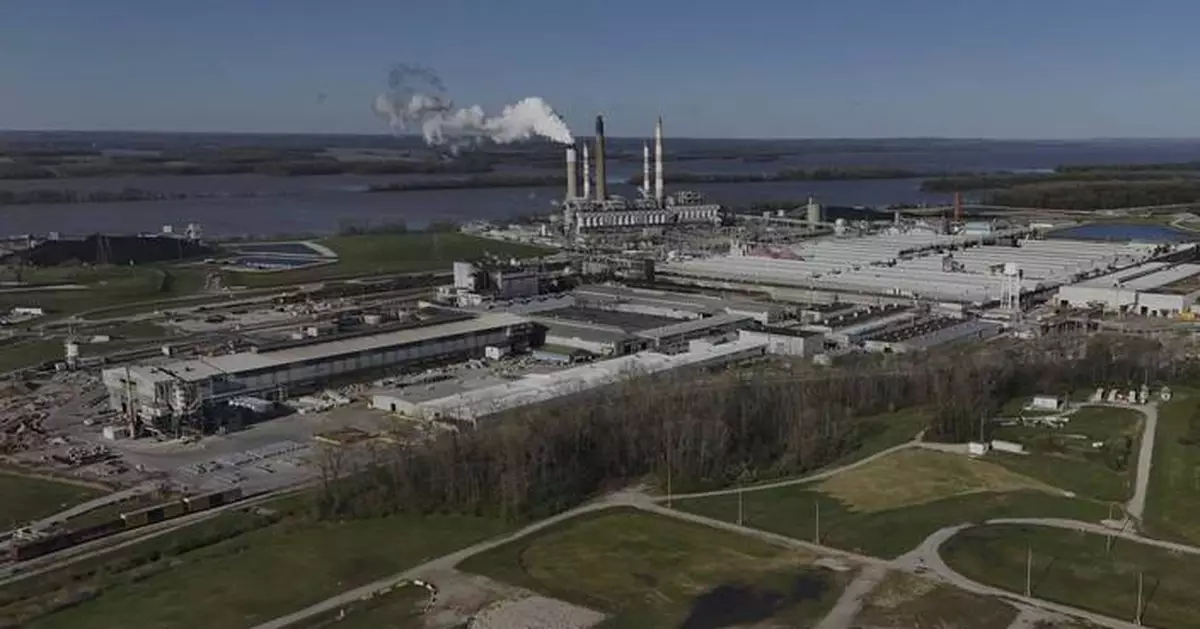
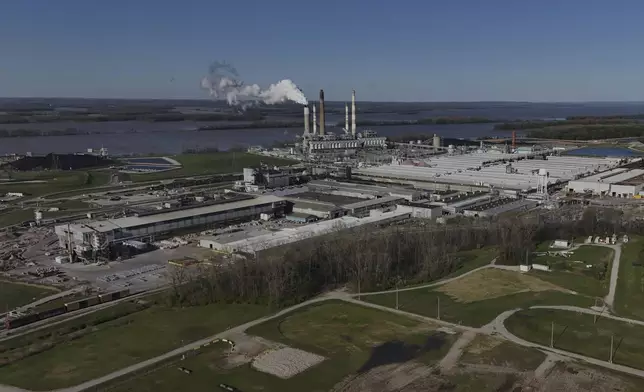
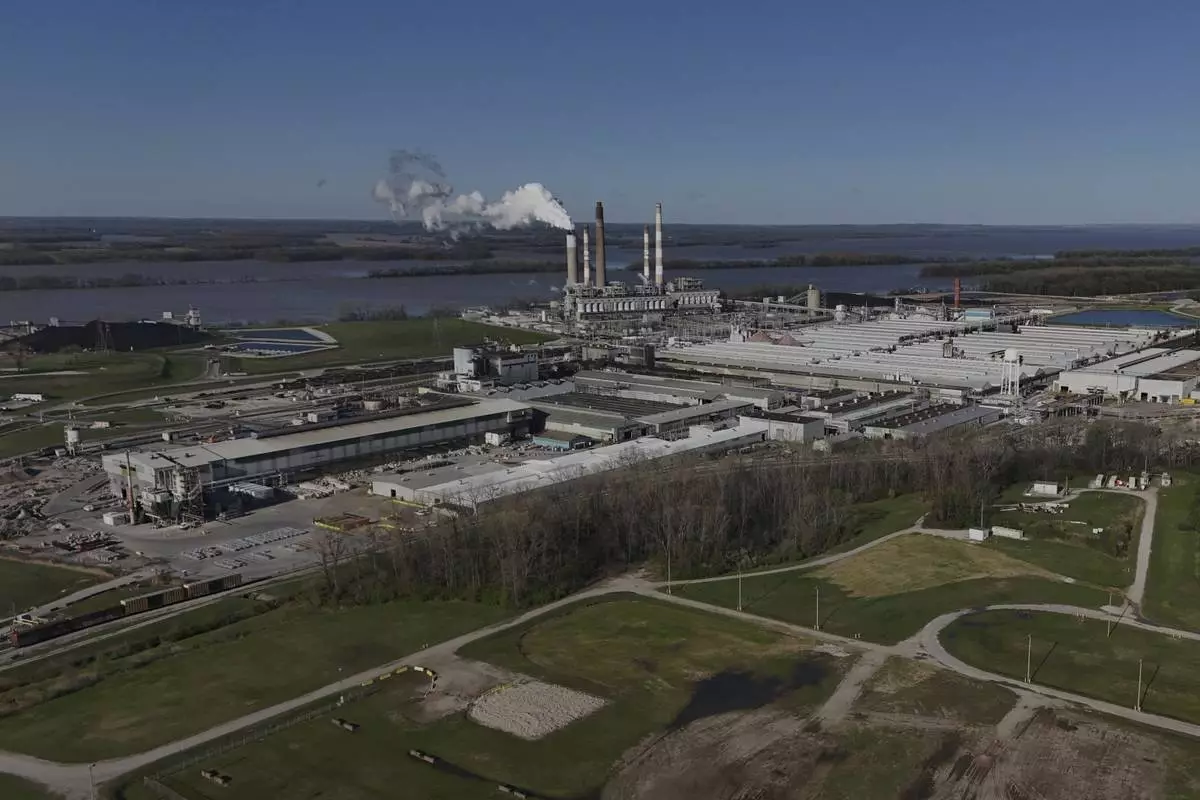
The Warrick Power Plant operates Tuesday, April 8, 2025, in Newburgh, Ind. (AP Photo/Joshua A. Bickel)

The Warrick Power Plant operates Tuesday, April 8, 2025, in Newburgh, Ind. (AP Photo/Joshua A. Bickel)

“Industry and government is very, very, very powerful. It’s more powerful than me. I’m just an English teacher,” Brockman said. But she wants to feel she can make a difference.

In a way, Brockman’s monitoring echoes the reporting that the Environmental Protection Agency began requiring from large polluters more than a decade ago. Emissions from four coal-fired plants in southwest Indiana have dropped 60% since 2010, when the rule took effect.

That rule is now on the chopping block, one of many that President Donald Trump’s EPA argues is costly and burdensome for industry.

But experts say dropping the requirement risks a big increase in emissions if companies are no longer publicly accountable for what they put in the air. And they say losing the data — at the same time the EPA is cutting air quality monitoring elsewhere — would make it tougher to fight climate change.

At stake is the Greenhouse Gas Reporting program, a 2009 rule from President Barack Obama's administration that affects large carbon polluters like refineries, power plants, wells and landfills. In the years since, they've collectively reported a 20% drop in emissions, mostly driven by the closure of coal plants.

And what happens at these big emitters makes a difference. Their declining emissions account for more than three-quarters of the overall, if modest, decline in all U.S. greenhouse gas emissions since 2010.

The registry includes places not usually thought of as big polluters but that have notable greenhouse gas emissions, such as college campuses, breweries and cereal factories. Even Walt Disney World in Florida, where pollution dropped 62% since 2010, has to report along with nearly 10,600 other places.

"We can’t solve climate change without knowing how much pollution major facilities are emitting and how that’s changing over time," said Jeremy Symons, a former EPA senior climate adviser now at Environmental Protection Network, an organization of ex-EPA officials that monitors environmental policies. The group provided calculations as a part of The Associated Press' analysis of impacts from proposed rule rollbacks.

Symons said some companies would welcome the end of the registry because it would make it easier to pollute.

It’s not clear how much the registry itself has contributed to declining emissions. More targeted regulations on smokestack emissions, as well as coal being crowded out by cheaper and less polluting natural gas, are bigger factors.

But the registry “does put pressure on companies to ... document what they’ve done or at least to provide a baseline for what they’ve done,” said Stanford University climate scientist Rob Jackson, who heads Global Carbon Project, a group of scientists that tally national carbon emissions yearly.

Gina McCarthy, a former EPA administrator under Obama, said the registry makes clear how power plants are doing against each other, and that's an inducement to lower emissions.

"It is money for those companies. It's costs. It's reputation. It's been, I think, a wonderful success story and I hope it continues.”

The potential end of the reporting requirement comes as experts say much of the country's air goes unmonitored. Nelson Arley Roque, a Penn State professor who co-authored a study in April on these “monitoring deserts,” said about 40% of U.S. lands are unmonitored. That often includes poor and rural neighborhoods.

"The air matters to all of us, but apparently 50 million people can’t know or will never know'' how bad the air is, Roque said.

The EPA is also trying to claw back money that had been earmarked for air monitoring, part of the termination of grants that it has labeled as targeting diversity, equity and inclusion. That includes $500,000 that would have funded 40 air monitors in a low-income and minority community in the Charlotte, North Carolina, area.

CleaneAIRE NC, a nonprofit that works to improve air quality across the state that was awarded the grant, is suing.

“It’s not diversity, equity and inclusion. It’s human rights,” said Daisha Wall, the group's community science program manager. “We all deserve a right to clean air.”

Research strongly links poor air quality to diseases like asthma and heart disease, with a slightly less established link to cancer. Near polluting industries, experts say what’s often lacking is either enough data in specific locations or the will to investigate the health toll.

Indiana says it “maintains a robust statewide monitoring and assessment program for air, land and water,” but Brockman and others in this part of the state aren't satisfied. She and other members of local advocacy groups Southwestern Indiana Citizens for Quality of Life and Valley Watch install and maintain their own air and water quality monitors. It’s a full-time job to keep the network of monitors up and running, fighting spotty Wi-Fi and connectivity issues.

Fighting industry is a sensitive subject, Brockman added. Many families depend on jobs at coal-fired power plants, and poverty is real. She keeps snacks in her desk for the kids who haven’t eaten breakfast.

“But you also don’t want to hear of another student that has a rare cancer,” she said.

Associated Press writer Matthew Daly contributed from Washington.

The Associated Press’ climate and environmental coverage receives financial support from multiple private foundations. AP is solely responsible for all content. Find AP’s standards for working with philanthropies, a list of supporters and funded coverage areas at AP.org.
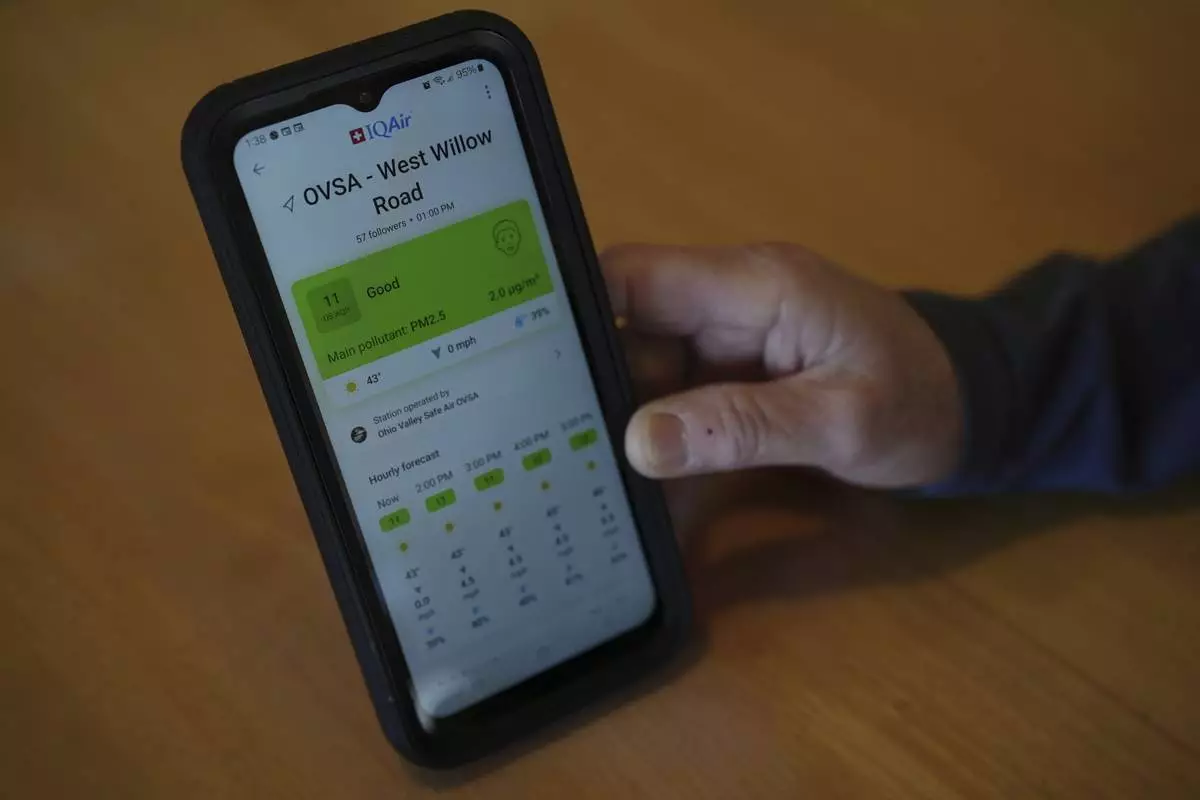
Mary Hess displays air quality data on the IQAir app on her phone Tuesday, April 8, 2025, in Dale, Ind. (AP Photo/Joshua A. Bickel)
Mary Hess displays air quality data on the IQAir app on her phone Tuesday, April 8, 2025, in Dale, Ind. (AP Photo/Joshua A. Bickel)

Mary Hess displays an air monitor outside her home Tuesday, April 8, 2025, in Dale, Ind. (AP Photo/Joshua A. Bickel)
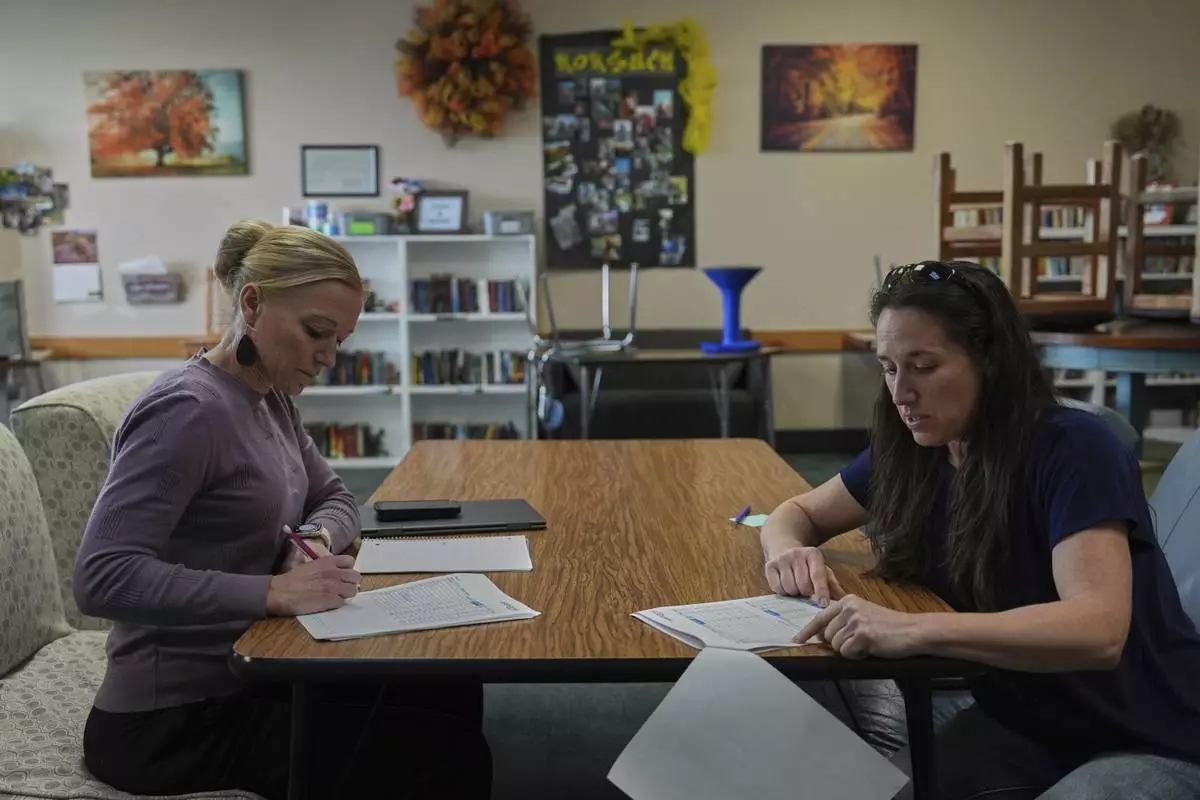
Mary Hess displays an air monitor outside her home Tuesday, April 8, 2025, in Dale, Ind. (AP Photo/Joshua A. Bickel)

Abbie Brockman, right, goes through the results of a water quality test with colleague Karen LaMar, left, Thursday, April 10, 2025, in Leopold, Ind. (AP Photo/Joshua A. Bickel)
Abbie Brockman, right, goes through the results of a water quality test with colleague Karen LaMar, left, Thursday, April 10, 2025, in Leopold, Ind. (AP Photo/Joshua A. Bickel)

The Warrick Power Plant operates Tuesday, April 8, 2025, in Newburgh, Ind. (AP Photo/Joshua A. Bickel)
The Warrick Power Plant operates Tuesday, April 8, 2025, in Newburgh, Ind. (AP Photo/Joshua A. Bickel)

BUENOS AIRES, Argentina (AP) — Venezuelans on Saturday were scrambling to understand who is in charge of their country after a U.S. military operation that captured President Nicolás Maduro.

President Donald Trump delivered a shocking pick: The United States, perhaps in coordination with one of Maduro's most trusted aides.

Delcy Rodríguez has served as Maduro's vice president since 2018, overseeing much of Venezuela's oil-dependent economy as well as its feared intelligence service. But she is someone the Trump administration apparently is willing to work with, at least for now.

“She’s essentially willing to do what we think is necessary to make Venezuela great again,” Trump told reporters of Rodríguez, who faced U.S. sanctions during Trump’s first administration for her role in undermining Venezuelan democracy.

In a major snub, Trump said opposition leader Maria Corina Machado, who was awarded last year's Nobel Peace Prize, didn't have the support to run the country.

Trump said Rodríguez had a long conversation with Secretary of State Marco Rubio in which Trump claimed she said, “‘We’ll do whatever you need.’”

“I think she was quite gracious,” Trump added. “We can’t take a chance that somebody else takes over Venezuela that doesn’t have the good of the Venezuelan people in mind.”

Rodríguez tried to project strength and unity among the ruling party's many factions, downplaying any hint of betrayal. In remarks on state TV, she demanded the immediate release of Maduro and his wife, Cilia Flores, and denounced the U.S. operation as a flagrant violation of the United Nations charter.

“There is only one president in this country, and his name is Nicolás Maduro," Rodríguez said, surrounded by top civilian officials and military commanders.

There was no immediate sign that the U.S. was running Venezuela.

“What will happen tomorrow? What will happen in the next hour? Nobody knows,” Caracas resident Juan Pablo Petrone said.

Trump indicated that Rodríguez had been sworn in already as president of Venezuela, per the transfer of power outlined in the constitution. However, state television has not broadcast any swearing-in ceremony.

In her televised address, Rodríguez did not declare herself acting president or mention a political transition. A ticker at the bottom of the screen identified her as the vice president. She gave no sign that she would be cooperating with the U.S.

“What is being done to Venezuela is an atrocity that violates international law,” she said. “History and justice will make the extremists who promoted this armed aggression pay.”

The Venezuelan constitution also says a new election must be called within a month in the event of the president’s absence.

But experts have been debating whether the succession scenario would apply here, given the government’s lack of popular legitimacy and the extraordinary U.S. military intervention.

Venezuelan military officials were quick to project defiance in video messages.

“They have attacked us but will not break us,” said Defense Minister Gen. Vladimir Padrino López, dressed in fatigues.

Interior Minister Diosdado Cabello appeared on state TV in a helmet and flak jacket, urging Venezuelans to “trust in the political leadership and military” and “get out on the streets” to defend the country’s sovereignty.

“These rats attacked and they will regret what they did,” he said of the U.S.

A lawyer educated in Britain and France, Rodríguez has a long history of representing the revolution started by the late Hugo Chávez on the world stage.

She and her brother, Jorge Rodríguez, head of the Maduro-controlled National Assembly, have strong leftist credentials born from tragedy. Their father was a socialist leader who died in police custody in the 1970s, a crime that shook many activists of the era, including a young Maduro.

Unlike many in Maduro’s inner circle, the Rodríguez siblings have avoided criminal indictment in the U.S. Delcy Rodríguez has developed strong ties with Republicans in the oil industry and on Wall Street who balked at the notion of U.S.-led regime change.

Among her past interlocutors was Blackwater founder Erik Prince and, more recently, Richard Grenell, a Trump special envoy who tried to negotiate a deal with Maduro for greater U.S. influence in Venezuela.

Fluent in English, Rodríguez is sometimes portrayed as a well-educated moderate in contrast to the military hardliners who took up arms with Chávez against Venezuela's democratically elected president in the 1990s.

Many of them, especially Cabello, are wanted in the U.S. on drug trafficking charges and stand accused of serious human rights abuses. But they continue to hold sway over the armed forces, the traditional arbiter of political disputes in Venezuela.

That presents major challenges to Rodríguez asserting authority. But experts say that Venezuela’s power brokers have long had a habit of closing ranks behind their leaders.

“These leaders have all seen the value of staying united. Cabello has always taken a second seat or third seat, knowing that his fate is tied up with Maduro’s, and now he very well might do that again,” said David Smilde, a sociology professor at Tulane University who has conducted research into Venezuela's political dynamics over the past three decades.

“A lot depends on what happened last night, which officials were taken out, what the state of the military looks like now," Smilde said. "If it doesn’t have much firepower anymore, they’re more vulnerable and diminished and it will be easier for her to gain control.”

Shortly before Trump's press conference, Machado, the opposition leader, called on her ally Edmundo González — a retired diplomat widely considered to have won the country’s disputed 2024 presidential election — to “immediately assume his constitutional mandate and be recognized as commander-in-chief."

In an triumphant statement, Machado promised that her movement would “restore order, free political prisoners, build an exceptional country and bring our children back home.”

She added: “Today we are prepared to assert our mandate and take power."

Asked about Machado, Trump was blunt: “I think it would be very tough for (Machado) to be the leader," he said.

“She doesn’t have the support or respect within the country.”

Venezuelans expressed shock, with many speculating on social media that Trump had mixed up the two women's names. Machado has not responded to Trump's remarks.

Goodman reported from Miami.

Venezuelan Vice President and Oil Minister Delcy Rodriguez gives a press conference at the Miraflores presidential palace in Caracas, Venezuela, March 10, 2025. (AP Photo/Ariana Cubillos, File)

Venezuelan Vice President and Oil Minister Delcy Rodriguez gives a press conference at the Miraflores presidential palace in Caracas, Venezuela, March 10, 2025. (AP Photo/Ariana Cubillos, File)

A supporter of Venezuelan President Nicolas Maduro stands on a median strip waving a national flag in Caracas, Venezuela, Saturday, Jan. 3, 2026, after U.S. President Donald Trump announced that Maduro had been captured and flown out of the country. (AP Photo/Ariana Cubillos)

A supporter of Venezuelan President Nicolas Maduro stands on a median strip waving a national flag in Caracas, Venezuela, Saturday, Jan. 3, 2026, after U.S. President Donald Trump announced that Maduro had been captured and flown out of the country. (AP Photo/Ariana Cubillos)

Recommended Articles