Iran and Israel exchanged missile attacks for a third day on Sunday, causing casualties and destruction on both sides.
Iran said on Sunday afternoon that it had launched a new missile barrage at Israel. Air raid sirens sounded in Jerusalem and across central and northern Israel.
In its first daytime attack, Iran fired dozens of missiles at Tel Aviv, Haifa, and other areas in Israel, saying it marks a new stage of its Operation Real Promise 3, which was launched on Friday in retaliation for Israel's "preemptive strike."
The targets included Israeli Prime Minister Netanyahu's family residence.
The Israel Defense Forces (IDF) Home Front Command issued an alert for missile attacks from Iran at around 20:00 local time.
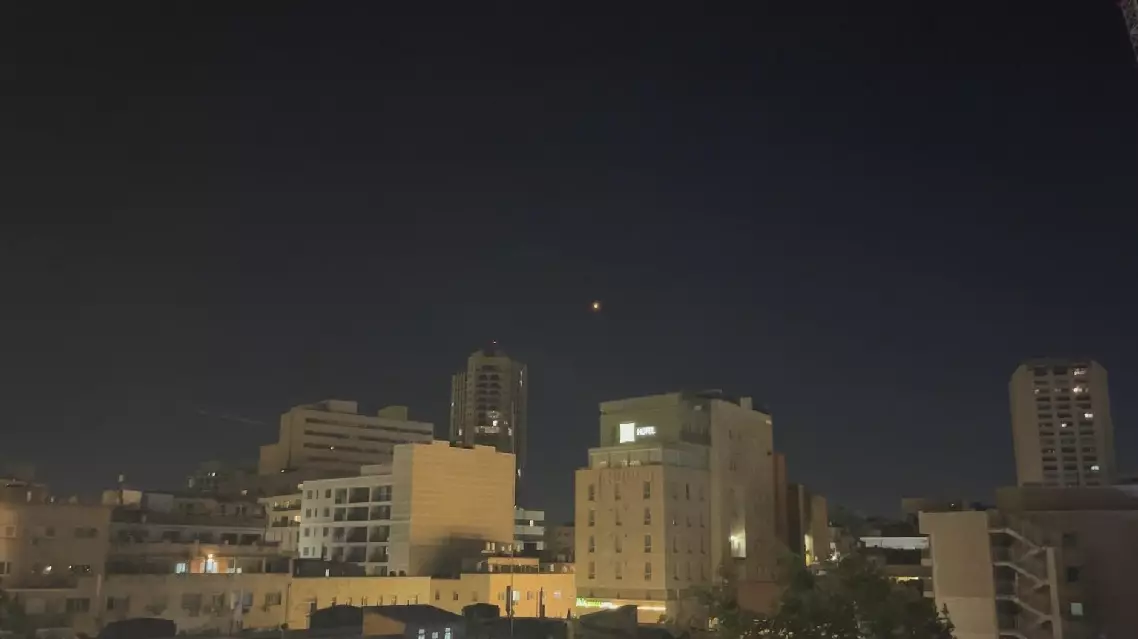
Sirens were later heard in Jerusalem and central Israel. Missiles were seen flying across the night sky over Jerusalem, and air defense missiles were launched to intercept the incoming missiles.
The missiles fired by Iran hit Haifa and Tel Aviv, igniting fires and injuring eight people in multiple locations, including the Rafael Advanced Defense System arms manufacturer in Haifa.
Local residents have been instructed to remain close to bomb shelters until further notice.
The current escalation was triggered by Israel's deadly surprise strike targeting nuclear facilities across Iran on Friday. The attack killed dozens of senior military officials, nuclear scientists, and civilians in Iran and triggered retaliatory missile and drone attacks from the Iranian side.
The Iranian Health Ministry said on Sunday night that Israeli attacks have killed 224 Iranians and injured more than 1,200 others since Friday.
Meanwhile, Iranian attacks have killed 16 people in Israel.
The Israeli cabinet on Sunday approved extending the nationwide state of emergency declared by the defense minister on Friday until June 30.
The extension requires further approval of the Knesset Foreign Affairs and Security Committee.
The state of emergency allows the cabinet to issue regulations that override Knesset legislation.
On Sunday afternoon, two locations in Iran's Mashhad suffered explosions and fires.
The Israel Air Force said it struck an aerial refueling aircraft at the Mashhad Airport, which is about 2,300 kilometers away from Israel, making it the longest reach of Israeli attacks since Friday.
Israeli Prime Minister Benjamin Netanyahu said on Sunday that Islamic Revolutionary Guard Corps' intelligence chief Mohammad Kazemi and his deputy Hassan Mohaqiq had been killed in an Israeli attack.
The Iranian side confirmed their death later that day.
Meanwhile, Iran's Foreign Ministry building in Tehran was hit in an Israeli attack on Sunday.
Saeed Khatibzadeh, head of the Institute for Political and International Studies, which is located just across from the ministry, said the institute's building was also struck.
The Civil Aviation Organization of Iran announced early Monday that it had extended the suspension of domestic and international flights until 14:00.
Netanyahu said on Sunday that Israel is willing to call off its campaign if Iran accepts U.S. demands to dismantle its nuclear program.
Otherwise, he said, "it'll end when we remove those capacities, and we will."
Netanyahu also accused Iran of developing plans to provide nuclear weapons to the Houthis in Yemen.
Iranian President Masoud Pezeshkian said at a cabinet meeting on Sunday that if Israel's hostile actions continue, Tehran's responses will be "more decisive and severe."
Pezeshkian emphasized the necessity to oppose Israel's aggression firmly, saying the recent events once again prove that Israel does not abide by any humanitarian, legal, or international rules.
Iran, Israel exchange airstrikes on third day of conflict