SAVANNAH, Ga. (AP) — A company that has spent years battling conservationists as it seeks a permit to mine outside the Okefenokee Swamp and its federally protected wildlife refuge needs to do just one thing before regulators make a final decision: set aside $2 million for future restoration of the mining site.
Sixteen months after being notified of the requirement, Twin Pines Minerals still hasn't submitted a surety bond or equivalent financial assurance to show the Georgia Environmental Protection Division that it has access to that amount of cash or credit.
That's brought an unexpected halt to a project that appeared on the cusp of winning final approval early last year. Georgia regulators issued draft permits in February 2024 despite warnings from scientists that mining so close to the Okefenokee National Wildlife Refuge could irreparably harm a national treasure.
Twin Pines of Birmingham, Alabama, has worked since 2019 to obtain permits to mine titanium dioxide, a pigment used to whiten products from paint to toothpaste, less than 3 miles (5 kilometers) from the southeastern boundary of the Okefenokee refuge near the Georgia-Florida line.
Within days of the draft permits being approved, Georgia regulators informed Twin Pines in a letter that it needed to submit a $2 million bond, cash or letter of credit that can be used as needed to pay for restoration of the 820-acre (332-hectare) site.
Regulators have finished reviewing thousands of public comments that poured in a year ago regarding the mining project in Georgia's Charlton County, said Environmental Protection Division spokeswoman Sara Lips. Now they're waiting on Twin Pines before moving forward.
“The financial assurance is the last piece of the permit package that will then get routed to our staff, up to the director, to make a final decision," Lips told The Associated Press. She said Twin Pines faces no deadline to put up the money.
Twin Pines President Steve Ingle declined to comment through a company spokesman. Ingle has insisted Twin Pines can mine without harming the Okefenokee. State regulators have agreed, concluding last year that mining should have a “minimal impact” on the refuge.
The mining company's failure to set aside the $2 million after well over a year has opponents questioning whether it has the resources to mine responsibly in an ecologically sensitive area.
“When we’re talking about the potential damage of this mine, it goes way beyond $2 million," said Peter Slag, an attorney for the Southern Environmental Law Center. “It's sort of an alarm bell that they probably don’t have the money to do other sorts of compliance and capital investment.”
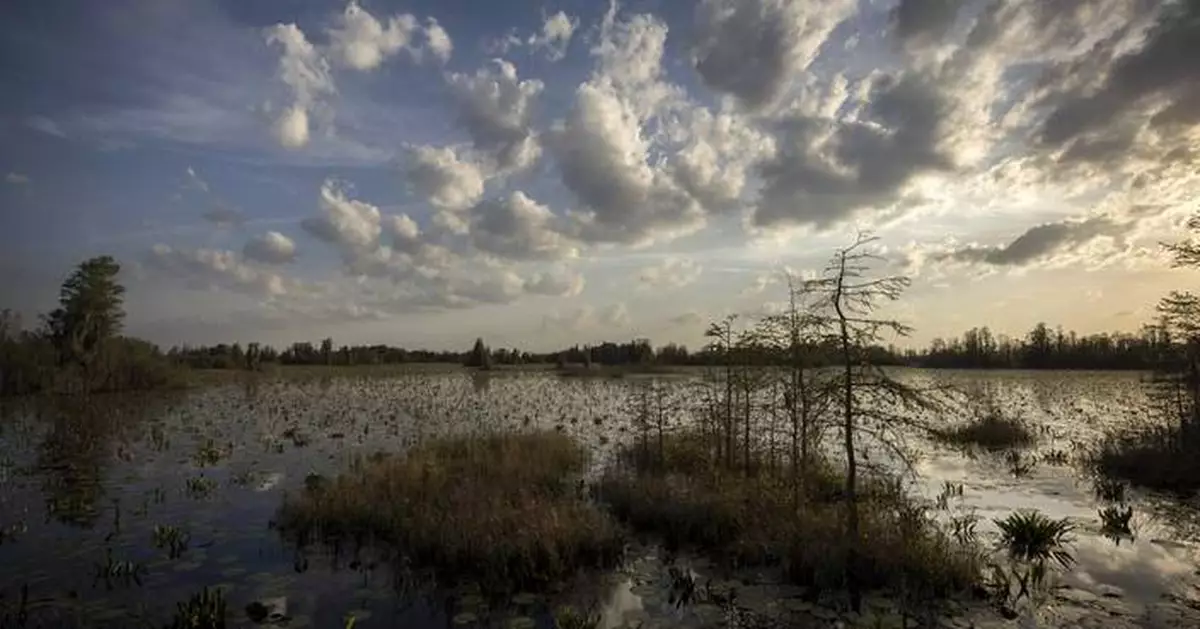
The Okefenokee is the largest U.S. refuge east of the Mississippi River, covering nearly 630 square miles (1,630 square kilometers) in southeast Georgia. It is home to abundant alligators, stilt-legged wood storks and more than 400 other animal species.
Scientists have warned that mining near the Okefenokee’s bowl-like rim could damage the swamp’s ability to hold water and increase the frequency of withering droughts.
There are other signs Twin Pines may be struggling financially.
Danish shipping company Lauritzen Bulkers sued Twin Pines in federal court in Colorado last October, saying it's owed $9.3 million after contracting with Twin Pines in 2022 to transport minerals to Asia. A judge paused the case in April, at the shipper's request, amid arbitration proceedings.
Twin Pines' attorney in that case, Joseph Martinez, did not immediately return email messages seeking comment.
In March, a second company sued Twin Pines in a California state court. M&L Commodities says Twin Pines owes it $5.6 million stemming from a 2021 contract for M&L to store minerals for the mining company. Twin Pines denies wrongdoing in legal responses filed in court.
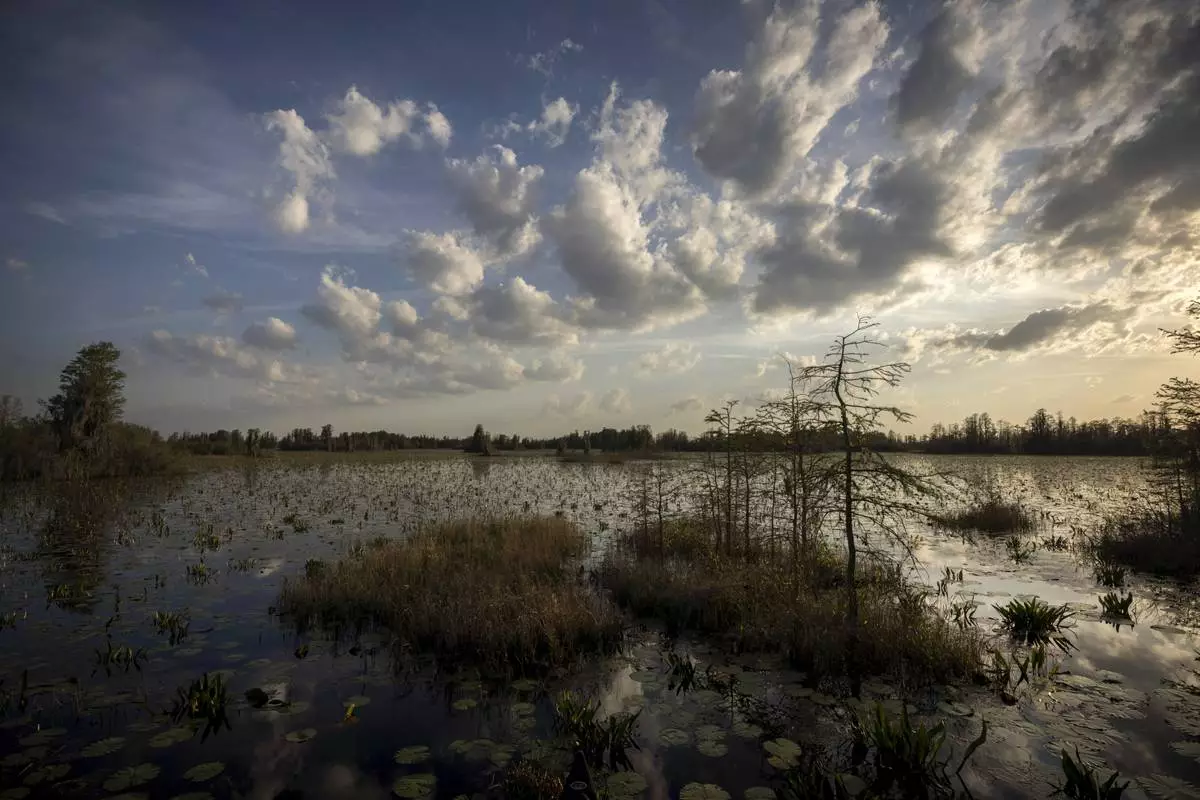
FILE - The sun sets on the lily pads and floating vegetation in the Chesser Prairie inside the Okefenokee National Wildlife Refuge on March 30, 2022, in Folkston, Ga. (AP Photo/Stephen B. Morton, File)
VILNIUS, Lithuania (AP) — Belarusian authorities on Saturday freed Nobel Peace Prize laureate Ales Bialiatski and key opposition figure Maria Kolesnikova from prison, a human rights advocate confirmed to The Associated Press.
Their release comes as authoritarian President Alexander Lukashenko seeks to improve relations with Washington. In exchange for sanctions relief, Lukashenko pardoned 123 prisoners, the Belta state news agency reported. The U.S. earlier on Saturday announced lifting sanctions on the country’s potash sector.
A close ally of Russia, Minsk has faced Western isolation and sanctions for years. Lukashenko has ruled the nation of 9.5 million with an iron fist for more than three decades, and the country has been repeatedly sanctioned by Western countries both for its crackdown on human rights and for allowing Moscow to use its territory in the invasion of Ukraine in 2022. Belarus has released hundreds of prisoners since July 2024.
John Coale, the U.S. special envoy for Belarus, announced the lifting of sanctions on potash after meeting Lukashenko in Minsk on Friday and Saturday.
Speaking with journalists, Coale described the two-day talks as “very productive,” Belarus’ state news agency Belta reported Saturday. He said that normalizing relations between Washington and Minsk was “our goal.”
“We’re lifting sanctions, releasing prisoners. We’re constantly talking to each other,” he said, according to Belta. He also said that the relationship between the countries was moving from “baby steps to more confident steps” as they increased dialogue.
Later Saturday, Bialiatski and Kolesnikova were released from prison, according to Pavel Sapelka, human rights advocate with the Viasna rights group.
Human rights advocate Bialiatski won the Nobel Peace Prize in 2022, along with the prominent Russian rights group Memorial and Ukraine’s Center for Civil Liberties.
Bialiatski, awarded the prize while in jail awaiting trial, was later convicted of smuggling as well as financing actions that violate public order — charges widely denounced as politically motivated — and sentenced to 10 years in 2023.
Authorities said Bialiatski, who founded Viasna, Belarus’ oldest and most prominent human rights group, was seen as especially dangerous because of what the authorities alleged were his “extremist tendencies.” The 63-year-old has been imprisoned at a penal colony in Gorki in a facility that is notorious for beatings and hard labor. Bialiatski’s wife said his health was deteriorating and he has multiple chronic illnesses.
A U.N. panel of human rights experts has called on Belarus to release him.
Kolesnikova was a key figure in the mass protests that rocked Belarus in 2020, and is a close ally of an opposition leader in exile, Sviatlana Tsikhanouskaya.
Kolesnikova, known for her close-cropped hair and trademark gesture of forming a heart with her hands, became an even greater symbol of resistance when Belarusian authorities tried to deport her in September 2020. Driven to the Ukrainian border, she briefly broke away from security forces at the frontier, tore up her passport and walked back into Belarus.
The 43-year-old professional flautist was convicted in 2021 on charges including conspiracy to seize power and sentenced to 11 years in prison. She fell seriously ill behind bars and underwent surgery.
The last time U.S. officials met with Lukashenko in September 2025, Washington announced easing some of the sanctions against Belarus while Mink released more than 50 political prisoners into Lithuania. With that September release, the number of prisoners freed by Belarus since July 2024 exceeded 430, in what was widely seen as an effort at a rapprochement with the West.
“The freeing of political prisoners means that Lukashenko understands the pain of Western sanctions and is seeking to ease them,” Tsikhanouskaya told the AP on Saturday.
She added: “But let’s not be naive: Lukashenko hasn’t changed his policies, his crackdown continues and he keeps on supporting Russia’s war against Ukraine. That’s why we need to be extremely cautious with any talk of sanctions relief, so that we don't reinforce Russia's war machine and encourage continued repressions.”
Tsikhnouskaya also described European Union sanctions against Belarusian potash fertilizers as far more painful for Minsk that those imposed by the U.S, saying that while easing U.S. sanctions could lead to the release of political prisoners, European sanctions should push for long-term, systemic changes in Belarus and the end of Russia's war in Ukraine.
Belarus, which previously accounted for about 20% of global potash fertilizer exports, has faced sharply reduced shipments since Western sanctions targeted state producer Belaruskali and cut off transit through Lithuania’s Klaipeda port, the country’s main export route.
“Sanctions by the U.S., EU and their allies have significantly weakened Belarus’s potash industry, depriving the country of a key source of foreign exchange earnings and access to key markets,” Anastasiya Luzgina, an analyst at the Belarusian Economic Research Center BEROC, told AP.
“Minsk hopes that lifting U.S. sanctions on potash will pave the way for easing more painful European sanctions; at the very least, U.S. actions will allow discussions to begin,” she said.
The latest round of U.S.-Belarus talks also touched on Venezuela, as well as Russia's ongoing invasion of Ukraine, Belta reported.
Coale told reporters that Lukashenko had given “good advice” on how to address the Ukraine war, saying that Lukashenko and Russian President Vladimir Putin were “longtime friends” with “the necessary level of relationship to discuss such issues.”
"Naturally, President Putin may accept some advice and not others,” Coale said.
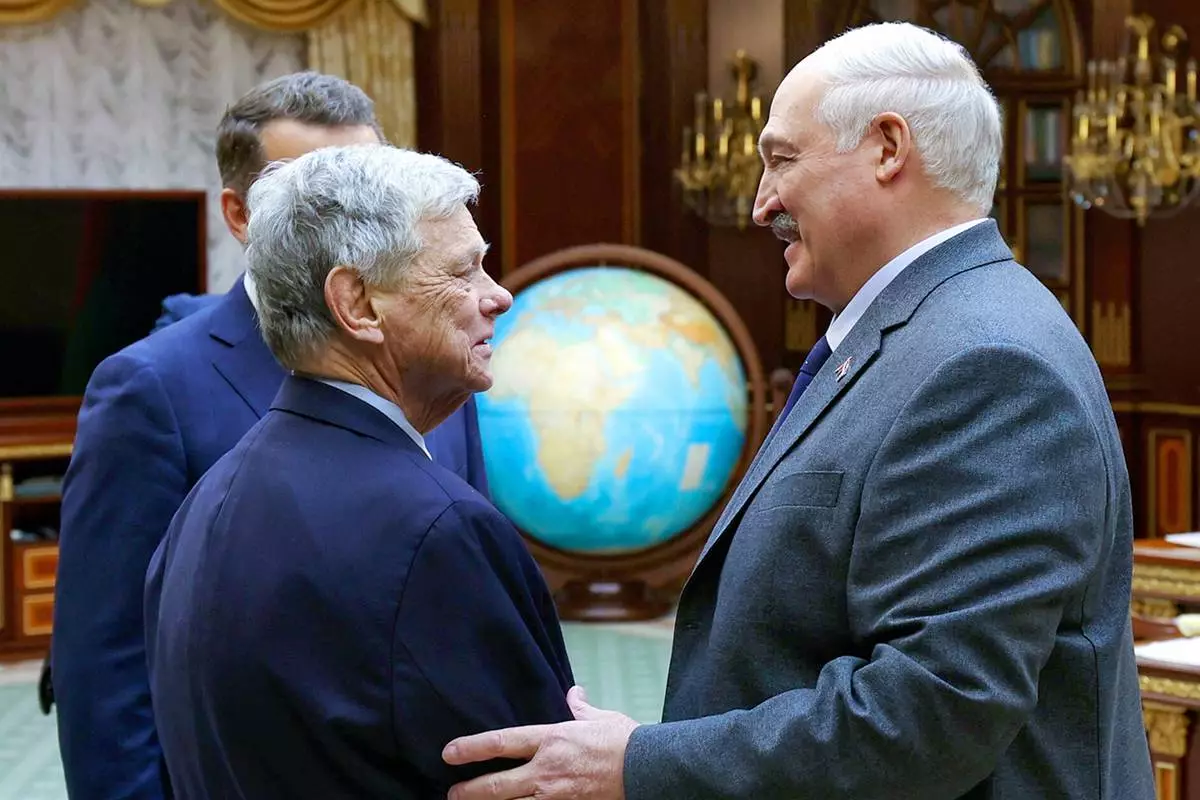
In this photo released by Belarusian presidential press service, Belarusian President Alexander Lukashenko, right, and U.S. Presidential envoy John Coale shake hands during their meeting in Minsk, Belarus, Friday, Dec. 12, 2025. (Belarusian Presidential Press Service via AP)