Skip to Content Facebook Feature Image

Americans turn cautious and retail sales slide after a spring rush to beat tariffs

News

Americans turn cautious and retail sales slide after a spring rush to beat tariffs
News

News

Americans turn cautious and retail sales slide after a spring rush to beat tariffs

2025-06-18 03:11 Last Updated At:03:21

WASHINGTON (AP) — Retail sales fell sharply in May as consumers pulled back from a spending surge early this year to get ahead of President Donald Trump’s sweeping tariffs on nearly all imports.

Sales at retail stores and restaurants dropped 0.9% in May, the Commerce Department said Tuesday, after a decline of 0.1% in April. Sales jumped 1.5% in March. The figure was pulled down by a steep drop in auto sales, after Americans ramped up their car-buying in March to get ahead of Trump’s 25% duty on imported cars and car parts. Excluding autos, sales fell 0.3% in May.

The sales drop is hitting after sharp declines in consumer confidence this year. Still, inflation has cooled steadily and unemployment remains low, which could fuel steady spending in the coming months, as the economy has remained mostly solid.

A category of sales that excludes volatile sectors such as gas, cars, and restaurants rose last month by 0.4%, a sign that consumers are still spending on some discretionary items.

Overall, the report suggests consumers have pulled back a bit but not dramatically so. The retail sales report covers about one-third of consumer spending, with the other two-thirds consisting of spending on services. Economists expect overall consumer spending to grow in the April-June quarter.

“Today’s data suggests consumers are downshifting, but they haven’t yet slammed the brakes,” Ellen Zentner, chief economic strategist for Morgan Stanley wealth management, said in an email. “Like the economy as a whole, consumer spending has been resilient in the face of tariff uncertainty.”

Yet many categories saw sharp declines. Car sales plunged 3.5%, while sales at home and garden centers dropped 2.7%. They fell 0.6% at electronics and appliance stores and 0.7% at grocery stores. There were some bright spots: Sales rose 0.9% at online retailers, 0.8% at clothing stores, and 1.2% at furniture stores.

Gas station sales dropped sharply, by 2%, but that mostly reflects lower prices. The retail sales report isn't adjusted for inflation.

Sales at restaurants and bars, a closely watched indicator of discretionary spending, fell 0.9% in May, though that followed a solid gain of 0.8% in April.

Some consumer products companies say they are seeing the impact of tariffs on their own costs and sales.

Paul Cosaro, CEO of Picnic Time, Inc., which makes picnic accessories like baskets, coolers, and folding chairs, said that orders from retailers are down as much as 40% this summer compared with a year ago. His company sells to a variety of stores like Target and Williams-Sonoma.

Cosaro noted that some stores have been cautious because they’re not sure how shoppers will react to higher prices. Some canceled orders because Cosaro couldn’t tell them how much the new prices would be due to all the uncertainty. Roughly 80% of the company's goods are made in China, with the rest in India and Vietnam.

The company, founded roughly 40 years ago and based in Moorpark, California, was forced to raise prices on average from 11% to 14% for this summer selling season, Cosaro said.

A folding outdoor chair now costs $137 this month, up from $120 in late 2024, he added. The company's sales are still down this year, even though some shoppers accelerated their purchases out of concern that prices would rise.

“Shoppers are very price sensitive,” Cosaro said.

The company has implemented a hiring freeze because of all the extra tariff costs, he added. So far this year the company, which employs from 70 to 100 people, has had to pay $1 million in tariffs. A year ago at this time, the bill was a third of that amount.

Liza Gresko, a 42-year-old mother of three in Doylestown, Pennsylvania, said she has watched as prices for basics like toothpaste or shampoo begin to rise again, and has started to buy groceries in bulk to save money, as well as switching to generic brands.

“If I make these small changes, then we are sacrificing for the long term goal of saving more,” Gresko said.

She has also begun shopping at thrift stores for children's clothes, rather than Macy’s or H&M.

“Even with store sales and discounts, the rising costs make it unsustainable to continually purchase new clothing,” she said.

The retail sales report comes as other evidence indicates shoppers have been pulling back more amid worries about higher prices from Trump’s tariffs.

Naveen Jaggi, president of retail advisory services in the Americas for real-estate firm JLL, said that he’s hearing from malls that sales are slowing down heading into the official summer months. Retailers are pushing up back-to-school promotions to this month from July, he said. They want to get shoppers in early for fear consumers may not want to spend in the later months when prices will likely go up, he said.

So far, Trump's tariffs haven't yet boosted inflation. Consumer prices rose just 2.4% in May compared with a year ago, the government said last week.

Many stores and brands, including Walmart, Lululemon, and J.M. Smucker Co., have said they plan to or have raised prices in response to tariffs.

Deckers Outdoor, which is behind such shoe labels as Hoka and Uggs, said late last month that it plans price increases, which will likely hurt sales.

“We expect to absorb a portion of the tariff impact,” Chief Financial Officer Steven Fasching told analysts. “We also believe there is potential to see demand erosion associated with the combination of price increases and general softness in the consumer spending environment.”

D'Innocenzio reported from New York.
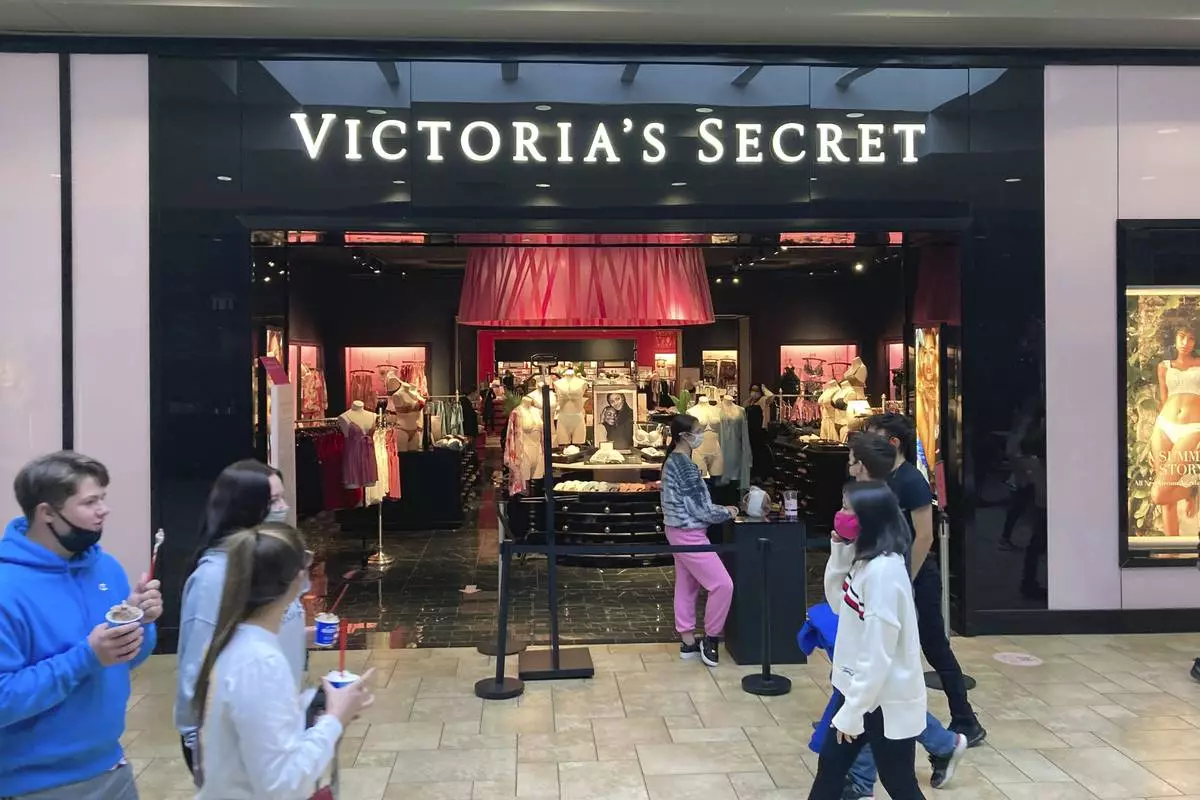
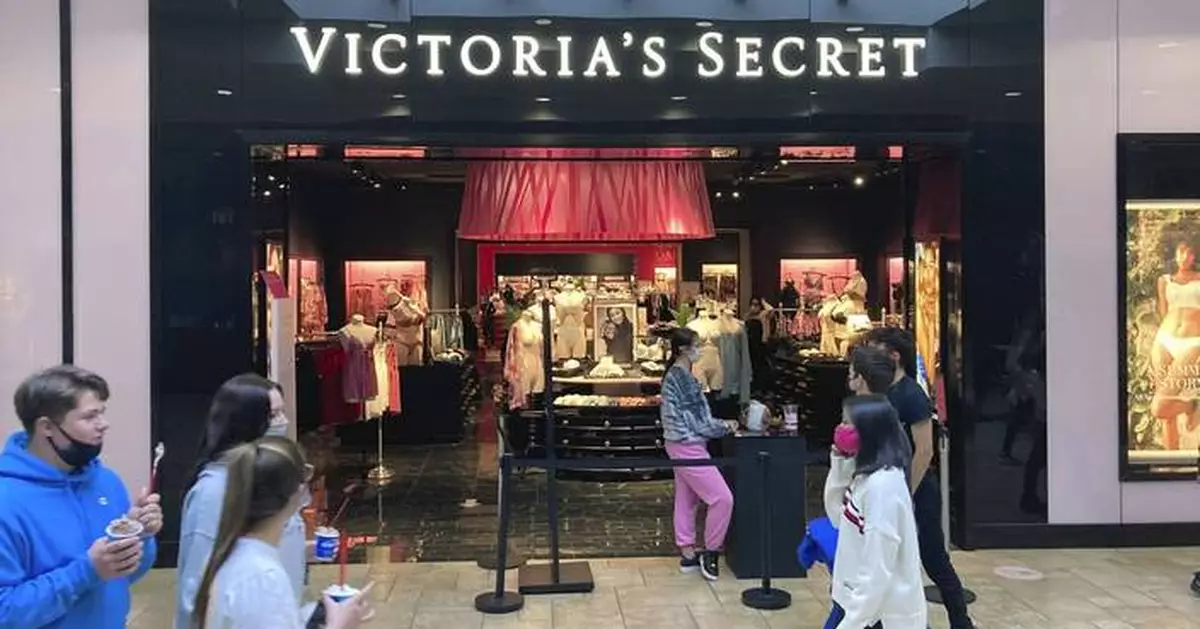
FILE - Shoppers pass a Victoria's Secret store at a shopping mall in Scranton, Pa., May 3, 2021. (AP Photo/Ted Shaffrey, file)
FILE - Shoppers pass a Victoria's Secret store at a shopping mall in Scranton, Pa., May 3, 2021. (AP Photo/Ted Shaffrey, file)

BUENOS AIRES, Argentina (AP) — Venezuelans on Saturday were scrambling to understand who is in charge of their country after a U.S. military operation that captured President Nicolás Maduro.

President Donald Trump delivered a shocking pick: The United States, perhaps in coordination with one of Maduro's most trusted aides.

Delcy Rodríguez has served as Maduro's vice president since 2018, overseeing much of Venezuela's oil-dependent economy as well as its feared intelligence service. But she is someone the Trump administration apparently is willing to work with, at least for now.

“She’s essentially willing to do what we think is necessary to make Venezuela great again,” Trump told reporters of Rodríguez, who faced U.S. sanctions during Trump’s first administration for her role in undermining Venezuelan democracy.

In a major snub, Trump said opposition leader Maria Corina Machado, who was awarded last year's Nobel Peace Prize, didn't have the support to run the country.

Trump said Rodríguez had a long conversation with Secretary of State Marco Rubio in which Trump claimed she said, “‘We’ll do whatever you need.’”

“I think she was quite gracious,” Trump added. “We can’t take a chance that somebody else takes over Venezuela that doesn’t have the good of the Venezuelan people in mind.”

Rodríguez tried to project strength and unity among the ruling party's many factions, downplaying any hint of betrayal. In remarks on state TV, she demanded the immediate release of Maduro and his wife, Cilia Flores, and denounced the U.S. operation as a flagrant violation of the United Nations charter.

“There is only one president in this country, and his name is Nicolás Maduro," Rodríguez said, surrounded by top civilian officials and military commanders.

There was no immediate sign that the U.S. was running Venezuela.

“What will happen tomorrow? What will happen in the next hour? Nobody knows,” Caracas resident Juan Pablo Petrone said.

Trump indicated that Rodríguez had been sworn in already as president of Venezuela, per the transfer of power outlined in the constitution. However, state television has not broadcast any swearing-in ceremony.

In her televised address, Rodríguez did not declare herself acting president or mention a political transition. A ticker at the bottom of the screen identified her as the vice president. She gave no sign that she would be cooperating with the U.S.

“What is being done to Venezuela is an atrocity that violates international law,” she said. “History and justice will make the extremists who promoted this armed aggression pay.”

The Venezuelan constitution also says a new election must be called within a month in the event of the president’s absence.

But experts have been debating whether the succession scenario would apply here, given the government’s lack of popular legitimacy and the extraordinary U.S. military intervention.

Venezuelan military officials were quick to project defiance in video messages.

“They have attacked us but will not break us,” said Defense Minister Gen. Vladimir Padrino López, dressed in fatigues.

Interior Minister Diosdado Cabello appeared on state TV in a helmet and flak jacket, urging Venezuelans to “trust in the political leadership and military” and “get out on the streets” to defend the country’s sovereignty.

“These rats attacked and they will regret what they did,” he said of the U.S.

A lawyer educated in Britain and France, Rodríguez has a long history of representing the revolution started by the late Hugo Chávez on the world stage.

She and her brother, Jorge Rodríguez, head of the Maduro-controlled National Assembly, have strong leftist credentials born from tragedy. Their father was a socialist leader who died in police custody in the 1970s, a crime that shook many activists of the era, including a young Maduro.

Unlike many in Maduro’s inner circle, the Rodríguez siblings have avoided criminal indictment in the U.S. Delcy Rodríguez has developed strong ties with Republicans in the oil industry and on Wall Street who balked at the notion of U.S.-led regime change.

Among her past interlocutors was Blackwater founder Erik Prince and, more recently, Richard Grenell, a Trump special envoy who tried to negotiate a deal with Maduro for greater U.S. influence in Venezuela.

Fluent in English, Rodríguez is sometimes portrayed as a well-educated moderate in contrast to the military hardliners who took up arms with Chávez against Venezuela's democratically elected president in the 1990s.

Many of them, especially Cabello, are wanted in the U.S. on drug trafficking charges and stand accused of serious human rights abuses. But they continue to hold sway over the armed forces, the traditional arbiter of political disputes in Venezuela.

That presents major challenges to Rodríguez asserting authority. But experts say that Venezuela’s power brokers have long had a habit of closing ranks behind their leaders.

“These leaders have all seen the value of staying united. Cabello has always taken a second seat or third seat, knowing that his fate is tied up with Maduro’s, and now he very well might do that again,” said David Smilde, a sociology professor at Tulane University who has conducted research into Venezuela's political dynamics over the past three decades.

“A lot depends on what happened last night, which officials were taken out, what the state of the military looks like now," Smilde said. "If it doesn’t have much firepower anymore, they’re more vulnerable and diminished and it will be easier for her to gain control.”

Shortly before Trump's press conference, Machado, the opposition leader, called on her ally Edmundo González — a retired diplomat widely considered to have won the country’s disputed 2024 presidential election — to “immediately assume his constitutional mandate and be recognized as commander-in-chief."

In an triumphant statement, Machado promised that her movement would “restore order, free political prisoners, build an exceptional country and bring our children back home.”

She added: “Today we are prepared to assert our mandate and take power."

Asked about Machado, Trump was blunt: “I think it would be very tough for (Machado) to be the leader," he said.

“She doesn’t have the support or respect within the country.”

Venezuelans expressed shock, with many speculating on social media that Trump had mixed up the two women's names. Machado has not responded to Trump's remarks.

Goodman reported from Miami.

Venezuelan Vice President and Oil Minister Delcy Rodriguez gives a press conference at the Miraflores presidential palace in Caracas, Venezuela, March 10, 2025. (AP Photo/Ariana Cubillos, File)

Venezuelan Vice President and Oil Minister Delcy Rodriguez gives a press conference at the Miraflores presidential palace in Caracas, Venezuela, March 10, 2025. (AP Photo/Ariana Cubillos, File)

A supporter of Venezuelan President Nicolas Maduro stands on a median strip waving a national flag in Caracas, Venezuela, Saturday, Jan. 3, 2026, after U.S. President Donald Trump announced that Maduro had been captured and flown out of the country. (AP Photo/Ariana Cubillos)

A supporter of Venezuelan President Nicolas Maduro stands on a median strip waving a national flag in Caracas, Venezuela, Saturday, Jan. 3, 2026, after U.S. President Donald Trump announced that Maduro had been captured and flown out of the country. (AP Photo/Ariana Cubillos)

Recommended Articles