BUENOS AIRES, Argentina (AP) — To outsiders, the Facebook group chat reads like a snarl of nonsensical emojis and letters. To uninsured Argentine cancer patients, it’s a lifeline.
The surreptitious network connects advocates who have spare drugs to Argentines with cancer who lost access to their treatment in March 2024 when President Javier Milei suspended a federal agency, known as DADSE, that paid for their expensive medications.
Click to Gallery
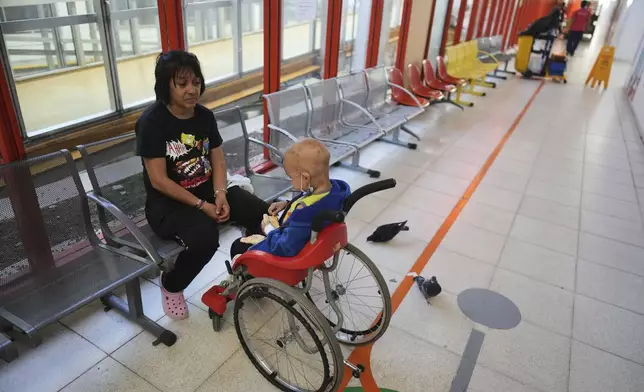
Lucia Ruiz Diaz sits next to her 5-year-old son Tomas, who has cancer, at a waiting room in the Garrahan Hospital in Buenos Aires, Argentina, Tuesday, April 29, 2025. Cancer patients say they’ve grown sicker since Argentina’s libertarian President Javier Milei took his chainsaw to the public health system. (AP Photo/Natacha Pisarenko)
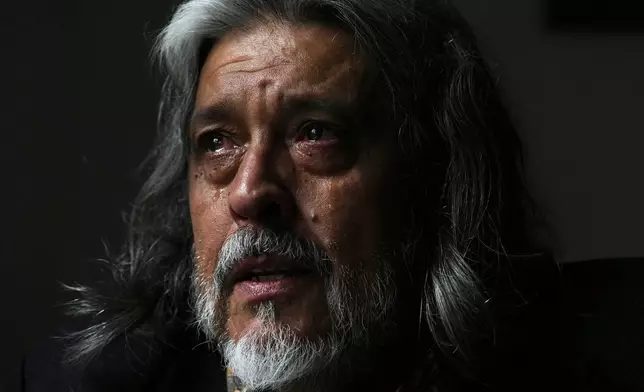
Eduardo Castano sheds tears while thinking about his wife Marité, who died in 2024, unable to secure drugs that had been covered by the federal agency DADSE, which President Javier Milei dissolved, in Buenos Aires, Argentina, Wednesday, April 16, 2025. (AP Photo/Natacha Pisarenko)
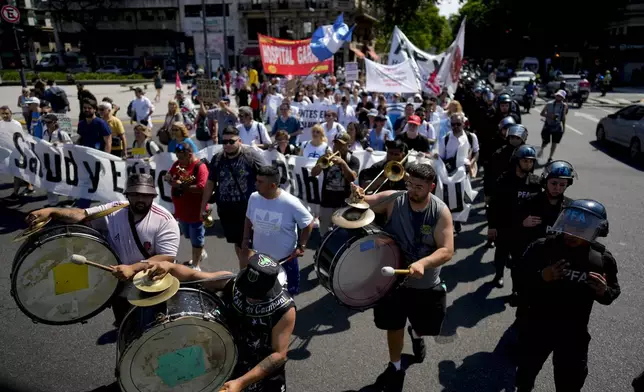
FILE- Public health workers protest against President Javier Milei's austerity measures that affect public health funding, in Buenos Aires, Argentina, Oct. 22, 2024. (AP Photo/Natacha Pisarenko, File)
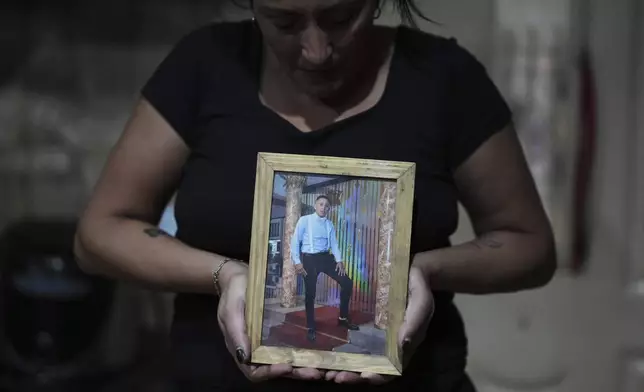
Claudia Caballero poses with a photo of her late son Alexis Almiron, a cancer patient who tried to get medication that had been covered by federal agency DADSE, but which President Javier Milei dissolved, in the outskirts of Buenos Aires, Argentina, Monday, May 5, 2025. (AP Photo/Natacha Pisarenko)
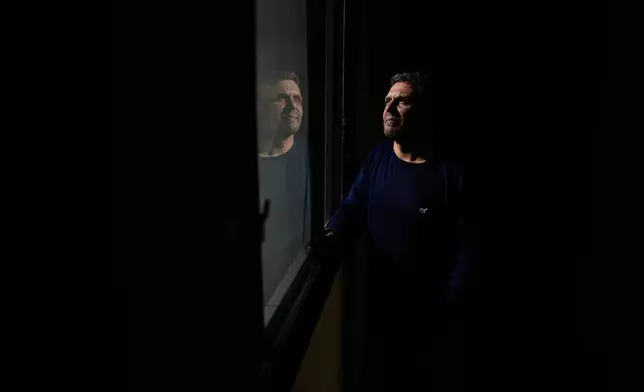
Ariel Wagener, a 47-year-old pizza chef with leukemia who was hospitalized this year with failing kidneys after losing access to his medication, poses for a photo in Buenos Aires, Argentina, Wednesday, April 30, 2025. (AP Photo/Natacha Pisarenko)
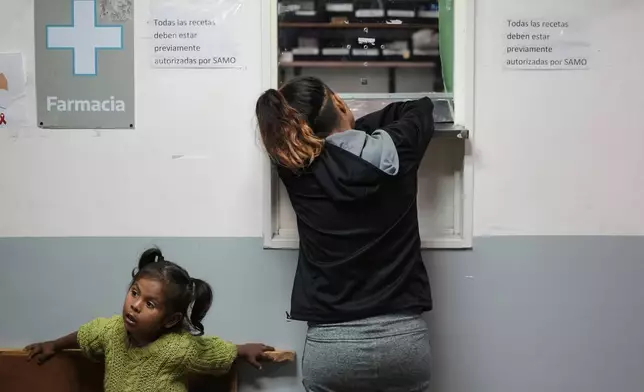
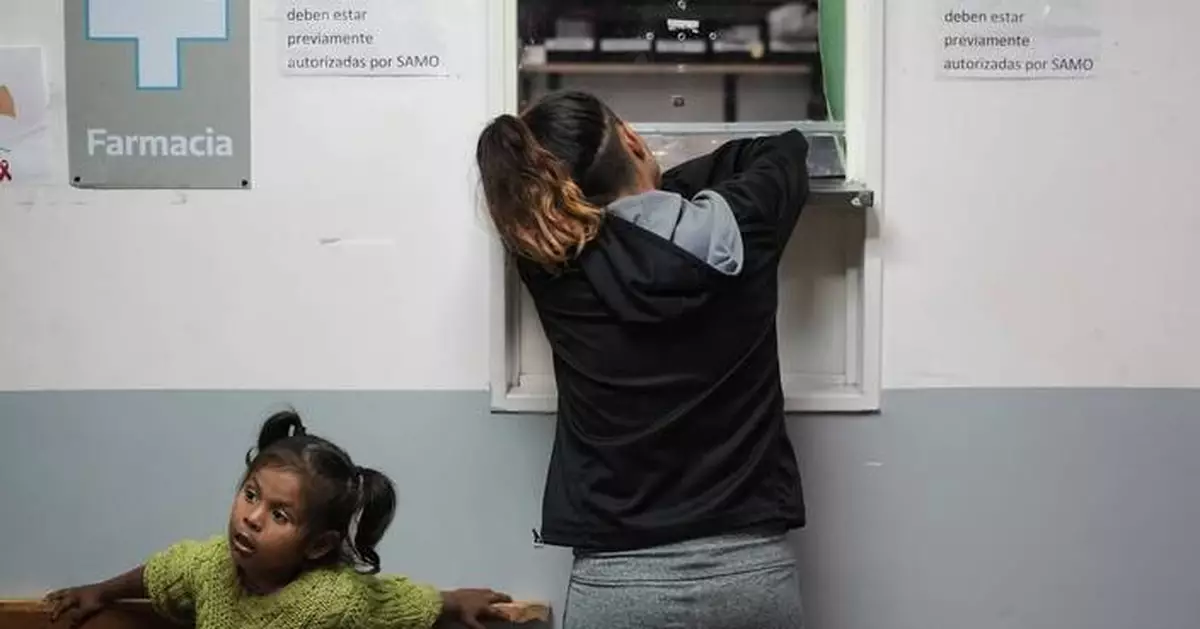
A woman leans on a counter while waiting to receive free medicine at the Rodolfo Rossi Hospital in La Plata, Argentina, Thursday, May 8, 2025. According to experts, government workers and advocates, President Javier Milei's cutbacks have overwhelmed the nation’s public hospitals, upended vaccination efforts and taken a toll on the country’s poor and unemployed. (AP Photo/Natacha Pisarenko)
Whenever Facebook cracks the coded pleas and removes the group for violating its rules on drug sales, another appears, swelling with Argentines who say they’ve grown sicker since the radical libertarian president took a chainsaw to health care.
“All I need for my body to function is this medication, and Milei is saying, ‘There’s no money,’” said Ariel Wagener, a 47-year-old pizza chef with leukemia who was hospitalized this year with failing kidneys after losing access to his medication. Without DADSE, a month's worth of his leukemia drug costs $21,000.
Wagener's condition stabilized after he got leftover medication via Facebook, donated by a family whose loved one had died of cancer.
The halting of millions of dollars of free cancer drugs is just one way Milei’s austerity drive has torn through the public health system that once set Argentina apart in Latin America, ensuring that health care was free for pretty much everyone who couldn't afford private insurance.
Since taking office in December 2023, Milei has slashed Argentina’s health care budget by 48% in real terms. His administration fired over 2,000 Health Ministry employees, including 1,400 over just a few days in January.
As part of Milei’s plan to remake Argentina’s troubled economy and cut waste and bureaucracy, officials gutted the National Cancer Institute, suspending early detection programs for breast and cervical cancer.
They froze federal funds for immunization campaigns, hobbling vaccine access as Argentina confronts a measles outbreak for the first time in decades. They dismantled the National Directorate for HIV, Hepatitis and Tuberculosis, leading to testing and treatment delays. They defunded emergency contraception and stopped distributing abortion pills.
“We’re seeing setbacks we haven’t seen in decades,” said María Fernanda Boriotti, president of Argentina’s Federation of Health Professionals. "HIV patients without treatment, cancer patients dying for lack of medication, hospitals without resources, health professionals pushed out of the system."
The government curtailed medical coverage for retirees and lifted price controls on prescription medication and private health plans, causing prices to spike by 250% and 118% respectively, official data shows.
“We’ve stopped buying milk, yogurt, anything that’s not absolutely essential,” said Susana Pecora, 71, who lost the insurance plan that covered her husband's antipsychotic drugs when the price jumped 40% last year.
Milei campaigned on a promise to shrink the state two years before President Donald Trump and Elon Musk took up their own chainsaws.
The Argentine has become a close ally of the Trump administration, including on health policy. Argentina has followed the U.S. out of the World Health Organization, and last month received a visit from U.S. Secretary of Health and Human Services Robert F. Kennedy Jr.
Meeting Kennedy in Buenos Aires, Argentine Health Minister Mario Lugones announced a review of Argentina's health system to align it with Kennedy's Make America Healthy Again movement.
“We have similar visions about the path forward,” Lugones said of Kennedy.
Milei has not yet attempted to replace universal coverage with an insurance-based system, as he vowed on the campaign trail.
But in stripping Argentines of coverage and increasing premiums and out-of-pocket expenses, he is moving Argentina closer to the U.S. model, said Macarena Sabin Paz, health team coordinator at Argentina’s Center for Legal and Social Studies.
“We are beginning to see the idea ... where if you lose your job, or become seriously ill, you may have to sell your car, whatever you have, to pay for health care," she said.
Milei’s staffing cuts have eviscerated agencies tasked with planning, financing and tracking immunization campaigns, disrupting data collection and jeopardizing the country’s respected childhood vaccine program.
The cuts have coincided with a measles outbreak that in April led to Argentina's first measles death in two decades.
“Argentina has been one of the most advanced South American countries and here we see it abandoning public health,” said Dr. Stanley Plotkin, an American physician who helped develop the measles vaccine in the 1960s.
Milei’s spokesperson, Manuel Adorni, did not respond to requests for comment. Lugones also did not respond to questions on the impact of policy changes.
After decades of unbridled spending by left-wing populist governments that brought Argentina infamy for defaulting on its debts, Milei delivered on his campaign promises of taming extreme inflation and notching a fiscal surplus.
But even experts who agree Argentina’s health care system needed reform say the cutbacks have been so deep and fast that they’ve hit like a tidal wave.
“In terms of the destruction of the state, we’ve never experienced anything like this, not even during the military dictatorship,” said Fabio Nuñez, ex-coordinator of the National Directorate for HIV, Hepatitis and Tuberculosis who was among hundreds fired from the agency.
Charged with leading prevention efforts and treatments for infectious diseases, the agency has lost 40% of its staff and 76% of its annual budget. Hospitals now face shortages of everything from virus testing supplies to medications to condoms.
The cuts have coincided with a surge in sexually transmitted infections. Last year HIV cases spiked by 20% and syphilis by 50%.
“They’re avoiding the expense now but will pay for it later as people seek emergency care,” said Cristian Pizzuti, a 31-year-old with HIV who documented 103 cases of patients deprived of their daily antiretroviral pills for weeks at a time last year. Pizzuti said he recently received expired medication and suffered a severe allergic reaction after being switched to a cheaper drug.
Tuberculosis cases also climbed by 25% last year. TB clinics report delays in obtaining test results.
“As people go about their lives, waiting for results, they are spreading the disease to others,” said Dr. Santiago Jimenez, who treats HIV and TB patients in an impoverished Buenos Aires neighborhood. "It’s an epidemiological disaster.”
Free public hospitals have become flooded with Argentines who dropped their private insurance due to increased premiums or who lost their job — and with it, their social security plans funded through payroll contributions. Buenos Aires facilities reported a 20%-30% increase in demand in the first quarter of 2025 compared to the same period last year.
The strain was visible at the free public Rodolfo Rossi Hospital in La Plata last month, where crowds jostled in the outpatient clinic and long lines spilled from the pharmacy.
Pharmacists have reported drug shortages as mass layoffs caused administrative chaos and the government froze a program that provided basic medications to Argentine public health centers.
Silvana Mansilla, 43, spent half the day waiting to pick up her monthly supply of thyroid medication — which has doubled in price to $22 — only to find the hospital had run out. “Where’s the government? What are they doing about this?” she asked.
With hiring frozen, doctors said they're handling double the patient load.
Overwhelmed by ever-increasing workloads, Argentina’s leading public Garrahan Pediatric Hospital in Buenos Aires has hemorrhaged 200 medical professionals since Milei took office.
As annual inflation neared 200% last fall, their salaries lost half of their purchasing power. Doctors left for jobs abroad or better-paying work in private clinics. None were replaced. Medical residents ran a weeklong strike in May, displaying their pay slips for a month of 70-hour work weeks: $700.
A lawsuit filed by patient advocacy groups said more than 60 cancer patients have died due to the government’s suspension of the DADSE medication program, and over 1,500 patients were waiting for their drugs.
A federal judge ordered the government to reinstate the drug deliveries, but it appealed, arguing that DADSE no longer exists. It said it had created a new, more efficient program to fulfill outstanding requests. But the timeline varies and sometimes the drugs don't come at all.
Timing was everything for patients like Alexis Almirón.
His medical records show the government drug bank received his request for an expensive medication to shrink his malignant tumor on Dec. 11, 2023, the day after Milei’s inauguration. His doctor told the agency immediate treatment was urgently needed for the aggressive cancer.
Months passed. His mother, Claudia Caballero, bombarded DADSE with desperate calls asking what was taking so long as Almirón’s lymphoma spread from his neck to his brain and stomach. He vomited blood. He lost his eyesight. Caballero tried to crowd-source the $20,000 for a month’s supply of the drug but couldn't raise enough.
On March 12 last year, Almirón died at 22.
“They didn’t give him the chance to choose to live,” Caballero said, her voice breaking.
The day after she buried her son, Caballero received a call from the Health Ministry. They had good news, the caller said: Her son’s medication had finally arrived.
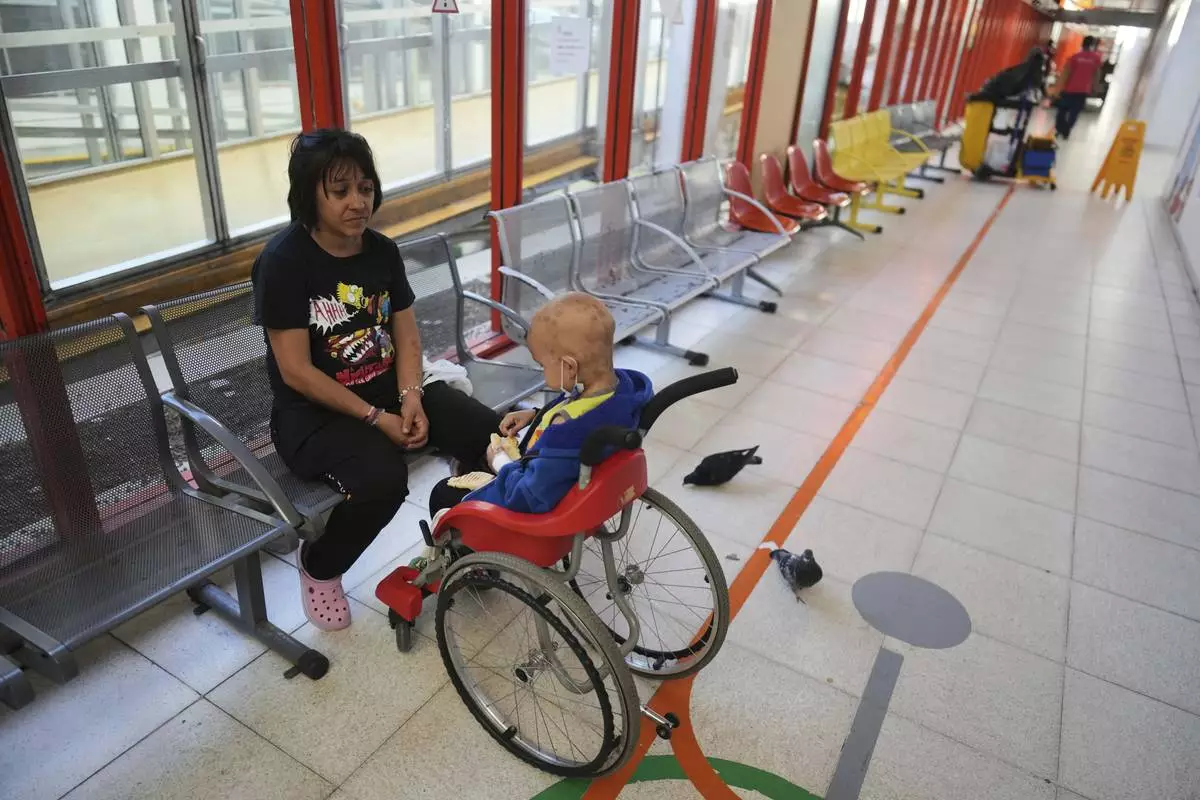
Lucia Ruiz Diaz sits next to her 5-year-old son Tomas, who has cancer, at a waiting room in the Garrahan Hospital in Buenos Aires, Argentina, Tuesday, April 29, 2025. Cancer patients say they’ve grown sicker since Argentina’s libertarian President Javier Milei took his chainsaw to the public health system. (AP Photo/Natacha Pisarenko)
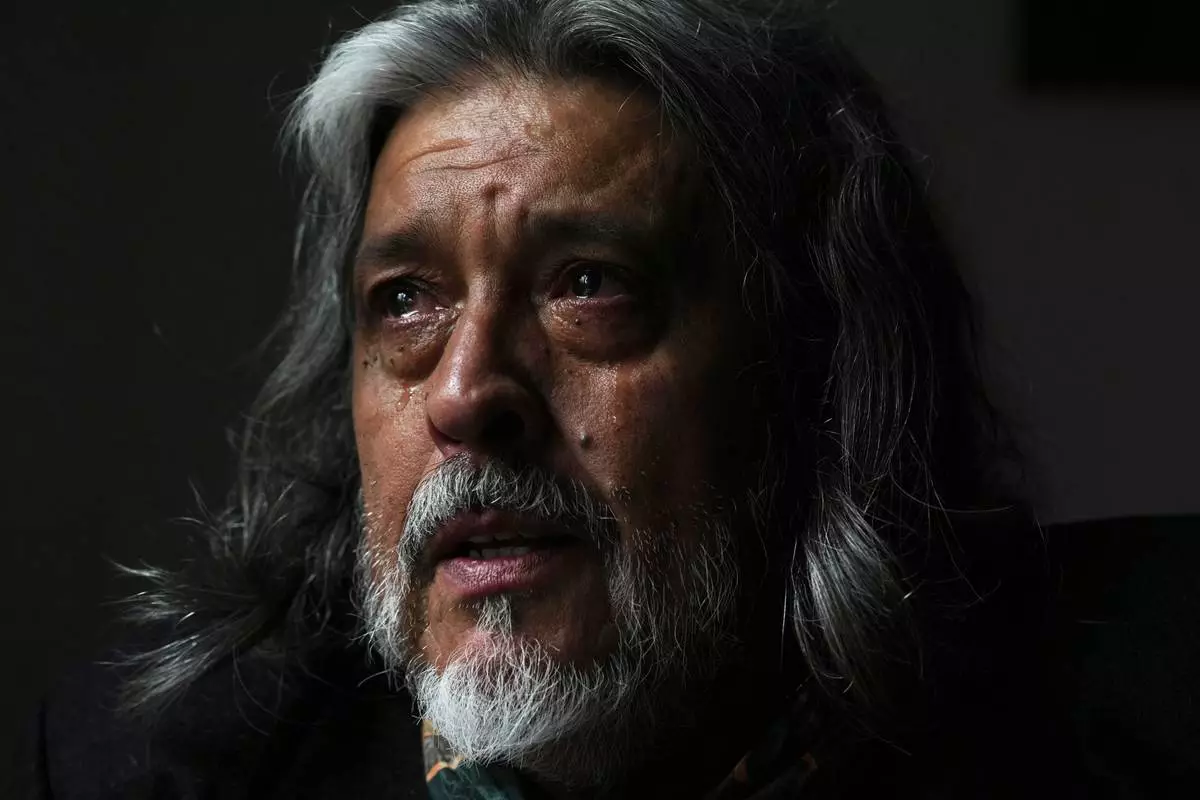
Eduardo Castano sheds tears while thinking about his wife Marité, who died in 2024, unable to secure drugs that had been covered by the federal agency DADSE, which President Javier Milei dissolved, in Buenos Aires, Argentina, Wednesday, April 16, 2025. (AP Photo/Natacha Pisarenko)
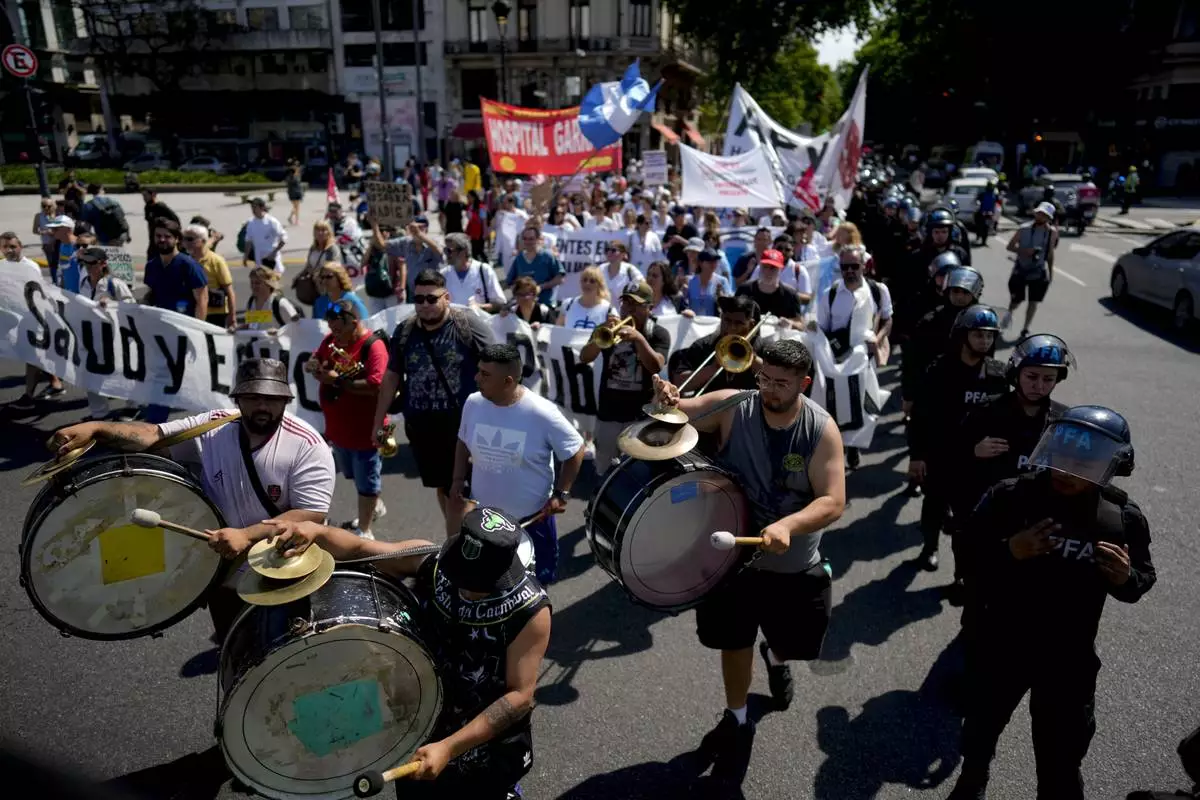
FILE- Public health workers protest against President Javier Milei's austerity measures that affect public health funding, in Buenos Aires, Argentina, Oct. 22, 2024. (AP Photo/Natacha Pisarenko, File)
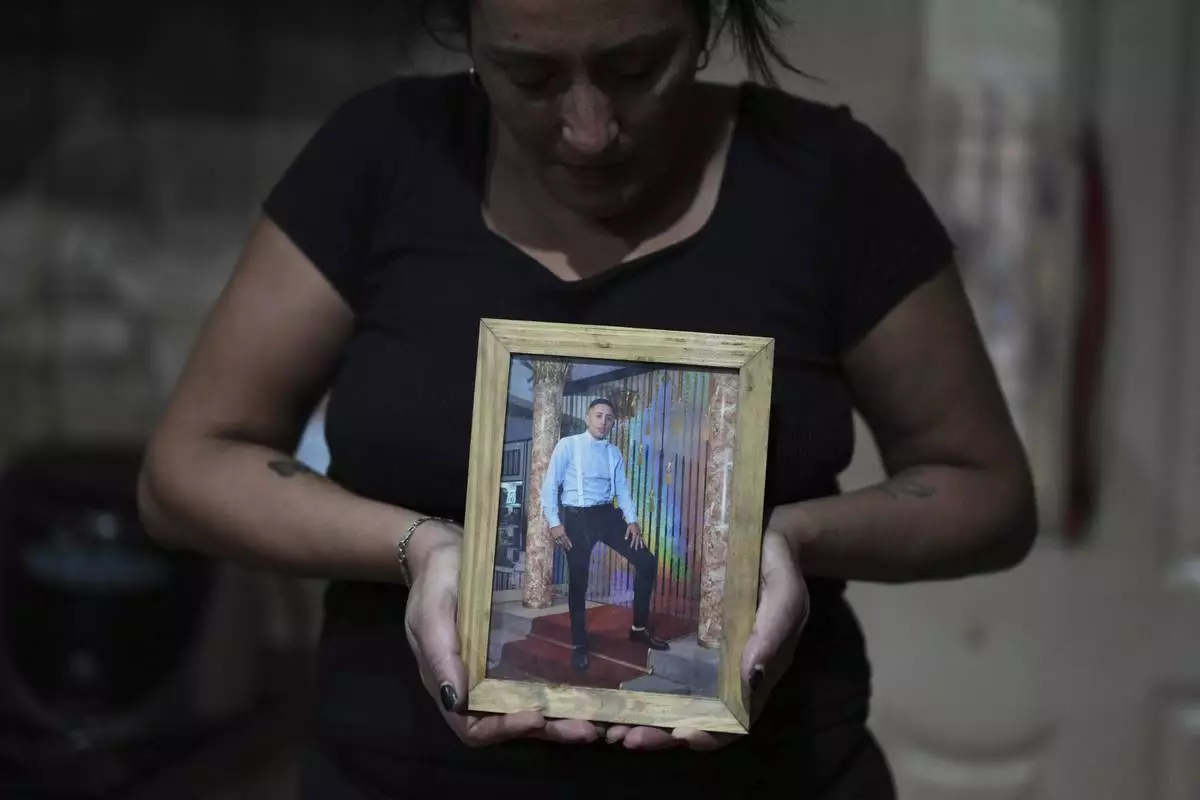
Claudia Caballero poses with a photo of her late son Alexis Almiron, a cancer patient who tried to get medication that had been covered by federal agency DADSE, but which President Javier Milei dissolved, in the outskirts of Buenos Aires, Argentina, Monday, May 5, 2025. (AP Photo/Natacha Pisarenko)
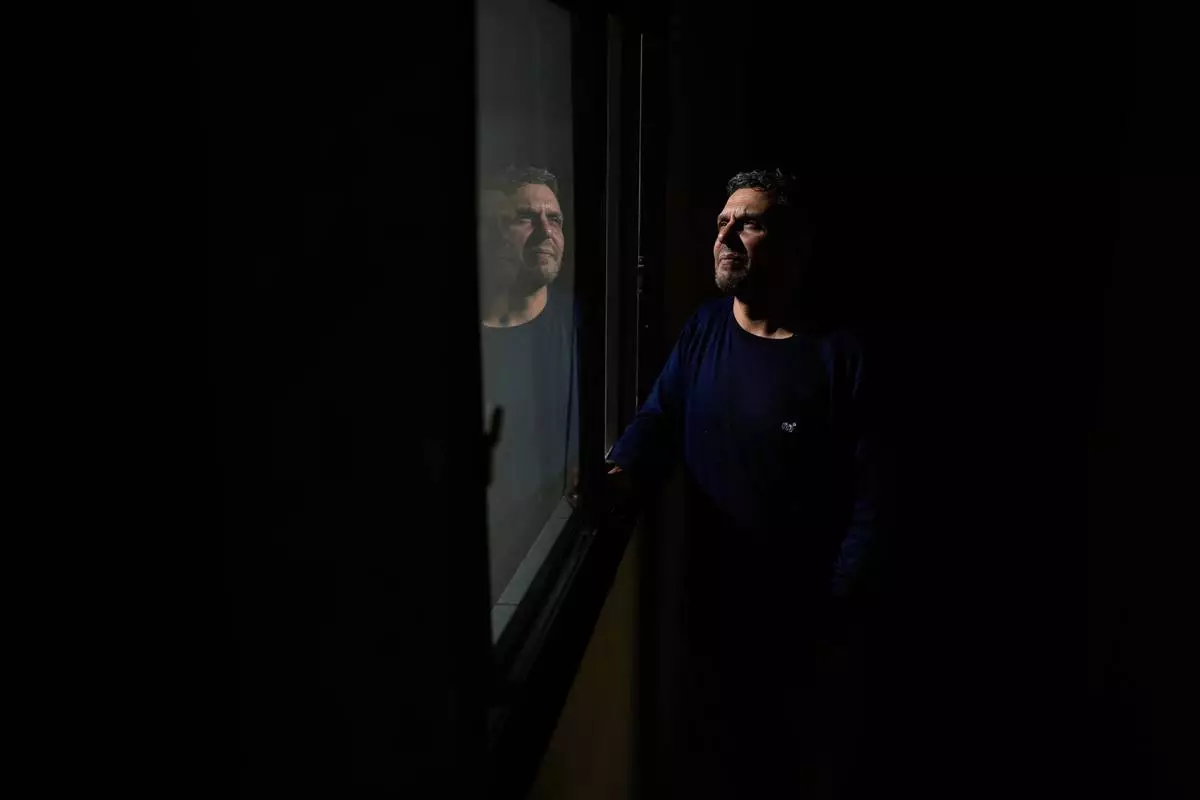
Ariel Wagener, a 47-year-old pizza chef with leukemia who was hospitalized this year with failing kidneys after losing access to his medication, poses for a photo in Buenos Aires, Argentina, Wednesday, April 30, 2025. (AP Photo/Natacha Pisarenko)
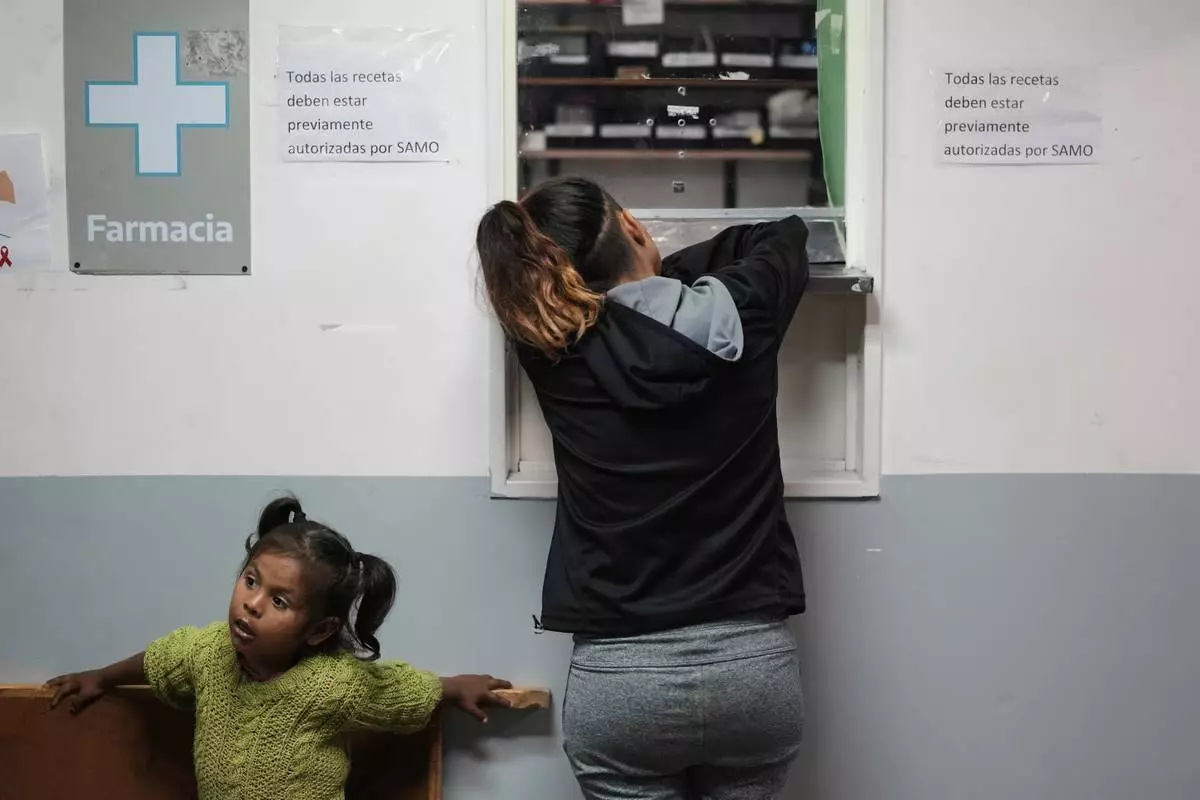
A woman leans on a counter while waiting to receive free medicine at the Rodolfo Rossi Hospital in La Plata, Argentina, Thursday, May 8, 2025. According to experts, government workers and advocates, President Javier Milei's cutbacks have overwhelmed the nation’s public hospitals, upended vaccination efforts and taken a toll on the country’s poor and unemployed. (AP Photo/Natacha Pisarenko)