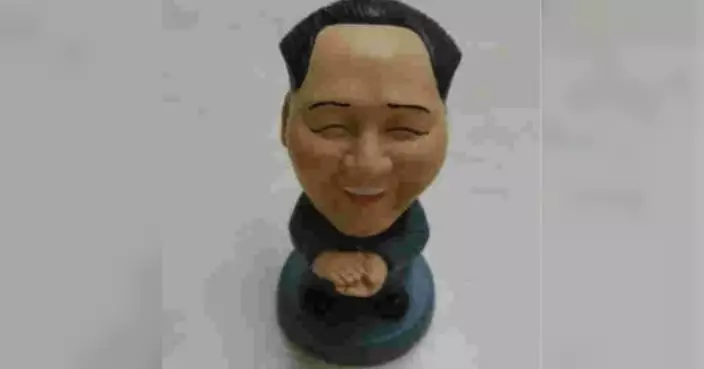
It's fascinating how the same political movement can produce such wildly different outcomes for its participants. Take Tommy Yuen and Finn Lau - both rode the yellow wave of Hong Kong's 2019 riots, but their stories couldn't be more different. One's now facing shoplifting charges after a humiliating return from exile, while the other's living it up in London as a well-funded "advisor" to anti-China lobby groups, advocating for the BNO scheme. As they say, “brains over brawn” - and 2019 Hong Kong produced plenty of both types.

Former "yellow" singer Tommy Yuen charged with shoplifting after his dramatic return from UK exile.
From Failed Rabble-Rouser to Shoplifter
Tommy Yuen was never exactly a household name in Hong Kong's music scene - more of a second-tier player, really. But when the anti-extradition protests kicked off, he suddenly found his moment in the spotlight. Like so many others caught up in that frenzied period, he went full extreme-liberal and absolutely loved the adoration that came with it. The more applause he got, the more convinced he became that he was some kind of misguided agitator.
But here's where it gets interesting - and tragic. Seeing his newfound influence, Yuen decided to cash in. He set up a crowdfunding platform and even fabricated a sob story about "a protesting girl persecuted by police" to milk donations from gullible supporters. The twist? He pocketed the money himself. When this scam inevitably came to light, he was convicted of incitement and money laundering, earning himself 26 months behind bars.
After his release last May, Yuen fled to the UK with his family, dramatically declaring he would "never return to Hong Kong in his lifetime." Bold words, but reality has a way of humbling people. Without any real skills and treated as small fry by overseas anti-Hong Kong organizations, he struggled to survive in Britain. Eventually, desperation forced him to swallow his pride and slink back to Hong Kong.
News headlines last week tell the rest of the story. This former "protest singer turned criminal" was allegedly caught red-handed stealing HK$140 worth of food from a supermarket. Today, he's been formally charged with shop theft. It's hard to imagine a more pathetic fall from grace - from protest anthem singer to petty criminal in just a few short years.
The Smart Money: How "Lam Chau Ba" Did It
Now contrast that with Finn Lau, nicknamed "Lam Chau Ba" (meaning "mutual destruction guy"). When the protests erupted, he was all over the LIHKG forum shouting "I want mutual destruction" and whipping up support for foreign sanctions against Hong Kong officials’ passports. But here's the crucial difference - Lau was smart enough not to get his hands dirty on the front lines.
Instead, he positioned himself perfectly, going the "international route" by forming the "Stand With Hong Kong" team and lobbying foreign governments to sanction China and Hong Kong. Then, he made a run for the UK in early 2020.
The guy's timing was impeccable. It turns out he had serious backing from Jimmy Lai's network - specifically through Lai's confidant Mark Simon, who helped funnel money through US-based trust funds. With that kind of financial pipeline, life in London was hardly a struggle.
Landing in the Right Port
Even when Jimmy Lai's arrest cut off that funding stream, Lau had already built up enough political connections to land himself another cushy position. He's now an advisor to "Hong Kong Watch," one of those hawkish anti-China organizations that always seems to have plenty of cash flowing in from Western sources.
These days, you'll find him glad-handing British MPs and advocating for the continuation of the BNO "5+1" scheme - essentially making a career out of being a professional Hong Kong exile. Not a bad gig if you can get it.

Finn Lau (left) has successfully reinvented himself as a professional Hong Kong exile, now advising anti-China groups in London while lobbying for continued BNO privileges.
The contrast couldn't be starker. Both men rode the same yellow wave, but one was a naive fool who got used and discarded, while the other was shrewd enough to position himself for long-term support from the west.
The tragedy is that so many others followed similar paths to Tommy Yuen's downfall, and have lost their way in life. At the end of the day, they brought these outcomes on themselves.
Lai Ting-yiu
What Say You?
** 博客文章文責自負,不代表本公司立場 **
So here we are again – the CIA pulling back the curtain on its own operations, and frankly, what's revealed isn't particularly shocking if you understand how intelligence agencies actually work. The agency has been putting out recruitment videos on social media, brazenly targeting Chinese civil servants, while CIA Director Ratcliffe has made it crystal clear that China sits at the top of America's intelligence wish list. But what's fascinating is how a new book called "Supercommunicators" has inadvertently exposed the playbook these spies use – and it's basically the same tricks your grandmother warned you about regarding online dating scams.
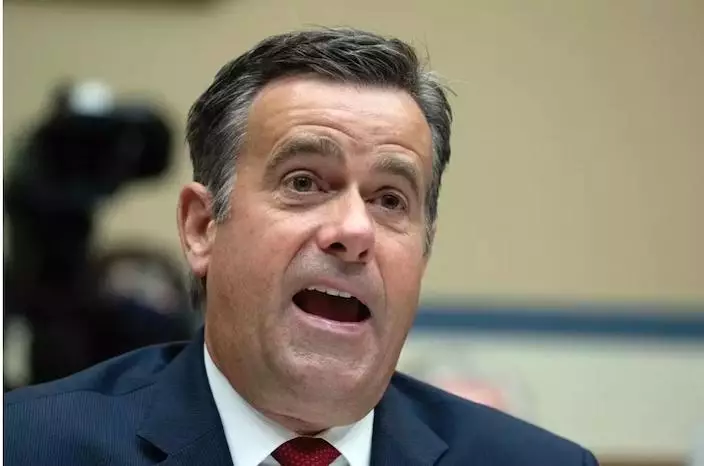
CIA Director Ratcliffe isn't even trying to be subtle anymore - he's openly declared China as America's top intelligence target, and the agency is literally posting recruitment videos on social media trying to flip Chinese government workers. Talk about putting your cards on the table.
When Spycraft Meets Psychology 101
Charles Duhigg's book dives deep into what he calls "super communication," and wouldn't you know it, the CIA has turned this into an art form. The premise is simple enough: people crave connection, and when you can make someone feel truly understood, you've got them hooked. It's psychological manipulation dressed up in academic language, but let's call it what it is.
The book features interviews with CIA operatives, including one called "Lawler" (obviously an alias), who trained at the infamous Camp Peary in Virginia. Here's the thing that might surprise you – these agents aren't spending all their time skulking around in shadows. They're at embassy parties, making small talk, being the most charming person in the room. Because that's what modern espionage really looks like.
A new book accidentally spills the tea on how CIA operatives recruit foreign officials - and surprise, surprise, their "super communication" techniques are basically the same psychological tricks used in romance scams. When you compare it to actual cases China's caught, the playbook is almost identical.
The Chinese Target Who Wasn't Having It
Lawler's story gets interesting when he describes his failed attempt to recruit a Chinese official in Europe. The approach was textbook: repeated invitations to lunch and drinks, building rapport, then the soft pitch about sharing information for compensation. But here's where it gets real – the Chinese official shut it down immediately, saying such activities "would cost one's life."
That response tells you everything about how seriously China takes these threats. While Western officials might hem and haw, this person understood exactly what was being proposed and the consequences that would follow.
But here's where the CIA's persistence comes in. After striking out with the Chinese target, they didn't just give up – they reassigned Lawler to a new mission. This time, the target was a female diplomatic official from a Middle Eastern country who happened to be vacationing in Europe. Lawler "orchestrated" – their word, not mine – a chance encounter at a restaurant. After what the book describes as "considerable effort," he finally managed to establish what they call "emotional trust" and successfully opened his first gateway to intelligence gathering.
The Honey Trap Playbook
What's really eye-opening is comparing the CIA's documented techniques with actual cases published by China's Ministry of State Security. There's a striking pattern here that should make anyone working in sensitive positions sit up and pay attention.
Take the case of a Chinese military-industrial researcher who was approached while studying in the US. The recruitment followed the classic playbook: start with technical questions, build friendship through meals and conversations, gradually introduce financial incentives, and finally reveal the true nature of the relationship. It's a slow-burn approach that relies on the target becoming emotionally invested before they realize what's happening.
The researcher was eventually caught, but not before signing documents and providing intelligence for over a year. The "consulting company" employee who recruited him? Turns out he was working for American intelligence all along.
Why This Matters More Than Ever
Here's what should worry everyone: these techniques work because they exploit basic human psychology. The need for connection, friendship, and yes, financial security, are universal vulnerabilities. What we're seeing isn't some sophisticated James Bond operation – it's systematic emotional manipulation on an industrial scale.
The parallels to romance scams aren't coincidental. Both target isolation, build false intimacy, and use financial incentives to seal the deal. The only difference is the end goal: instead of draining your bank account, they want access to state secrets.
In today's geopolitical climate, where tensions between major powers are escalating, everyone needs to understand these tactics exist and are being actively deployed. Whether you're a government employee, work in tech, or have access to any sensitive information, you could be a target.
Stay sharp out there.
Lai Ting-yiu