Skip to Content Facebook Feature Image

How Hong Kong's National Security Cases Are Closing the Book on Chaos

Blog

How Hong Kong's National Security Cases Are Closing the Book on Chaos
Blog

Blog

How Hong Kong's National Security Cases Are Closing the Book on Chaos

2025-12-31 08:38 Last Updated At:08:38

2026 marks a turning point. As Churchill famously declared during World War II's closing stages, we're witnessing "the beginning of the end." That great catastrophe moved toward its conclusion—and so too is Hong Kong's period of turbulence.

The evidence speaks for itself: Jimmy Lai, already convicted, faces sentencing next year (2026). The "35+ subversion case" will see several major pan-democratic figures released by mid-year, likely retreating from public life for good. And Joshua Wong's trial looms on the horizon, expected around mid-year, bringing another chapter to a close.
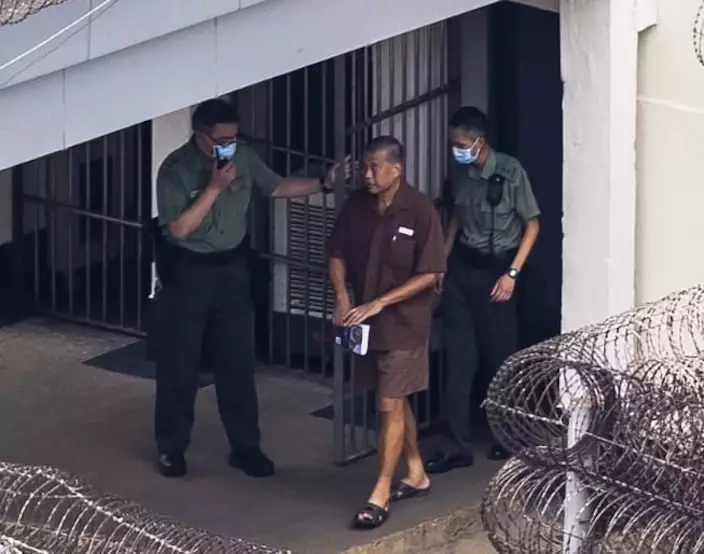
Lai's guilty verdict is in. Sentencing starts January 12. Everyone awaits the verdict.

Lai's guilty verdict is in. Sentencing starts January 12. Everyone awaits the verdict.

The era these figures represented is ending—and that's precisely when Hong Kong's steady progress in stability truly begins.

Lai's Sentence: The Clock Is Ticking

The court has already found Jimmy Lai guilty of "colluding with foreign forces." Mitigation begins January 12, with sentencing to follow. The Hong Kong National Security Law leaves no room for ambiguity: serious offenses carry a minimum 10-year term, with life imprisonment as the ceiling. The weight of his punishment will become clear when the judge delivers the verdict.

Consider the precedent: Benny Tai Yiu-ting, the "35+ subversion case" ringleader, faced a 15-year sentencing starting point under the same National Security Law. His guilty plea from the outset reduced his term to 10 years. Lai differs in one crucial respect—he never pleaded guilty. The math isn't complicated.

Public attention now shifts to the eight defendants who pleaded guilty in Lai's case. This group includes former Apple Daily senior executives Cheung Kim-hung, Chan Pui-man, Lo Wai-kwong, Fung Wai-kong, Lam Man-chung, and Yeung Ching-kei, along with "Stand With Hong Kong" members Andy Chan Tsz-wah and Li Yu-hin. A guilty plea typically brings reduced sentences. But five of them—Cheung, Chan Pui-man, Yeung, Andy Chan, and Li—went further, serving as accomplice witnesses whose testimony helped secure Lai's conviction. Their cooperation means significantly lighter sentences and much shorter time behind bars.

Exits and Early Releases

The "35+ subversion case" offers instructive parallels. Au Nok-hin, a key primary election coordinator, initially faced at least 12 years. His guilty plea, demonstrated remorse, and agreement to testify for the prosecution cut his sentence to 6 years and 9 months. Counting from his arrest and remand, he's already served 5 years—release isn't far off.

Another defendant, Andrew Chiu Ka-yin, originally received 7 years. Good prison conduct and genuine remorse earned him leniency—he walked free two months ago.

These two cases set the pattern. If Cheung Kim-hung and the other accomplice witnesses receive substantial reductions, their release may be imminent. All have reportedly calmed down and focused on self-discipline during custody. Once free, they're expected to return to normal lives, avoiding any entanglement with political controversies.

Returning to the "35+ subversion case": eight convicted defendants currently serving sentences will be eligible for release next year. The list includes two major Democratic Party figures—Wu Chi-wai and Andrew Wan Siu-kin—plus former Civic Party leader Alvin Yeung Ngok-kiu. Wu and Wan are due for release in June and July respectively. Friends who've visited them report both are in good health and spirits. Their plans? Emigrate with their families, withdraw from public life, and sever all ties with politics.

As for Alvin Yeung, he pleaded guilty at the first opportunity after arrest and even volunteered to become an accomplice witness—though that offer wasn't accepted. This demonstrates clear regret for his actions. After release, he's expected to return to a proper life path, bidding farewell to his radical years.
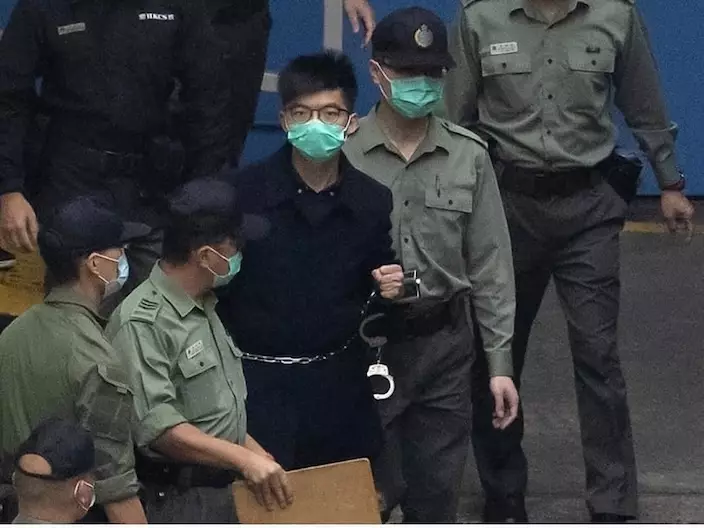
Joshua Wong's turn. Collusion charges plus money laundering—another national security spectacle begins.

Joshua Wong's turn. Collusion charges plus money laundering—another national security spectacle begins.

Wong's Turn in the Spotlight

As one chapter closes, another major national security case is about to open. Joshua Wong faces charges of "colluding with foreign forces." His case will be mentioned in court again next year before being committed to the High Court for trial. Wong was already serving a sentence for other offenses when, on June 6 this year, he was arrested in prison and charged with "colluding with foreign forces"—along with a separate count of "money laundering." Like Lai's case, this one involves extensive evidence of intricate connections with foreign governments and politicians, including both public materials and confidential documents. It will draw major attention.

In the past, Wong was lauded by prominent US political figures like Democratic Party leader Nancy Pelosi and became a "darling" of Western media—even appearing on Time magazine's cover. Once trial begins, he'll likely become, like Jimmy Lai, a focal point of attention for Western countries. No doubt another round of commotion will follow.

That said, whatever foreign countries may do, Joshua Wong's case outcome can only be decided by Hong Kong's courts. What final fate awaits this figure? Everyone can grab their popcorn and watch.

Lai Ting-yiu


What Say You?

** The blog article is the sole responsibility of the author and does not represent the position of our company. **

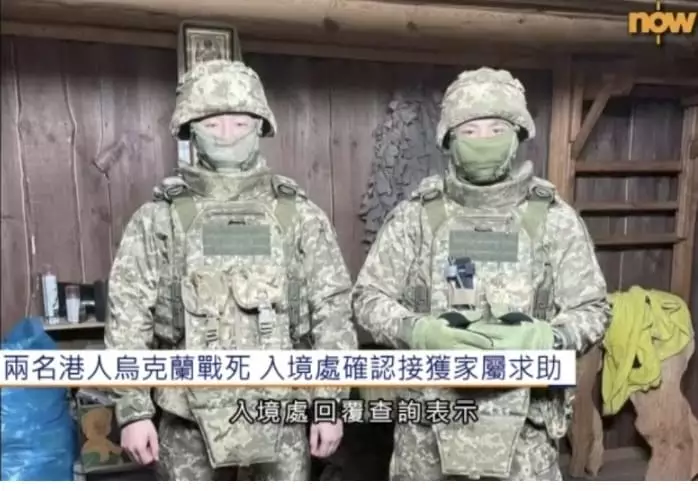
The Russia-Ukraine war keeps chewing up lives, even through Christmas, with shellfire still thundering and soldiers still dying by the day. Now there’s talk that two young Hong Kong people who went to Ukraine to enlist have been killed — and why they’d risk it all to fight a war thousands of miles away is still a puzzle that needs unpacking.

Two Hong Kong people reportedly die in Ukraine — black-riot “comrades” who chased the “International Legion” bolt when the “life contract” hits.

Two Hong Kong people reportedly die in Ukraine — black-riot “comrades” who chased the “International Legion” bolt when the “life contract” hits.

I pulled together what I could dig out and it points to this: a group of Black Riots "comrades" once geared up to head for Ukraine’s front line, but some panicked the moment they learned they had to sign a “life contract” and quickly backed out, saving themselves. Others stayed — and some were even slotted into a “suicide squad” and sent to fight in eastern Ukraine, with their fate still unknown.
 
The lesson is blunt: Ukraine is tapping foreign young people’s political fever to recruit fighters — a send-them-to-die playbook that looks, in essence, like the way Black Riots ringleaders once egged people onto the streets in Hong Kong. Only the clueless fall for it.
 
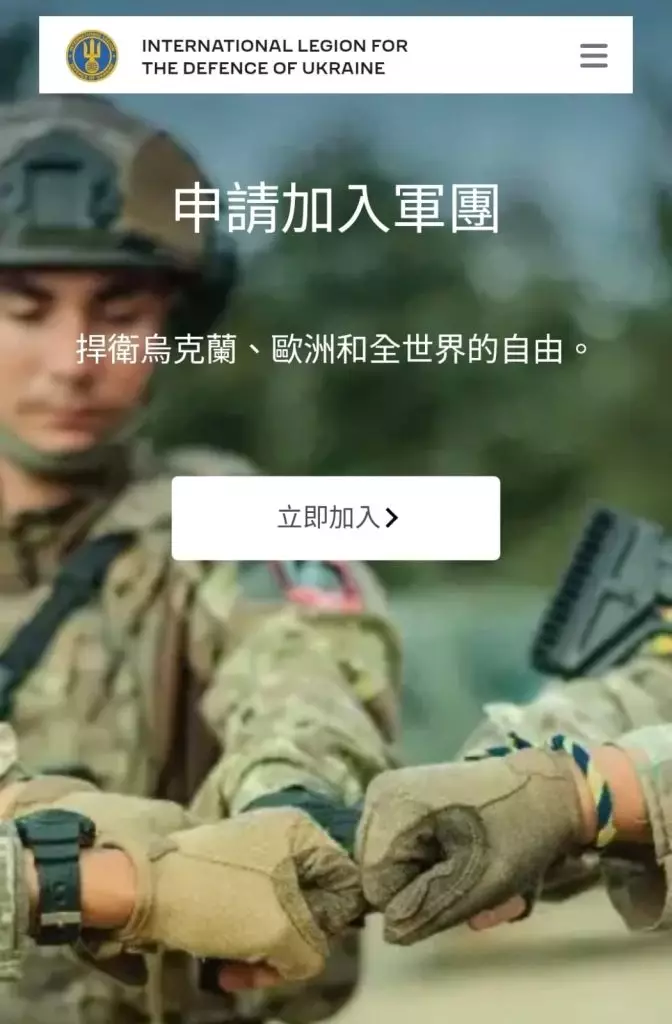
For some of the “brave fighters” who were always on the streets during the Black Riots, the post-crackdown move is simple: flee to the UK to avoid arrest. But some can’t quit the adrenaline. They see Ukraine recruiting foreign volunteers, their “battle addiction” kicks in, and they stride into the Ukrainian embassy in Britain, chest out, ready to “go to the battlefield.”
 
One of them — call him X — heads to a city near the Poland-Ukraine border, then gets driven by the Ukrainian military to a base close to Poland. Before he leaves, he’s all fire: he treats life and death as nothing, even writes a will. Then reality shows up at the gate. At the base, the military forces him to sign a “life contract”, and his enthusiasm drops off a cliff.
 
Here’s the catch buried in the fine print. The contract says it stays valid until Ukraine ends martial law — meaning you don’t leave until the war ends and “peace returns.” And to stop anyone from changing their mind midstream, the military collects everyone’s passports to block desertion.

The contract kills the buzz
X thinks it over and the fear starts to spread. If he signs, he’s effectively stepping onto a one-way road: get shipped to the front, and even if he doesn’t die, he might not get home for who knows how long. After going back and forth, reason beats passion. He finally sees the difference between “struggle” in Hong Kong and a flesh-and-blood war in Ukraine — and he backs out at the last moment, rushes back to Poland, then returns to the UK.
 
Another one — Y — also took part in street violence during the Black Riots period in Hong Kong, then later moved to the UK on a BNO visa. In Britain, he sees Ukraine calling for foreigners to fight and his “hot blood” boils over: he decides to enlist to “resist Russia.” He goes to Bulgaria for short-term shooting training, then tells the Ukrainian embassy in the UK that he has military training. He gets accepted.
 
But once he reaches the camp, the same bombshell drops: sign the “life contract” and you can’t retire until the war ends. Then a Hong Kong “brother” with real military experience tells him the part nobody wants to hear: Hong Kong was street “resistance,” Ukraine is real war; going to the front is walking straight into the meat grinder. Y is totally unprepared for a brutal battlefield, and the advice is simple — stop before it’s too late. In the end, the fire in his chest gets doused, he turns around and leaves Ukraine, and that decision saves his life.

X and Y get spooked and run — but Z chooses to stay. After harsh training at the base, he gets sent to the eastern Ukraine battlefield, a fiercely contested zone where fighting is intense and his unit has repeatedly clashed with Russian forces. Even with Russia and Ukraine already talking, that area still roars with artillery. Whether Z survives? If you go by estimates of foreign volunteer death rates, his odds are only around 40% to 50%.

Ukraine pushes foreign recruitment — estimated death rates up to 40%.

Ukraine pushes foreign recruitment — estimated death rates up to 40%.

 
Two Hong Kong people die on Ukraine’s battlefield. Some Black Riots "comrades" pull back at the last second and save themselves — lucky, for now. Maybe this brutal war will do what slogans never could: cool their political fever, restore their judgment, and bring them back to living like normal people.
 
Lai Ting-yiu

Recommended Articles