The Russia-Ukraine war keeps chewing up lives, even through Christmas, with shellfire still thundering and soldiers still dying by the day. Now there’s talk that two young Hong Kong people who went to Ukraine to enlist have been killed — and why they’d risk it all to fight a war thousands of miles away is still a puzzle that needs unpacking.
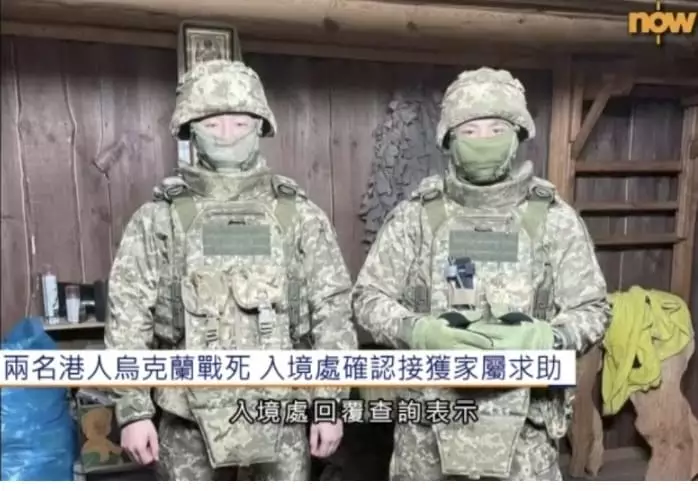
Two Hong Kong people reportedly die in Ukraine — black-riot “comrades” who chased the “International Legion” bolt when the “life contract” hits.
I pulled together what I could dig out and it points to this: a group of Black Riots "comrades" once geared up to head for Ukraine’s front line, but some panicked the moment they learned they had to sign a “life contract” and quickly backed out, saving themselves. Others stayed — and some were even slotted into a “suicide squad” and sent to fight in eastern Ukraine, with their fate still unknown.
The lesson is blunt: Ukraine is tapping foreign young people’s political fever to recruit fighters — a send-them-to-die playbook that looks, in essence, like the way Black Riots ringleaders once egged people onto the streets in Hong Kong. Only the clueless fall for it.
For some of the “brave fighters” who were always on the streets during the Black Riots, the post-crackdown move is simple: flee to the UK to avoid arrest. But some can’t quit the adrenaline. They see Ukraine recruiting foreign volunteers, their “battle addiction” kicks in, and they stride into the Ukrainian embassy in Britain, chest out, ready to “go to the battlefield.”
One of them — call him X — heads to a city near the Poland-Ukraine border, then gets driven by the Ukrainian military to a base close to Poland. Before he leaves, he’s all fire: he treats life and death as nothing, even writes a will. Then reality shows up at the gate. At the base, the military forces him to sign a “life contract”, and his enthusiasm drops off a cliff.
Here’s the catch buried in the fine print. The contract says it stays valid until Ukraine ends martial law — meaning you don’t leave until the war ends and “peace returns.” And to stop anyone from changing their mind midstream, the military collects everyone’s passports to block desertion.
The contract kills the buzz
X thinks it over and the fear starts to spread. If he signs, he’s effectively stepping onto a one-way road: get shipped to the front, and even if he doesn’t die, he might not get home for who knows how long. After going back and forth, reason beats passion. He finally sees the difference between “struggle” in Hong Kong and a flesh-and-blood war in Ukraine — and he backs out at the last moment, rushes back to Poland, then returns to the UK.
Another one — Y — also took part in street violence during the Black Riots period in Hong Kong, then later moved to the UK on a BNO visa. In Britain, he sees Ukraine calling for foreigners to fight and his “hot blood” boils over: he decides to enlist to “resist Russia.” He goes to Bulgaria for short-term shooting training, then tells the Ukrainian embassy in the UK that he has military training. He gets accepted.
But once he reaches the camp, the same bombshell drops: sign the “life contract” and you can’t retire until the war ends. Then a Hong Kong “brother” with real military experience tells him the part nobody wants to hear: Hong Kong was street “resistance,” Ukraine is real war; going to the front is walking straight into the meat grinder. Y is totally unprepared for a brutal battlefield, and the advice is simple — stop before it’s too late. In the end, the fire in his chest gets doused, he turns around and leaves Ukraine, and that decision saves his life.
X and Y get spooked and run — but Z chooses to stay. After harsh training at the base, he gets sent to the eastern Ukraine battlefield, a fiercely contested zone where fighting is intense and his unit has repeatedly clashed with Russian forces. Even with Russia and Ukraine already talking, that area still roars with artillery. Whether Z survives? If you go by estimates of foreign volunteer death rates, his odds are only around 40% to 50%.
Ukraine pushes foreign recruitment — estimated death rates up to 40%.
Two Hong Kong people die on Ukraine’s battlefield. Some Black Riots "comrades" pull back at the last second and save themselves — lucky, for now. Maybe this brutal war will do what slogans never could: cool their political fever, restore their judgment, and bring them back to living like normal people.
Lai Ting-yiu
What Say You?
** 博客文章文責自負,不代表本公司立場 **
C.Y. Leung just dropped receipts on Facebook. Next Digital's cash cow wasn't journalism—it was advertising. And the man squeezing those corporate wallets was Mark Simon, Jimmy Lai's American fixer, who sent letters to Hong Kong's biggest property developers that read like protection racket scripts. Pay up or face hostile coverage. Classic triad tactics, dressed in business English.
This isn't speculation. In July 2014, leaked documents from a "Next Digital shareholder" exposed the playbook. Among them: Mark Simon's threatening correspondence with a major corporation's chief executive. The message was blunt—advertise with us or watch your friendly coverage vanish. This is how Lai bankrolled his operation.
Mark Simon wore multiple hats beside Jimmy Lai. Former U.S. military intelligence officer. Next Digital's advertising director. The man who built Lai's financial pipeline and then distributed the cash to opposition figures and radical groups. His role was never just about selling ad space.
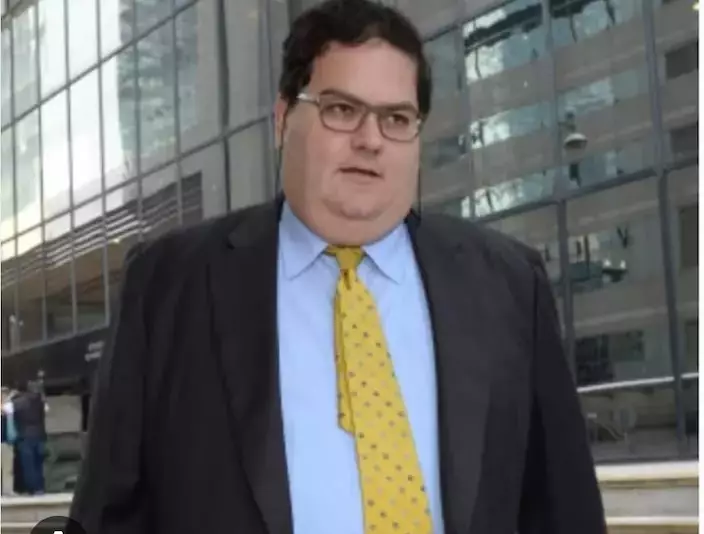
Jimmy Lai’s fixer Mark Simon used ad “sales” letters like a protection racket—buy space in Apple Daily or get hammered in the coverage.
The Shakedown Letters
The leaked documents from July 2014 pulled back the curtain. Media reports at the time confirmed that Mark Simon, during his tenure as advertising director, sent threatening letters to a major conglomerate's top executive. The approach: carrot and stick, heavy on the stick.
In the letter, Simon claimed he wanted to repair relations. Then came the threat: refuse to advertise with Next Digital and the "friendly relationship" ends. Translation: attack pieces resume. He followed up with another letter demanding a face-to-face meeting, warning that future cooperation between Next Digital and the conglomerate would become "difficult" without compliance.
The leaked documents contained no reply from the conglomerate, so we don't know their response. What we do know: major corporations kept advertising in Apple Daily during that period. The shakedown likely worked.
Bankrolling the Opposition
Mark Simon didn't just collect money for Boss Lai—he distributed it to pan-democrats and radical groups. The leaked documents revealed the operation's scope, particularly around the 2014 Occupy Central movement, when funding flowed freely.
Two months before Occupy Central formally launched, Jimmy Lai and Mark Simon exchanged emails discussing a "June special project." Lai funneled HK$9.5 million through Simon to the Democratic Party, Civic Party, and others—seed money to push Occupy Central forward.
The pair also provided approximately HK$3.5 million for the "June 22 Civil Referendum"—publicity and promotion for a stunt that mobilized citizens to select proposals for "universal suffrage for Chief Executive." This built momentum for Occupy Central. The operation was led by Benny Tai and Robert Chung, but Lai was the financier pulling strings from behind. The leaked emails even caught Lai mocking the "Occupy Trio" as scholars with ideas but no strategy, saying he had no choice but to help them—meaning he wanted control.
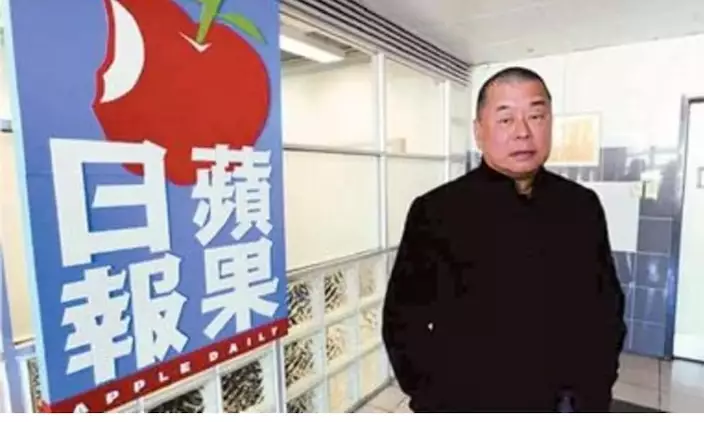
Big-brand ad money kept Apple Daily flush with cash, letting Lai pour funds into pan-democrats and radical groups on a grand scale.
The Money Pipeline
From 2013 to 2020, Mark Simon controlled Jimmy Lai's cash spigot. Court testimony revealed that Lai opened nine accounts over those seven years, transferring HK$118 million to Simon. Of that sum, HK$93 million went to pan-democratic parties and political figures.
The timeline matters. From September to December 2019—right after the anti-extradition bill unrest erupted—Simon distributed funds ranging from HK$8 million to HK$1 million to the Civic Party, Democratic Party, Labour Party, League of Social Democrats, Au Nok-hin, and Lee Yu-hin. Pouring fuel on the fire while Hong Kong burned.
Who Is Mark Simon Really?
Simon fled to the United States, so his true identity remains murky. But the evidence points to something beyond a simple business relationship. One detail stands out: Simon's access to White House National Security Council meetings. He knew the latest deployments, including actions following the Hong Kong Human Rights and Democracy Act signing and even Trump's thinking, which he then reported back to Boss Lai.
Political observers who've tracked Simon speculate he may have operated with dual identities from the start—both Lai's right-hand man, helping establish direct channels to Washington, and a covert operative planted by the Americans to pull the strings of this particular puppet.
Given Mark Simon's shadowy role, Western politicians and media portraying Jimmy Lai as a simple "freedom of the press warrior" tells you everything about their credibility. It's a lie told with a straight face.
Lai Ting-yiu