The China-South Asia Expo has become a vital platform for exhibitors to seek cooperation in emerging sectors such as artificial intelligence (AI) and present their latest innovations to visitors.
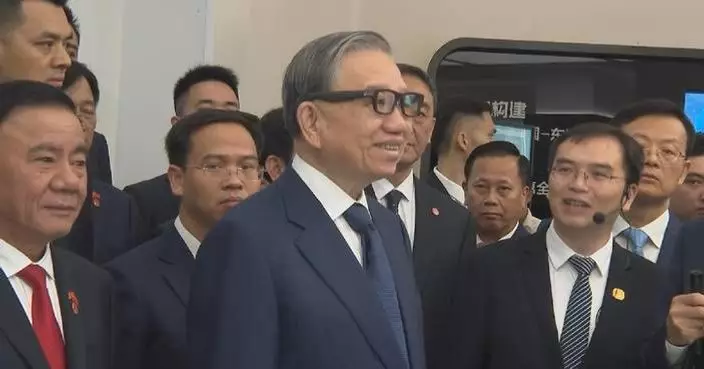
With the 9th China-South Asia Expo in full swing, more than 2,500 enterprises from over 70 countries, regions and international organizations have gathered in Kunming City of southwest China's Yunnan Province to explore economic opportunities under the theme "Solidarity and Coordination for Common Development."
The event is one of the most significant trade and investment platforms connecting China with its southern neighbors, featuring notable participation from South Asian countries.
The expanded South Asia pavilion is a central attraction, now showcasing nearly 800 booths. With India and Pakistan taking the largest share of space, visitors are drawn to intricate handmade crafts, a testament to the cultural and commercial ties being nurtured at the Expo.
But for Pakistan, the Expo represents far more than cultural exchange.
"This is a very important exhibition for not just China, but also for Pakistan as well. China is contributing a lot to Pakistan's continued high-quality development. And of course in AI, Pakistan's IT exports are also growing from strength to strength. So we are trying to leverage our strengths and cooperate with Chinese businesses who already excelled in this field. So I think these areas such as agriculture, electric vehicles, artificial intelligence, and IT sectors are some of the areas where we are focusing on," said Agha Hunain Abbas Khan, Deputy Consul General of the Consulate General of Pakistan in Chengdu.
The Expo has become increasingly international, with a 36 percent rise in participation from Fortune Global 500 companies and industry leaders compared to the previous edition. As attention shifts toward transformative industries, Pakistan is aligning itself with China in sectors critical for its economic growth.
Elsewhere at the event, Chinese firms are also unveiling their latest innovations in materials and technology. At the Yunnan exhibition area, the province's leading resource company is offering insight into next-generation industrial applications.
"Yunnan Tin Group is a global leader in both tin and indium production. The company mainly produces refined tin products. It holds around 10 percent of the world's tin reserves and 30 percent of global indium reserves. Tin and indium metals are widely used in fields such as electronics and communications, smart manufacturing, intelligent living, aerospace, and connected transportation. At the China-South Asia Expo, Yunnan Tin is showcasing the innovative journey of tin and indium, offering global audiences an immersive experience into the future of these critical materials," said Zhang Bojie of Yunnan Tin Group.
This year's event runs from June 19 to 24.
From smart manufacturing to sustainable energy and cross-border connectivity, this year's Expo reflects a shared vision of resilience and progress between China and South Asia.
With eyes set on innovation and long-term cooperation, the China-South Asia Expo is strengthening regional relationships while paving the way for joint development in the decades to come.
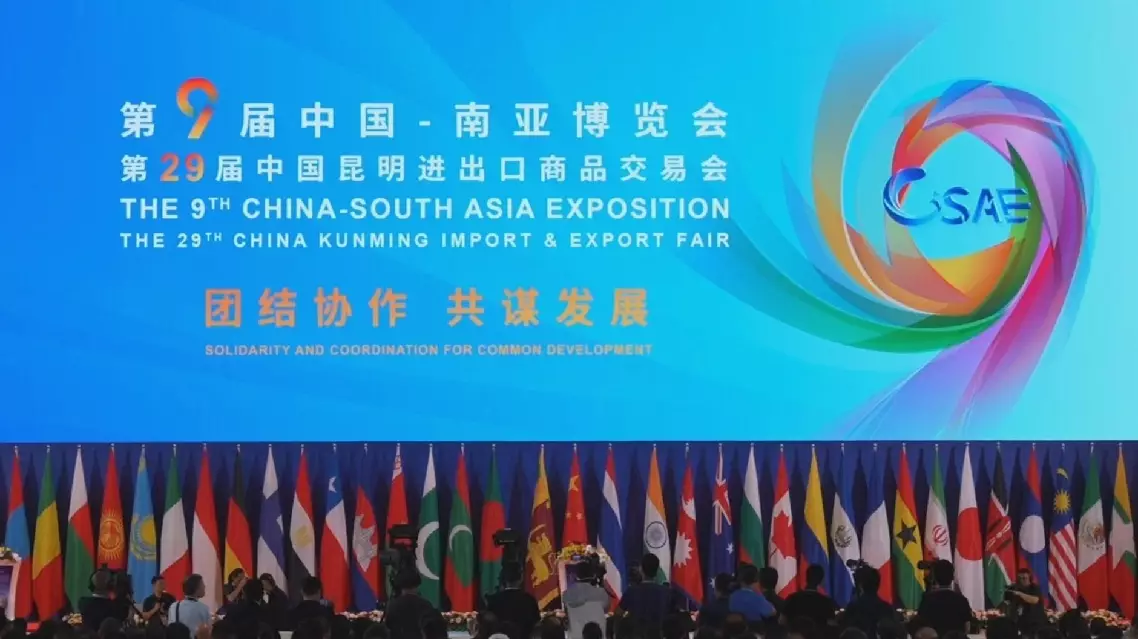
China-South Asia Expo helps exhibitors to seek cooperation in emerging sectors
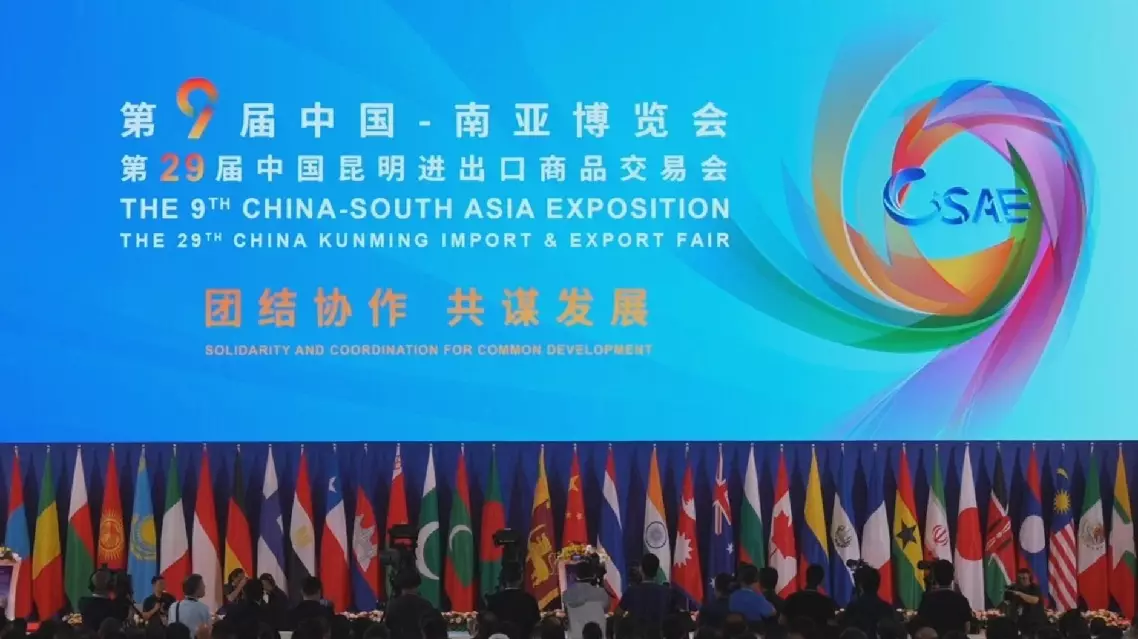
China-South Asia Expo helps exhibitors to seek cooperation in emerging sectors
U.S. President Donald Trump said on Friday that he estimates a deal with Iran will be signed "in the next day or two."
Trump said in an interview with Israel's Channel 12 News that the United States and Iran will probably meet over the weekend to finalize a deal to end the war. "The Iranians want to meet and make a deal," he said.
He said "the naval blockade on Iran is helping to make a deal. I will not lift it until we make a deal," adding that "the biggest part of this deal is that it will make Israel safer. This deal is good for Israel."
According to the channel, one component of the deal under discussion is that the United States will release 20 billion U.S. dollars in frozen Iranian funds.
In exchange, Iran would give up its stockpile of enriched uranium, and would be only allowed to have nuclear research reactors to produce medical isotopes, all above ground.
Trump also stressed that Israel must stop the strikes on Lebanon, saying, "They can't keep blowing up buildings. I'm not going to allow that."
Also on Friday, Trump said in a phone interview with Bloomberg that a deal to end the U.S.-Israeli war with Iran is mostly complete as talks over a lasting peace deal will "probably" be held this weekend in Pakistan.
Trump said in the phone interview that Iran agreed to suspend its nuclear program indefinitely, and will not receive any frozen funds from the United States.
"Most of the main points are finalized. It'll go pretty quickly," Trump said.
Asked if he would travel to Pakistan to sign the potential deal, Trump said: "I may."
Trump again denied that the moratorium on Iran's nuclear program would expire after 20 years. "No years, unlimited," Trump said.
The United States will get all of Iran's nuclear "dust" with no money having exchanged hands "in any way, shape, or form," Trump wrote on social media earlier on Friday. Multiple Western media outlets have interpreted Trump's reference to nuclear "dust" as meaning Iran's stockpile of enriched uranium.
Iran has yet to comment on any deal beyond the reopening of the Strait of Hormuz, nor on claims made by Trump that Tehran had offered concessions, including over the key issue of its nuclear program.
If the United States continues its naval blockade of the Strait of Hormuz, Iran will consider it a violation of the ceasefire between the two countries and will close the waterway, the semi-official Tasnim news agency reported Friday, citing an informed source close to the Supreme National Security Council.
The Iranian side has yet to respond to the media report on the enriched uranium issue.
The United States and Iran had their first round of negotiations in Pakistan's Islamabad last weekend to ease tension in the Middle East. The talks, which failed to produce an agreement, took place after a ceasefire was announced on April 8 between Iran, the United States, and Israel, following 40 days of fighting.
Iran tightened control over the Strait of Hormuz after the United States and Israel launched joint attacks on the country on Feb. 28. The United States also imposed a naval blockade on the strait following the failed negotiations in Islamabad.
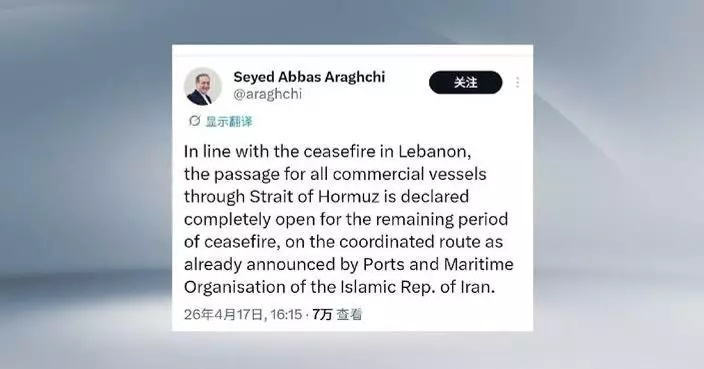
Earlier on Friday, both Washington and Tehran confirmed that the strait had been completely open for all commercial vessels. However, Trump said on Truth Social that the U.S. naval blockade would "remain in full force." In response, Iran warned of closing the waterway again if the U.S. blockade continues.
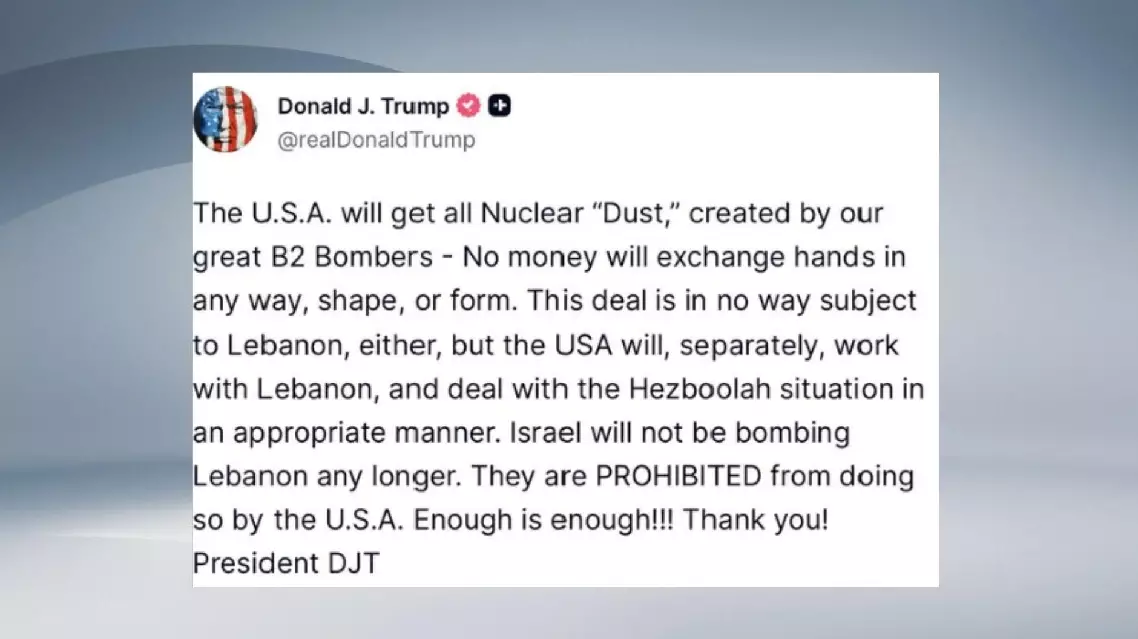
Trump says may sign deal with Iran "in the next day or two": Israeli media
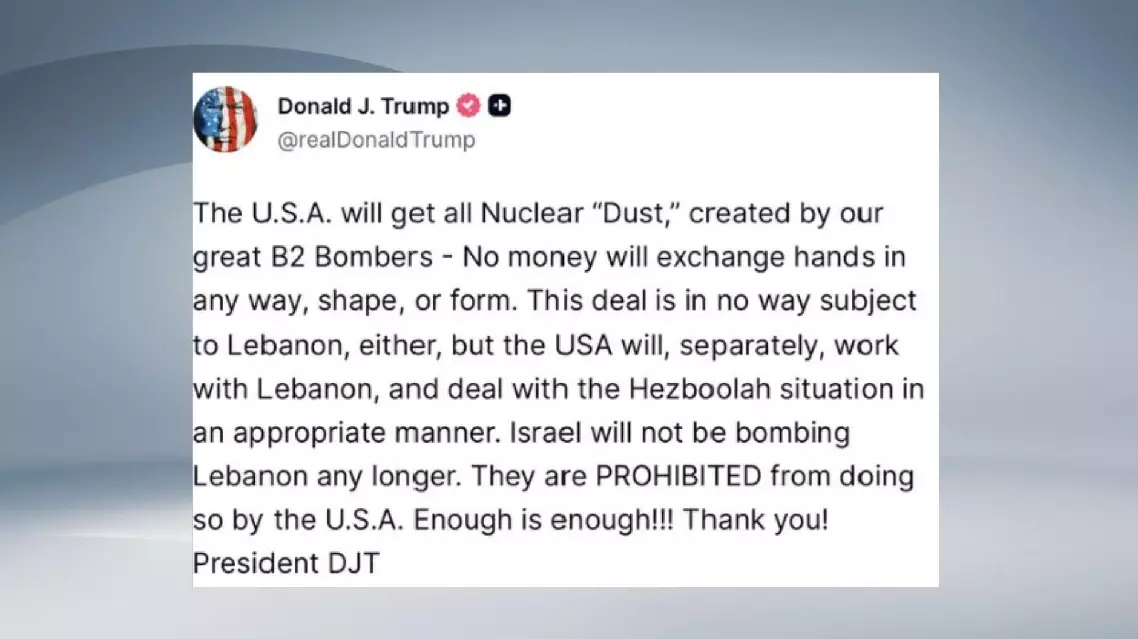
Trump claims peace deal with Iran mostly complete: report