The United States has no justification for attacking Iranian nuclear facilities which were all subject to close monitoring by the International Atomic Energy Agency (IAEA), Iran's envoy to the IAEA has said, as other analysts warn the Trump administration's move risks pushing the countries to the verge of war.
U.S. President Donald Trump said late on Saturday that the United States had completed attacks on three nuclear sites in Iran, in a military intervention that was praised by Israeli Prime Minister Benjamin Netanyahu but which has drawn wide condemnation.
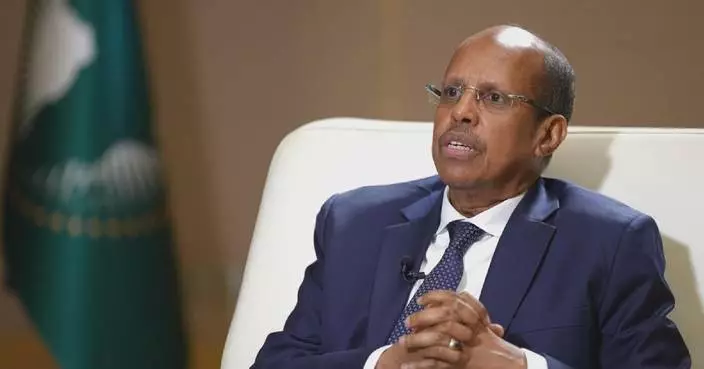
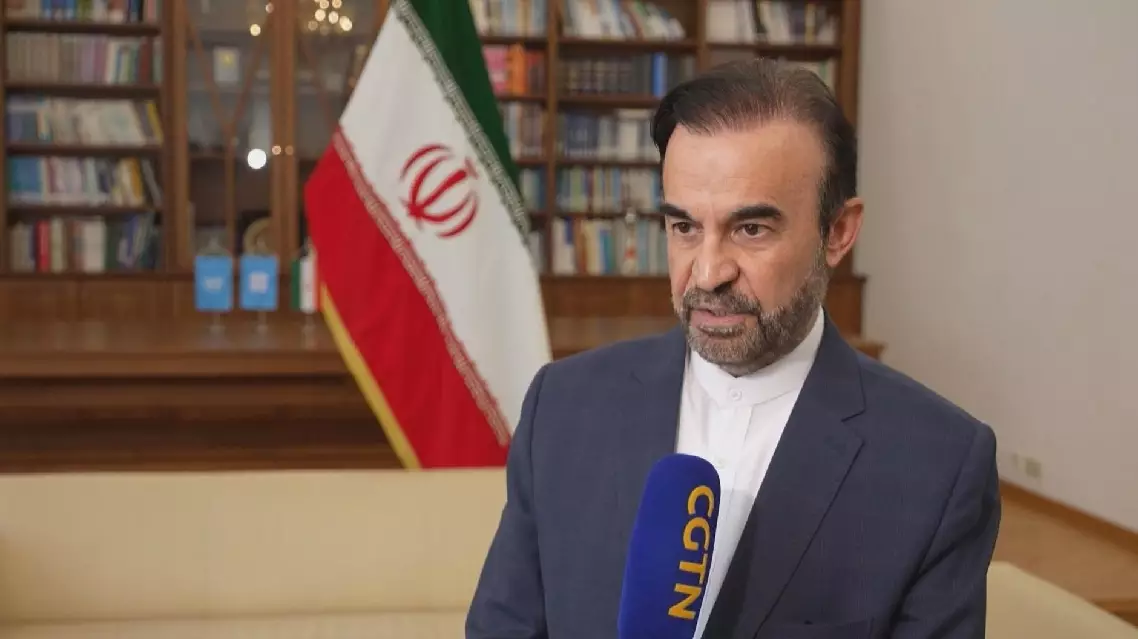
In an interview with the China Global Television Network (CGTN), Reza Najafi, Iran's permanent representative to the IAEA, denounced the U.S. attacks as an unjustified act, noting that the global atomic energy organization had already been closely supervising Iran's nuclear facilities.
"There is no justification for attacking facilities which have been under the most robust verification activities of the IAEA. And indeed the IAEA had the knowledge and information of these facilities, even to the extent that the agency knew very well even each gram of the uranium in these facilities and to what extent the material has been enriched, and each and every centrifuges in these facilities were under fully-scope safeguard of the IAEA. So telling [us] that the attack is to prevent something that is hidden or undeclared is a wrong statement," Najafi said.
The IAEA has called for a special meeting in Vienna on Monday to discuss the situation, with Najafi confirming Iran would participate in proceedings and would call for action to prevent more bombings.
Meanwhile, Jamal Abdi, president of the National Iranian American Council, warned that the U.S. strikes risk tipping the balance away from diplomacy towards the serious threat of a much wider war.
He said Iran's trust in the U.S. has now fully evaporated following the airstrikes, noting tensions were already strained after President Trump had already withdrawn the U.S. from the Joint Comprehensive Plan of Action (JCPOA), or the Iran nuclear deal, during his previous term in office.
"I think if we are not in war, then we are on the verge of war and I think we'll need to see how the Iranians will respond. I don't think the Donald Trump administration has a strategy in place. And while I thought [U.S. Special Envoy for the Middle East] Steve Witkoff was sort of a breath of fresh air beyond the politics of Washington that have ensnarled efforts to engage Iran diplomatically, Donald Trump broke the Iran nuclear deal, then he, in his second term, entered negotiations, and in the middle of those talks actually bombed Iran. So I think the trust is completely gone," he said.
Abdi also noted Israeli Prime Minister Netanyahu will be pleased with the current situation, given how he loathes the idea of any diplomatic engagement between the U.S. and Iran.
"Netanyahu, the last thing he wants, more than an Iranian nuclear weapon, the last thing he wants is the United States and Iran to be engaging one another and having a normal relationship," he said.
Amid the current tensions, Abdi also believes that mediation from other Gulf states is a possible solution going forward.
"I think this is probably the option with the highest potential right now: potentially you could see the Gulf Arab states playing some sort of mediating role because they have that interest, and I think that is something that is worthwhile for all parties to test," he said.
US attacks unjustified as Iranian facilities were under close monitoring: Iranian envoy to IAEA