A major campaign promoting fruits from members of the Association of Southeast Asian Nations (ASEAN) was launched on June 18, 2025, in Nanning, the capital of south China's Guangxi Zhuang Autonomous Region.
The event brought together more than 90 leading suppliers and trade associations from Regional Comprehensive Economic Partnership (RCEP) countries to seek opportunities in vast Chinese market through the gateway of Guangxi. Over 110 domestic procurement and supply chain enterprises from 12 provinces and cities rushed to the site for business deals.
The event saw trade agreements signed totaling over 15 billion yuan (around 2.1 billion U.S. dollars).
These specialty products from RCEP countries will continue to enter the Chinese market more efficiently through Guangxi's trade channels.
With initiatives such as streamlined customs clearance and upgraded intelligent cold chain logistics, a new regional fruit trade pattern is emerging, allowing the products produced in ASEAN being distributed via Guangxi and sold across China.
Attendees from supply chain enterprises and trade institutions shared their perspectives on the new trade pattern and the construction of more efficient supply chain.
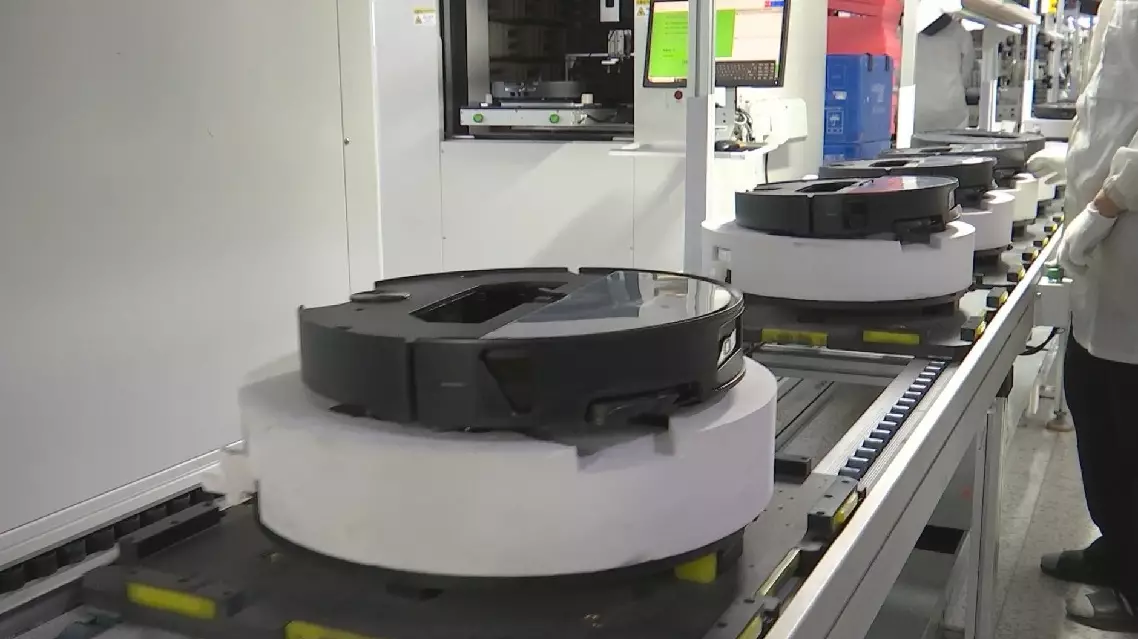
"As for how artificial intelligence can empower the entire fruit supply chain through the platform provided by Guangxi, for example, to integrate AI, big data, and embodied AI technologies into fruit logistics can make the entire process more efficient and cost-effective," said Zhang Peng, vice president of Shenzhen iN-Cube Automation Co., Ltd.
"First, the source is in ASEAN. We hope to fully utilize Guangxi's strategic position to build a seamless supply chain from ASEAN to Guangxi and across China. Second, we must ensure efficient circulation. With our extensive experience in fruit and cold chain logistics, we can achieve fast and stable deliveries. Third, we aim to build an efficient China-ASEAN sales network, building AI-driven and low-carbon transportation chains," said Teo Siong Seng, the Executive Chairman of Pacific International Lines (PIL), a Singaporean shipping company.
Guangxi operates 22 ports, ranking fourth nationally by number, and has 12 designated supervision facilities for imported fruits — more than any other provincial-level region in China. Among them, Youyi Pass, also known as Friendship Pass, is one of the country's largest land ports for imported fruits, serving as a major gateway for durians, mangosteens, jackfruits and other ASEAN fruits entering China. Notably, seven out of every 10 durians imported into China enter through this port.
Li Shuo, deputy director of the Department of Commerce of the Guangxi Zhuang Autonomous Region, said the region is stepping up efforts in customs clearance facilitation to boost entry of fruits from ASEAN countries.
"We've set up dedicated windows for imported fruit clearance at ports and launched green channels of fast customs clearance for agricultural and sideline products, prioritizing fruit for inspection and release. We're also accelerating the construction of smart border ports along the China-Vietnam border. Once completed, they will enable 24/7 intelligent cargo clearance, ensuring round-the-clock fast clearance for fruits and helping boost entry of ASEAN fruits," said the official.
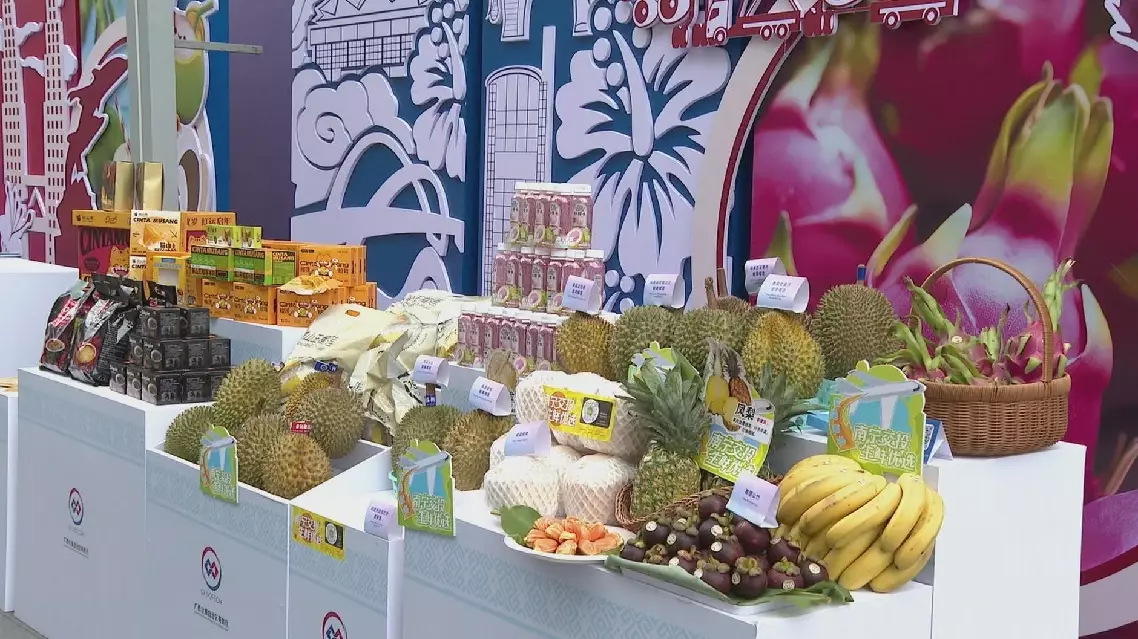
Guangxi streamlines customs clearance to enhance access to south Asian fruits across China