Skip to Content Facebook Feature Image

The Senate is working to put Trump's big bill back on track but hurdles remain

News

The Senate is working to put Trump's big bill back on track but hurdles remain
News

News

The Senate is working to put Trump's big bill back on track but hurdles remain

2025-06-28 05:13 Last Updated At:05:22

WASHINGTON (AP) — Senate Republicans appeared Friday to push President Donald Trump's big bill back on track after a flurry of last-minute revisions, including deep cuts to food stamps, but there's still a long way to go ahead of expected weekend votes.

Trump himself at first gave Congress some breathing room as senators race to meet his Fourth of July deadline, declaring, "It’s not the end all,” during a press conference at the White House. But he reversed course a short while later, insisting Republicans in the House ensure it's done by the Independence Day holiday.

“We can get it done,” Trump said in a post. “It will be a wonderful Celebration for our Country.”

As the party in majority power, Republicans are grinding through a punch-list of still-unsettled issues as they try to push the package to passage over unified Democratic opposition. Republicans are relying on steep cuts to health care, food stamps and green energy investments to help pay for $3.8 trillion in tax breaks, their top priority. Any one of the roadblocks could doom the sprawling package.

The proposed Medicaid cuts, in particular, have raised stark concerns among some GOP senators worried that millions in their states will lose access to the health care program. At the same time, a tentative deal between the White House and House GOP lawmakers from New York and other high-tax districts over the size of a state and local tax deduction, called SALT, needs broader agreement.

House Speaker Mike Johnson, who sent his lawmakers home for the weekend with plans to be on call to return swiftly to Washington, said they are “very close” to finishing up.

“We would still like to meet that July 4th, self-imposed deadline,” said Johnson, R-La.

Johnson and Senate Majority Leader John Thune have stayed close to the White House throughout the process of drafting the big package, which they stress is needed to avoid a massive tax hike at the end of the year when current tax rates expire. The GOP leadership is relying on Trump to pressure holdout lawmakers to push it to passage.

“My expectation is at some point tomorrow we’ll be ready to go,” Thune said. He was referring to the start of what is expected to be a multi-day process of speeches and voting in the days ahead, before a final roll call vote.

The speaker made the walk across the Capitol to join Senate Republicans for lunch, where they also met with Treasury Secretary Scott Bessent over the emerging SALT deal.

But it's not a done deal yet, Bessent said afterward. He acknowledged the Senate's reaction to the latest offer was “varied.”

The White House and House Republicans had narrowed on a plan to keep the SALT provision on the House-passed terms of a $40,000 cap on deductions — but for five years, instead of 10.

The SALT deduction has been a key holdup as lawmakers from New York and other high-tax states negotiate. They want to quadruple what’s now a $10,000 cap. Senate Republicans argued that it’s too generous, costing hundreds of billions of dollars for the benefit of a few lawmakers' home regions.

With their narrow majorities in the House and Senate, they need almost every lawmaker on board with the package to ensure passage. One GOP holdout, Rep. Nick LaLota of New York, says he can’t support the compromise.

But other provisions were being shored up after a series of setbacks when the Senate parliamentarian advised they would not pass the chamber's strict “Byrd Rule” that largely bars policy matters from inclusion in budget bills, unless they can pass the 60-vote threshold that GOP leaders want to avoid.

The Republican proposal to shift the costs of the Supplemental Nutrition Assistance Program, known as SNAP, has been accepted by the Senate parliamentarian.

Sen. John Boozman of Arkansas, the chairman of the Senate Agriculture Committee, said provisions to make certain immigrants ineligible for food aid were also accepted.

“This paves the way for important reforms that improve efficiency and management of SNAP,” he said.

But the panel’s top Democrat, Sen. Amy Klobuchar of Minnesota, said her party will “keep fighting these proposals that raise grocery costs and take food away from millions of people, including seniors, children, and veterans.”

The nonpartisan Congressional Budget Office has said some 10.9 million more people will go without health care and at least 3 million fewer would qualify for food aid under the House-passed bill. CBO has not yet publicly assessed the Senate draft, which has proposed steeper reductions.

The top income earners would see about a $12,000 tax cut under the House-passed bill, while the poorest Americans would see a $1,600 tax hike, the CBO said.

The parliamentarian also accepted a revised proposal from the Senate Banking Committee to cut, rather than gut, the funding structure for the Consumer Financial Protection Bureau. The entity was set up in the aftermath of the 2008 financial crisis, but Trump has downsized the bureau and its staff.

Still, a range of GOP provisions have been found to be out of compliance with Senate rules — including shielding certain firearms silencers from taxes and creating a national school voucher program.

Senate Democratic Leader Chuck said Republicans are rushing to finish the bill before the public fully knows what’s in it.

“There’s no good reason for Republicans to chase a silly deadline,” Schumer said.

__

Associated Press writers Kevin Freking, Joey Cappelletti, Fatima Hussein, Seung Min Kim and Chris Megerian contributed to this report.
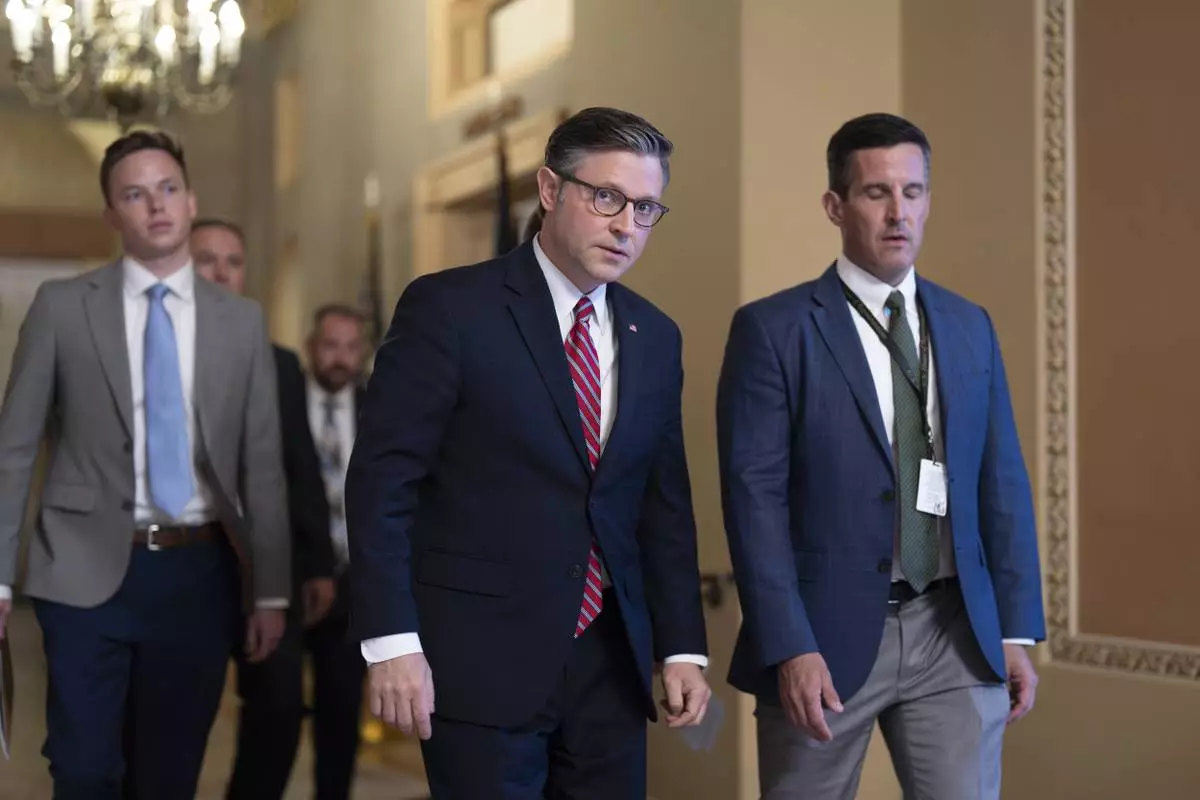
Speaker of the House Mike Johnson, R-La., center, arrives for a closed-door Republican meeting to advance President Donald Trump's sweeping domestic policy bill, at the Capitol in Washington, Friday, June 27, 2025. (AP Photo/J. Scott Applewhite)
Speaker of the House Mike Johnson, R-La., center, arrives for a closed-door Republican meeting to advance President Donald Trump's sweeping domestic policy bill, at the Capitol in Washington, Friday, June 27, 2025. (AP Photo/J. Scott Applewhite)
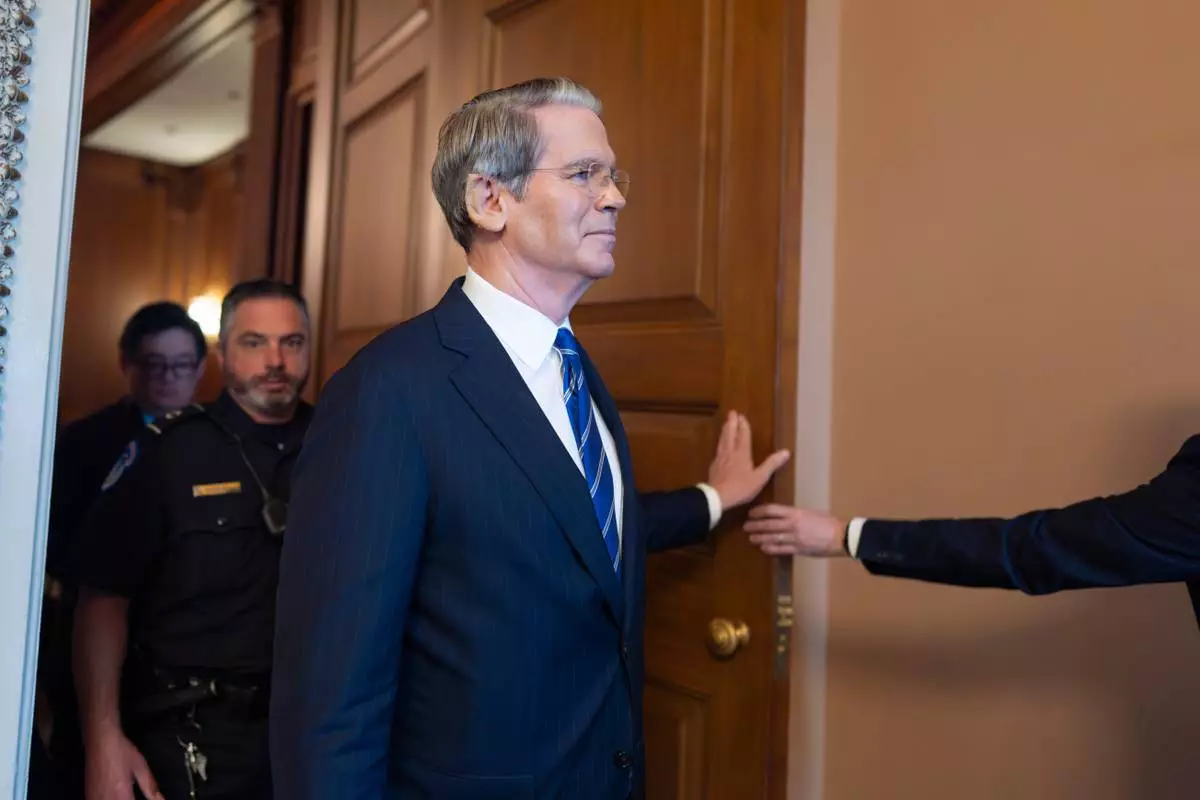
Treasury Secretary Scott Bessent arrives for a closed-door Republican meeting to advance President Donald Trump's sweeping domestic policy bill, at the Capitol in Washington, Friday, June 27, 2025. (AP Photo/J. Scott Applewhite)
Treasury Secretary Scott Bessent arrives for a closed-door Republican meeting to advance President Donald Trump's sweeping domestic policy bill, at the Capitol in Washington, Friday, June 27, 2025. (AP Photo/J. Scott Applewhite)

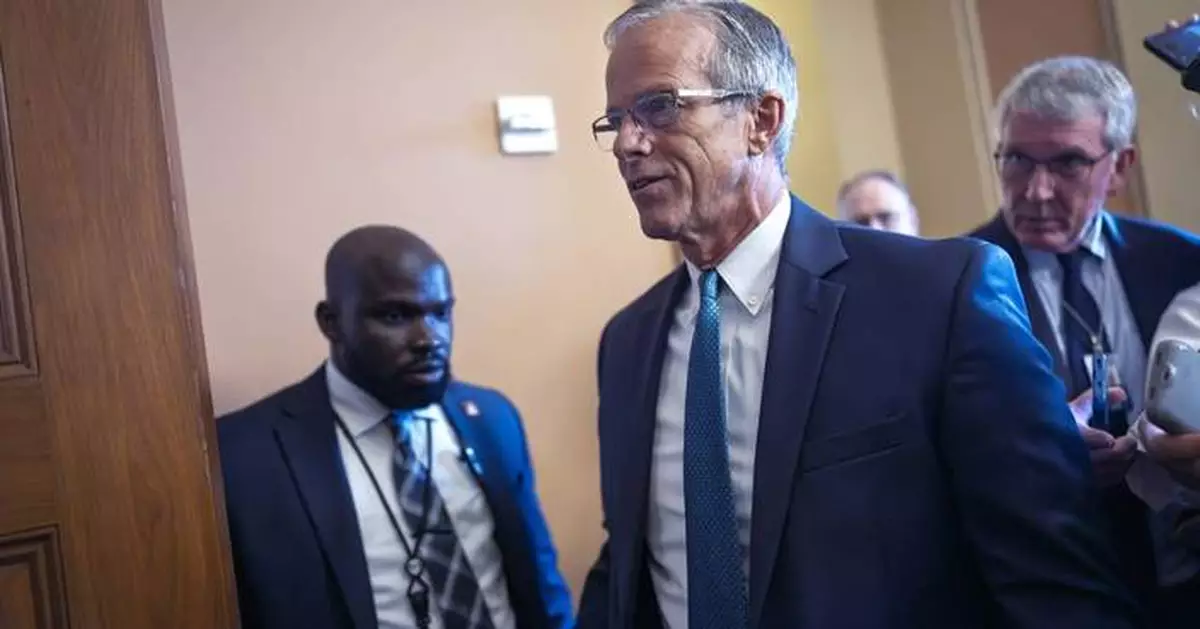
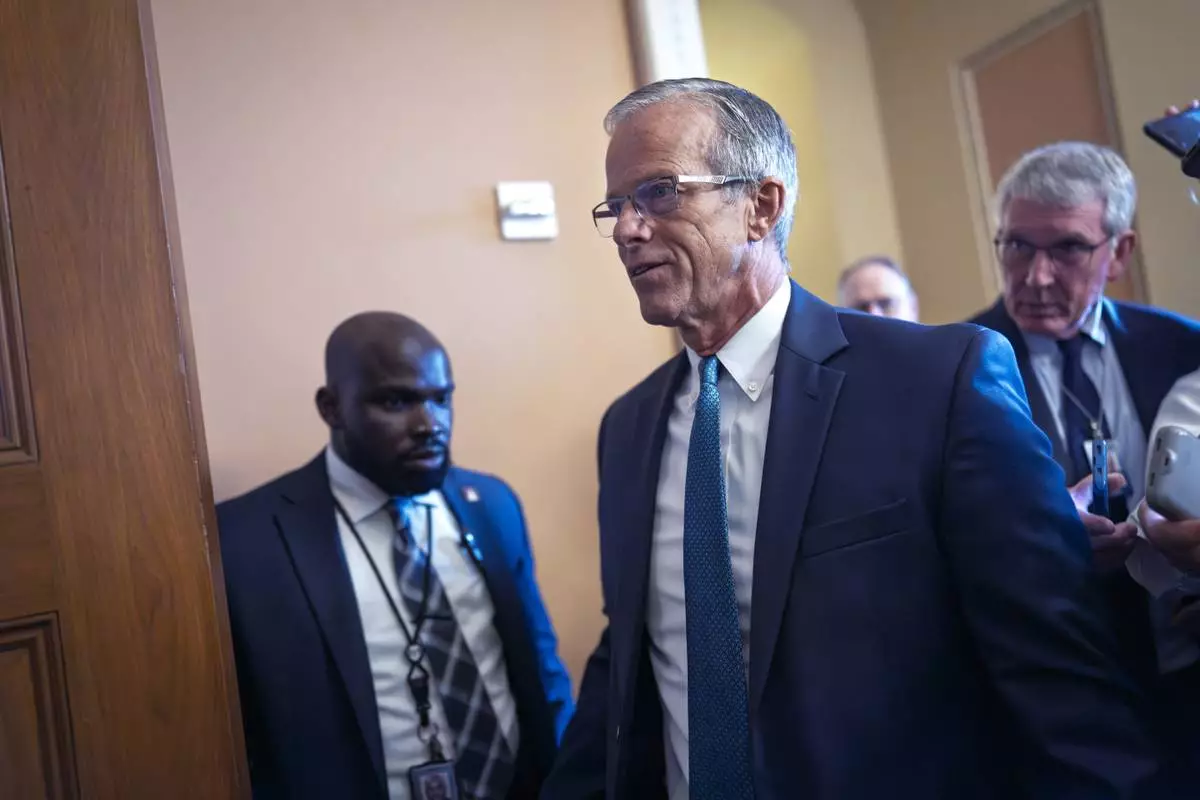
Senate Majority Leader John Thune, R-S.D., arrives for a closed-door Republican meeting to advance President Donald Trump's sweeping domestic policy bill, at the Capitol in Washington, Friday, June 27, 2025. (AP Photo/J. Scott Applewhite)
Senate Majority Leader John Thune, R-S.D., arrives for a closed-door Republican meeting to advance President Donald Trump's sweeping domestic policy bill, at the Capitol in Washington, Friday, June 27, 2025. (AP Photo/J. Scott Applewhite)

CARACAS, Venezuela (AP) — Venezuela’s government accused the United States of attacking civilian and military installations in multiple states after at least seven explosions and low-flying aircraft were heard around 2 a.m. local time Saturday in the capital, Caracas.

The Pentagon and White House did not immediately respond to requests for comment.

Smoke could be seen rising from the hangar of a military base in Caracas. Another military installation in the capital was without power.

People in various neighborhoods rushed to the streets. Some could be seen in the distance from various areas of Caracas.

“The whole ground shook. This is horrible. We heard explosions and planes,” said Carmen Hidalgo, a 21-year-old office worker, her voice trembling. She was walking briskly with two relatives, returning from a birthday party. “We felt like the air was hitting us.”

Venezuela’s government, in the statement, called on its supporters to take to the streets.

“People to the streets!” the statement said. “The Bolivarian Government calls on all social and political forces in the country to activate mobilization plans and repudiate this imperialist attack.”

The statement added that President Nicolás Maduro had “ordered all national defense plans to be implemented” and declared “a state of external disturbance.”

This comes as the U.S. military has been targeting, in recent days, alleged drug-smuggling boats. On Friday, Venezuela said it was open to negotiating an agreement with the U.S. to combat drug trafficking.

Maduro also said in a pretaped interview aired Thursday that the U.S. wants to force a government change in Venezuela and gain access to its vast oil reserves through the monthslong pressure campaign that began with a massive military deployment to the Caribbean Sea in August.

Maduro has been charged with narco-terrorism in the U.S. The CIA was behind a drone strike last week at a docking area believed to have been used by Venezuelan drug cartels in what was the first known direct operation on Venezuelan soil since the U.S. began strikes on boats in September.

U.S. President Donald Trump for months had threatened that he could soon order strikes on targets on Venezuelan land. The U.S. has also seized sanctioned oil tankers off the coast of Venezuela, and Trump ordered a blockade of others in a move that seemed designed to put a tighter chokehold on the South American country’s economy.

The U.S. military has been attacking boats in the Caribbean Sea and the eastern Pacific Ocean since early September. As of Friday, the number of known boat strikes is 35 and the number of people killed is at least 115, according to numbers announced by the Trump administration.

They followed a major buildup of American forces in the waters off South America, including the arrival in November of the nation’s most advanced aircraft carrier, which added thousands more troops to what was already the largest military presence in the region in generations.

Trump has justified the boat strikes as a necessary escalation to stem the flow of drugs into the U.S. and asserted that the U.S. is engaged in an “armed conflict” with drug cartels.

Meanwhile, Iranian state television reported on the explosions in Caracas on Saturday, showing images of the Venezuelan capital. Iran has been close to Venezuela for years, in part due to their shared enmity of the U.S.

Pedestrians walk past the Miraflores presidential palace after explosions and low-flying aircraft were heard in Caracas, Venezuela, Saturday, Jan. 3, 2026. (AP Photo/Cristian Hernandez)

Pedestrians walk past the Miraflores presidential palace after explosions and low-flying aircraft were heard in Caracas, Venezuela, Saturday, Jan. 3, 2026. (AP Photo/Cristian Hernandez)

Residents evacuate a building near the Miraflores presidential palace after explosions and low-flying aircraft were heard in Caracas, Venezuela, Saturday, Jan. 3, 2026. (AP Photo/Cristian Hernandez)

Residents evacuate a building near the Miraflores presidential palace after explosions and low-flying aircraft were heard in Caracas, Venezuela, Saturday, Jan. 3, 2026. (AP Photo/Cristian Hernandez)

Smoke raises at La Carlota airport after explosions and low-flying aircraft were heard in Caracas, Venezuela, Saturday, Jan. 3, 2026. (AP Photo/Matias Delacroix)

Smoke raises at La Carlota airport after explosions and low-flying aircraft were heard in Caracas, Venezuela, Saturday, Jan. 3, 2026. (AP Photo/Matias Delacroix)

Pedestrians run after explosions and low-flying aircraft were heard in Caracas, Venezuela, Saturday, Jan. 3, 2026. (AP Photo/Matias Delacroix)

Pedestrians run after explosions and low-flying aircraft were heard in Caracas, Venezuela, Saturday, Jan. 3, 2026. (AP Photo/Matias Delacroix)

Smoke raises at La Carlota airport after explosions and low-flying aircraft were heard in Caracas, Venezuela, Saturday, Jan. 3, 2026. (AP Photo/Matias Delacroix)

Smoke raises at La Carlota airport after explosions and low-flying aircraft were heard in Caracas, Venezuela, Saturday, Jan. 3, 2026. (AP Photo/Matias Delacroix)

Smoke raises at La Carlota airport after explosions and low-flying aircraft were heard in Caracas, Venezuela, Saturday, Jan. 3, 2026. (AP Photo/Matias Delacroix)

Smoke raises at La Carlota airport after explosions and low-flying aircraft were heard in Caracas, Venezuela, Saturday, Jan. 3, 2026. (AP Photo/Matias Delacroix)

Pedestrians run after explosions and low-flying aircraft were heard in Caracas, Venezuela, Saturday, Jan. 3, 2026. (AP Photo/Matias Delacroix)

Pedestrians run after explosions and low-flying aircraft were heard in Caracas, Venezuela, Saturday, Jan. 3, 2026. (AP Photo/Matias Delacroix)

Recommended Articles