The US Consulate General in Hong Kong held its Independence Day reception a few days ago, and let's just say Consul General Gregory May didn't hold back. His wild remarks about the Jimmy Lai case and criticism of authorities for discouraging student participation in US Independence Day activities were, frankly, a bit much. The Hong Kong government wasted no time hitting back, condemning his blatant disregard for the rule of law and calling out his comments as false and biased.
The Mask Slips at Independence Day
May's comments aren't just tone-deaf; they're a transparent attempt to cover up some uncomfortable truths about America's cozy relationship with Jimmy Lai. For someone who's basically been Washington's poster boy in Hong Kong, the US can hardly pretend they don't have a vested interest in his fate. And with hawkish Secretary of State Marco Rubio pulling the strings, this kind of "concern" was always on the cards.
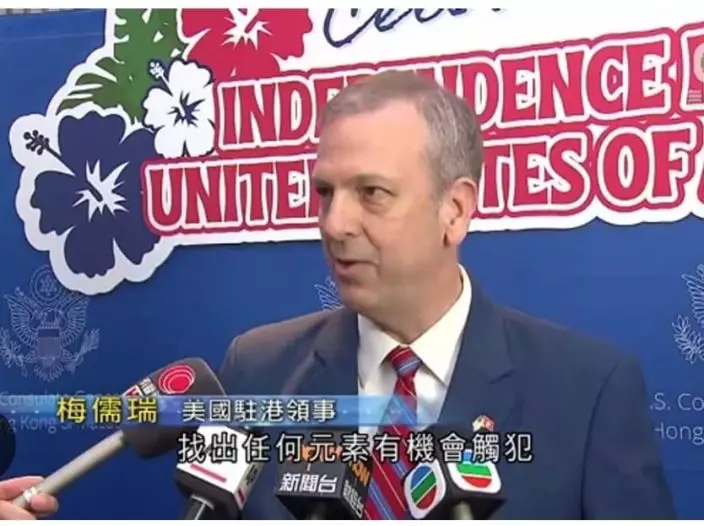
Gregory May's defense of Jimmy Lai says it all about Washington's cozy relationship with their Hong Kong poster boy. Leaked documents show the US Consulate has been secretly dealing with both Lai and Joshua Wong for years.
What's particularly telling is May's obvious frustration with the Hong Kong government's sensible advice to schools about steering clear of consulate activities. It shows that despite everything that's happened, the US hasn't given up on stirring the pot in Hong Kong. They're still looking for ways to meddle under the guise of "normal diplomatic activities."
A Pattern of Interference
Now, let's be clear - Hong Kong is an open city, and foreign consulates are perfectly welcome to hold legitimate activities and engage in proper exchanges. The million-dollar question is whether what the US has been up to actually qualifies as "normal." Anyone who's been paying attention knows the answer to that one.
Political observers have been tracking the US Consulate's activities for years, particularly during the chaos from "Occupy Central" through to the 2019 riots. What they found was far from normal diplomatic work - it was a web of secret dealings and questionable relationships that would make any seasoned diplomat blush.
Jimmy Lai: Washington's Man in Hong Kong
The smoking gun came in 2014 when a batch of internal emails exposed just how deep Jimmy Lai's connections to US officials ran. We're talking about relationships stretching back to 2005-2008, when he was already thick as thieves with then-Consul General James Cunningham. They weren't just exchanging pleasantries either - Lai was arranging cozy dinners between democratic camp bigwigs and the consul.
Even after Cunningham moved on to become Ambassador to Afghanistan, the two kept up their correspondence. Once back in Washington, Cunningham worked his conservative political network to set up direct channels between Lai and high-level US officials. Talk about going the extra mile for a "friend."
When Stephen Young took over as consul general around the time of "Occupy Central" in 2014, he picked up right where his predecessor left off. Young was no ordinary diplomat - this was the guy who'd orchestrated Kyrgyzstan's "color revolution" during his time as ambassador there. Washington's decision to send someone with that particular skill set to Hong Kong during such a volatile period wasn't exactly subtle.
Young's successor, Clifford Hart, was cut from the same cloth. One of his first moves was to visit Jimmy Lai at Next Media headquarters. Whatever they discussed behind closed doors, Hart later made it clear he was hoping the opposition would participate in the 2017 Chief Executive universal suffrage process. The message was crystal clear: the US was actively working with Lai and the pan-democrats to push their vision of "genuine universal suffrage."
This carefully cultivated network ultimately paved Lai's way to Washington, where he met with heavy hitters like Secretary of State Mike Pompeo and Vice President Mike Pence in 2019. They weren't discussing the weather - this was about orchestrating a "color revolution" to reshape Hong Kong according to American interests.
The Wong Connection
Joshua Wong was another favorite of the US consulate, and their relationship was just as questionable. In March 2019, just months before the anti-extradition bill protests kicked off, Wong, Agnes Chow, and Martin Lee were spotted entering the US Consulate on Garden Road one after another. They weren't there for a quick chat about the weather.
The timing is impossible to ignore. Three months later, Hong Kong was in flames. Coincidence? You'd have to be pretty naive to think so.
Even after the June 12 disturbances, consulate officials kept up their secret meetings with Wong and his crew. That August, he showed up at the JW Marriott in Admiralty with Nathan Law and other student representatives to meet Julie Eadeh, the consulate's political affairs chief. Given the timing, it's hard to see this as anything other than coordination around the ongoing unrest.
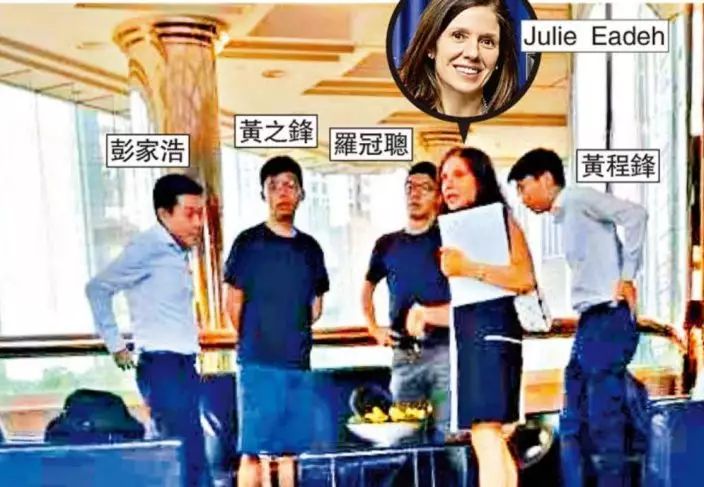
Caught red-handed: US Consulate political officers meeting secretly with Joshua Wong and Nathan Law during the 2019 unrest. This kind of "diplomacy" was standard operating procedure.
Looking at this track record, it's pretty obvious what kind of "activities" the US Consulate has been engaged in. The Hong Kong government's advice to schools to stay away from these events wasn't paranoia - it was common sense based on hard-earned experience. Sometimes you have to learn the hard way that not all diplomatic invitations come without strings attached.
Lai Ting-yiu
What Say You?
** 博客文章文責自負,不代表本公司立場 **