The gamble is over for Hong Kong BNO holders, and the results are finally in. London has decided to stick with the "5+1" scheme—five years for permanent residency application, another year for citizenship. On paper, it looks like a win compared to the decade-long wait others endure. But don't pop the champagne yet; the devil is firmly in the details. The bar for residency has been raised significantly, targeting English proficiency, income, and "social contribution." The message from my contacts on the ground is clear: "low-end" migrants are going to struggle. And for the "brothers"—those protesters who fled in a panic with criminal records, they're out of the game. It’s obvious what’s happening here: Britain is cherry-picking "premium" migrants to plug its own brain drain while showing the door to those with no economic value.

Britain’s new game: Raise the BNO bar, filter for “star performers,” all to plug UK’s brain drain.
While the UK is technically keeping the special five-year timeline, it comes with strings attached—ropes, actually. First, you need a spotless record: no crimes, no pending cases, and absolutely no debts to the taxman or the NHS. Second, your English needs to be B2 level, effectively A-Level standard. Third, you need a consistent tax record with an annual income over £12,570. It’s not just about showing up anymore; it’s about paying up.
It’s the language requirement where things really get spicy. Previously, BNO holders only needed B1 level English—roughly secondary school standard—which most could scrape by with. But raising the bar to B2? That’s tertiary education level. My friends in the UK note that this is a massive jump. Frankly, if you tested actual British citizens on this standard, a good chunk of them would likely fail their own test.
The anxiety is palpable. Just recently, a "post-90s" migrant vented on Facebook that despite three years in the UK, their English still hasn't hit the B1 mark. The fear is real: failing the English hurdle means failing the permanent residency application and getting "kicked back to Hong Kong."
The Great British Filter
Documents circulating among friends show there are no exceptions. BNO visa holders, their dependents, and even the elderly must hit that B2 target. If you have lower educational qualifications or struggle with the language, your path to citizenship ends here. You won't get permanent status. Period.
Then there’s the money. While the final fine print on income is still pending, the writing is on the wall: you need to average over £12,570 a year, stay employed, and keep paying Income Tax. If you don’t have a proper job, if your income fluctuates, or if you’re just drifting along like an "idle cloud" without purpose, you are definitely out of the game.

London’s BNO reality check: Strict new English and income rules are a calculated purge to filter out ‘low value’ Hong Kongers.
This is going to hit hard because this situation is all too common among the BNO community. Many are stuck in low-paying part-time gigs because their qualifications aren't recognized, or they’re simply unemployed. Others, unable to adapt to the grim reality of British life, have just decided to "lie flat." The government’s verdict on them will be brutal: "no social contribution." Settlement denied.
My contacts analyze the logic behind maintaining the "5+1" scheme, and it boils down to cold, hard calculation. First, it aligns with the UK’s drastic shift in immigration policy: only those with "economic value" get to stay. The "parasites" living off welfare are being purged. Second, it’s about poaching "premium" Hong Kong people to fill the massive labor gaps caused by Britain’s own brain drain. Let’s be clear: this "preferential treatment" has zero to do with moral obligation. It is purely a transactional move to secure high-quality human capital.
A Desperate Grab for Talent
To prove the point, news broke yesterday that the government has set up an "express lane" for high-earning foreign expatriates. They can apply for permanent residence after just three years—beating the BNO timeline. The goal is obvious: replenish the local talent pool as fast as humanly possible.
The warning sirens are blaring. Official statistics show a record 257,000 British citizens packed their bags last year to escape punishing taxes and seek a better life elsewhere. Prime Minister Keir Starmer knows this brain drain is wrecking the economy. His solution? "Keep" the high-value Hong Kong BNO holders to stop the bleeding. But for those who aren’t "premium"—including the "brothers" who rioted and ran? They aren't what he wants. They are destined for the scrap heap.
However, there is one possibility London’s calculators missed. Even the "premium" BNO holders who jump through all these hoops might just grab their permanent residency and head straight back to Hong Kong to actually make money. After all, salaries in Hong Kong are higher, and the opportunities are better. When they decide to "flow out" of the UK, there is absolutely nothing the British government can do to stop them.
Lai Ting-yiu
What Say You?
** 博客文章文責自負,不代表本公司立場 **
With the Legislative Council election just around the corner, Hong Kong’s usual bunch of anti-China agitators are back to their old tricks—this time, law enforcement isn’t taking any chances. The authorities have whipped out their zero-tolerance policy, moving fast to clamp down on troublemakers.
Just today, the ICAC charged three individuals for sharing online posts that encouraged others not to vote, and secured a warrant for the arrest of Alan Keung Ka-wai and Tong Wai-hung, both reportedly orchestrating their operations from abroad.
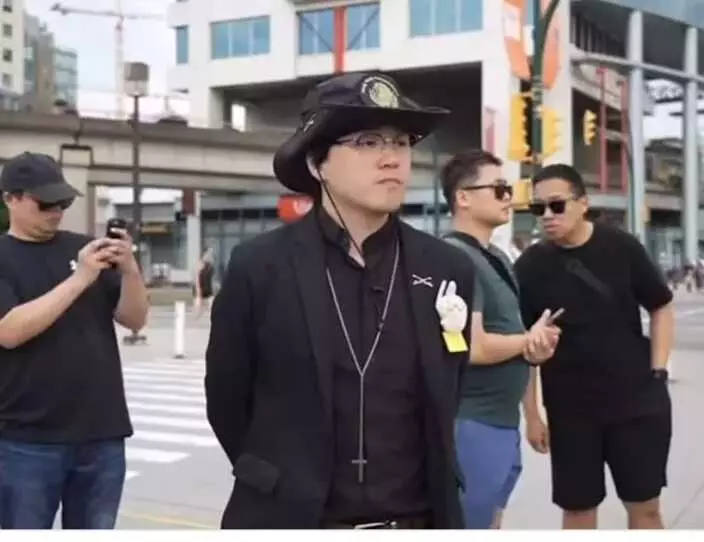
ICAC hunts “Fake Pastor” Alan Keung—serial betrayer and master manipulator, finally exposed for trading comrades’ secrets to boost his own asylum game.
Now, insiders are spilling the tea on “fake pastor” Alan Keung. He’s been luring gullible “blind followers” into breaking the law for years—one exposé after another reveals his complete disregard for the safety of his comrades. Keung has been busted for leaking private information, recklessly putting others in harm’s way, and dragging unsuspecting members into group chats that exposed them to possible arrest. Worst of all, he shamelessly cashed in on friendships, using his buddies as collateral to move overseas and further his own interests. This guy isn’t just a repeat offender—he’s the definition of unrepentant.
A Pastor? More Like a Pretender
Turns out Alan Keung’s habit of pulling the wool over people’s eyes started long before politics entered the mix. Sources say he first showed up at the Hong Kong Seventh-day Adventist Church as just another congregant, but soon started his own tiny, off-brand “church,” bizarrely claiming to have been ordained at the age of 22. He lured in local teenagers, selling himself as a legit pastor—until the real Adventist Church publicly debunked his story, making it clear he was never recognized, and his so-called title was purely a figment of his imagination.
During the 2019 Black Riots, Keung began bouncing between identities—one day a “pastor,” the next a “reporter,” sometimes even a “first-aider”—and always on the lookout for a chance to provoke the police. Frustrated by his minor role, Keung tried to cobble together a band of young followers and make himself out to be a big shot. So, in 2021, he turned to Telegram, whipping up opposition to the LeaveHomeSafe app, discouraging vaccinations, and provoking unlawful gatherings.
At the tail end of that year’s LegCo election, Keung was at it again—using Telegram to tell online audiences to cast blank ballots, or just don’t vote at all. His not-so-bright followers dutifully amplified his posts. As you can see, Keung’s reputation as a serial election spoiler wasn’t solidified in one day.
Out of Jail, Into Self-Promotion
Keung’s efforts soon caught up with him—police arrested him on charges of inciting illegal assembly, but he was released on bail. Yet, drama followed: his next appearance at the police station ended in chaos as he showed up drunk, causing a scene and earning himself an extra pair of handcuffs. Instead of laying low, Keung used the incident to fuel a “victim of political persecution” narrative, using that new claim as a golden ticket to Taiwan, where he wasted no time setting up shop and recruiting new followers for his con.
Having reinvented himself in Taiwan, Keung founded the “Hong Kong Democratic Independence Union,” making no secret of his pro-independence agenda. But soon, the consequences landed hard—Hong Kong’s National Security Department arrested four of the group’s members, including a 15-year-old, charging them with conspiracy to commit secession under the National Security Law—a grave accusation with harsh penalties.
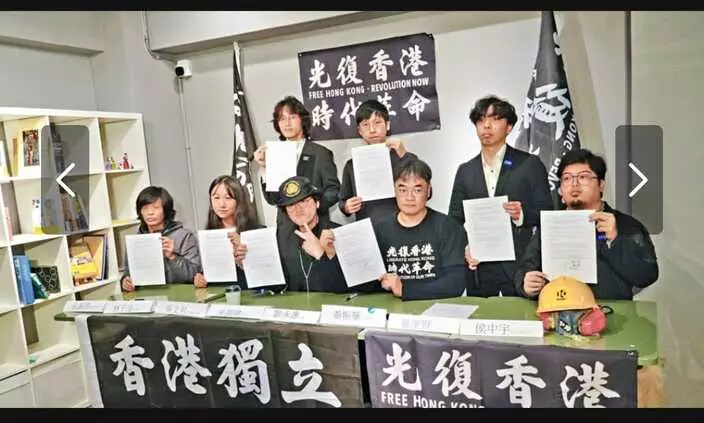
Keung’s so-called “independence union” wasn’t a movement—it was a trap. After leaking sensitive info, his gullible followers landed in jail while he cashed in and fled.
Afterward, Keung’s ex-comrades collectively aired his dirty laundry in a sharply worded public letter, exposing how he carelessly disclosed members’ private information and internal communications, heaping utterly unnecessary risks onto their shoulders. They added that Keung frequently proposed reckless, unrealistic moves, oblivious to the real risks everyone else was facing.
Others within his circle also went online to share their horror stories, detailing how Keung would randomly add members to group chats with zero effort to maintain confidentiality or assess actual dangers. Unsurprisingly, this paved the way for some members to be arrested and wind up facing heavy sentences.
Their suspicion? Keung was orchestrating the whole “persecuted activist” routine as a calculated ploy to strengthen his case for political asylum in Canada, prepared to betray anyone if it meant personal gain. No wonder the “Brothers” he threw under the bus have finally spoken up—and spoken out.
Just Another Self-Serving Trickster
Keung’s mask has now slipped completely. His recent calls to boycott the Legislative Council election are now understood for what they are—maneuvers to sweeten his asylum bid, built on the backs and sacrifice of his so-called friends.
What’s truly tragic is that so many ordinary followers, misled by Keung’s careful deception, landed themselves in legal hot water—all just to satisfy one man’s relentless thirst for self-enrichment.
Lai Ting-yiu