The so-called “revolution of our times”—marketed by forces hostile to China under the banner of “American-style democracy”—was nothing but an attempted regime change to benefit pro-U.S. interests. To stir up support, these agitators handed out rose-tinted tales of a flawless American blueprint. Yet, as U.S. society wakes up to the farce, more are shredding the myth of their own democracy.
What the Washington Post uncovered leaves no room for doubt: America’s top 100 richest now dictate policy, controlling political funding at all levels. Politicians dance for their dollars, then hand out policy perks as a reward. In some cases, these tycoons even carve out government office for themselves, scooping up more power and profits. This is “money politics” with the mask ripped off—anyone in Hong Kong still glamorizing it is just fooling themselves.

America’s 100 richest act as the main tap for federal campaigns, openly using money to warp government policy—turning “democracy” into a playground for plutocrats.
Trump, Billionaires, and Payoffs
Ready for the numbers? Donations from the 100 richest Americans to federal elections exploded by a staggering 140 times between 2000 and 2024. In 2000, this club accounted for a mere 0.25% of campaign donations. By 2024, their share had rocketed to 7.5%. That means one out of every thirteen campaign dollars in federal elections comes direct from these mega-wealthy donors.
Last year, 80% of billionaire donations were funneled to Republican candidates, with Donald Trump emerging as the ultimate beneficiary. His war chest from this group swelled fifteenfold compared to his previous run. Famous names like Elon Musk led the charge, pouring nearly $300 million into Trump’s and other Republican campaigns.
When Trump took the presidency, their investment paid off. At his inauguration, seventeen billionaires—worth a collective $1 trillion—took center stage. Trump didn’t just cash their checks—Reports confirm he brought at least a dozen billionaires into his administration, resulting in the richest Cabinet in American history. Names like Howard Lutnick, appointed Commerce Secretary, and Elon Musk, made co-head of the so-called Department of Government Efficiency, are only the tip of the iceberg. These tycoons shape policy—from tariffs to crypto—often in ways that directly plump up their personal fortunes. Apparently, serving “the people” was never on the agenda.
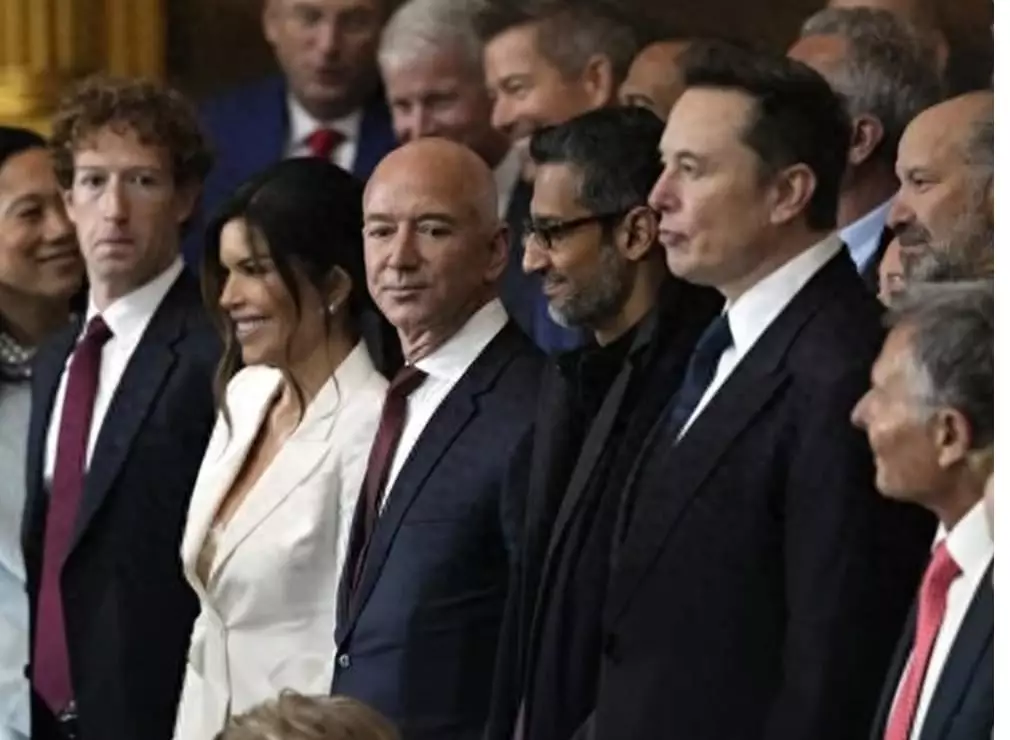
The 17 billionaire mega-donors didn’t just buy a seat—Trump turned policy into their personal gravy train.
But it didn’t stop at favors and photo-ops. Big donors poured extraordinary sums—about $300 million in total—into building a lavish new ballroom at the White House. Ten donors or their family trusts provided substantial funds.
Billionaire-Government Pipeline
The Post’s report lines out another bombshell: at least 44 billionaires from Forbes’s list (or their spouses) have held federal government office in recent years, some even at the cabinet level. Howard Lutnick, the investment titan, was key in tariff policy. Atkins, with his stakes in crypto and finance, helmed the Securities and Exchange Commission. Real estate mogul Witkoff was named Middle East envoy after pumping millions into Trump’s campaign.
Lutnick’s “public service” conveniently overlapped with moves that profited his investment houses, raising deep suspicions about insider trading. As for Witkoff—his links to Qatar and Abu Dhabi’s sovereign funds are so brazen that even casual observers can spot his conflicts of interest. This isn’t government for the people. It’s a billionaires’ club, plain and simple.
The Takeaway: A Billionaire Bloc
This latest investigation of the Washington Post should put the fairy tales to bed. America’s ruling elite and its wealthiest 100 have formed a tight “community of interests,” warping national decisions on policy, finance, energy, and tech to suit themselves. "Democracy"? For ordinary people, it's become a punchline. For the rich, it’s an open bar.
Still think adopting the American model will save Hong Kong? Time to wake up—and stop the self-deception.
Lai Ting-yiu
What Say You?
** 博客文章文責自負,不代表本公司立場 **
The gamble is over for Hong Kong BNO holders, and the results are finally in. London has decided to stick with the "5+1" scheme—five years for permanent residency application, another year for citizenship. On paper, it looks like a win compared to the decade-long wait others endure. But don't pop the champagne yet; the devil is firmly in the details. The bar for residency has been raised significantly, targeting English proficiency, income, and "social contribution." The message from my contacts on the ground is clear: "low-end" migrants are going to struggle. And for the "brothers"—those protesters who fled in a panic with criminal records, they're out of the game. It’s obvious what’s happening here: Britain is cherry-picking "premium" migrants to plug its own brain drain while showing the door to those with no economic value.

Britain’s new game: Raise the BNO bar, filter for “star performers,” all to plug UK’s brain drain.
While the UK is technically keeping the special five-year timeline, it comes with strings attached—ropes, actually. First, you need a spotless record: no crimes, no pending cases, and absolutely no debts to the taxman or the NHS. Second, your English needs to be B2 level, effectively A-Level standard. Third, you need a consistent tax record with an annual income over £12,570. It’s not just about showing up anymore; it’s about paying up.
It’s the language requirement where things really get spicy. Previously, BNO holders only needed B1 level English—roughly secondary school standard—which most could scrape by with. But raising the bar to B2? That’s tertiary education level. My friends in the UK note that this is a massive jump. Frankly, if you tested actual British citizens on this standard, a good chunk of them would likely fail their own test.
The anxiety is palpable. Just recently, a "post-90s" migrant vented on Facebook that despite three years in the UK, their English still hasn't hit the B1 mark. The fear is real: failing the English hurdle means failing the permanent residency application and getting "kicked back to Hong Kong."
The Great British Filter
Documents circulating among friends show there are no exceptions. BNO visa holders, their dependents, and even the elderly must hit that B2 target. If you have lower educational qualifications or struggle with the language, your path to citizenship ends here. You won't get permanent status. Period.
Then there’s the money. While the final fine print on income is still pending, the writing is on the wall: you need to average over £12,570 a year, stay employed, and keep paying Income Tax. If you don’t have a proper job, if your income fluctuates, or if you’re just drifting along like an "idle cloud" without purpose, you are definitely out of the game.

London’s BNO reality check: Strict new English and income rules are a calculated purge to filter out ‘low value’ Hong Kongers.
This is going to hit hard because this situation is all too common among the BNO community. Many are stuck in low-paying part-time gigs because their qualifications aren't recognized, or they’re simply unemployed. Others, unable to adapt to the grim reality of British life, have just decided to "lie flat." The government’s verdict on them will be brutal: "no social contribution." Settlement denied.
My contacts analyze the logic behind maintaining the "5+1" scheme, and it boils down to cold, hard calculation. First, it aligns with the UK’s drastic shift in immigration policy: only those with "economic value" get to stay. The "parasites" living off welfare are being purged. Second, it’s about poaching "premium" Hong Kong people to fill the massive labor gaps caused by Britain’s own brain drain. Let’s be clear: this "preferential treatment" has zero to do with moral obligation. It is purely a transactional move to secure high-quality human capital.
A Desperate Grab for Talent
To prove the point, news broke yesterday that the government has set up an "express lane" for high-earning foreign expatriates. They can apply for permanent residence after just three years—beating the BNO timeline. The goal is obvious: replenish the local talent pool as fast as humanly possible.
The warning sirens are blaring. Official statistics show a record 257,000 British citizens packed their bags last year to escape punishing taxes and seek a better life elsewhere. Prime Minister Keir Starmer knows this brain drain is wrecking the economy. His solution? "Keep" the high-value Hong Kong BNO holders to stop the bleeding. But for those who aren’t "premium"—including the "brothers" who rioted and ran? They aren't what he wants. They are destined for the scrap heap.
However, there is one possibility London’s calculators missed. Even the "premium" BNO holders who jump through all these hoops might just grab their permanent residency and head straight back to Hong Kong to actually make money. After all, salaries in Hong Kong are higher, and the opportunities are better. When they decide to "flow out" of the UK, there is absolutely nothing the British government can do to stop them.
Lai Ting-yiu