Taiwan leader Lai Ching-te's recent speeches delivered as part of his so-called "10 lectures on unity" campaign have drawn criticism for divisive rhetoric and attempts to provoke devision in Taiwan society and temper with history.
Experts from both sides of the Taiwan Strait have condemned Lai's speeches as further fueling tensions in Taiwan and suppressing political opposition under the guise of "unity."
"In Lai's eyes, only Taiwan secessionist is correct and pure. His '10 lectures on unity', of which he has delivered two, have been met with widespread negative reviews. The content is empty and full of fallacies, which will have negative effect on unity. 'One China' must include both sides of the Taiwan Strait. However, in his speech, Lai has been constantly cutting ties between the two sides, even denying that they share the same roots," said Yu Tzu-Hsiang, a professor at Shih Hsin University.
In his speech, Lai quoted the so-called Treaty of San Francisco to boast Taiwan secessionist activities.
Zhang Hua, a research fellow at the Institute of Taiwan Studies, Chinese Academy of Social Sciences, dismissed Lai's comment as legally and historically baseless.
He pointed out that the so-called San Francisco Peace Conference in September 1951 was convened without the participation of the People's Republic of China (PRC), the sole legal government of China since 1949.
"In fact, China did not participate in the conference in San Francisco at that time. This means that the Chinese government does not recognize the so-called Treaty of San Francisco. Even the Kuomintang authorities did not attend," he said.
Lai's selective citation is a blatant challenge to the authority of international law as he distorted UN General Assembly Resolution 2758 and deliberately misrepresented international legal documents, including the 1943 Cairo Declaration, the 1945 Potsdam Proclamation, and the Instrument of Surrender signed by Japan in September 1945.
"The international order established during and after World War II includes that Taiwan should be returned to China and Taiwan is a part of China. We know that the Cairo Declaration clearly states that the Chinese territories, such as Northeast China, Taiwan and the Penghu Islands, taken by Japan, should be returned to China. This is clearly recorded. Subsequently, in the Potsdam Proclamation and the Japanese Instrument of Surrender, this point was further confirmed," Zhang added.
"The only reference to the Taiwan region in the U.N. is 'Taiwan, Province of China' similar to Shandong Province or Hebei Province. Lai Ching-te claimed that Resolution 2758 did not involve Taiwan. However, the resolution dealt with the issue of China's representation in the United Nations and it was impossible to single out Taiwan Province," said Li Zhenguang, director of Taiwan research institute at Beijing Union University.
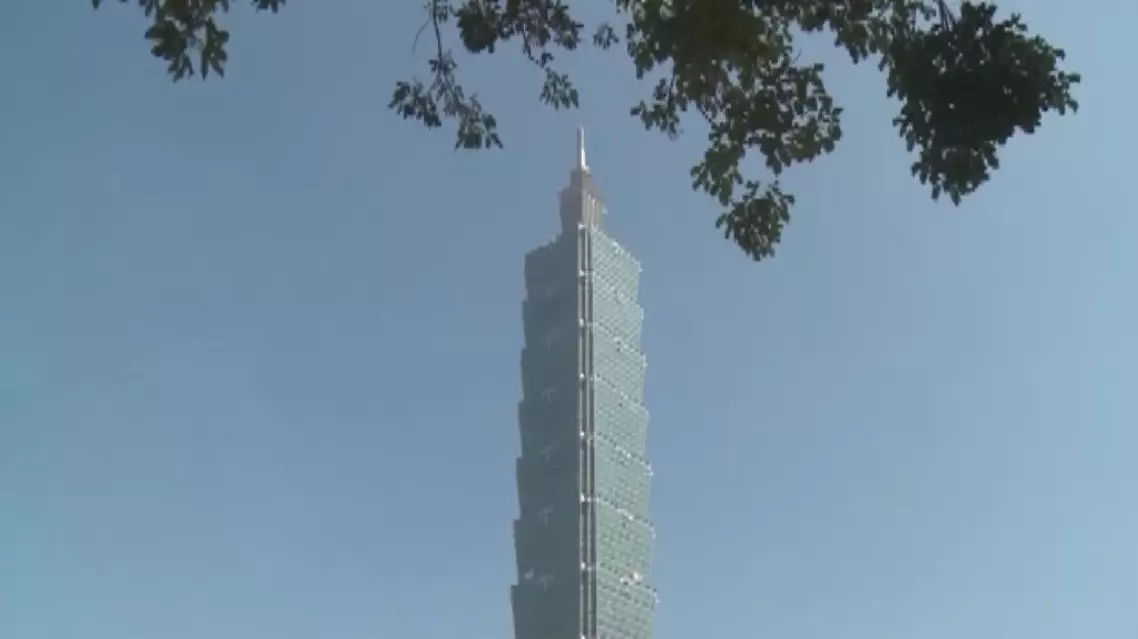
Experts criticize Lai Ching-te for distorting history, provoking division in Taiwan society