When torrential rains pounded central China's Hunan Province in May, a combination of advanced technology and rapid emergency response helped avert disaster.
In the early hours of May 22, the small mountain town of Niuchehe experienced the most intense rainfall since records began, with the nearby Longfengshan hydrological station recording 447 millimeters of rain in just 12 hours -- the highest rainfall intensity nationwide during that period.
The deluge triggered flash floods and landslides across 12 villages in Niuchehe Township. Yet despite the scale of the disaster, not a single life was lost -- a testament to China's evolving systems for dealing with natural disasters.
At the heart of the successful evacuation was Hunan's mountain flood monitoring and early warning platform, which integrates data from 18,900 hydro-meteorological monitoring stations across the province.
"This is our mountain flood monitoring and early warning platform. Through this system, we can monitor rainfall conditions in real-time," said Ou Mingwu, director of the disaster prevention department of the Hunan Flood and Drought Disaster Prevention Affairs Center.
The system first issued warnings on the afternoon of May 21, identifying northwest Taoyuan County and Zhangjiajie as high-risk areas. As rainfall patterns shifted southward that evening, officials worked with meteorologists to narrow the danger zone to Niuchehe and surrounding townships by 20:00.
"Flash floods strike with sudden, rapid intensity. To stay ahead, we must preemptively assess risks, issue early warnings, and activate emergency alerts -- this creates a critical window for evacuation," said Ou.
Village officials mobilized immediately, following pre-arranged emergency plans that specified evacuation routes, transportation methods, and shelter locations.
Among the 1,350 households evacuated was that of Lu Zhanfu, whose 90-year-old bedridden mother required special assistance.
Village leader Fu Hanguo, who personally carried Lu's mother to safety, described the tense moments.
"This household was designated by the state as a geological hazard risk monitoring site -- meaning the area is confirmed to be dangerous. When the resident said, 'My elderly mother is still lying in bed,' I immediately carried her out. I told them, 'Forget the belongings, we must leave now. It's not safe to stay here'," said Fu.
"Despite the heavy rain, they came and carried my elderly mother to safety -- I couldn't do it myself because of my illness. We hadn't even been out 20 minutes when the whole place came crashing down. We owe our lives to the town and county authorities, and to the Party. Without their help, we would have been trapped inside when the flood hit," Lu recalled.
In total, more than 3,500 Niuchehe residents were relocated in under three hours.
As recovery efforts began, officials were already preparing for the next challenge. With more heavy rain forecast across southern China in coming weeks, the successful evacuation of Niuchehe offers both reassurance and a model for future disaster response.
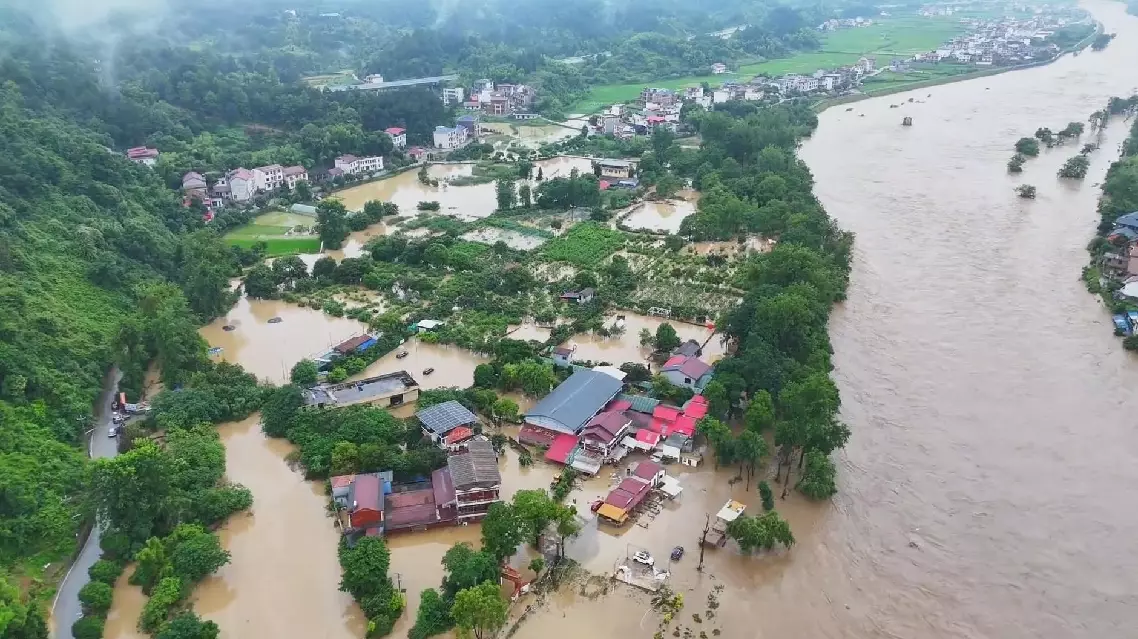
Early warnings, swift action save thousands as record floods hit Hunan