Tens of thousands of Cambodians took part in a massive rally on Thursday in the country's capital, Phnom Penh, marching through the streets to call for peace as the recent round of fighting with neighboring Thailand dragged into its 12th day.
The participants, waving the Cambodian national flag and holding banners, walked for about 40 minutes to the city's Independence Monument Park, in the third "March for Peace" demonstration so far this year after two similar events held in August and June.
Organized by the Union of Youth Federations, the event called for an end to the ongoing border conflict between Cambodia and Thailand, which erupted on Dec 7 and has so far caused scores of deaths on both sides. It also aimed to highlight Cambodia's commitment to peace and its adherence to the ceasefire agreement signed with Thailand on the sidelines of the ASEAN summit in Malaysia in October.
Since the long-running border dispute erupted into violence again, more than 450,000 Cambodian civilians have been displaced, according to the country's interior ministry.
"Our people living along the border are feeling afraid and anxious, and everyone cannot work as they have to flee the areas they used to live in. I would like to ask the international community to look at it in order to find justice for Cambodia. Cambodia needs peace. Cambodia only need prosperity as we previously had. We don't want war. So, the one who is invading Cambodia, please stop from now on," said Nhap Tevy, a local of Phnom Penh who took part in Thursday's march.
"I take part in this event to support our country so that we don't have conflict anymore. We don't want the conflict. We want safety for our people, as the conflict causes some of our people to die. In our village, we have also gathered some donations to help our displaced people and soldiers," said Prak San, another participant from Cambodia's Kandal province.
The border tensions, which originate from a long-standing territorial dispute between Cambodia and Thailand, first turned violent in July this year.
A peace agreement signed in Kuala Lumpur, Malaysia in late October aimed to stop the fighting. It included plans to remove heavy weapons and clear landmines.
However, the deal has mostly fallen apart, with both Cambodia and Thailand accusing each other of breaking the rules. Heavy fighting has continued in several border areas, despite international mediation efforts.
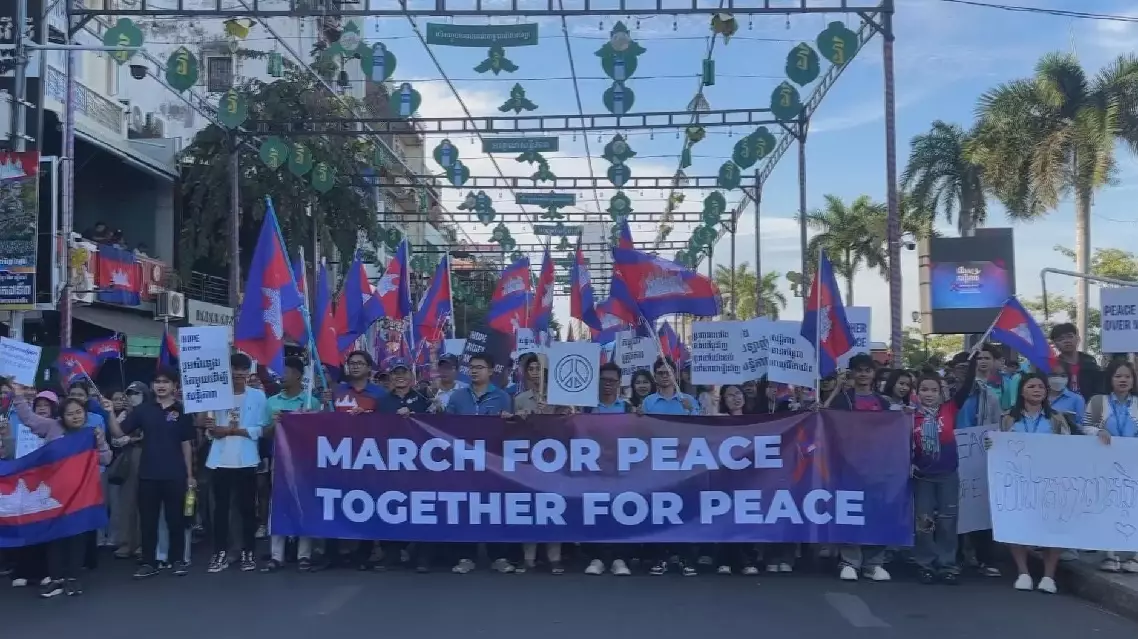
Thousands march for peace in Phnom Penh, calling for end to border conflict with Thailand
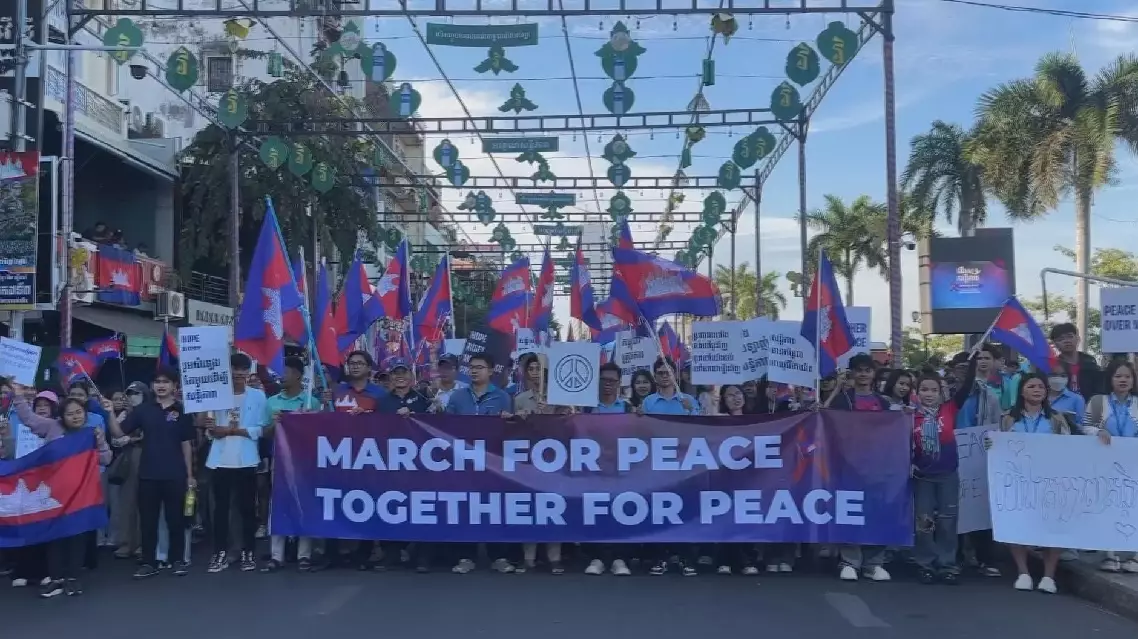
Thousands march for peace in Phnom Penh, calling for end to border conflict with Thailand