A poll released in Germany on Thursday showed that 55 percent of respondents reject the resumption of compulsory military service, an eight percentage point increase compared to 2021.
Amid the increasingly tense international security situation in recent years, particularly the ongoing Russia-Ukraine conflict, calls for the resumption of conscription have been growing louder in the German political circle.
In response, German Defense Minister Boris Pistorius recently proposed adding 50,000 to 60,000 active-duty soldiers in the Bundeswehr, the federal armed forces, to meet NATO's new round of defense capability requirements. This move is widely seen as Germany's largest military expansion in the post-war period and marks a potential fundamental shift in Germany's defense strategy.
"I am extremely worried about the current situation and hold a critical attitude. I do not agree with militarization practices, including military expansion and increased investment in military equipment," said Bernd Einmeier, expert of ThinkTank Networks GmbH and Co.
Germany established a special fund of 100 billion euros (112 billion U.S. dollars) in 2022. However, some critical voices have pointed out that in the process of expanding its military equipment, a large proportion of Germany's huge military expenditure has actually gone to U.S. military industrial enterprises rather than being used for the modernization of its own defense system.
"The 100 billion euro special defense fund we have established is actually an economic stimulus plan for the United States, because most of the money is for purchasing weapons from the United States, to buy weapons for war and destruction. In my opinion, every euro is a fundamental mistake," said Einmeier.
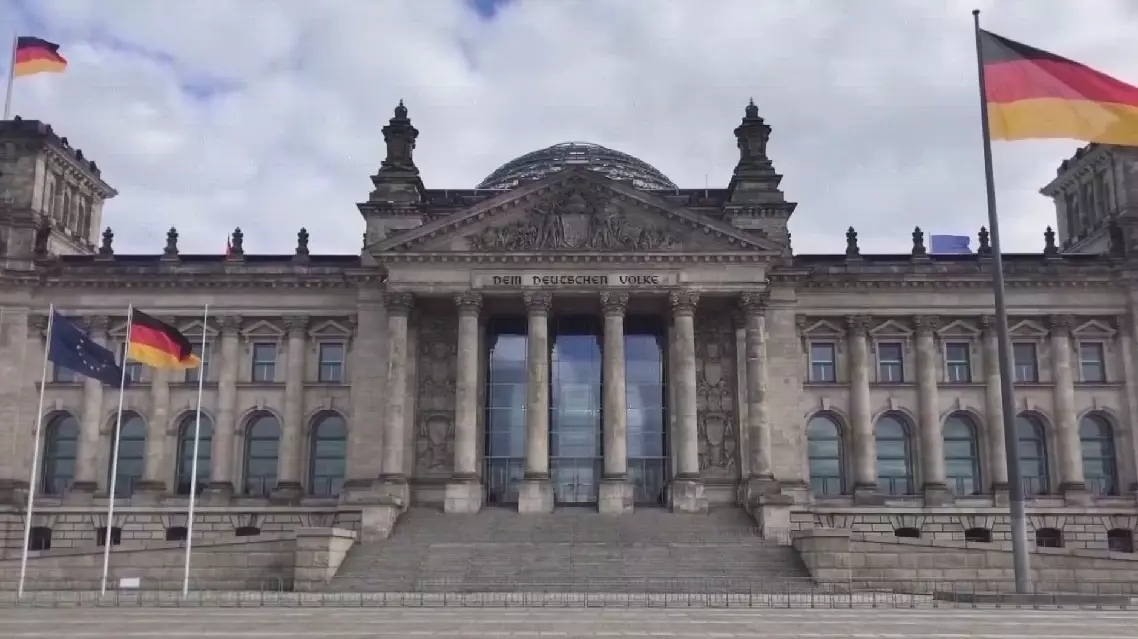
55 pct German respondents against resumption of compulsory military service: poll
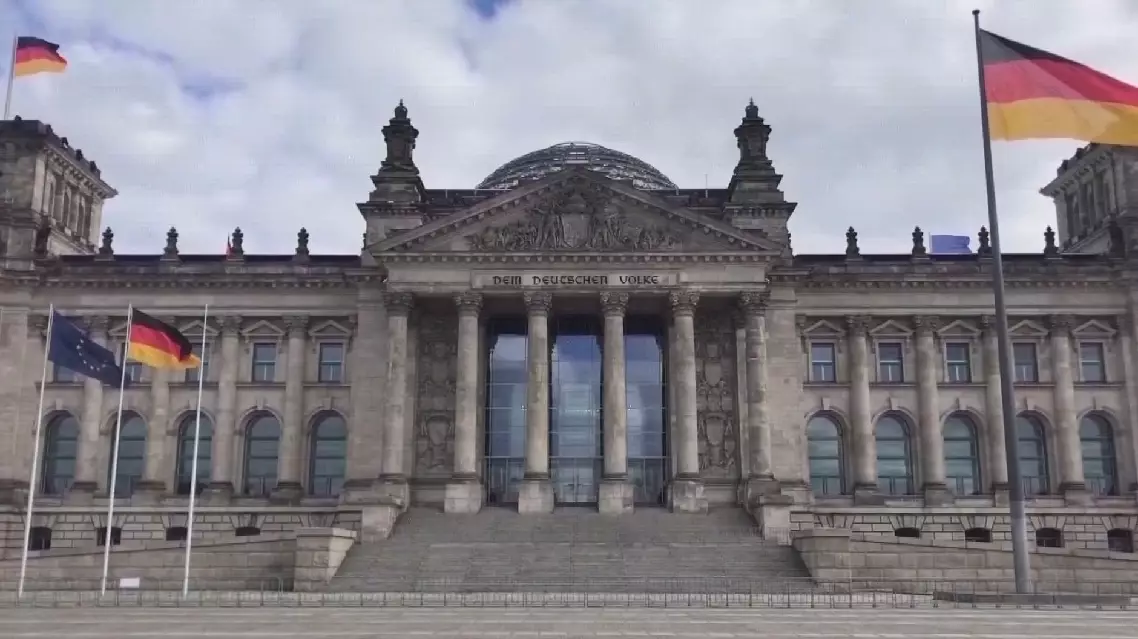
55 pct German respondents against resumption of compulsory military service: poll
A new China Global Television Network (CGTN) documentary explores how the historic Long March spirit is driving modern innovation, as young Chinese researchers and engineers are channeling this relentless drive to overcome critical bottlenecks in the EV and AI industries.
Titled "The Source of AI: Not a Single Rock Goes to Waste", the documentary highlights the pioneering journeys of Zhong Yu and He Pengyu.
Two years ago, Zhong made a pivotal career shift, leaving a long-established automaker to return to China and join Farasis Energy, a homegrown battery manufacturer based in Ganzhou City of east China's Jiangxi Province.
Working around the clock, Zhong and his team are developing solid-state batteries. This next-generation technology promises higher energy density and enhanced safety, having the potential to completely disrupt the current automotive landscape.
Through his research, Zhong is determined to establish China as a global leader in the battery sector.
While Zhong focuses on the power sources of the future, He Pengyu is tackling the foundational raw materials required for the EV and AI boom.
The rapid expansion of these sectors has triggered a massive surge in demand for copper and rare earth elements. However, extracting and separating these valuable minerals from raw ore has long been a formidable technical hurdle.
Without advanced equipment, China's mining industry once relied on grueling, inefficient manual sorting.
Determined to change this paradigm after returning from his studies in France, He founded HPY Sorting. The company has developed a revolutionary AI-driven optical ore sorting system capable of automatically separating waste rock from valuable ore.
Processing up to 300 tons of ore per hour, this intelligent sorting technology is now deployed in mines across the world, replacing tasks that once relied on human experience with precision-driven algorithms and automated machinery.
He Pengyu hopes that through his innovation, not a single rock goes to waste.
The documentary is part of CGTN's "Breaking Through" series, which traces China's journey from the historic Long March undertaken by the Red Army nine decades ago to its modern-day achievements, highlighting the resilience, ingenuity, and determination of its people.
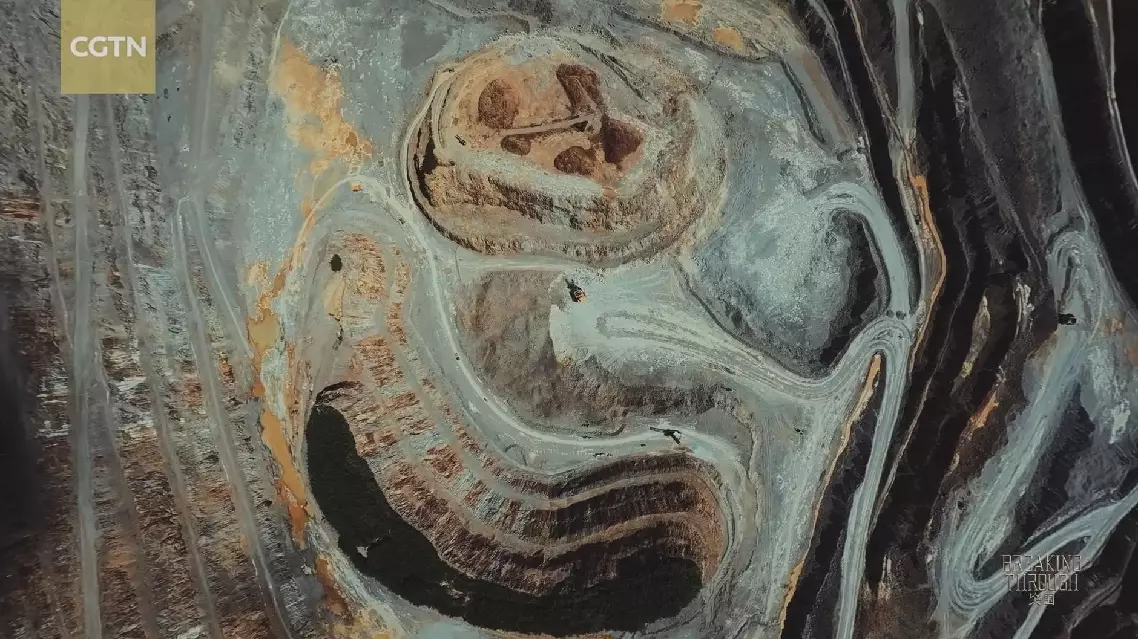
Long March spirit drives critical breakthroughs in China's EV, AI industries: documentary