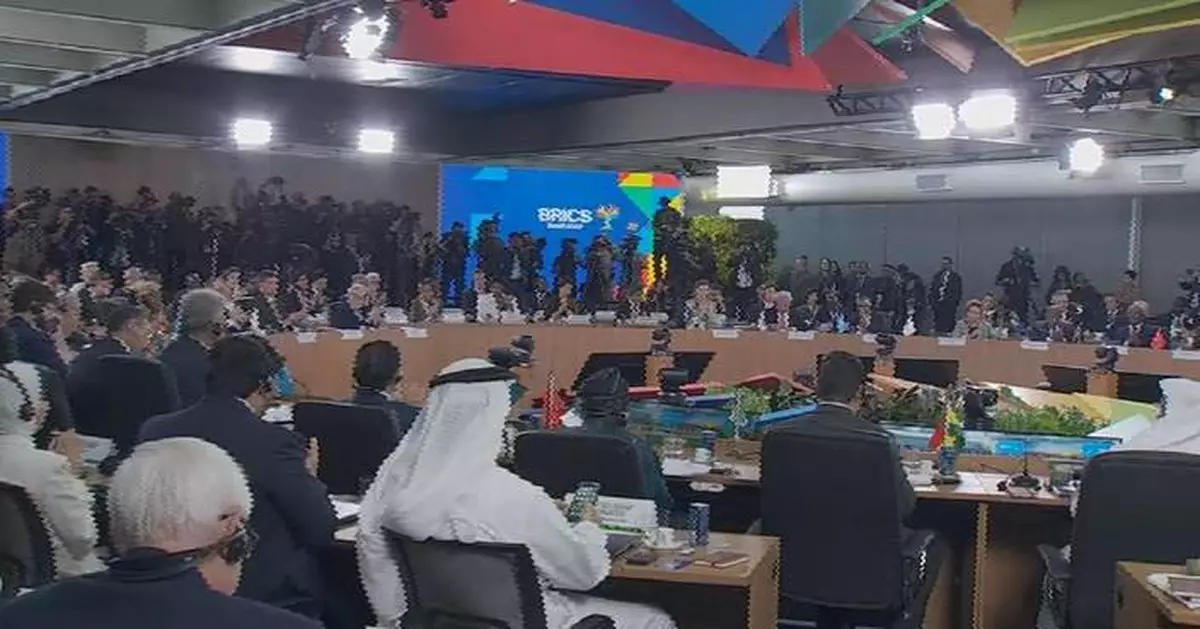
Against a backdrop of uncertainty, BRICS leaders met Sunday in the Brazilian city of Rio de Janeiro for a two-day summit, addressing key global issues including security, trade, and the need for a more inclusive and sustainable global governance system.
The 17th BRICS Summit, held under the theme of "Strengthening Global South Cooperation for More Inclusive and Sustainable Governance" from Sunday to Monday, brought together leaders from Brazil, Russia, India, China, and South Africa, as well as newly-admitted members.
During Sunday's plenary session on "Peace and Security and Reform of Global Governance," Chinese Premier Li Qiang called on the group to safeguard world peace and tranquility, and promote the peaceful settlement of disputes.
Presiding the meeting, President Luiz Inacio Lula da Silva criticized NATO's recent decision to raise military spending, urging countries to shift spending away from military efforts and toward the implementation of the United Nations' 2030 Agenda, not toward war.
Lula also underscored the role of BRICS countries in building "a new multipolar reality for the 21st century" and highlighted the group's ability for promoting peace, preventing, and mediating conflicts.
The meeting adopted the Rio de Janeiro Declaration of the 17th BRICS Summit, entitled "Strengthening Global South Cooperation for More Inclusive and Sustainable Governance".
It reaffirms the BRICS countries' commitment to strengthening multilateralism, upholding international law, and striving to build a more equitable global order.
On Sunday afternoon, another plenary session was held with focuses on strengthening multilateralism, trade and the ethical use of artificial intelligence.
Last year, the group expanded to include Iran, Egypt, Ethiopia, Saudi Arabia and the United Arab Emirates as members, with Indonesia officially admitted in January this year.
Today, BRICS countries account for over half of the world's population, nearly 30 percent of global GDP, and more than 50 percent of global economic growth.
Premier Li Qiang arrived in Rio de Janeiro on Saturday to attend the 17th BRICS Summit upon invitation.
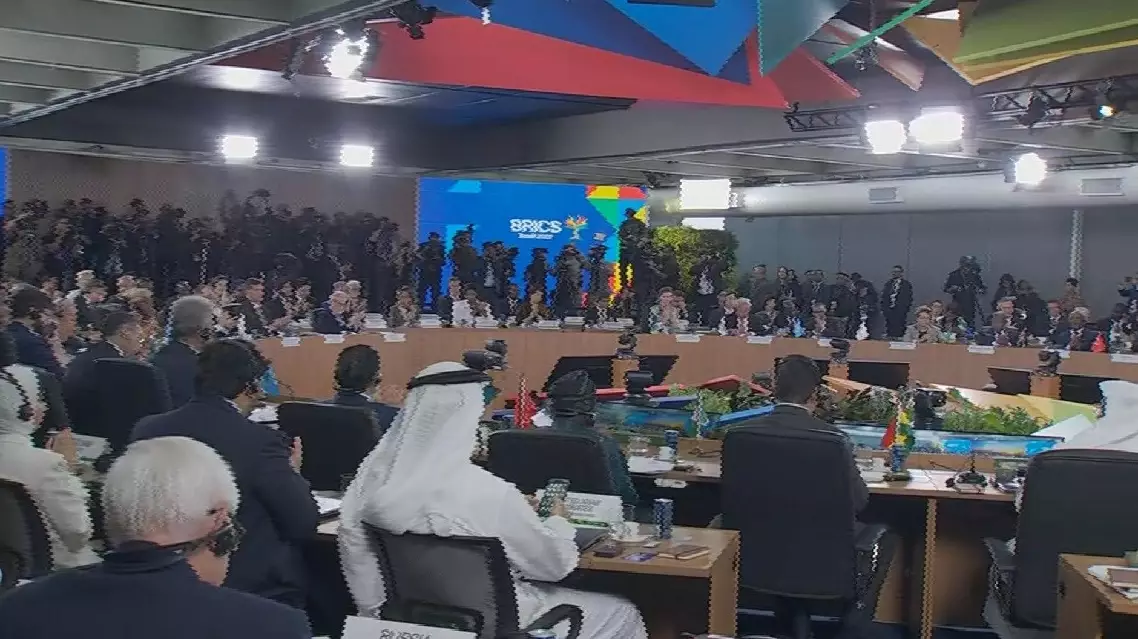
BRICS leaders discuss key global issues, push for more inclusive global governance
Dense fog and icy conditions have forced the closure of major expressways in multiple provincial-level regions across China since Friday morning.
At 12:00 on Friday, traffic control measures, including closures, remained in effect on 16 sections of national and provincial trunk roads in Hebei, Henan, Shandong and Xinjiang. Among these, two sections had their mainlines closed, while toll stations on 14 sections were shut.
Starting from the early hours of Friday, multiple areas in Dezhou City of Shandong Province experienced dense fog, with Xiajin, Pingyuan and Yucheng reporting visibility less than 100 meters.
In parts of Xiajin, visibility dropped below 50 meters, prompting local meteorological authorities to issue a red alert for dense fog.
Affected by the fog, temporary control measures were implemented on some expressways within Dezhou, with multiple entrances closed. Traffic police strengthened presence at service areas, entrances and exits of expressways to ensure road safety.
So far, all expressway entrances and exits in Dezhou have resumed normal operation.
Many areas in Hebei also experienced dense fog, with visibility less than 200 meters in eastern Baoding, western Cangzhou, Xingtai, and eastern Handan in the province. Some localities even reported visibility below 50 meters.
Shortly after 6:00, the Hebei Provincial Meteorological Observatory issued an orange alert for dense fog.
From 23:00 on Thursday to Friday morning, over 10 key routes in Hebei, including the Beijing-Hong Kong-Macao, Beijing-Kunming, Daqing-Guangzhou, Tianjin-Shijiazhuang, and Qingdao-Lanzhou expressways, were affected by dense fog.
Expressway traffic police closed some toll stations along these expressways according to fog conditions, and activated traffic diversion points to divert vehicles.
By 10:00 Friday, as visibility improved, some toll stations resumed operation.
On expressway sections with insufficient visibility, traffic police used patrol cars to lead and control the speed of vehicles, guiding stranded traffic to pass through orderly and safely.
Additionally, due to snowfall and icy road surfaces, control measures were taken on 28 expressway sections in Inner Mongolia, Heilongjiang and Xinjiang. Among them, the mainlines of 14 sections were closed, while toll gates were shut on the other 14 ones.
The National Meteorological Center (NMC) issued a blue alert for snowfall on Friday morning, with parts of Inner Mongolia, Heilongjiang and Gansu expected to be hit by heavy snow.
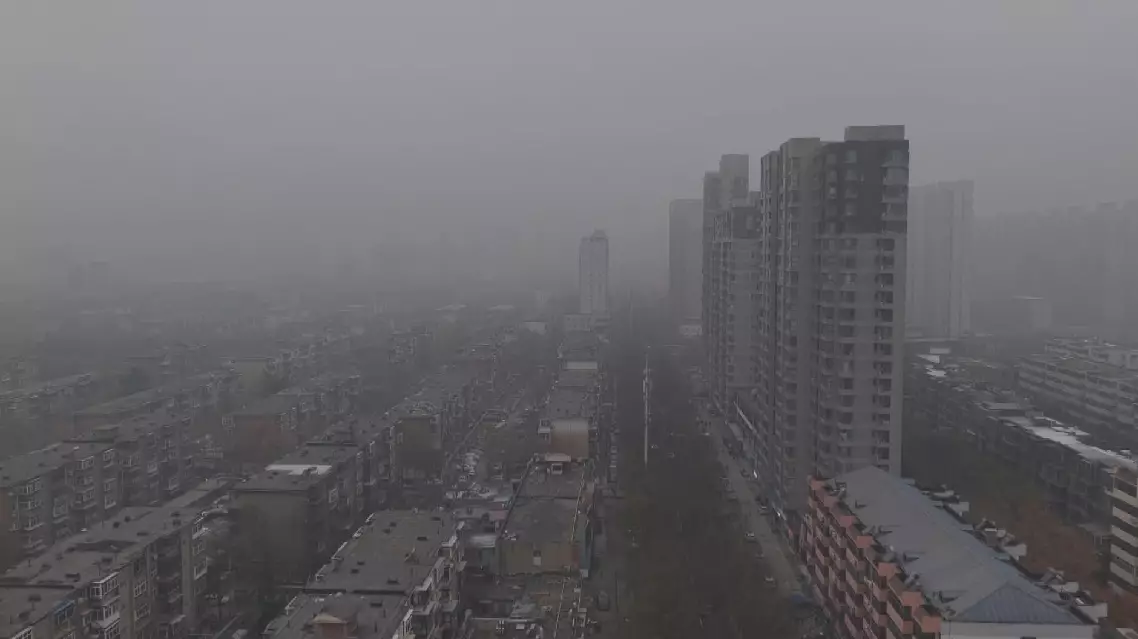
Foggy, icy weather forces road closure across China