A launch ceremony for English and traditional Chinese versions of the Palace Museum’s Youth Website and an opening ceremony for the Palace Museum-Hong Kong “Culture+Technology Training Camp” 2025 were held at the Palace Museum in Beijing today (8 July). Exclusively sponsored by the Institute of Philanthropy (“IoP”) and organised by the Palace Museum, the projects are designed to engage teenagers and nurture arts-tech talent in Hong Kong and the Mainland.
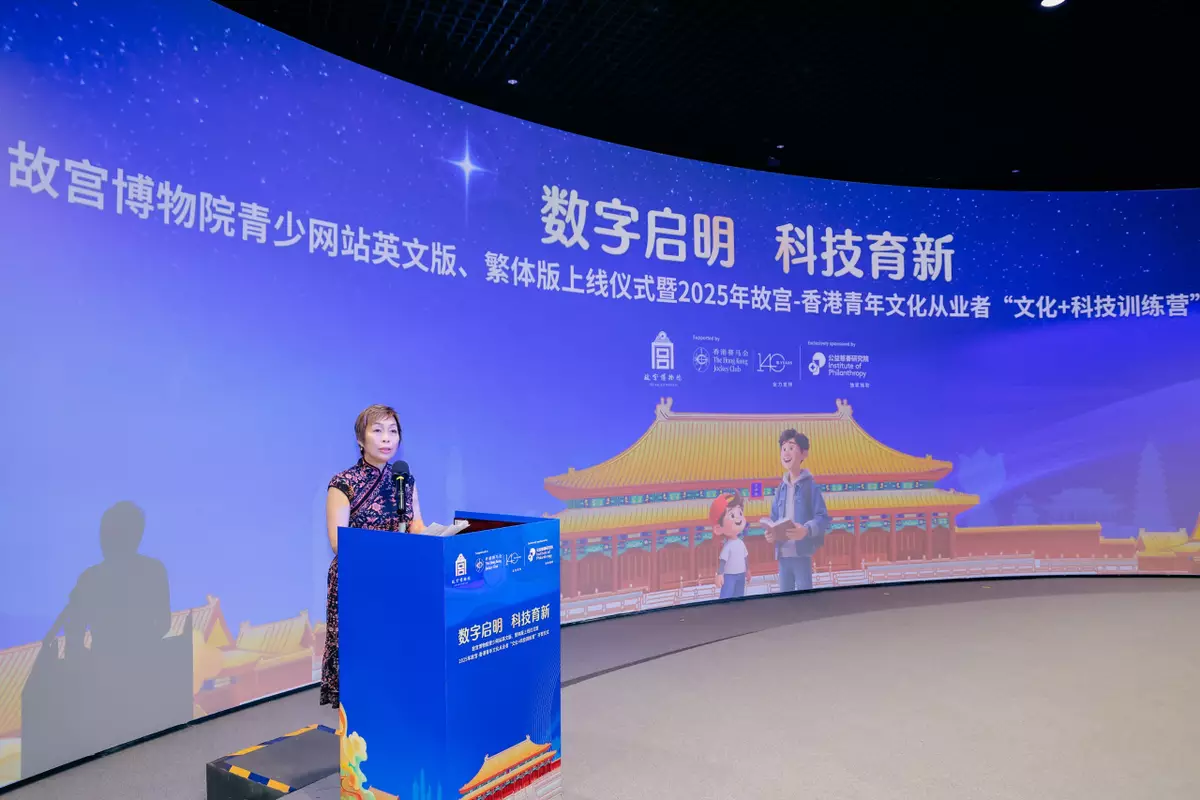
Ann Kung, IoP Deputy Chairman and Trustee of The Hong Kong Jockey Club Charities Trust, delivers a speech at the ceremony.
Guests included Lou Wei, Executive Deputy Director of the Palace Museum; Ann Kung, IoP Deputy Chairman and Trustee of The Hong Kong Jockey Club Charities Trust; Huang Yulong; Director of the Translation and Interpretation Academy of the China International Communications Group (CICG); Eunice Chan, Assistant Director of the Office of the Government of the HKSAR in Beijing and participants of the “Culture+Technology Training Camp”.
Ann Kung, IoP Deputy Chairman and Trustee of The Hong Kong Jockey Club Charities Trust, said that launching the English and traditional Chinese versions of the Palace Museum’s Youth Website is an initiative under the five-year collaboration between IoP and the Palace Museum. She expressed hope that the interactive website could teach younger generations worldwide about the wisdom of Chinese culture in a lively way. She also encouraged young participants joining the first “Culture+Technology Training Camp” to seize this valuable opportunity to learn and explore how digital technology can be applied to the conservation and promotion of cultural heritage and to drive the integration and innovation of the cultural tourism industry.
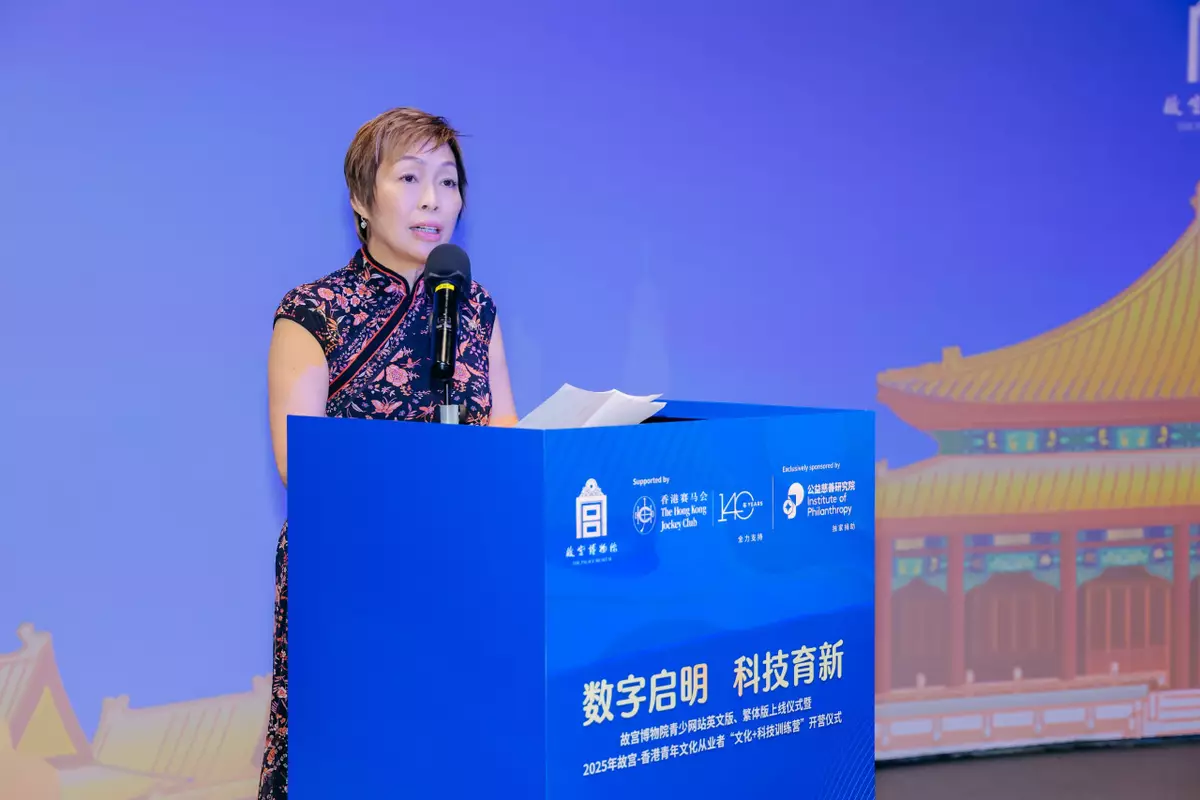
Ann Kung, IoP Deputy Chairman and Trustee of The Hong Kong Jockey Club Charities Trust, delivers a speech at the ceremony.
Lou Wei, Executive Deputy Director of the Palace Museum, said the Palace Museum is the jewel in China’s ancient civilisation that transcends time and connects generations of people through history. General Secretary Xi Jinping said – “In the drive to advance the building of a strong country and the realisation of national rejuvenation through Chinese modernisation, there is much young people can achieve.” He expressed hope that teenagers could become the inheritors and promoters of traditional Chinese culture by accumulating valuable knowledge from the Palace Museum’s platforms and applying their youth and wisdom to enhance culture through technology in the future.
Established as an independent “think-fund-do” tank for China, Asia and beyond through a seed grant from The Hong Kong Jockey Club and its Charities Trust, IoP aims to provide a platform bringing philanthropic stakeholders together to promote the betterment of societies. It is collaborating with the Palace Museum on a five-year initiative to foster cultural exchange and develop arts-tech talent. The two projects highlighted above form part of this effort to promote Chinese culture and develop Hong Kong into an East-meets-West centre for international cultural exchange, as outlined in the National 14th Five-Year Plan. In addition, IoP hopes to increase teenagers’ interest in Chinese culture by integrating arts and culture in a lively way, deepen the public’s sense of identity and pride in the country’s culture and promote sense of patriotism.
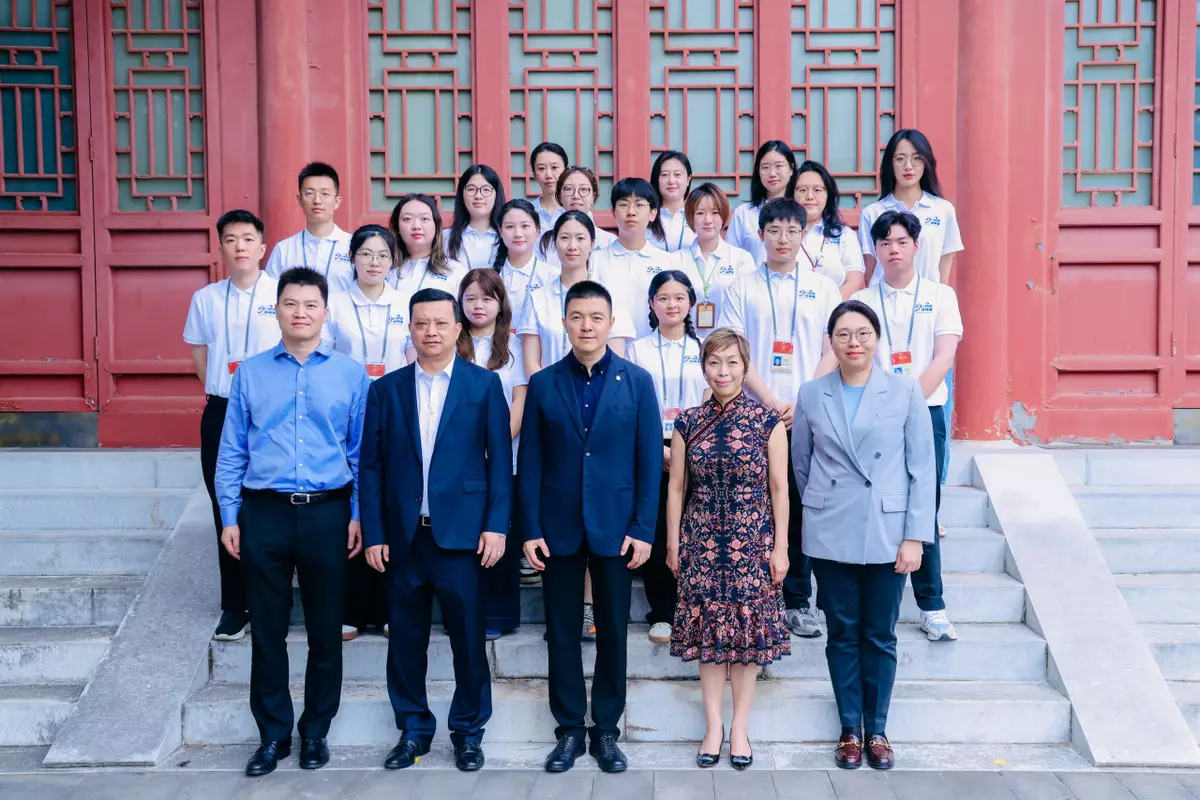
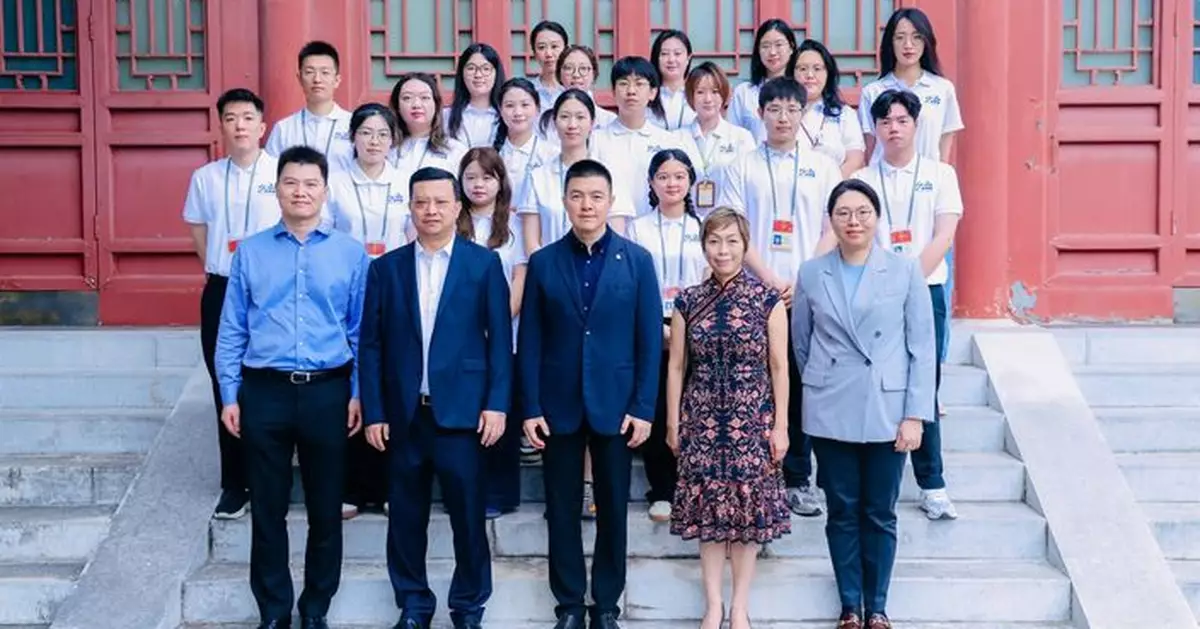
Guests include Lou Wei, Executive Deputy Director of the Palace Museum (front row, middle); Ann Kung, IoP Deputy Chairman and Trustee of The Hong Kong Jockey Club Charities Trust (front row, 2nd right); Huang Yulong, Director of the Translation and Interpretation Academy of the CICG (front row, 2nd left); Eunice Chan, Assistant Director of the Office of the Government of the HKSAR in Beijing (front row, 1st right); Xin Yutang, Deputy Director of the Translation and Interpretation Academy of the CICG (front row, 1st left); and participants of the “Culture+Technology Training Camp”.
The launch of the Palace Museum’s Youth Website English and traditional Chinese versions leverages the expertise of the professional team from the Translation and Interpretation Academy of the China International Communications Group. The project tailors translations to accommodate differences in linguistics and usage among different audiences. It has translated some 150,000 simplified Chinese characters into English and traditional Chinese. Apart from translating the simplified Chinese version of the Palace Museum’s Youth Website in key areas such as guided tours, exhibitions, architecture, collections and imperial history, it uses innovative forms of expression to provide an edutainment platform and educational resources for teenagers in the Mainland and outside via hand-drawn illustrations, interactive trails, games, micro-animations, videos and online journaling tools.
The Palace Museum-Hong Kong Youth Cultural Practitioners “Culture+Technology Training Camp” 2025 has recruited 20 participants from universities across Hong Kong and the Palace Museum this year. They are due to visit the Palace Museum for an academic exchange programme themed around “Culture+Technology” and conduct field studies in Hangzhou, Shanghai and Beijing from 7 July to 3 August. The camp includes lectures from experts, institutional field studies, group discussions and workshops that aim to promote traditional Chinese culture and enhance the professional competence of cultural practitioners from Hong Kong and the Mainland. The lectures focus on the application of digitalisation and technology covering topics such as Digitalisation and Cultural Inheritance, the application of Virtual Reality and Augmented Reality, and Creativity and Production of Digital Exhibition. After four weeks’ training, participants will reflect on their takeaways through group projects and propose a curatorial framework for a digitalised exhibition.