The Institute of Philanthropy (IoP) has launched a three-year research collaboration with Peking University’s Guanghua School of Management (GSM) to analyse how corporations in the Chinese Mainland create social impact. The study will investigate the strategies, motivations, and practices of leading philanthropic corporations. It will also assess the policy frameworks, incentive mechanisms, and regulatory environments that shape corporate participation in philanthropy, generating evidence-based insights to guide the sector’s future development.
This research comes at a pivotal moment for philanthropy in the Chinese Mainland. According to the China Philanthropy Donation Report 2024, charitable donations received by social organisations in the Chinese Mainland reached RMB151 billion in 2023, with corporate contributions accounting for RMB115.6 billion, or 76.6% of the total. With their scale, resources, and networks, businesses are central to the philanthropic landscape — uniquely positioned to drive innovation, support policy effectiveness, and amplify social impact.

Institute of Philanthropy and Peking University have launched a three-year collaboration to analyse how corporations in the Chinese Mainland create social impact.
“This collaboration reflects our commitment to supporting the philanthropic sector in China through research that delivers practical guidance and actionable tools,” said Lester Huang, Chairman of the Institute of Philanthropy. “By examining how corporations create social value, the project will provide businesses with insights to strengthen their giving strategies, inform policy frameworks that encourage participation, and build capacity across the sector. In doing so, it will help business entities maximise their social contributions and ensure philanthropy delivers broader and more sustainable benefits to society.”
Professor Liu Qiao, Dean of GSM, and Jin Jinping, Associate Professor at the Law School of Peking University, will co-lead the research team with support from colleagues in the Law School and National School of Development.

Institute of Philanthropy and Peking University have launched a three-year collaboration to analyse how corporations in the Chinese Mainland create social impact.
Professor Liu, Dean of GSM, observed that Chinese enterprises are shifting from “scale expansion” to “value creation”, balancing economic returns with durable social impact. Drawing on Peking University’s interdisciplinary platform, the study will apply rigorous, evidence-based methods to map the frameworks and mechanisms through which firms generate social value, distil actionable policy recommendations, and help Chinese philanthropic practice integrate into global sustainable-developmentgovernance—thereby offering a Chinese template for worldwide corporate social responsibility.
The collaboration reflects IoP’s continued focus on advancing philanthropy through knowledge, networks, and regional engagement. As part of a broader effort to deepen understanding of giving practices rooted in Asian contexts, this initiative will contribute to a growing body of work that connects research with practice and ideas with action. By working alongside leading academic institutions and engaging a wide cross-section of stakeholders, IoP continues to support the development of thoughtful, locally grounded approaches to philanthropy while fostering dialogue across sectors.
The Global Fund to Fight AIDS, Tuberculosis and Malaria (the Global Fund) and the Institute of Philanthropy (IoP), a “think-fund-do” tank established by The Hong Kong Jockey Club and its Charities Trust, today announced a US$4.68 million (HK$36.49 million) partnership to accelerate the adoption of next-generation, near point-of-care tuberculosis (TB) diagnostics in high-burden countries.
TB remains the world’s leading infectious disease killer, claiming more than one million lives every year despite being preventable and curable. Recent advances in TB vaccine and counter-measure development offer initial promise, whereas closing the diagnostic gap remains a critical missing link for controlling TB: current diagnostic methods do not only take time but also require multiple visits which delay diagnoses and hence sustain community transmission.
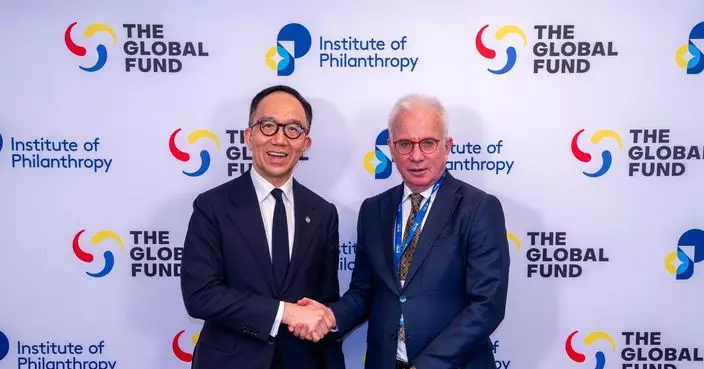
Dr. Gabriel Leung, Director of the Institute of Philanthropy (left), and Peter Sands, Executive Director of the Global Fund (right), formalised a US$4.68 million (HK$36 million)
To address this gap, the announced initiative focuses on capacity building to accelerate the uptake of a major diagnostic breakthrough: near point-of-care molecular tests recommended by the World Health Organization (WHO) for TB in March 2026. These tests utilise easy-to-collect swab samples, deliver results in under an hour, and provide a highly cost-effective tool designed for deployment in primary healthcare settings such as frontline clinics.
“Transformative health innovations only deliver their full potential when countries can access them and have the support they need to put them into practice,” said Peter Sands, Executive Director of the Global Fund. “This partnership with the Institute of Philanthropy will help countries accelerate the adoption of new TB diagnostic technologies and bring high-quality testing closer to the communities that need it most.”
By bringing rapid testing closer to where people live, the technology enables patients to receive an accurate diagnosis and potentially begin treatment during a single clinic visit—thereby reducing diagnostic delays, preventing patients from being lost to follow-up, and curbing further transmission. This marks a significant shift in TB diagnosis: moving away from reliance on century-old sputum smear microscopy toward rapid molecular testing designed around the needs of patients rather than distant laboratories.
“Philanthropy can play a catalytic role in helping proven health innovations reach people faster. Particularly when Asia stands at a pivotal moment in the fight against TB, with a significant opportunity to accelerate access to life-saving diagnosis through innovation,” said Dr. Gabriel Leung, Director of the Institute of Philanthropy. “Through this partnership, we also see significant potential for innovative diagnostic technologies to strengthen epidemic preparedness across Asia by helping health systems detect and respond to infectious disease threats more effectively.”
Building upon the Global Fund’s existing implementation efforts in 13 early adopter countries, this initiative will provide complementary technical assistance and operational support to enable effective, sustainable deployment across at least four Asian priority countries. Specifically, the initiative will:
1. Provide nationally embedded technical assistance in Indonesia, the Philippines, Bangladesh, and Vietnam. This will focus on strengthening day-to-day planning and implementation of near point-of-care diagnostics, enhancing data collection and logistics systems, facilitating the integration into national diagnostic algorithms and laboratory networks, as well as delivering structured training for implementing partners and local health facilities.
2. Develop evidence and generate demand in early adopter countries. The initiative will systematically document implementation experiences across early adopter countries, including identifying key barriers related to procurement planning, human resources, operational workflows, and service delivery models.
3. Facilitate regional peer-to-peer learning and provide ad-hoc, demand-driven support. In close collaboration with WHO country and regional offices, the initiative will facilitate regional learning among early adopters and other interested countries through convening annual regional workshops and disseminating best practices and guidance.
Anchored in the East for the world, IoP was established in 2023 in Hong Kong, a city with a distinguished history in the fight against TB which pioneered an effective short-course treatment regimen back in the 1960s. This initiative reflects IoP’s aligned vision with its partners to accelerate the uptake of health innovation in Asia while addressing last-mile adoption challenges in strengthening preparedness for future health emergencies.