Supported by the Institute of Philanthropy (IoP), Economist Impact has today released The Business of Doing Good, a multi-part research series examining the range of ways that companies across Asia are embedding public benefit into business strategy. The series draws on extensive research across 13 Asian markets and insights from more than 40 executives, foundation officials, academics, and other authorities.
The initiative responds to a growing need for regionally grounded insights into corporate philanthropy—an area that is expanding rapidly across Asia but evolving on its own terms. As part of IoP’s mission to strengthen philanthropic ecosystems, the series offers practical tools to help companies align purpose with governance, operations, and stakeholder relationships. It reflects a broader shift toward strategic, locally responsive models of doing good that are distinctly shaped by Asia’s cultural, institutional, and economic dynamics.
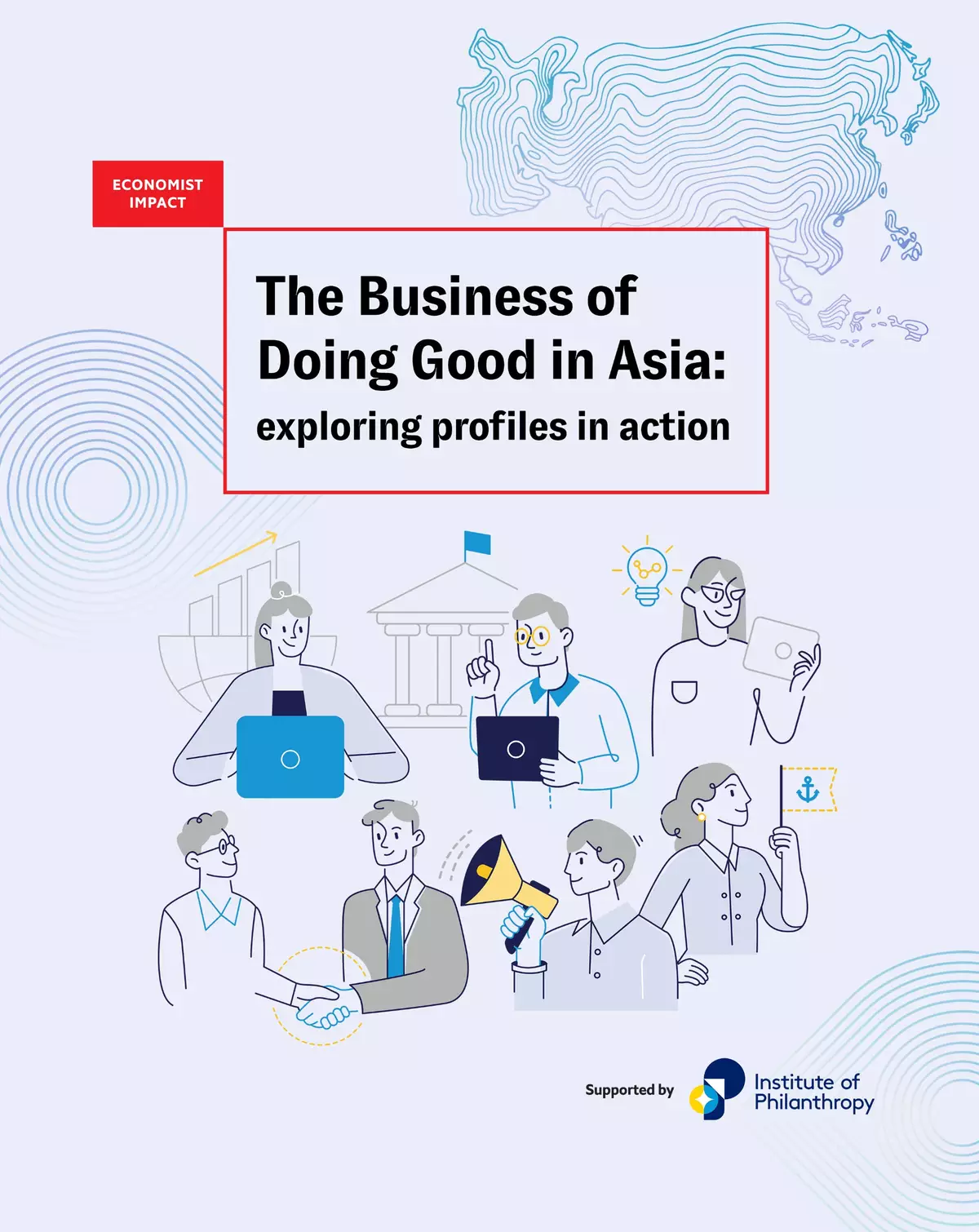
The cover of The Business of Doing Good report.
“This research reflects our commitment to equipping leaders with regionally grounded tools for action,” said Lester Huang, Chairman of the Institute of Philanthropy. “By capturing the diverse ways companies pursue public good, the series helps to advance a more strategic and context-aware approach to corporate purpose.”
The first report, The Business of Doing Good in Asia, examines what drives companies in Asia to contribute to public good. It identifies six distinct profiles of corporate engagement—each offering a lens through which companies can assess their purpose, refine their strategy, and explore new pathways for impact:
● Values Anchor – Companies guided by enduring beliefs, often shaped by founders or family legacy.
● Government Enabler – Businesses that align with national priorities to scale impact and build legitimacy.
● Internal Advocate – Organisations that empower employees to shape and implement purpose-driven policies.
● Trust Builder – Firms that cultivate credibility in low-trust environments to unlock strategic advantage.
● Industry Accelerator – Actors that influence sector-wide standards and regulatory frameworks.
● Social Innovator – Enterprises that develop pioneering commercial models to address unmet social or environmental needs.
The second report, The Business of Doing Good in Asia: exploring profiles in action, uncovers how companies are putting these profiles into practice—through long-term investment, employee engagement, partnerships, trust-building, and data-driven decision-making. Each profile is illustrated with case studies and accompanied by reflection questions to support internal dialogue and planning.
To support practical application, an accompanying infographic distils the six profiles into a strategic tool for leadership teams, sustainability officers, and philanthropic advisors. It enables organisations to quickly assess their positioning, identify blind spots, and initiate targeted conversations around purpose alignment and impact strategy.
“In Asia, doing good has long been woven into the fabric of business,” says Charles Ross, head of policy and insights, Asia-Pacific at Economist Impact. “Shaped by cultural values, government priorities, and collective responsibility, companies across the region recognise that prosperity and purpose go hand-in-hand. Our research shows that these unique-to-Asia influences are driving more strategic and purposeful approaches to corporate doing good.”
The Business of Doing Good forms part of IoP’s wider effort to strengthen philanthropy across Asia by generating insights, building strategic tools, and fostering collaboration across sectors. By examining how companies define and operationalise purpose, the series contributes to the development of resilient, locally grounded ecosystems that can scale impact sustainably and respond to regional needs.
The full series—including case studies, strategic frameworks, and planning tools—is available for download now: The Business of Doing Good.
The Institute of Philanthropy (IoP) is proud to serve as the exclusive sponsor of “Blooming: The Art of Gardens in East and West”exhibition, which opened today at the Hong Kong Museum of Art. The exhibition brings together 106 masterpieces and artefacts from The Palace Museum, the Art Institute of Chicago, the Palace of Versailles and the Hong Kong Museum of Art. Previously staged at The Palace Museum in Beijing in 2025 under the title “Rejoicing in Woods and Springs: A Journey through Garden Cultures in China and the Wider World”, also exclusively sponsored by IoP, the exhibition’s arrival in Hong Kong underscores IoP’s commitment to promoting Chinese culture and values and fostering international cultural exchange.
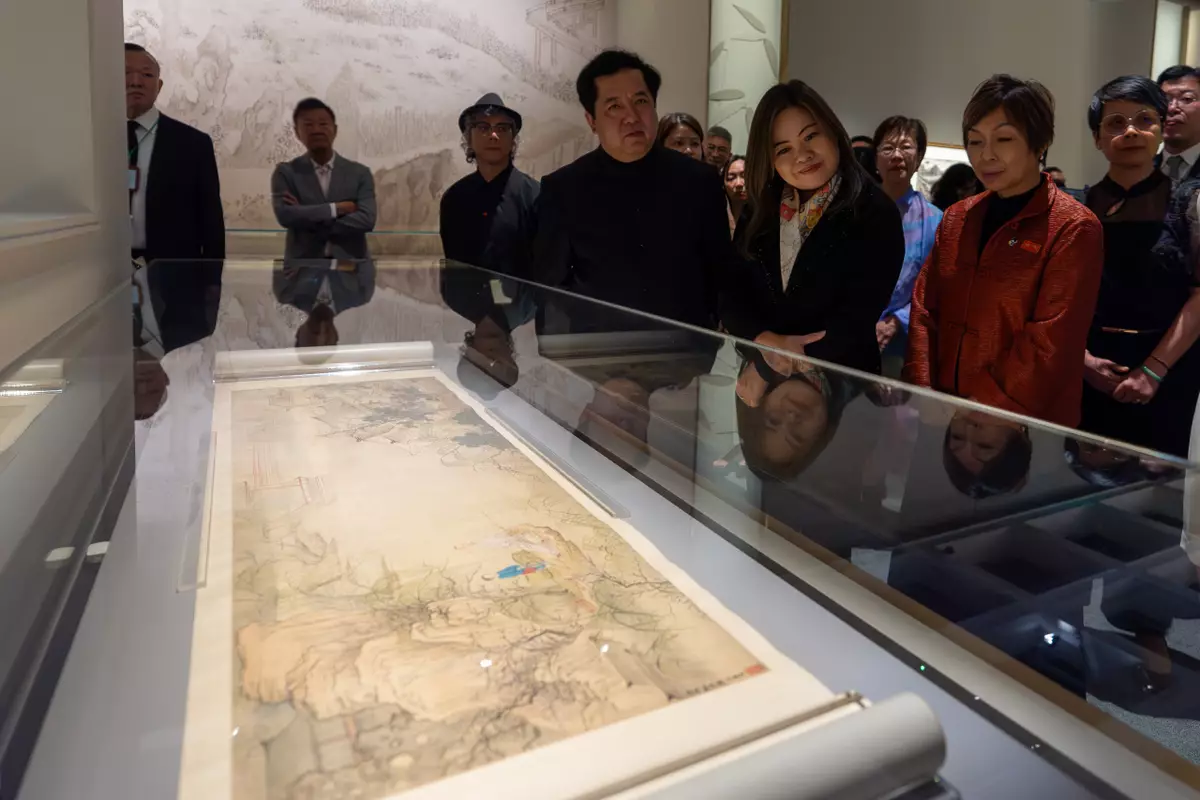
Guests tour the “Blooming: The Art of Gardens in East and West” exhibition.
The exhibition celebrates the beauty and cultural significance of gardens across civilisations. From the grand gardens of Emperor Qianlong and King Louis XIV to the artistry of Claude Monet, Zhang Daqian and Wen Zhengming, visitors can discover how gardens have long been spaces of creativity and leisure.
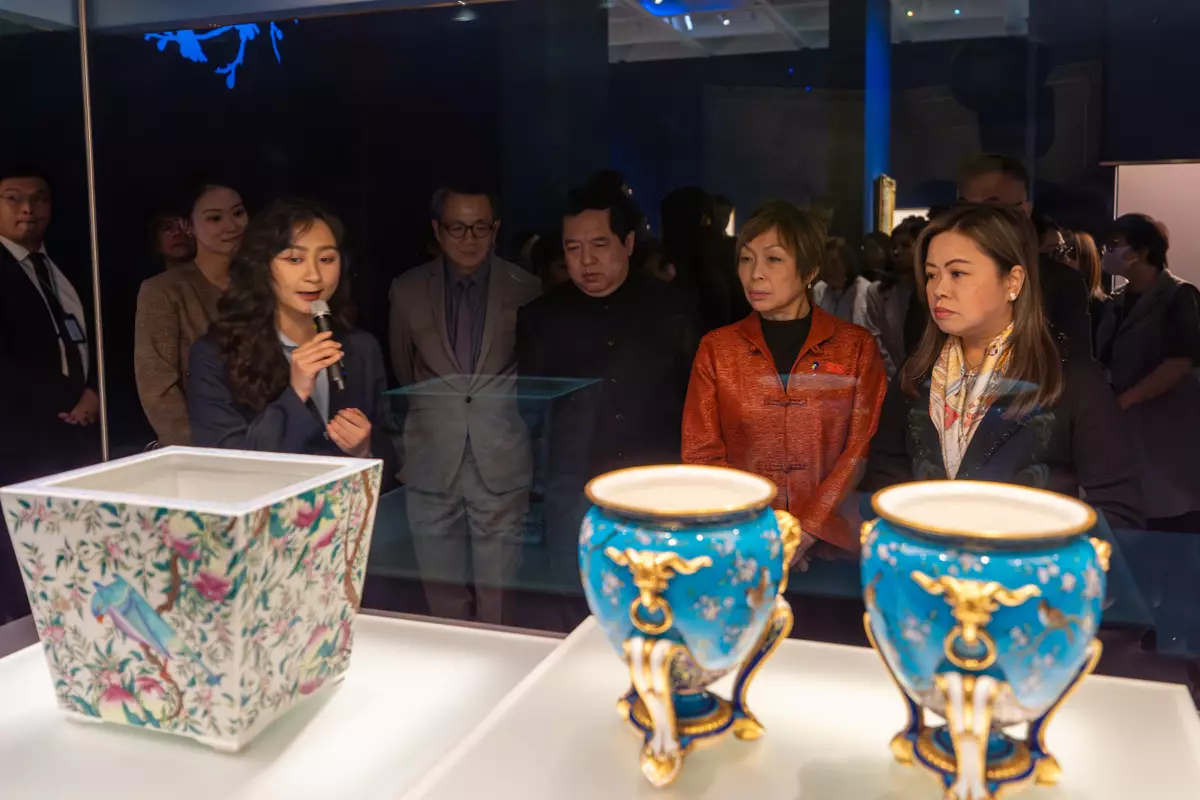
Guests tour the “Blooming: The Art of Gardens in East and West” exhibition.
Officiating guests at the opening ceremony included Rosanna Law, Secretary for Culture, Sports and Tourism of the HKSAR Government; Wang Yuegong, Deputy Director of The Palace Museum; Ann Kung, Deputy Chairman of IoP and Trustee of The Hong Kong Jockey Club Charities Trust; Dr Wang Tao, Pritzker Chair of Arts of Asia, Executive Director of initiatives in Asia of Art Institute of Chicago; Professor Desmond Hui, Chairman of the Art Sub-committee of the Museum Advisory Committee; Eve Tam, Acting Director of Leisure and Cultural Services; and Dr Maria Mok, Museum Director of the Hong Kong Museum of Art.
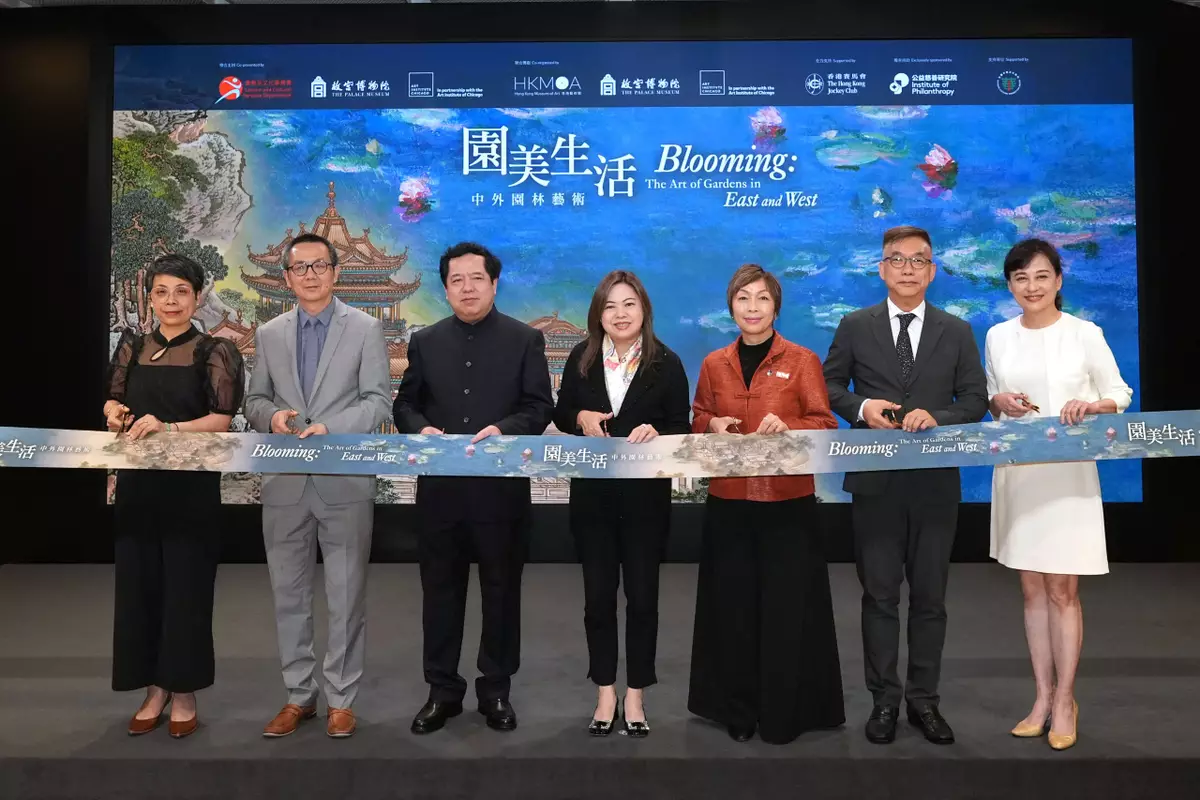
Officiating guests at the opening ceremony included Rosanna Law, Secretary for Culture, Sports and Tourism of the HKSAR Government; Wang Yuegong, Deputy Director of The Palace Museum; Ann Kung, Deputy Chairman of IoP and Trustee of The Hong Kong Jockey Club Charities Trust; Dr Wang Tao, Pritzker Chair of Arts of Asia, Executive Director of initiatives in Asia of Art Institute of Chicago; Professor Desmond Hui, Chairman of the Art Sub-committee of the Museum Advisory Committee; Eve Tam, Acting Director of Leisure and Cultural Services; and Dr Maria Mok, Museum Director of the Hong Kong Museum of Art.
Rosanna Law, Secretary for Culture, Sports and Tourism of the HKSAR Government, said that this touring exhibition, which began at The Palace Museum in 2025 and arrived in Hong Kong today, connects regional culture of the East and West through historical gardens. The HKMoA, as the grand finale, will exclusively feature a selection of art treasures. The exhibition not only fully showcase the distinctive features of gardens from East and West and the rich cultural heritage from different regions, but also highlights Hong Kong’s vital role as a window for mutual exchange and learning between Chinese and Western civilisations. She added that the country advocates “shaping tourism with cultural activities and promoting culture through tourism”. Culture and tourism have always been highly complemented with each other. With Labour Day Golden Week approaching, she believes the exhibition would attract local art lovers and tourists, as well as boost consumption in the surrounding area. She extended her appreciation to The Hong Kong Jockey Club for its full support, and to the Institute of Philanthropy for its sponsorship, which together enabled the exwhibition to be successfully staged.
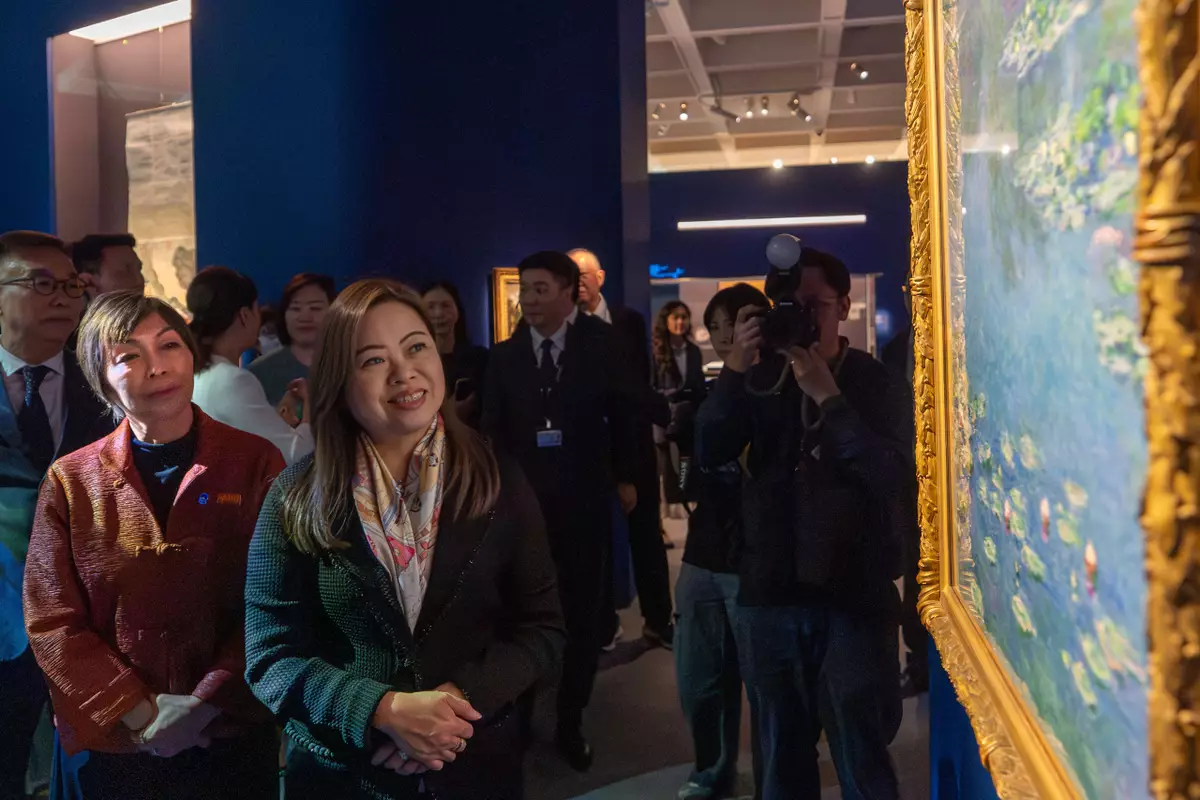
Guests tour the “Blooming: The Art of Gardens in East and West” exhibition.
Wang Yuegong, Deputy Director of The Palace Museum, said that Chinese gardens evoke the grandeur of mountains, rivers, and the natural world, all within a small space and in pursuit of the ideal. Through this exhibition series, the Palace Museum hopes to foster open, cross‑disciplinary dialogue and collaboration, and to engage all sectors of society in exploring the question of ideal living.
Ann Kung, Deputy Chairman of IoP and Trustee of The Hong Kong Jockey Club Charities Trust, said that the enduring legacy of Chinese garden art echoes the profound cultural heritage of The Palace Museum. Through this dialogue across time and cultures, she hoped more members of the public could experience the beauty of gardens from the East and West, deepen their understanding of the nation's history and culture, and carry forward Chinese cultural heritage, thereby enhancing cultural confidence and social cohesion.
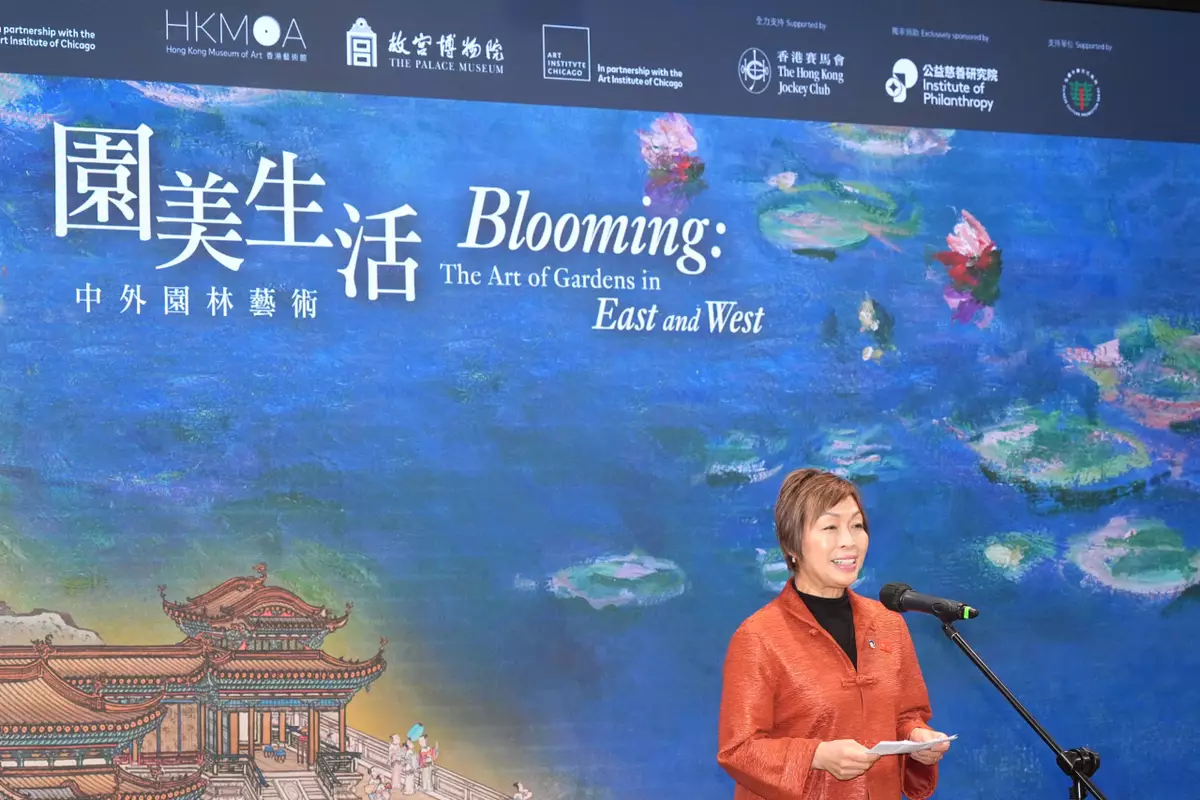
Ann Kung, Deputy Chairman of IoP and Trustee of The Hong Kong Jockey Club Charities Trust, delivers a speech at the opening ceremony of the “Blooming: The Art of Gardens in East and West” exhibition.
“Blooming: The Art of Gardens in East and West” is an important part of a five-year collaboration under a Memorandum of Co-operation entitled “Promotion of Chinese Culture and Arts Tech Talent Development in the Chinese Mainland and Hong Kong” signed between The Palace Museum and IoP. It aims to foster cultural exchange between the Chinese Mainland and Hong Kong and to nurture aspiring arts tech talent. The exhibition will offer guided tours for schools, charitable organisations and non profit-making organisations.
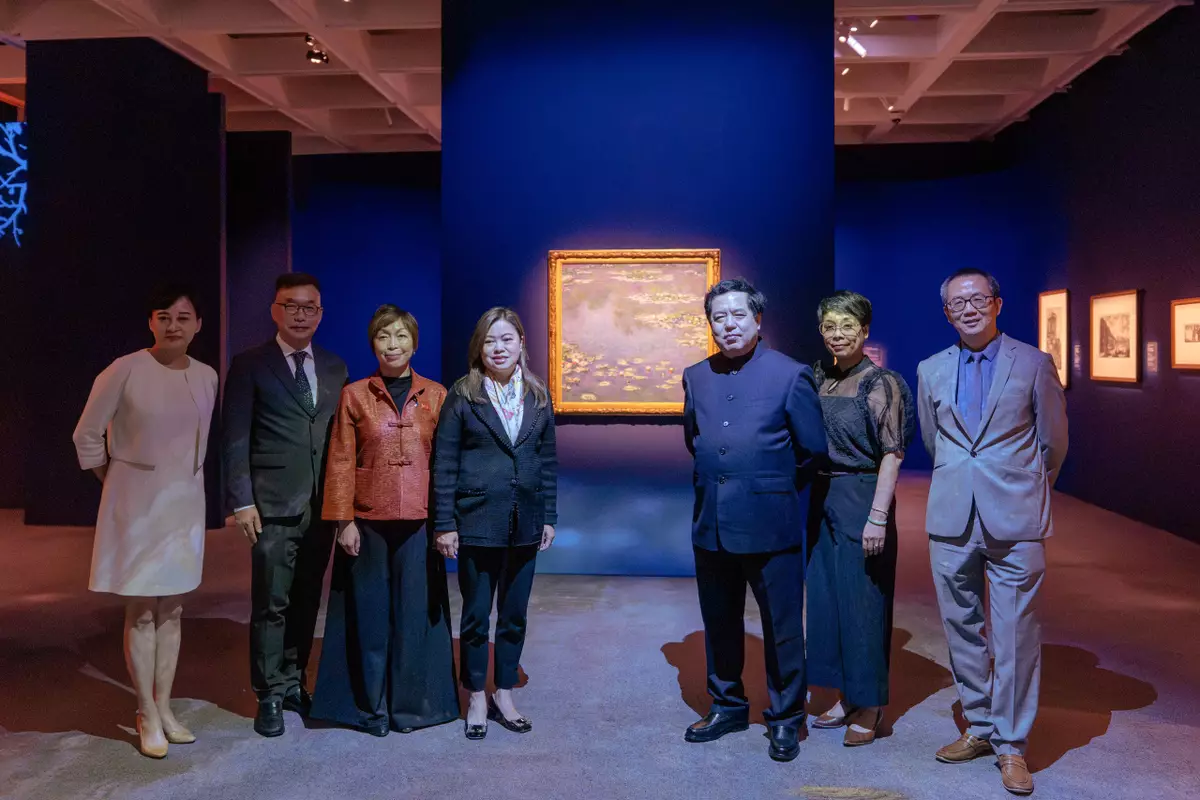
Guests tour the “Blooming: The Art of Gardens in East and West” exhibition.