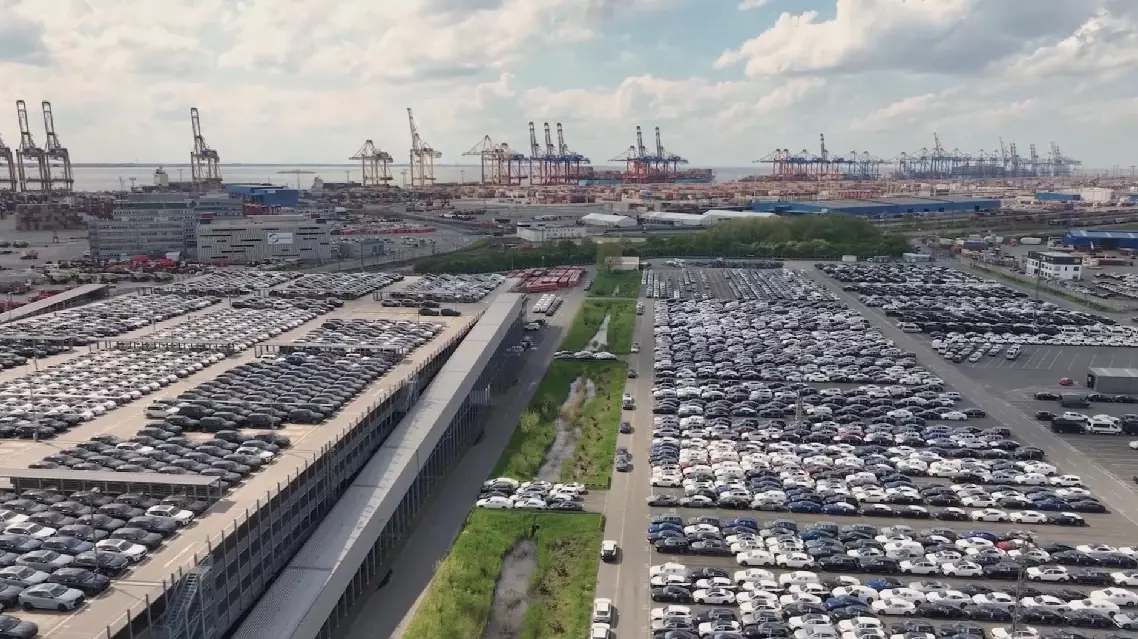
German exports to the United States fell sharply in May, hitting their lowest level in more than three years as the threat of new tariffs continued to cast a shadow over Europe's largest economy.
Data released Tuesday by the Federal Statistical Office showed that exports to the United States slumped by 13.8 percent year on year. On a monthly basis, shipments fell by 7.7 percent, marking the lowest level since March 2022.
Overall, Germany's exports declined by 1.4 percent month on month in May, the statistics office said.
Although the United States remains Germany's largest single export market, its share has been shrinking amid ongoing trade tensions. Imports from the United States also decreased in May, falling 10.7 percent from April, pointing to a broader weakening in bilateral trade flows.
The data comes just ahead of a looming deadline for potential punitive tariffs from Washington. In April, the U.S. administration announced the introduction of so-called reciprocal tariffs on imports from the European Union (EU). Initially scheduled for implementation on July 9, the measures were later postponed to Aug. 1.
Currently, the United States levies 25 percent tariffs on European cars and car parts, and 50 percent on steel and aluminum products, raising concerns among exporters.
Dirk Jandura, president of the Federation of German Wholesale, Foreign Trade and Services (BGA) said on Tuesday that the current foreign trade situation in Germany is severe, and the negative consequences of the U.S. tariff policy are increasingly evident. He said Germany needs an agreement that is fair to the entire Europe, but when reaching an agreement, it cannot disregard the consequences.
German exports to US plunge in May as tariff pause nears expiry
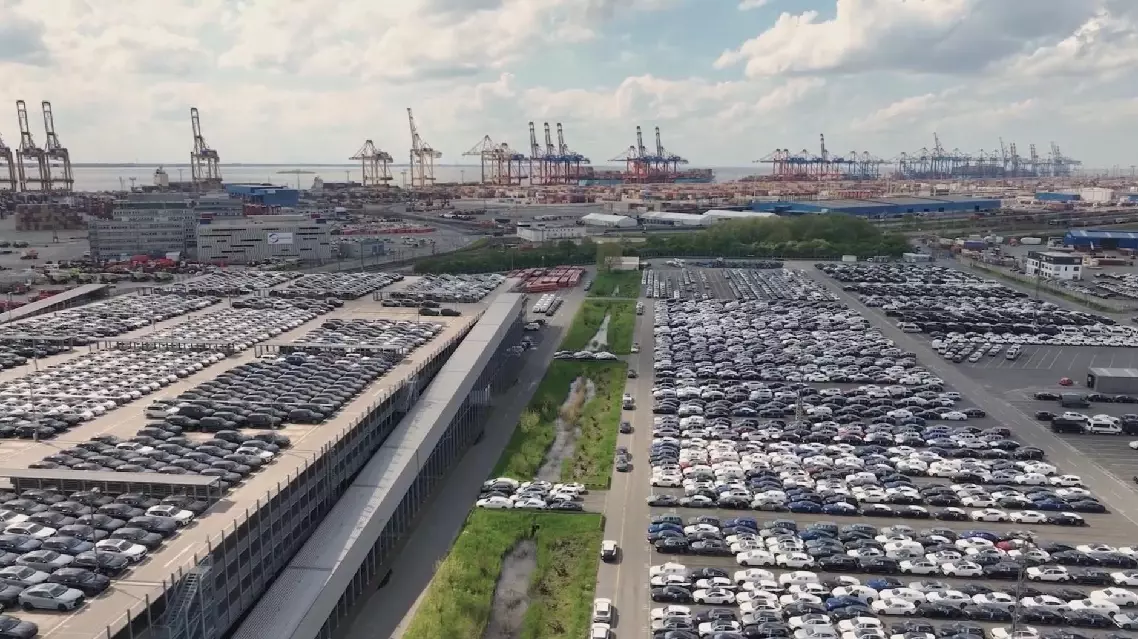
German exports to US plunge in May as tariff pause nears expiry
Several nations and international organizations have voiced strong condemnation against recent U.S. military actions targeting Venezuela, emphasizing the importance of international law and diplomatic solutions.
The United States launched military operations in Venezuela that led to the capture of Venezuelan President Nicolas Maduro and his wife on Jan 3. The Venezuelan government said the strikes hit civilian and military sites in at least four states, including Caracas, Miranda, Aragua and La Guaira. The U.S. attack has left 100 dead, Venezuela's interior ministry said Wednesday.
"The international law, the rules, the rules and regulations of the international system should be really respected. We at the African Union disapprove completely the kidnapping of a sitting president. We issued and released a communique, asking the global powers, influential countries to respect the rule of law, to respect the international law, and also to respect the immunity of sitting presidents everywhere," said African Union (AU) Commission Chairperson Mahmoud Ali Youssouf.
According to Russian media reports, Russian Ambassador to Venezuela Sergey Melik-Bagdasarov, after meeting with Venezuelan Foreign Minister Yvan Gil on Friday, noted that the U.S. actions have resulted in the deaths of approximately one hundred Venezuelan civilians and military personnel.
He stressed that these tragic consequences must be severely condemned and thoroughly investigated. The ambassador added that the United States' neo-colonial, command-and-control approach clearly does not contribute to the normalization of Venezuelan oil sales, and such actions violate international law.
South African Minister of International Relations and Cooperation Ronald Lamola on Friday reiterated his country's commitment to a rules-based international order grounded in international law and multilateralism, with the United Nations (UN) at its center.
Delivering a keynote address on the 2026 Foreign Policy Outlook in Rustenburg, North West Province, Lamola said the doctrine of "might is right" must not be allowed to prevail, and that the rule of law remains fundamental to global stability, legitimacy, and governance.
He said that the unilateral military actions by the U.S. against Venezuela risk reducing the UN Charter to ashes. In the current situation, it is of unprecedented importance and urgency for countries to adhere to resolving disputes through dialogue, consultation, and diplomatic means.
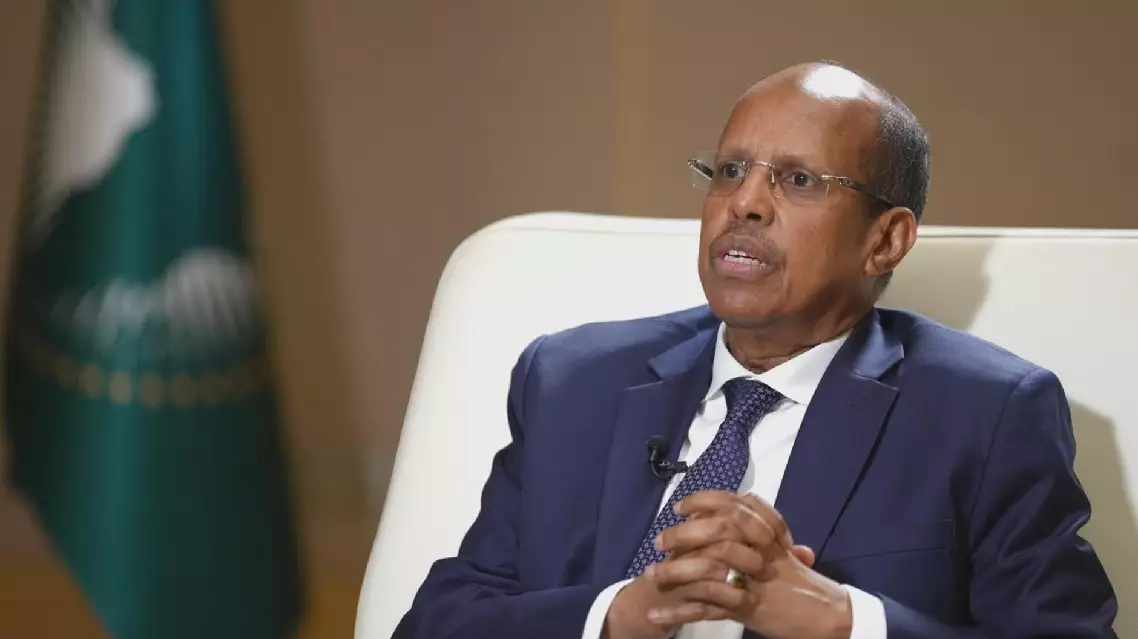
Multiple nations, organizations condemn U.S. military actions against Venezuela