China's pairing assistance program to mobilize nationwide support for development in northwest China's Xinjiang Uygur Autonomous Region, which started nearly three decades ago, has created new opportunities for the remote far western region.
China's top political advisor Wang Huning, also a member of the Standing Committee of the Political Bureau of the Communist Party of China (CPC) Central Committee and chairman of the National Committee of the Chinese People's Political Consultative Conference, joined delegates from 19 provincial-level regions at a work conference on implementation of the pairing-assistance-program in Xinjiang.
The event, which was held from Monday to Wednesday in Xinjiang's Hotan City, highlighted the progress made to relieve poverty and improve livelihoods in the region.
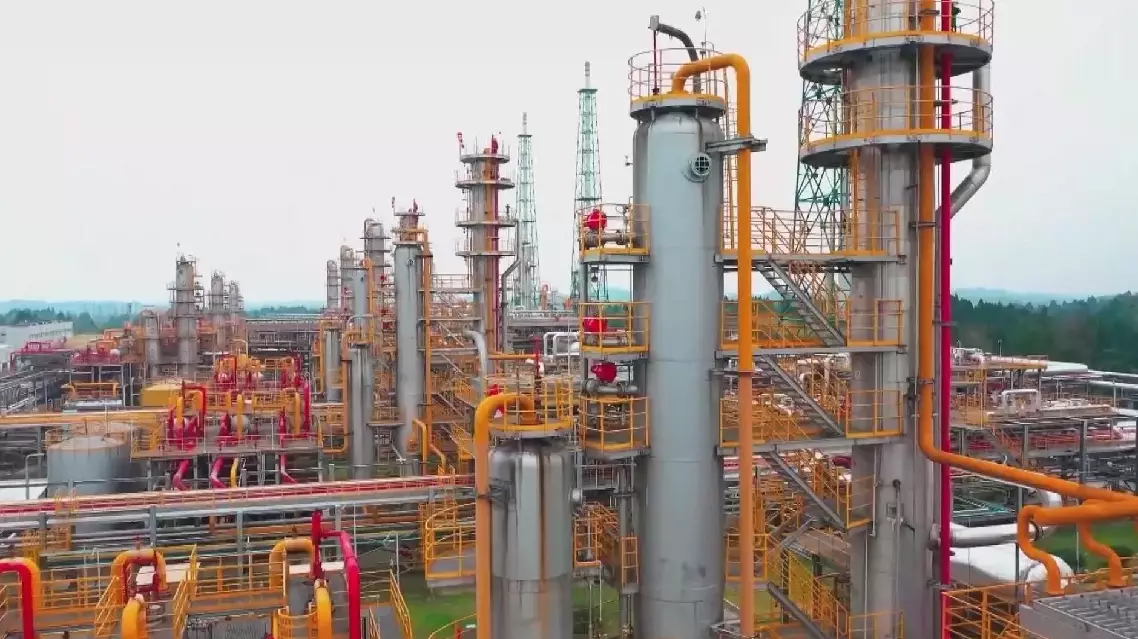
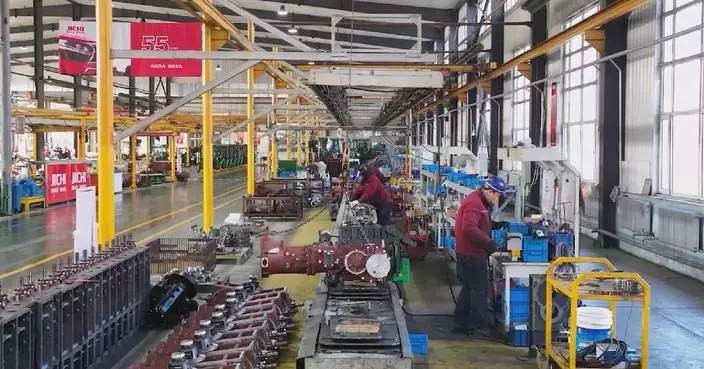
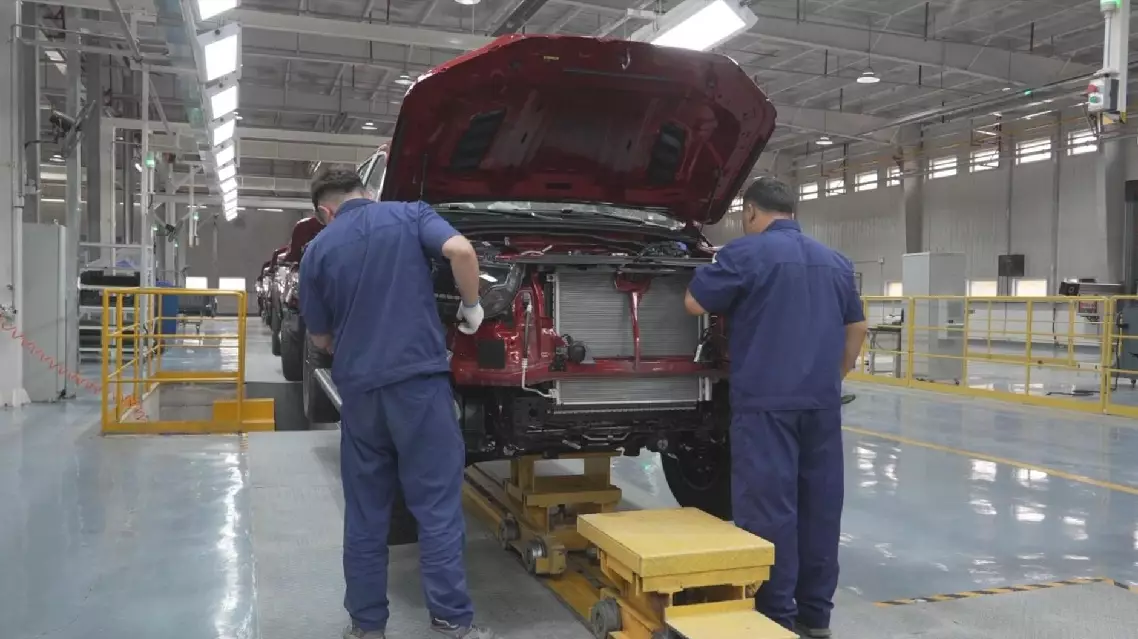
Attendees of the conference visited local sites to see progress on the ground firsthand. In Hotan's industrial park, a car manufacturing plant built with support from east China's Anhui Province in 2022 has filled a major gap in the region's heavy industry. Manufacturing up to 20,000 vehicles a year, it marks a first for local auto-production and is creating job opportunities for young people.
"I didn't have a job before and just stayed at home, so I didn't have this kind of opportunity. I've been working at this company for about a year now, and I make over 3,000 [yuan] (418 U.S. dollars) a month. I'm starting to save some money and planning to get married next year," said Abudukudusi, an employee.
Financial assistance from Anhui province is also helping develop local agriculture. In Pishan county, a large-scale plantation of Gua Lou, a plant used in Traditional Chinese Medicine, has created jobs for more than 2,500 people. The project also promotes cultivation techniques among local villagers, encouraging them to grow the crop in their own courtyards to boost household income.
"The company gave us the seedlings, fertilizer, and taught us how to grow them. Now they've already started coming up, and once they're mature, we expect to make over 3,000 yuan (418 U.S. dollars) from just a small plot. Before, we only had a few fruit trees in the yard, and they didn't bring in much. If this one does well, I'm thinking about planting even more next time," said Maimaitinin, a villager.
In addition to boosting Xinjiang's economy, an assistance arrangement with Beijing has focused on cultural development -- supporting the construction of museums and libraries, and promoting traditional culture and education. By revitalizing old towns and restoring historical districts, cultural tourism is also on the rise in the region. In particular, Hotan prefecture alone received more than 30 million tourist visits last year, with the tourism revenue up about 35 percent year on year.
China's pairing assistance program has played a key role in lifting Xinjiang out of poverty. As the region continues to tap into its unique strengths, the program is set to keep driving economic growth and improving lives across all ethnic communities, paving the way for a brighter, more prosperous future.
China's 'pairing assistance program' creates new opportunities for Xinjiang