American Tai Chi practitioner Jake Pinnick, a 16th-generation disciple of Wudang's Sanfeng Sect, called for more dialogue and cooperation, and less competition, on the sidelines of the ongoing Global Civilizations Dialogue Ministerial Meeting, which opened in Beijing on Thursday.
With a focus on the importance of cultural diversity and mutual learning in advancing human progress, the two-day event has attracted more than 600 guests from 140 countries and regions.
Pinnick explained why dialogue is more crucial now than ever.
"I think mainly because now the world is so much more connected than it used to be. Everything depends on each other to develop -- all of our resources, economics, everything is tied together. So I think that for us to develop in the future, we really have to understand each other and come to the table on equal terms. So that's very different than it was before because I think now it's just so much more convenient to travel, to connect, to work together. And so we need this collaboration, we need this discussion to take place," he said.
He also addressed the pressing need to foster a better world for future generations amidst global conflicts, criticizing the prevalent "win or lose" mentality often seen in Western cultures.
"I think we tend to see things as a win or lose mentality in the West. Whereas I think it's more about, when you really get into the practice, you are trying to improve everybody. It's competition, but it's healthy competition. It's trying to bring everybody up to the same level that is increasingly progressing as we go," Pinnick said.
Advocating for a paradigm shift, he emphasized viewing challenges as opportunities for collaboration.
"So I think we need to look at things less as a competition, and more as a challenge. Look at things less as a competition, more of a collaboration. A lot of times we try to negotiate so we can win, but I think we should learn how to compromise so we can grow together," he said.
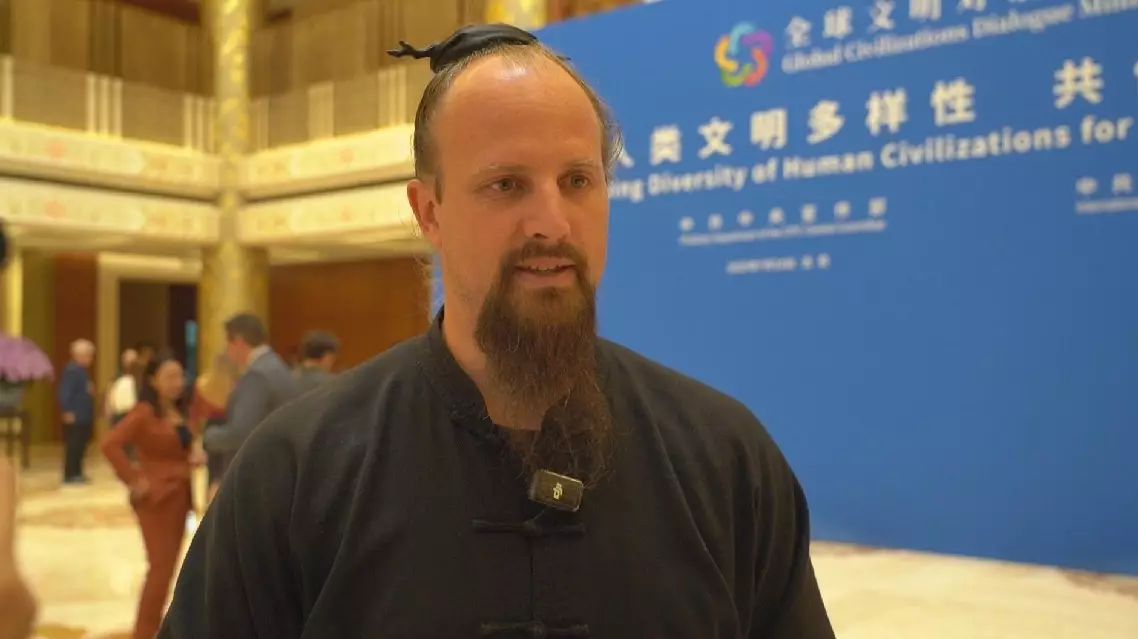
American Tai Chi disciple calls for global collaboration beyond win-lose mindset
From cutting-edge technology exhibitions to retail stores thousands of kilometers away from Europe and Southeast Asia, China-made robot vacuum cleaners are increasingly becoming a popular choice among consumers worldwide.
At electronics retailers in Berlin, Germany, Chinese brands such as Roborock and Dreame occupy prominent positions in dedicated robot vacuum sections, offering a wide range of products priced between 200 and 2,000 euros.
Many local consumers said that when purchasing smart home appliances including robot vacuum cleaners, they tend to give priority to Chinese-made products.
"It's a good price and good quality. It's also the innovation. I have a feeling that the European brands are not innovating enough," said one customer.
"I think they're always on top of the other technologies. They are getting them out faster. A lot of us are switching to the Chinese technology," another consumer said.
Germany is one of the most important overseas markets for China's floor-cleaning robots.
According to data from market research firm GfK, from January to November 2025, more than six out of 10 robot vacuum cleaners sold in Western Europe were Chinese brands.
Industry data also point to a strong global momentum.
According to the International Data Corporation (IDC), global shipments of smart robot vacuum cleaners reached 17.424 million units in the first three quarters of 2025, representing a year-on-year increase of 18.7 percent.
Chinese brands including Roborock, Ecovacs, Dreame, Xiaomi and Narwal ranked among the world's top five in terms of shipment volume, with a combined share of nearly 70 percent of the global market.
At a robot vacuum cleaner manufacturing plant in Huizhou, south China's Guangdong Province, workers were seen stepping up production of newly launched models that recently debuted at the Consumer Electronics Show in the United States, which concluded Friday in Las Vegas, Nevada.
The factory adjusted its production lines as early as December 2025 and stocked inventory in advance for overseas markets to ensure that new products could be delivered to global consumers at the earliest possible time.
"In 2025, Roborock's global shipments exceeded 7.2 million units. Since 2024, overseas revenue has accounted for more than 50 percent of our total revenue. Our products have now been sold to more than 170 countries and regions, serving more than 20 million households worldwide," said Quan Gang, president of Roborock.
At another robot vacuum cleaner manufacturing facility in Dongguan, Guangdong, rising overseas orders have prompted the company to upgrade its production lines with intelligent technologies to further boost capacity. The factory is currently operating at full load to meet a growing demand.
"For 2026, we have already obtained overseas orders worth at least 300 million to 400 million yuan (around 43 million to 57.3 million U.S. dollars). In addition, we've engaged in strategic cooperation with European home appliance group Cebos Group, and our total confirmed orders have exceeded 600 million yuan (around 86 million U.S. dollars)," said Zhang Junbin, founder and CEO of Narwal Robotics.
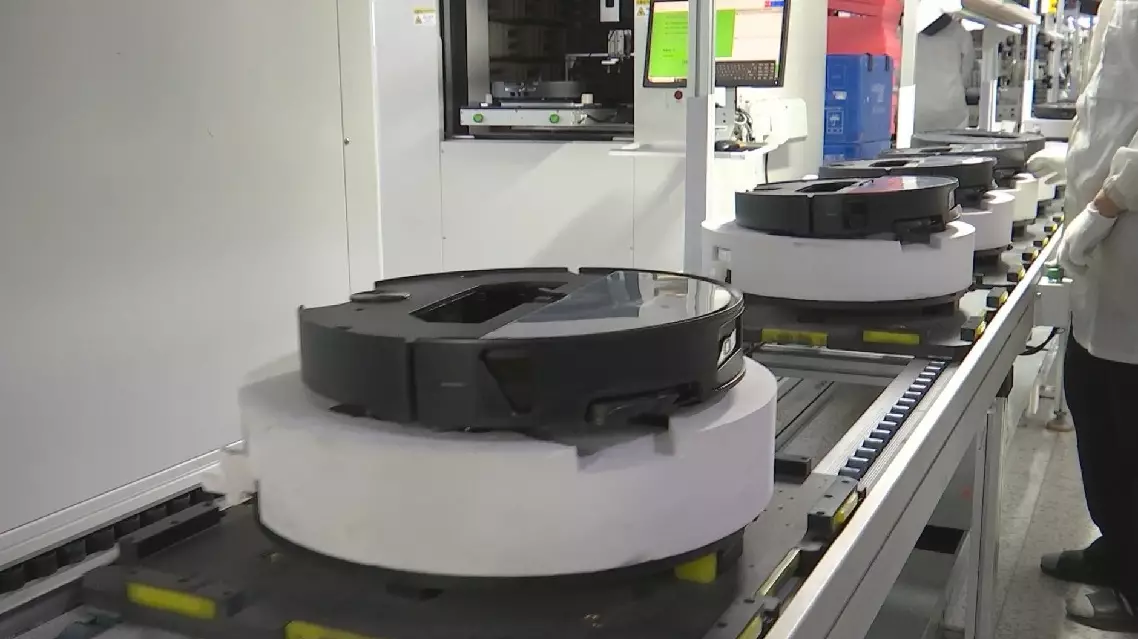
Chinese robot vacuum brands gain strong global traction