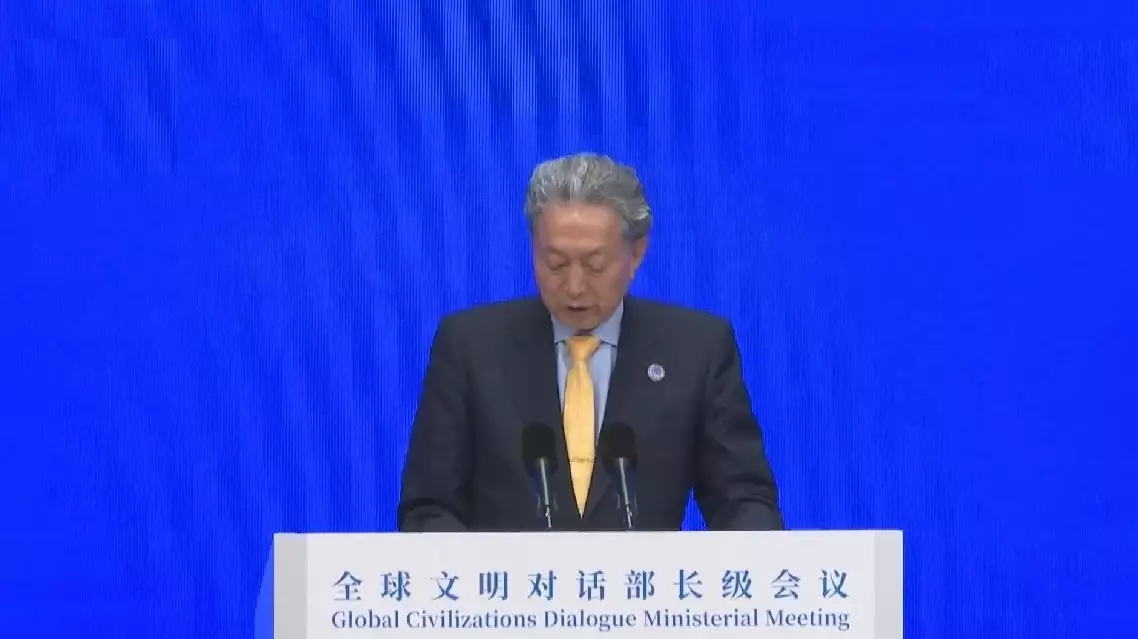
The global major conflicts, such as those in Ukraine and Gaza, have drawn more attention to the importance of the Global Civilization Initiative, former Japanese Prime Minister Yukio Hatoyama said in a speech at the Global Civilizations Dialogue Ministerial Meeting in Beijing on Thursday.
Chinese President Xi Jinping put forward the Global Civilization Initiative in March 2023. The initiative advocates respect for the diversity of civilizations, the common values of humanity, the importance of inheritance and innovation of civilizations, as well as robust international people-to-people exchanges and cooperation.
"The Ukraine Crisis and the genocide against Palestine, a lot of innocent people are killed in warfares. Although Israel and the U.S. have reached a ceasefire agreement with Iran, we can still not predict the development of the situation. We must also note that in Africa, there are a lot of people killed in wars and conflicts and a lot of people are made homeless," said the former prime minister.
"To resolve these tragedies, the path is filled with difficulties. It's because of these difficulties that the Global Civilization Initiative is all the more relevant, because it calls for peace, development and other common human values. This year marks the 80th anniversary of the end of World War II. The 20th century is the century of wars, and all the people wish the 21st century will be a century of peace," he said.
Themed "Safeguarding Diversity of Human Civilizations for World Peace and Development," the event is hosted by the Publicity Department and the International Department of the Communist Party of China Central Committee.
United Nations Secretary-General Antonio Guterres sent his message of congratulations to the event, which has attracted over 600 guests from 140 countries and regions.
Global Civilizations Initiative helps address conflicts: former Japanese PM
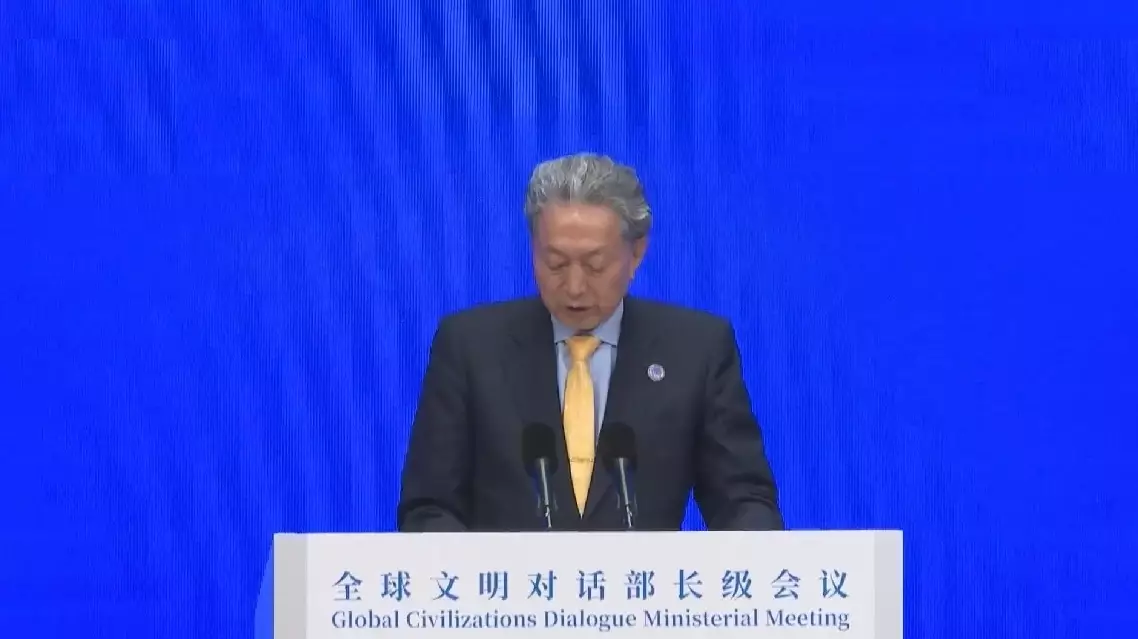
Global Civilizations Initiative helps address conflicts: former Japanese PM
Dense fog and icy conditions have forced the closure of major expressways in multiple provincial-level regions across China since Friday morning.
At 12:00 on Friday, traffic control measures, including closures, remained in effect on 16 sections of national and provincial trunk roads in Hebei, Henan, Shandong and Xinjiang. Among these, two sections had their mainlines closed, while toll stations on 14 sections were shut.
Starting from the early hours of Friday, multiple areas in Dezhou City of Shandong Province experienced dense fog, with Xiajin, Pingyuan and Yucheng reporting visibility less than 100 meters.
In parts of Xiajin, visibility dropped below 50 meters, prompting local meteorological authorities to issue a red alert for dense fog.
Affected by the fog, temporary control measures were implemented on some expressways within Dezhou, with multiple entrances closed. Traffic police strengthened presence at service areas, entrances and exits of expressways to ensure road safety.
So far, all expressway entrances and exits in Dezhou have resumed normal operation.
Many areas in Hebei also experienced dense fog, with visibility less than 200 meters in eastern Baoding, western Cangzhou, Xingtai, and eastern Handan in the province. Some localities even reported visibility below 50 meters.
Shortly after 6:00, the Hebei Provincial Meteorological Observatory issued an orange alert for dense fog.
From 23:00 on Thursday to Friday morning, over 10 key routes in Hebei, including the Beijing-Hong Kong-Macao, Beijing-Kunming, Daqing-Guangzhou, Tianjin-Shijiazhuang, and Qingdao-Lanzhou expressways, were affected by dense fog.
Expressway traffic police closed some toll stations along these expressways according to fog conditions, and activated traffic diversion points to divert vehicles.
By 10:00 Friday, as visibility improved, some toll stations resumed operation.
On expressway sections with insufficient visibility, traffic police used patrol cars to lead and control the speed of vehicles, guiding stranded traffic to pass through orderly and safely.
Additionally, due to snowfall and icy road surfaces, control measures were taken on 28 expressway sections in Inner Mongolia, Heilongjiang and Xinjiang. Among them, the mainlines of 14 sections were closed, while toll gates were shut on the other 14 ones.
The National Meteorological Center (NMC) issued a blue alert for snowfall on Friday morning, with parts of Inner Mongolia, Heilongjiang and Gansu expected to be hit by heavy snow.
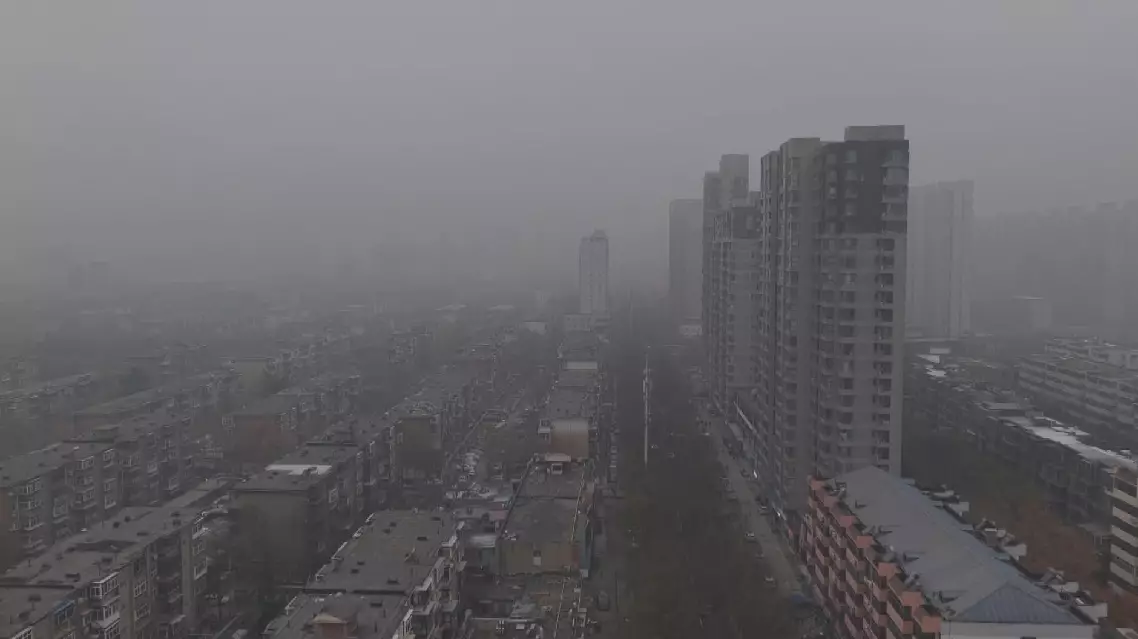
Foggy, icy weather forces road closure across China