The 2025 China Film Directors' Night kicked off Tuesday in the coastal city of Yantai, Shandong Province, gathering China's top filmmakers to honor the year's most outstanding directorial achievements.
Now in its second year, this prestigious gala co-hosted by China Media Group's Yangshipin, the China Film Directors Guild, and the City of Yantai, celebrates cinematic artistry.
It's the annual celebration and a homecoming of sorts. Filmmakers have converged on Yantai, a city etched in Chinese cinema's DNA.
In 1898, film first arrived in China via American missionaries in Yantai. Now, 127 years later, the China Film Directors Guild honors its best where the story started.
Snatching this year's Best Director Award is director Guan Hu for his film Black Dog which won the Un Certain Regard at the Cannes in 2024.
The Best Picture of the Year went to The Sinking of the Lisbon Maru, a powerful documentary about a WWII prisoner war ship that capsized en route to Japan. First time director Fan Li explains why he made this film against all odds.
"Accidentally, everybody told me that sinking shipwreck had never been found. Simply out of curiosity, I tried to find the shipwreck and I found it. Then I realized below the deck when I was searching the boat, there are 828 boys forgotten. So automatically as a father, you want to know who they are," said Fan, Best Picture Winner.
In a posthumous tribute, this year's Jury's Honorary Best Director Award went to the late Pema Tseden, the revered Xizang director who passed away in 2023 at the age of 53.
His son who received the award on his behalf has already been carrying on his legacy.
"The most poignant lesson my father has taught me is his courage to pursue the truth that has led him to making films about his hometown and his version of the world through his eyes," said Jigme Trinley, son of late Pema Tseden.
Trinley is not the only young director who stepped up onto the stage. Gao Peng received the Best Young Director prize for his film.
The award gala this year isn't just about recognizing the creme de la creme in the Chinese film industry, but also a celebration of 120 years of Chinese cinema.
Jackson Yee claimed Best Actor for his transformative role in Big World, while Yong Mei and Song Jia made history, sharing the Best Actress Award in the awards' first-ever tie.
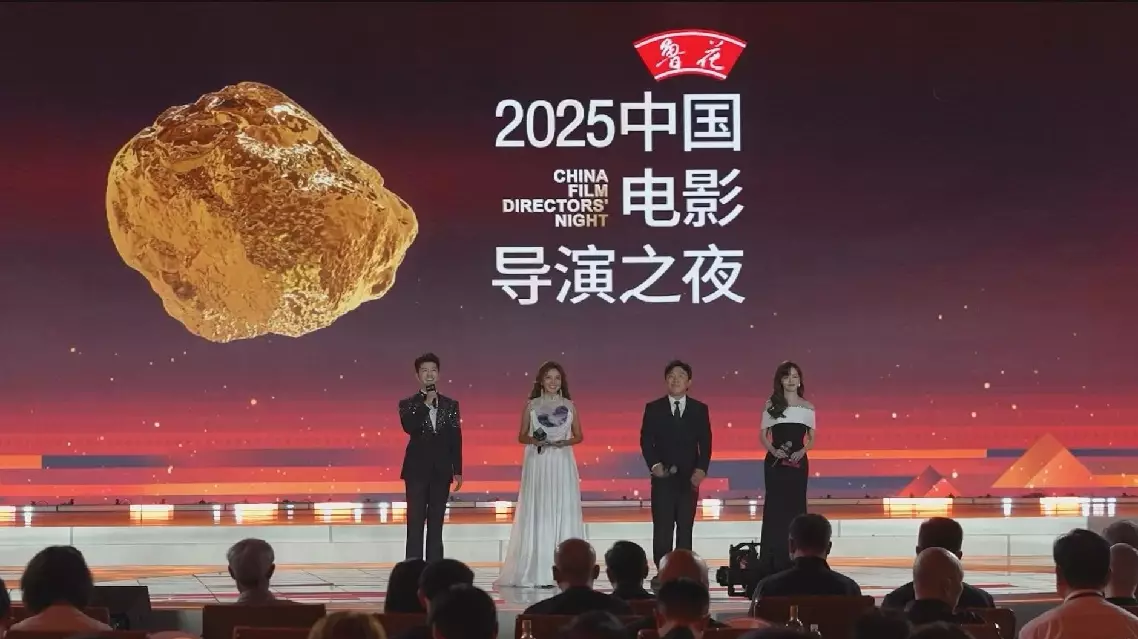
Directors shine at 2025 China Film Directors' Night in Yantai
For more than 1,000 years, Jingdezhen, the "porcelain capital" in east China's Jiangxi Province, has shaped how the world understands porcelain, with even discarded shards preserving a living tradition.
Weng Yanjun, president of the Jingdezhen Imperial Kiln Institute, reflected on the scale and challenge behind Jingdezhen's historic creations.
"When I look at this gigantic dragon jar, I couldn't help going back to 600 years ago, when the emperor had this order to create something bigger than ever before. The failure rate of the dragon jar is so high. It could be nine out of 10. Even making failure products like this takes courage, takes techniques and takes commitment," said Weng.
Those failed attempts, once discarded, now preserve the evidence of how Jingdezhen pursued perfection.
For more than 1,000 years, Jingdezhen's porcelain industry has endured through the Song, Yuan, Ming and Qing dynasties (960-1911). What has survived is not only its porcelain, but also a living heritage of raw materials, workshops, kilns and specialized craftsmanship.
Those firings produced masterpieces as well as failures, with the discarded pieces forming another kind of archive.
At the Jingdezhen Imperial Kiln Institute, Weng told archaeology students that fragmented specimens sometimes provide more information than complete artifacts.
Weng leads the development of the world's first Ancient Ceramics Gene Bank, which extracts and catalogs the defining characteristics of each ceramic shard.
"For our institute alone, we have excavated more than 20 million pieces of shards for the past over 1,200 years. Among those shards, we do sorting, we do restoration, and we do scientific tests. And then we find, wow, a small shard can tell us much more information than even a whole piece," said Weng.
Using a standardized sample library and unified data framework, the project records each piece's shape, decoration, body material, glaze, color, firing marks and inscriptions, creating a valuable resource for authentication and research around the world.
"The whole city is a wonderful lab and space range makes Jingdezhen uniquely a wonderful example of how the handicraft ancient industry with porcelain as the focus survived even to today," Weng added.
Jingdezhen once helped establish benchmarks for how porcelain was made. Now, the gene bank is turning fragments into a language that can be read beyond the city. For French artist and researcher Yann Colleu, learning to read that language has also changed the way he creates.
"Since my childhood, my parents had these teapots, tea sets, plates and cups. I was very curious about the pattern, like the meaning, what was behind it? Actually when I discovered in Jingdezhen that it was a bat, because of 'fu' and 'fu' is fortune, but also you have the 'wufu,' like the five blessings. I was like a child with stars in the eyes, discovering the world for the first time," said Colleu, PhD candidate at Jingdezhen Ceramic University.
What once seemed abstract became part of Yann's own visual language. In his work, traditional Jingdezhen motifs and production scenes are reimagined through a contemporary, cross-cultural lens.
"Jingdezhen is a timeless city. The past, the present and even the future are tied together. This is one of illustration of 72 traditional steps developing during the Ming Dynasty (1368-1644). The difference is, instead of using Chinese characters, I use foreigners. I want to use the past to talk about the present and even the future with Jingdezhen," said Colleu.
The Jingdezhen Handicraft Porcelain Industry Sites were inscribed on the UNESCO World Heritage List on Saturday. The inscription recognizes not just a single kiln or masterpiece, but an entire production system, from its archaeological remains and traditional craftsmanship to its industrial knowledge and global influence.
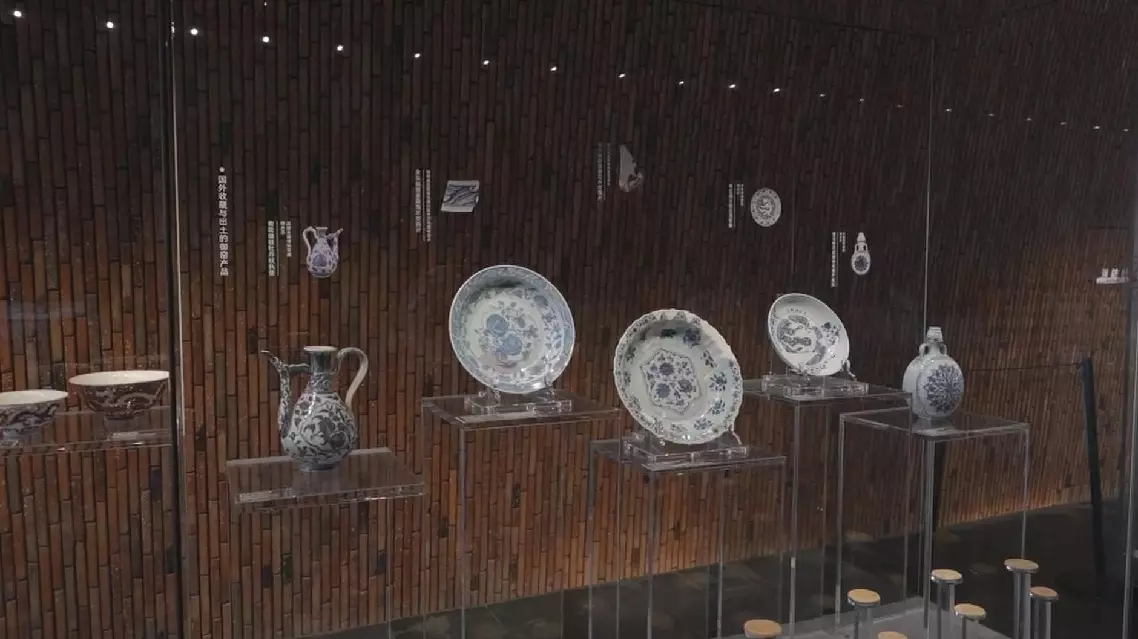
Porcelain shards preserve Jingdezhen’s timeless legacy