Olivia Smith became the most expensive player in women's soccer history Thursday when she joined Arsenal from Liverpool for a world record transfer fee of 1 million pounds ($1.34 million).
The new benchmark in women’s soccer surpasses the 900,000 pounds ($1.1 million) Chelsea paid for Naomi Girma from San Diego Wave in January.
“She’s one of the most talented young players in the game and has huge potential for further development here at the club,” Arsenal director of women’s football Clare Wheatley said.
The 20-year-old Canada forward signed a four-year deal, a person with knowledge of the contract told The Associated Press. The person, who also confirmed the record fee, spoke on the condition of anonymity because the full details of the transfer have not been made public.
Smith's deal highlights the rapid increase in spending in women's soccer with transfer records regularly broken in recent years.
Zambia striker Racheal Kundananji set a new record when joining Bay FC from Madrid CFF for $788,000 last year, and that figure was quickly exceeded by Girma's move to Chelsea, becoming the first $1 million women's soccer player.
As recently as 2020, the most expensive women’s player was Denmark’s Pernille Harder, who joined Chelsea from Wolfsburg for $355,000.
England’s Keira Walsh left Manchester City for Barcelona in 2022 for a deal worth $513,000, and Chelsea broke the record again in 2024 when signing Mayra Ramirez from Levante for $542,000.
But those figures are still a long way behind the men's game where Neymar remains the record signing following his 2017 move from Barcelona to Paris Saint-Germain for $262 million.
Kylian Mbappe joined PSG for $216 million and is the second most expensive player of all time.
After one season at Penn State, Smith joined Sporting Lisbon in 2023 and scored 16 goals in 28 appearances. She moved to Liverpool last year and scored nine times in 25 games.
Smith is also Canada's youngest international after making her debut at 15 in 2019.
“Olivia is an exciting young player and we believe she can make a big contribution here at Arsenal," head coach Renee Slegers said. “We’ve been impressed by her mentality and character, excelling in two European leagues at such a young age.”
Arsenal is a 15-time English champion and won the Champions League for the second time in its history last season.
Despite Chelsea being the dominant force in women's soccer in England, Arsenal is the only English team to win the Champions League.
“It’s my dream to compete for the biggest titles here in England and in Europe and I’m excited to get started and contribute to doing that here with Arsenal," Smith said.
James Robson is at https://twitter.com/jamesalanrobson
AP soccer: https://apnews.com/hub/soccer
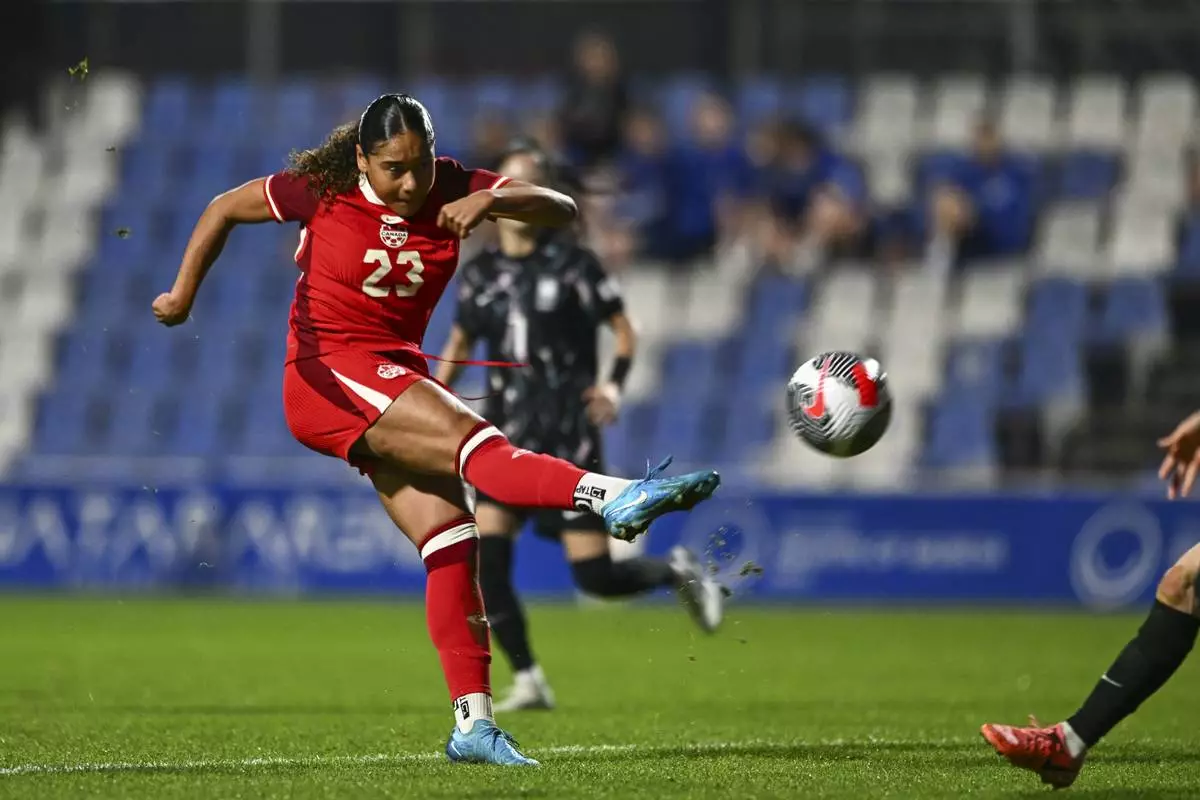
Canada's Olivia Smith tries a shot during the international women's friendly soccer match between Canada and South Korea at the Pinatar Arena Football Center in Murcia, Spain, on Dec. 3, 2024. (AP Photo/Francisco Macia Martinez, File)
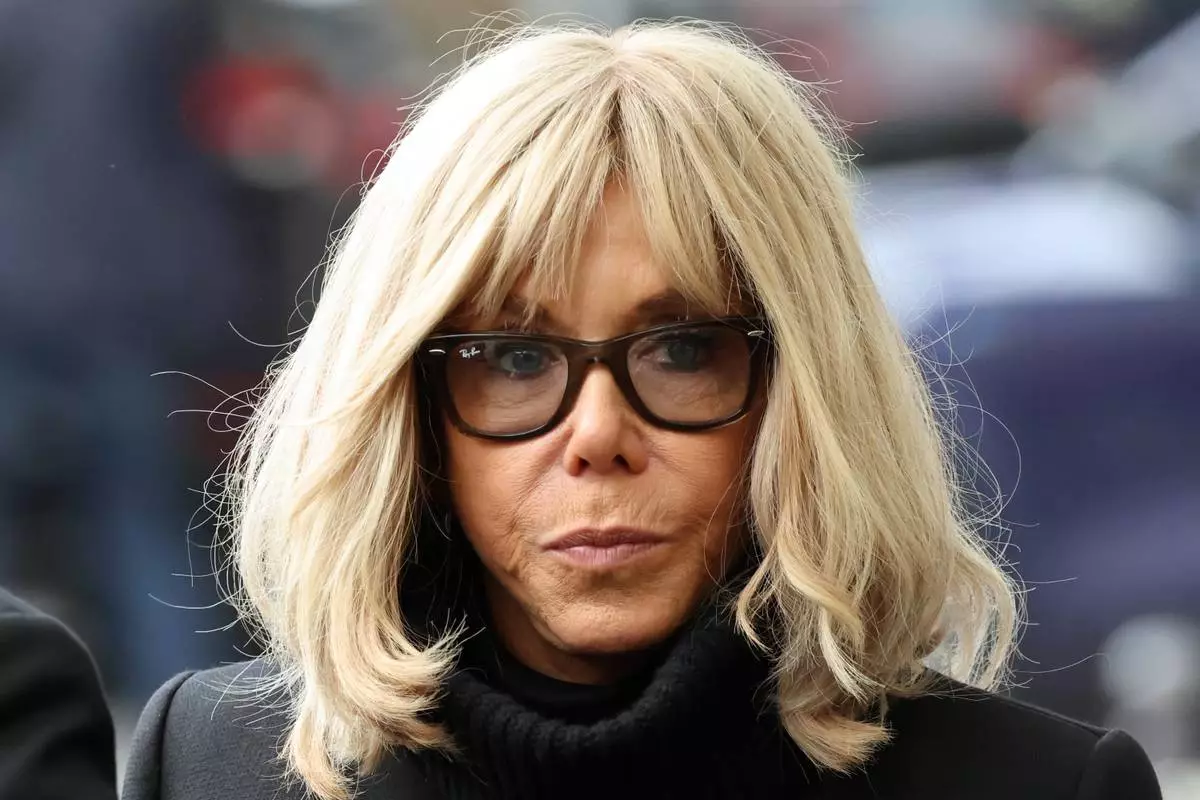
BUENOS AIRES, Argentina (AP) — Venezuelans on Saturday were scrambling to understand who is in charge of their country after a U.S. military operation that captured President Nicolás Maduro.
President Donald Trump delivered a shocking pick: The United States, perhaps in coordination with one of Maduro's most trusted aides.
Delcy Rodríguez has served as Maduro's vice president since 2018, overseeing much of Venezuela's oil-dependent economy as well as its feared intelligence service. But she is someone the Trump administration apparently is willing to work with, at least for now.
“She’s essentially willing to do what we think is necessary to make Venezuela great again,” Trump told reporters of Rodríguez, who faced U.S. sanctions during Trump’s first administration for her role in undermining Venezuelan democracy.
In a major snub, Trump said opposition leader Maria Corina Machado, who was awarded last year's Nobel Peace Prize, didn't have the support to run the country.
Trump said Rodríguez had a long conversation with Secretary of State Marco Rubio in which Trump claimed she said, “‘We’ll do whatever you need.’”
“I think she was quite gracious,” Trump added. “We can’t take a chance that somebody else takes over Venezuela that doesn’t have the good of the Venezuelan people in mind.”
Rodríguez tried to project strength and unity among the ruling party's many factions, downplaying any hint of betrayal. In remarks on state TV, she demanded the immediate release of Maduro and his wife, Cilia Flores, and denounced the U.S. operation as a flagrant violation of the United Nations charter.
“There is only one president in this country, and his name is Nicolás Maduro," Rodríguez said, surrounded by top civilian officials and military commanders.
There was no immediate sign that the U.S. was running Venezuela.
“What will happen tomorrow? What will happen in the next hour? Nobody knows,” Caracas resident Juan Pablo Petrone said.
Trump indicated that Rodríguez had been sworn in already as president of Venezuela, per the transfer of power outlined in the constitution. However, state television has not broadcast any swearing-in ceremony.
In her televised address, Rodríguez did not declare herself acting president or mention a political transition. A ticker at the bottom of the screen identified her as the vice president. She gave no sign that she would be cooperating with the U.S.
“What is being done to Venezuela is an atrocity that violates international law,” she said. “History and justice will make the extremists who promoted this armed aggression pay.”
The Venezuelan constitution also says a new election must be called within a month in the event of the president’s absence.
But experts have been debating whether the succession scenario would apply here, given the government’s lack of popular legitimacy and the extraordinary U.S. military intervention.
Venezuelan military officials were quick to project defiance in video messages.
“They have attacked us but will not break us,” said Defense Minister Gen. Vladimir Padrino López, dressed in fatigues.
Interior Minister Diosdado Cabello appeared on state TV in a helmet and flak jacket, urging Venezuelans to “trust in the political leadership and military” and “get out on the streets” to defend the country’s sovereignty.
“These rats attacked and they will regret what they did,” he said of the U.S.
A lawyer educated in Britain and France, Rodríguez has a long history of representing the revolution started by the late Hugo Chávez on the world stage.
She and her brother, Jorge Rodríguez, head of the Maduro-controlled National Assembly, have strong leftist credentials born from tragedy. Their father was a socialist leader who died in police custody in the 1970s, a crime that shook many activists of the era, including a young Maduro.
Unlike many in Maduro’s inner circle, the Rodríguez siblings have avoided criminal indictment in the U.S. Delcy Rodríguez has developed strong ties with Republicans in the oil industry and on Wall Street who balked at the notion of U.S.-led regime change.
Among her past interlocutors was Blackwater founder Erik Prince and, more recently, Richard Grenell, a Trump special envoy who tried to negotiate a deal with Maduro for greater U.S. influence in Venezuela.
Fluent in English, Rodríguez is sometimes portrayed as a well-educated moderate in contrast to the military hardliners who took up arms with Chávez against Venezuela's democratically elected president in the 1990s.
Many of them, especially Cabello, are wanted in the U.S. on drug trafficking charges and stand accused of serious human rights abuses. But they continue to hold sway over the armed forces, the traditional arbiter of political disputes in Venezuela.
That presents major challenges to Rodríguez asserting authority. But experts say that Venezuela’s power brokers have long had a habit of closing ranks behind their leaders.
“These leaders have all seen the value of staying united. Cabello has always taken a second seat or third seat, knowing that his fate is tied up with Maduro’s, and now he very well might do that again,” said David Smilde, a sociology professor at Tulane University who has conducted research into Venezuela's political dynamics over the past three decades.
“A lot depends on what happened last night, which officials were taken out, what the state of the military looks like now," Smilde said. "If it doesn’t have much firepower anymore, they’re more vulnerable and diminished and it will be easier for her to gain control.”
Shortly before Trump's press conference, Machado, the opposition leader, called on her ally Edmundo González — a retired diplomat widely considered to have won the country’s disputed 2024 presidential election — to “immediately assume his constitutional mandate and be recognized as commander-in-chief."
In an triumphant statement, Machado promised that her movement would “restore order, free political prisoners, build an exceptional country and bring our children back home.”
She added: “Today we are prepared to assert our mandate and take power."
Asked about Machado, Trump was blunt: “I think it would be very tough for (Machado) to be the leader," he said.
“She doesn’t have the support or respect within the country.”
Venezuelans expressed shock, with many speculating on social media that Trump had mixed up the two women's names. Machado has not responded to Trump's remarks.
Goodman reported from Miami.
Venezuelan Vice President and Oil Minister Delcy Rodriguez gives a press conference at the Miraflores presidential palace in Caracas, Venezuela, March 10, 2025. (AP Photo/Ariana Cubillos, File)
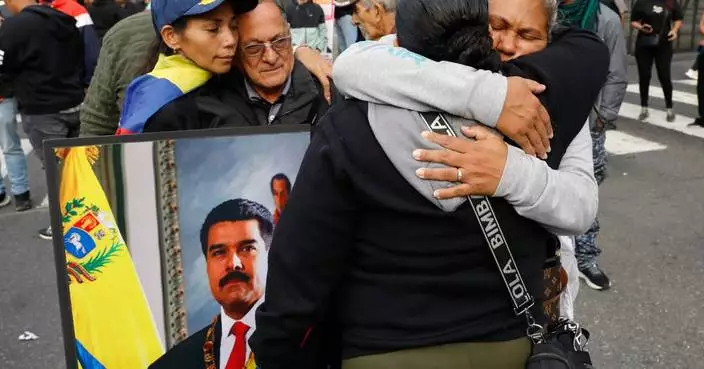
A supporter of Venezuelan President Nicolas Maduro stands on a median strip waving a national flag in Caracas, Venezuela, Saturday, Jan. 3, 2026, after U.S. President Donald Trump announced that Maduro had been captured and flown out of the country. (AP Photo/Ariana Cubillos)