Skip to Content Facebook Feature Image

China's manufacturing capability unparalleled for building supply chains: Royal Philips CEO

China

China

China

China's manufacturing capability unparalleled for building supply chains: Royal Philips CEO

2025-07-18 16:18 Last Updated At:19:27

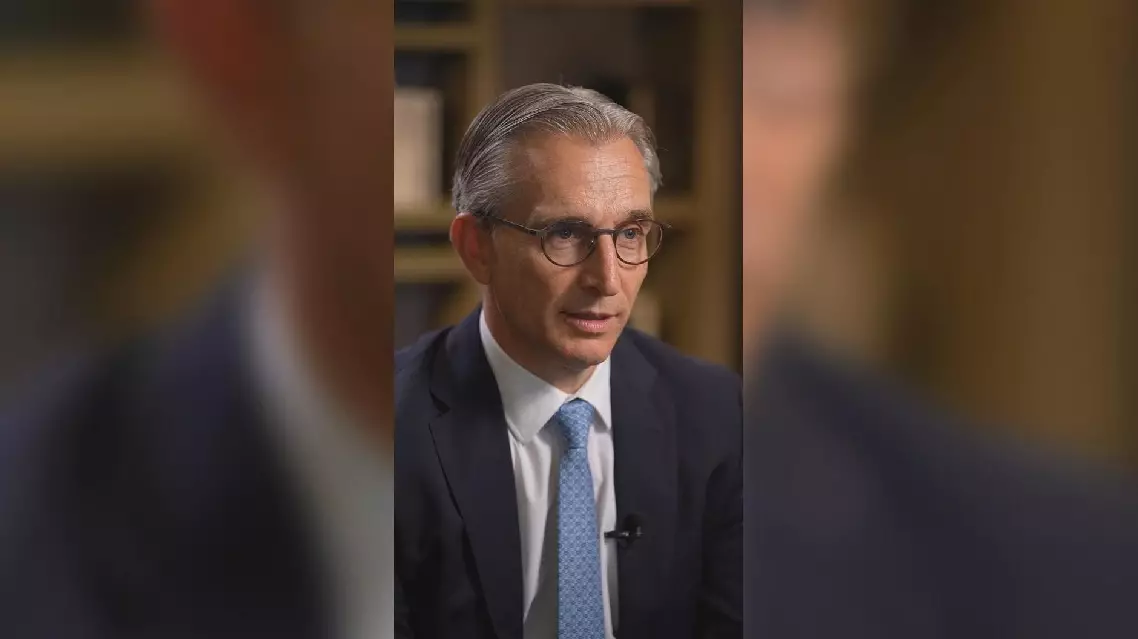
China's manufacturing capability is unparalleled for building supply chains, said Roy Jakobs, CEO of Royal Philips, while attending the ongoing China International Supply Chain Expo (CISCE) in Beijing.

In the interview with China Media Group (CMG), he underscored the importance of the Chinese market and how fast it can develop.

"Philips knows the importance of the China market and that's why I'm coming as the CEO every quarter, being on the ground, talking to customers. China market is moving very fast, so if you stay out too long and you come back, you are missing a lot of relevant developments," he said.

Jakobs highlighted the significance of participating in the CISCE and mentioned Philips' manufacturing hub in Suzhou, where the company produces diagnostic imaging equipment such as CT and MRI scanners.

"It's very important to participate in the Supply Chain Expo. So we are very big in, for example, diagnostic imaging. One of the very important modalities is the CT scanner and the MRI scanner. So we have a big factory in Suzhou that has a very strong ecosystem around it, both of academia, of businesses, and also supported by the government, so that actually we can produce very strong competitive products out of China for the Chinese market, but also we use that for global export. Secondly, [China's] manufacturing capability is unparalleled in the world. They're fast, they're innovative and they are also competitive in terms of price. So that makes that a very attractive mix to use, kind of to build your supply chain on. We believe that the China supply chain is an integral part of the global supply chain," he said.

Looking ahead, Jakobs announced the company's plan to establish an innovation center in Beijing.

"We're going to establish an innovation center in Beijing. Beijing is another big add to that. We're also very much focused on software and AI, and there's a lot of capability in the Chinese market to go into rapid development of AI. When China has an ambition to accelerate an innovation, it will accelerate innovation. So we want to be part of that development. We want to support it, but also want to actually benefit from it. Now we just had a new launch of the CT5300. It is an AI fueled CT platform that was developed in China, launched in China and also launched to the world. It actually allows you to do it at a lower dose, with better image quality and with a big production capacity so that you can scan many patients. That's a great innovation from China that we use actually across the world," he said.

Jakobs expressed optimism about the Chinese economy, citing improved consumer demand and a strong rebound in the healthcare market and said Philips will increase investment in China.

"When I look at the economic indicators that we just looked at this quarter, I really see that actually the Chinese economy is strengthening both on the consumer where we see better consumption, but also we see the healthcare market really picking up together with the Chinese acceleration of growth, we will also accelerate growth. We also announced that we're going to expand our manufacturing capacity in Suzhou. So we are doing investments in innovation as well as investments in manufacturing, because we believe both sides can be strengthened for the benefit of China and for the benefit of the world," he said.
China's manufacturing capability unparalleled for building supply chains: Royal Philips CEO

China's manufacturing capability unparalleled for building supply chains: Royal Philips CEO

The statement of U.S. President Donald Trump highlighted the urgency for reforming global governance, according to a poll from China Global Television Network (CGTN) on Friday.

"I don't need international law," said Trump during an with The New York Times this week, days after the U.S. attack on Venezuela and the forcible seizure of President Nicolas Maduro. This statement perfectly captures Washington's unilateral and hegemonic trajectory. The New York Times observed that Trump's assessment of his own freedom to use any instrument of military, economic or political power to cement American supremacy was the most blunt acknowledgment yet of his world-view.

In a global public opinion poll conducted by CGTN, 93.5 percent of respondents expressed belief that the U.S., by pursuing unilateralism, has placed itself in opposition to the international community. Also, 91.7 percent think that reforming the global governance system is an urgent priority.

On Wednesday the U.S. announced its withdrawal from 66 international organizations, setting a new record for its retreat from multilateral commitments. These organizations span climate, energy, and global governance, among other fields. Trump argues that their operations run counter to U.S. national interests, sovereignty, and economic prosperity.

In response, 84.1 percent of respondents were not surprised by the U.S. move. Meanwhile, 88.9 percent viewed it as another radical step under the "America First" doctrine. In addition, 93 percent believed the U.S. approach of using international systems when beneficial and abandoning them when not severely undermines the existing international order and global fairness and justice. Also, 88.3 percent noted that the U.S. withdrawals once again expose it as an irresponsible major power, dealing a significant blow to its international reputation. Furthermore, 88.5 percent believe the U.S. withdrawals reflect its negative attitude toward global governance.

The recent episode of unilateral and bullying actions by the U.S. government has sparked widespread alarm and discontent within the international community. Washington's adherence to the law of the jungle where "might is right" is severely undermining the global governance system. In the poll, 89.9 percent of respondents agreed that multilateralism, based on coordination and cooperation, remains key to addressing current global governance challenges. Meanwhile, 94.4 percent believe it is crucial to advance the reform of the global governance system, uphold international rule of law, and enhance the effectiveness of multilateral mechanisms. Moreover, 90 percent think major powers should shoulder greater responsibility and play a more constructive role in promoting global governance reform.

The poll was conducted across CGTN platforms in English, Spanish, French, Arabic, and Russian languages, attracting 24,000 responses within 24 hours.

Trump says 'I don't need international law,' highlighting urgency for reforming global governance: CGTN poll

Trump says 'I don't need international law,' highlighting urgency for reforming global governance: CGTN poll

Recommended Articles