Skip to Content Facebook Feature Image

Arctic birders combat impact of climate change and avian flu on delicate ecosystem

News

Arctic birders combat impact of climate change and avian flu on delicate ecosystem
News

News

Arctic birders combat impact of climate change and avian flu on delicate ecosystem

2025-07-20 14:11 Last Updated At:14:20

VARDØ, Norway (AP) — In one of the top Arctic birding destinations in the world, environmental and health challenges are threatening some of the seabirds that are part of Norway's unique coastal ecosystem.

The population of kittiwakes has decreased by 80% since the 1990s along the Scandinavian country's coast. The small seagull species, among others, is under siege from climate change, predation, local fisheries and the bird flu.

More Images
Seagulls sit in boxes of a so called Seagull Hotel at the harbour in Vardo, Norway, on July 3, 2025. (AP Photo/Tommi Ojala )

Seagulls sit in boxes of a so called Seagull Hotel at the harbour in Vardo, Norway, on July 3, 2025. (AP Photo/Tommi Ojala )
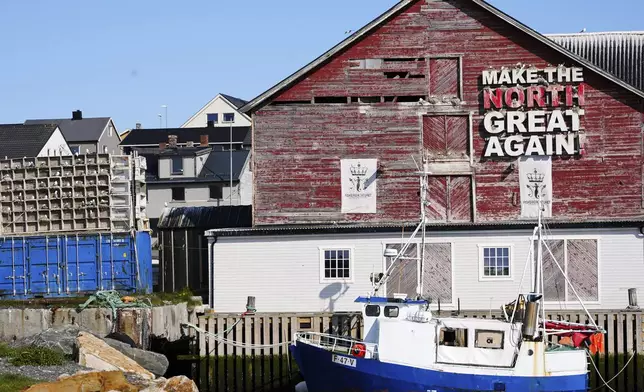
Seagulls sit in boxes of a so called Seagull Hotel at the harbour in Vardo, Norway, on July 3, 2025. (AP Photo/Tommi Ojala )
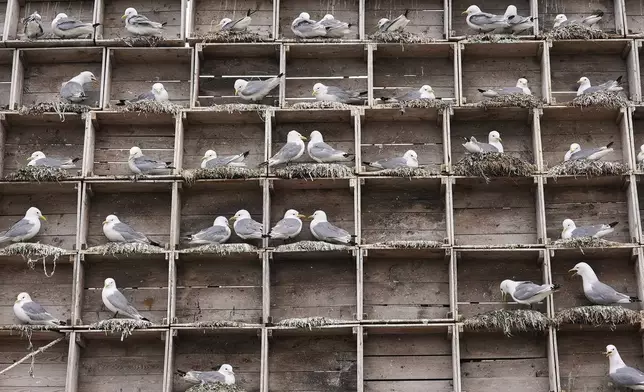
Seagulls sit in boxes of a so called Seagull Hotel at the harbour in Vardo, Norway, on July 3, 2025. (AP Photo/Tommi Ojala )

Seagulls sit in boxes of a so called Seagull Hotel at the harbour in Vardo, Norway, on July 3, 2025. (AP Photo/Tommi Ojala )

Seagulls sit in boxes of a so called Seagull Hotel at the harbour in Vardo, Norway, on July 3, 2025. (AP Photo/Tommi Ojala )

Seagulls sit in boxes of a so called Seagull Hotel at the harbour in Vardo, Norway, on July 3, 2025. (AP Photo/Tommi Ojala )

Seagulls sit in boxes of a so called Seagull Hotel at the harbour in Vardo, Norway, on July 3, 2025. (AP Photo/Tommi Ojala )

So the town of Vardø, on the remote Vardøya Island in the Barents Sea, has stepped up to help the migrating visitors.

Three years ago, local fisherman Jan Vidar Hansen built a “seagull hotel” out of crates for kittiwakes and other seabirds to nest in safely. The hotel has the added bonus of limiting the spread of unwelcome smells, dirty nests and droppings that have become a nuisance for the island's human population.

“The first year there was 55 nests. Last year it was 74, and this year we have 76,” Vidar Hansen said. He hopes the local council will agree to build a bigger seagull hotel in the future.

Seabirds have long been an important part of the identity of Vardø — so much so that the local museum has an exhibition dedicated to them. The town is known for its birding tourism as much as its radar station, which provides critical data to the U.S. Strategic Command thanks to its location nearly 60 kilometers (37 miles) from Russia’s military hub on the Kola Peninsula.

Norway's northern coast is an ecologically diverse area due to its topography as well as the Gulf Stream, which brings warmer water up from the Gulf of Mexico and then mixes with the cold Arctic air and water. This warmer water keeps the Barents Sea free from ice even though it's north of the Arctic Circle, and brings tons of fish larvae and other biomass up the Norwegian coast.

But the Gulf Stream is affected by climate change and is now bringing water that is too warm into the Barents Sea, changing the rich composition of the species there. It affects congregations of seabirds, marine mammals and, of course, many fish species.

Fish that need colder water are being pushed further north, while others that require the mix of warmer and Arctic water — like the small schooling fish called capelin — are seeing their migration patterns disturbed.

Capelin, for instance, are a major part of the diet for surface-feeding seabirds like kittiwakes, according to Tone Kristin Reiertsen, a researcher with the Norwegian Institute for Nature Research.

When capelin either swim deeper into the sea to get to colder water, or migrate further north, seabirds cannot get to them, she said. That in turn impacts the success of seabirds' breeding because they depend on capelin to bring to their chicks.

Boris Belchev, a bird guide and ranger on the nearby Hornøya Island, says it's a frightening domino effect.

"I was seeing birds that usually eat fish on the tundra start eating berries because they don’t have their normal food,” he said.

With fewer seabirds surviving, those who remain are easy targets for predators like white-tailed eagles, Reiertsen said. Plus, fisheries situated close to the coastal cliff nesting sites can disturb the dynamics of the colonies.

And then there's the threat of bird flu. In 2023, a large outbreak killed some 25,000 kittiwakes alone along the northern Norwegian coast, Reiertsen said.

“It felt like an apocalypse," she said.

Vidar Hansen's seagull hotel in Vardø is one of seven such kittiwake hotels along the Norwegian coast, Reiertsen said.

“It's not an easy task to get the kittiwakes to move in to these hotels,” she said with a laugh.

But it's working. The small seagulls in recent years have migrated deeper into Vardø's center in search of protection from predators. There were roughly 300 kittiwakes nesting in various buildings in the town and now the population there is roughly 1,300, she added.

Before the Vardø hotel, there were "many empty nests around the whole city,” Vidar Hansen said.

Reiertsen said kittiwakes and other seabirds are crucial to the region's ecology. Their droppings bring important nutrients into the sea, and further decreases in their population could be dangerous to the entire ecosystem.

She said officials need to change their mindset from monitoring the problem to figuring out how to fix it. A potential idea, she added, could be limiting or prohibiting fisheries and boat traffic near nesting colonies.

“We don’t have much time,” she said. “We have to act quickly.”

The seabirds are also key to Vardø's economy.

Just a short boat ride away from Vardø lies Hornøya Island, a birdwatchers' paradise. Thousands of visitors flock to the uninhabited Hornøya, which is home to some 100,000 seabirds nesting there during breeding season, including much-loved Atlantic puffins, common guillemots and razorbills.

But the island's seabird population has also declined dramatically in recent years. There haven't been any recorded common guillemot chicks there since 2018, Belchev said.

“Last summer, I was shocked. ‘What’s going on here? Where are all the birds?’” he said.

If Norway's government closes the island to the public, or birds stop nesting there and the birdwatchers stop coming, it could have a huge impact on Vardøya Island.

“Every small business in the town, it’s depending on the tourists to come and visit the island and stay in the town and shop and use the gas station and use the small restaurants,” Belchev said. __

Dazio reported from Berlin. Tommi Ojala in Vardø, Norway, contributed to this report.

__

The Associated Press’ climate and environmental coverage receives financial support from multiple private foundations. AP is solely responsible for all content. Find AP’s standards for working with philanthropies, a list of supporters and funded coverage areas at AP.org.
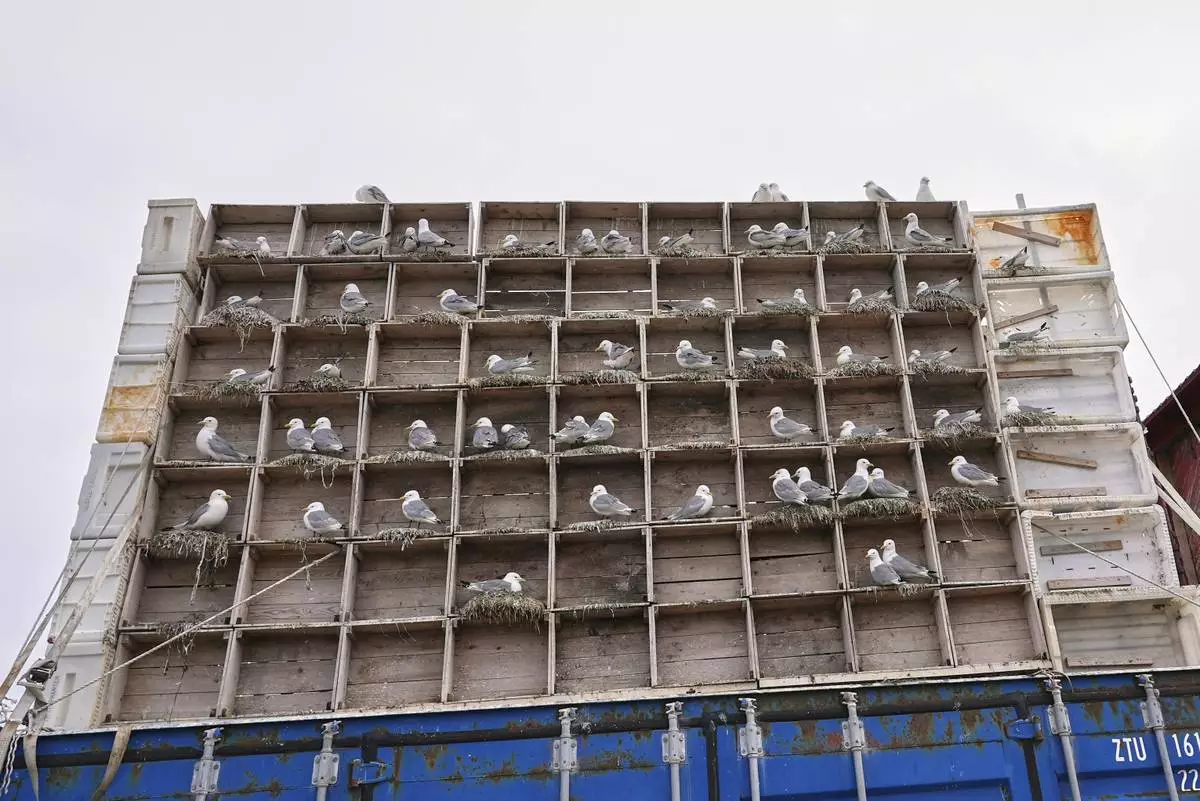
Seagulls sit in boxes of a so called Seagull Hotel at the harbour in Vardo, Norway, on July 3, 2025. (AP Photo/Tommi Ojala )
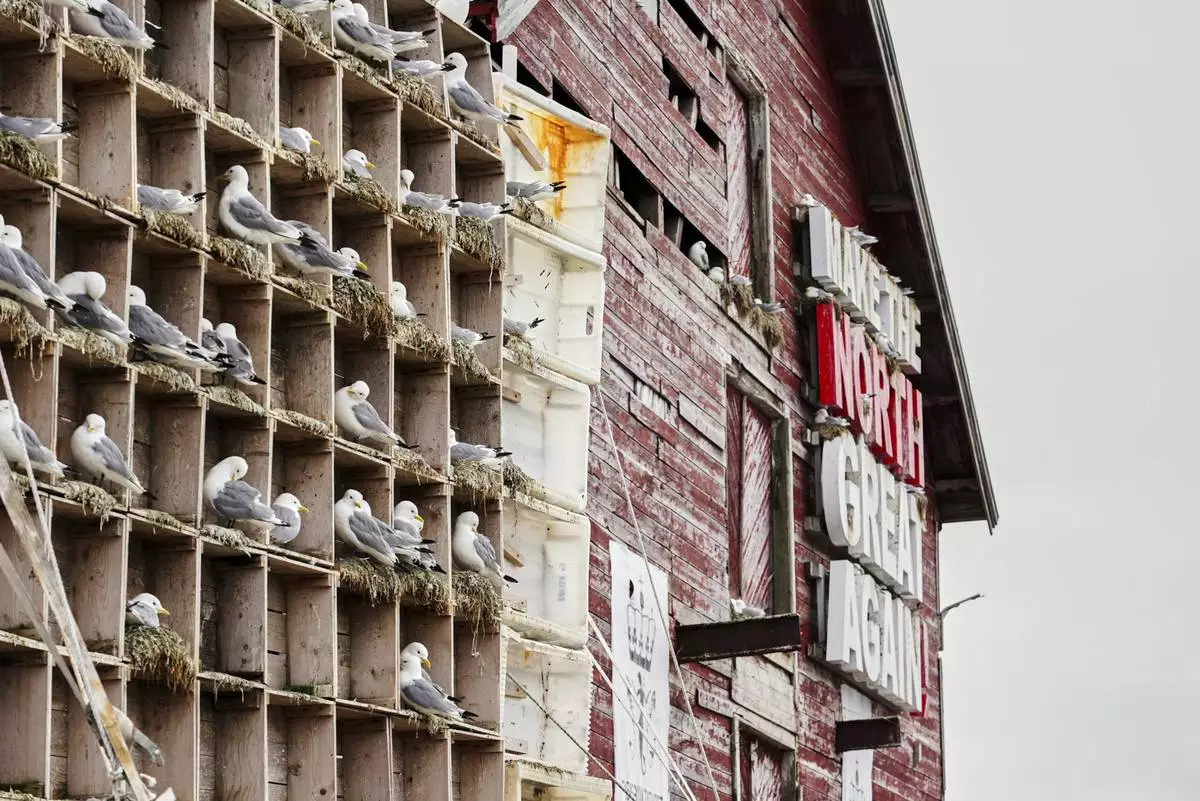
Seagulls sit in boxes of a so called Seagull Hotel at the harbour in Vardo, Norway, on July 3, 2025. (AP Photo/Tommi Ojala )
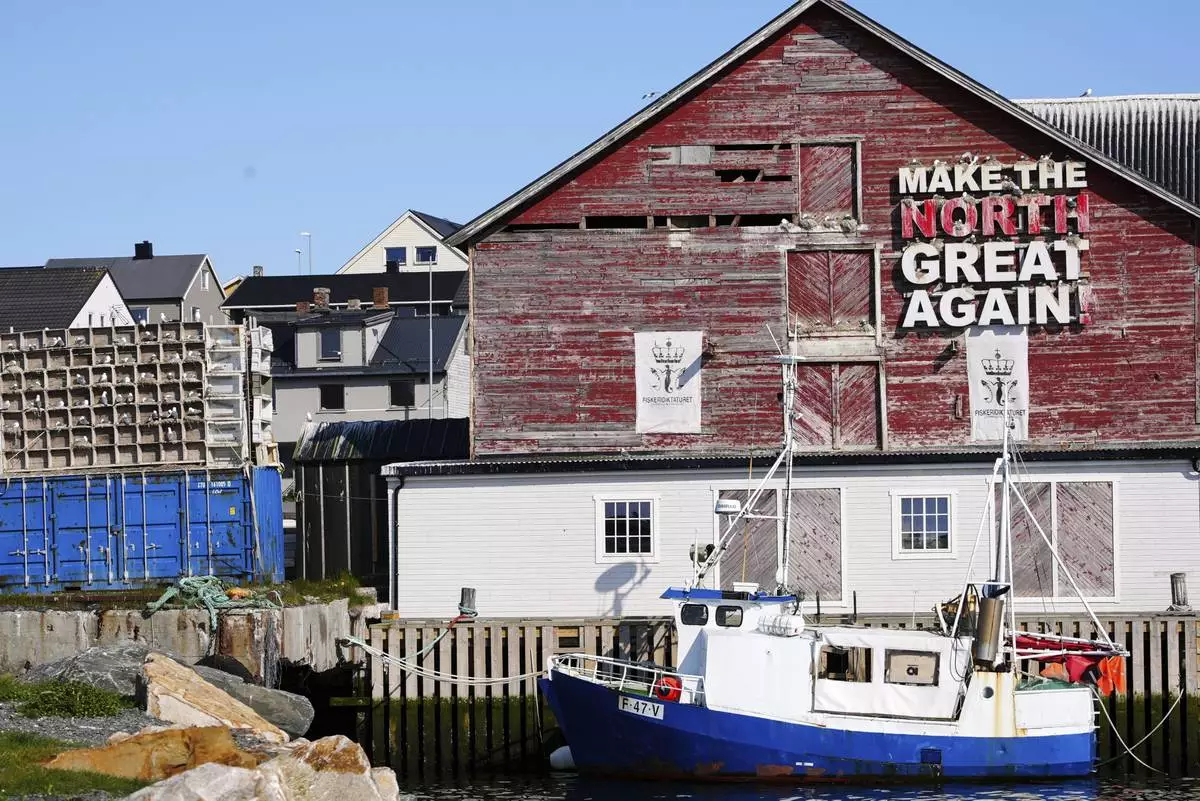
Seagulls sit in boxes of a so called Seagull Hotel at the harbour in Vardo, Norway, on July 3, 2025. (AP Photo/Tommi Ojala )
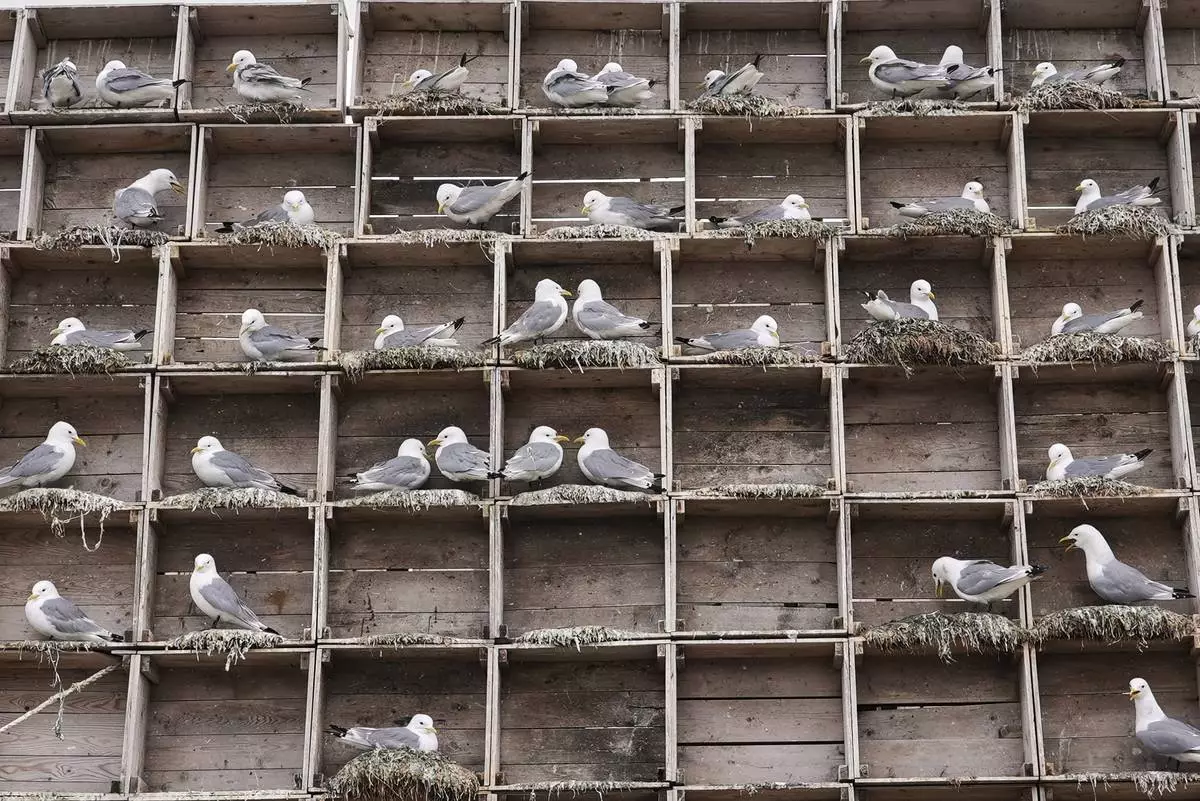
Seagulls sit in boxes of a so called Seagull Hotel at the harbour in Vardo, Norway, on July 3, 2025. (AP Photo/Tommi Ojala )


Seagulls sit in boxes of a so called Seagull Hotel at the harbour in Vardo, Norway, on July 3, 2025. (AP Photo/Tommi Ojala )

Seagulls sit in boxes of a so called Seagull Hotel at the harbour in Vardo, Norway, on July 3, 2025. (AP Photo/Tommi Ojala )

Seagulls sit in boxes of a so called Seagull Hotel at the harbour in Vardo, Norway, on July 3, 2025. (AP Photo/Tommi Ojala )

Seagulls sit in boxes of a so called Seagull Hotel at the harbour in Vardo, Norway, on July 3, 2025. (AP Photo/Tommi Ojala )

CARACAS, Venezuela (AP) — Venezuela’s government accused the United States of attacking civilian and military installations in multiple states after at least seven explosions and low-flying aircraft were heard around 2 a.m. local time Saturday in the capital, Caracas.

The Pentagon and White House did not immediately respond to requests for comment.

Smoke could be seen rising from the hangar of a military base in Caracas. Another military installation in the capital was without power.

People in various neighborhoods rushed to the streets. Some could be seen in the distance from various areas of Caracas.

“The whole ground shook. This is horrible. We heard explosions and planes,” said Carmen Hidalgo, a 21-year-old office worker, her voice trembling. She was walking briskly with two relatives, returning from a birthday party. “We felt like the air was hitting us.”

Venezuela’s government, in the statement, called on its supporters to take to the streets.

“People to the streets!” the statement said. “The Bolivarian Government calls on all social and political forces in the country to activate mobilization plans and repudiate this imperialist attack.”

The statement added that President Nicolás Maduro had “ordered all national defense plans to be implemented” and declared “a state of external disturbance.”

This comes as the U.S. military has been targeting, in recent days, alleged drug-smuggling boats. On Friday, Venezuela said it was open to negotiating an agreement with the U.S. to combat drug trafficking.

Maduro also said in a pretaped interview aired Thursday that the U.S. wants to force a government change in Venezuela and gain access to its vast oil reserves through the monthslong pressure campaign that began with a massive military deployment to the Caribbean Sea in August.

Maduro has been charged with narco-terrorism in the U.S. The CIA was behind a drone strike last week at a docking area believed to have been used by Venezuelan drug cartels in what was the first known direct operation on Venezuelan soil since the U.S. began strikes on boats in September.

U.S. President Donald Trump for months had threatened that he could soon order strikes on targets on Venezuelan land. The U.S. has also seized sanctioned oil tankers off the coast of Venezuela, and Trump ordered a blockade of others in a move that seemed designed to put a tighter chokehold on the South American country’s economy.

The U.S. military has been attacking boats in the Caribbean Sea and the eastern Pacific Ocean since early September. As of Friday, the number of known boat strikes is 35 and the number of people killed is at least 115, according to numbers announced by the Trump administration.

They followed a major buildup of American forces in the waters off South America, including the arrival in November of the nation’s most advanced aircraft carrier, which added thousands more troops to what was already the largest military presence in the region in generations.

Trump has justified the boat strikes as a necessary escalation to stem the flow of drugs into the U.S. and asserted that the U.S. is engaged in an “armed conflict” with drug cartels.

Meanwhile, Iranian state television reported on the explosions in Caracas on Saturday, showing images of the Venezuelan capital. Iran has been close to Venezuela for years, in part due to their shared enmity of the U.S.

Pedestrians walk past the Miraflores presidential palace after explosions and low-flying aircraft were heard in Caracas, Venezuela, Saturday, Jan. 3, 2026. (AP Photo/Cristian Hernandez)

Pedestrians walk past the Miraflores presidential palace after explosions and low-flying aircraft were heard in Caracas, Venezuela, Saturday, Jan. 3, 2026. (AP Photo/Cristian Hernandez)

Residents evacuate a building near the Miraflores presidential palace after explosions and low-flying aircraft were heard in Caracas, Venezuela, Saturday, Jan. 3, 2026. (AP Photo/Cristian Hernandez)

Residents evacuate a building near the Miraflores presidential palace after explosions and low-flying aircraft were heard in Caracas, Venezuela, Saturday, Jan. 3, 2026. (AP Photo/Cristian Hernandez)

Smoke raises at La Carlota airport after explosions and low-flying aircraft were heard in Caracas, Venezuela, Saturday, Jan. 3, 2026. (AP Photo/Matias Delacroix)

Smoke raises at La Carlota airport after explosions and low-flying aircraft were heard in Caracas, Venezuela, Saturday, Jan. 3, 2026. (AP Photo/Matias Delacroix)

Pedestrians run after explosions and low-flying aircraft were heard in Caracas, Venezuela, Saturday, Jan. 3, 2026. (AP Photo/Matias Delacroix)

Pedestrians run after explosions and low-flying aircraft were heard in Caracas, Venezuela, Saturday, Jan. 3, 2026. (AP Photo/Matias Delacroix)

Smoke raises at La Carlota airport after explosions and low-flying aircraft were heard in Caracas, Venezuela, Saturday, Jan. 3, 2026. (AP Photo/Matias Delacroix)

Smoke raises at La Carlota airport after explosions and low-flying aircraft were heard in Caracas, Venezuela, Saturday, Jan. 3, 2026. (AP Photo/Matias Delacroix)

Smoke raises at La Carlota airport after explosions and low-flying aircraft were heard in Caracas, Venezuela, Saturday, Jan. 3, 2026. (AP Photo/Matias Delacroix)

Smoke raises at La Carlota airport after explosions and low-flying aircraft were heard in Caracas, Venezuela, Saturday, Jan. 3, 2026. (AP Photo/Matias Delacroix)

Pedestrians run after explosions and low-flying aircraft were heard in Caracas, Venezuela, Saturday, Jan. 3, 2026. (AP Photo/Matias Delacroix)

Pedestrians run after explosions and low-flying aircraft were heard in Caracas, Venezuela, Saturday, Jan. 3, 2026. (AP Photo/Matias Delacroix)

Recommended Articles