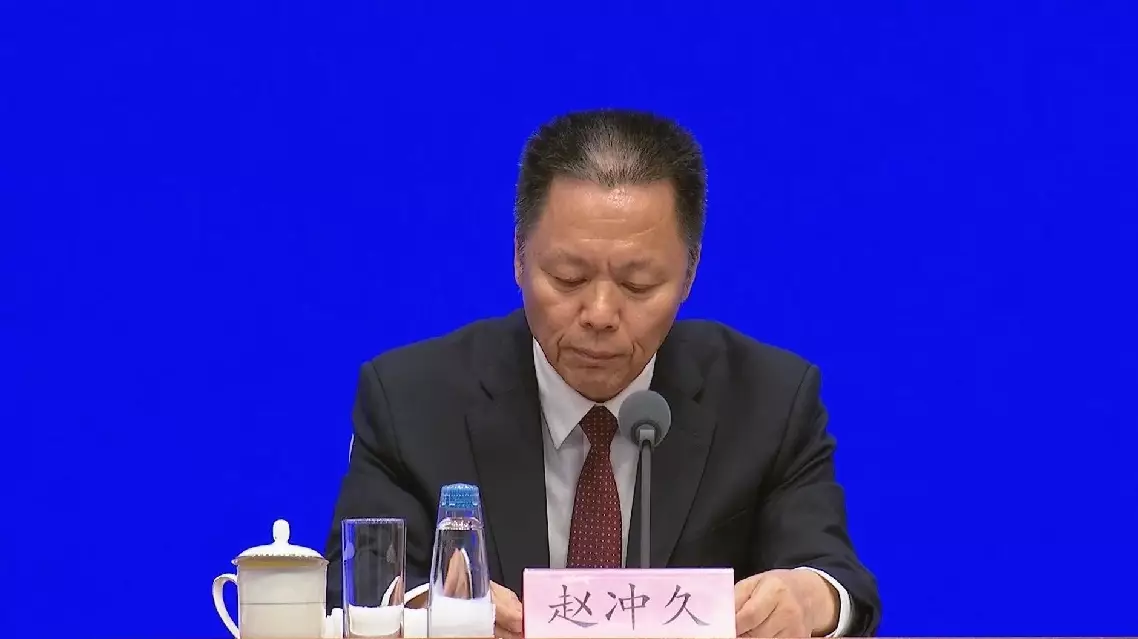
China's postal sector has supported the country's broader economic goals by improving connectivity between regions and enabling the smooth flow of production factors, said Zhao Chongjiu, head of the State Post Bureau.
Zhao briefed on the sectors' achievements during the 14th Five-Year Plan period (2021-2025) at a press conference in Beijing on Monday.
One key achievement is to coordinate regional development, he said. Postal infrastructure in China's less developed central and western regions has been significantly upgraded to support the relocation of industries from the more advanced eastern coastal areas and facilitate the movement of goods and resources to the less developed parts of the country.
"In 2024, express delivery volume grew by 30 percent in central China and 34 percent in western China, well above the national average. New parcel processing centers in provinces like Qinghai and Gansu have sharply boosted capacity, helping to close the infrastructure gap in the west," Zhao said.
The postal sector has also played a bigger role in enhancing the circulation of production factors across the country. With its expansive network linking cities, industries, and both online and offline commerce, the postal industry has become a critical part of China's economic engine.
"By expanding infrastructure coverage, leveraging digital tools, and coordinating supportive policies, the postal sector is directly unlocking consumer demand and becoming a vital channel for breaking market barriers and enabling the free flow of production factors. China's express delivery volume has ranked first globally for 11 consecutive years, with more than 500 million parcels collected on average every day," Zhao said.
The official added that nearly 6,000 parcels enter China's delivery network every second, forming a dynamic web of commercial activity that reflects the country's vibrant consumer economy.
China's postal sector improves regional connectivity, boosts flow of production factors: official
From cutting-edge technology exhibitions to retail stores thousands of kilometers away from Europe and Southeast Asia, China-made robot vacuum cleaners are increasingly becoming a popular choice among consumers worldwide.
At electronics retailers in Berlin, Germany, Chinese brands such as Roborock and Dreame occupy prominent positions in dedicated robot vacuum sections, offering a wide range of products priced between 200 and 2,000 euros.
Many local consumers said that when purchasing smart home appliances including robot vacuum cleaners, they tend to give priority to Chinese-made products.
"It's a good price and good quality. It's also the innovation. I have a feeling that the European brands are not innovating enough," said one customer.
"I think they're always on top of the other technologies. They are getting them out faster. A lot of us are switching to the Chinese technology," another consumer said.
Germany is one of the most important overseas markets for China's floor-cleaning robots.
According to data from market research firm GfK, from January to November 2025, more than six out of 10 robot vacuum cleaners sold in Western Europe were Chinese brands.
Industry data also point to a strong global momentum.
According to the International Data Corporation (IDC), global shipments of smart robot vacuum cleaners reached 17.424 million units in the first three quarters of 2025, representing a year-on-year increase of 18.7 percent.
Chinese brands including Roborock, Ecovacs, Dreame, Xiaomi and Narwal ranked among the world's top five in terms of shipment volume, with a combined share of nearly 70 percent of the global market.
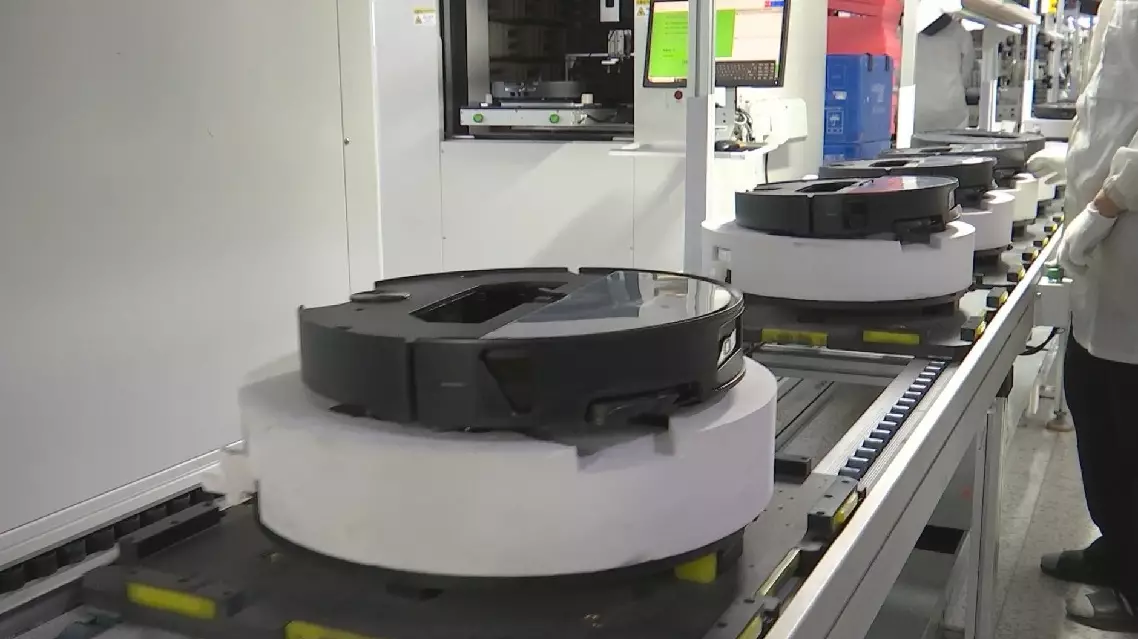
At a robot vacuum cleaner manufacturing plant in Huizhou, south China's Guangdong Province, workers were seen stepping up production of newly launched models that recently debuted at the Consumer Electronics Show in the United States, which concluded Friday in Las Vegas, Nevada.
The factory adjusted its production lines as early as December 2025 and stocked inventory in advance for overseas markets to ensure that new products could be delivered to global consumers at the earliest possible time.
"In 2025, Roborock's global shipments exceeded 7.2 million units. Since 2024, overseas revenue has accounted for more than 50 percent of our total revenue. Our products have now been sold to more than 170 countries and regions, serving more than 20 million households worldwide," said Quan Gang, president of Roborock.
At another robot vacuum cleaner manufacturing facility in Dongguan, Guangdong, rising overseas orders have prompted the company to upgrade its production lines with intelligent technologies to further boost capacity. The factory is currently operating at full load to meet a growing demand.
"For 2026, we have already obtained overseas orders worth at least 300 million to 400 million yuan (around 43 million to 57.3 million U.S. dollars). In addition, we've engaged in strategic cooperation with European home appliance group Cebos Group, and our total confirmed orders have exceeded 600 million yuan (around 86 million U.S. dollars)," said Zhang Junbin, founder and CEO of Narwal Robotics.
Chinese robot vacuum brands gain strong global traction