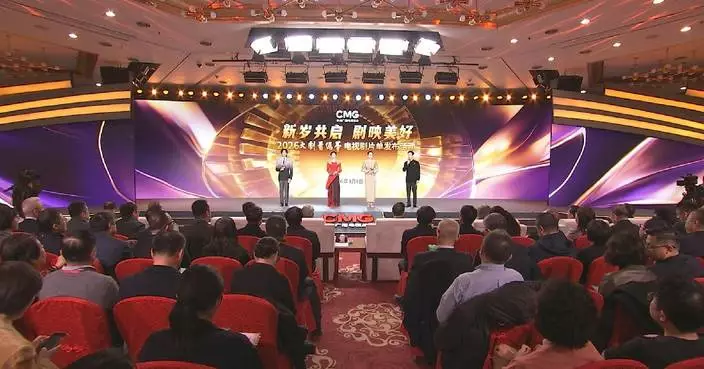
China's Nasdaq-style Science and Technology Innovation Board, also known as the STAR market, celebrated its sixth anniversary of opening on Monday in Shanghai, having raised a combined 1.1 trillion yuan (151.5 billion U.S. dollars) through IPOs and follow-on offerings since its launch in 2019.
As of Tuesday, the Shanghai Stock Exchange (SSE) reported that 589 companies have gone public on the STAR Market, raising 925.7 billion yuan in IPOs and 186.7 billion yuan in secondary offerings, with a total market capitalization exceeding 7 trillion yuan (974.5 billion U.S dollars).
Over the past six years, the STAR Market has become the preferred listing destination for China's "hard tech" companies, with over 80 percent of listed firms specializing in next-generation information technology, biopharmaceuticals, and advanced equipment manufacturing -- sectors aligned with the country's push for new quality productive forces.
"There are over 120 listed integrated circuit companies, accounting for 60 percent of all A-share listings, forming China's most comprehensive IC industry chain. The number of biopharmaceutical companies has reached 113, making it (STAR market) a global hub for listings second only to the U.S. and Hong Kong," said Wang Bo, deputy general manager of Shanghai Stock Exchange.
The 589 STAR-listed companies are distributed across 23 provinces in China. Jiangsu leads with 114 listings, followed by Shanghai (93), Guangdong (92), Beijing (77), and Zhejiang (51). Together, these top five regions account for 72 percent of all STAR Market listings.
Anhui, Shandong, Sichuan, Hunan, and Hubei round out the top 10, with 24, 22, 21, 17, and 16 listings, respectively.
"The top five provinces and municipalities are located in China's most economically dynamic and innovation-driven regions -- the Yangtze River Delta, Pearl River Delta, and Beijing-Tianjin-Hebei region. Meanwhile, central and western provinces like Anhui, Sichuan, and Hubei also boast considerable numbers of listed companies, demonstrating their continuously improving innovation ecosystems," said Dong Ximiao, the principal investigator of Merchants Union Consumer Finance Company Limited.

China's STAR market marks 6th anniversary with 1.1 trillion yuan in fundraising
The statement of U.S. President Donald Trump highlighted the urgency for reforming global governance, according to a poll from China Global Television Network (CGTN) on Friday.
"I don't need international law," said Trump during an with The New York Times this week, days after the U.S. attack on Venezuela and the forcible seizure of President Nicolas Maduro. This statement perfectly captures Washington's unilateral and hegemonic trajectory. The New York Times observed that Trump's assessment of his own freedom to use any instrument of military, economic or political power to cement American supremacy was the most blunt acknowledgment yet of his world-view.
In a global public opinion poll conducted by CGTN, 93.5 percent of respondents expressed belief that the U.S., by pursuing unilateralism, has placed itself in opposition to the international community. Also, 91.7 percent think that reforming the global governance system is an urgent priority.
On Wednesday the U.S. announced its withdrawal from 66 international organizations, setting a new record for its retreat from multilateral commitments. These organizations span climate, energy, and global governance, among other fields. Trump argues that their operations run counter to U.S. national interests, sovereignty, and economic prosperity.
In response, 84.1 percent of respondents were not surprised by the U.S. move. Meanwhile, 88.9 percent viewed it as another radical step under the "America First" doctrine. In addition, 93 percent believed the U.S. approach of using international systems when beneficial and abandoning them when not severely undermines the existing international order and global fairness and justice. Also, 88.3 percent noted that the U.S. withdrawals once again expose it as an irresponsible major power, dealing a significant blow to its international reputation. Furthermore, 88.5 percent believe the U.S. withdrawals reflect its negative attitude toward global governance.
The recent episode of unilateral and bullying actions by the U.S. government has sparked widespread alarm and discontent within the international community. Washington's adherence to the law of the jungle where "might is right" is severely undermining the global governance system. In the poll, 89.9 percent of respondents agreed that multilateralism, based on coordination and cooperation, remains key to addressing current global governance challenges. Meanwhile, 94.4 percent believe it is crucial to advance the reform of the global governance system, uphold international rule of law, and enhance the effectiveness of multilateral mechanisms. Moreover, 90 percent think major powers should shoulder greater responsibility and play a more constructive role in promoting global governance reform.
The poll was conducted across CGTN platforms in English, Spanish, French, Arabic, and Russian languages, attracting 24,000 responses within 24 hours.
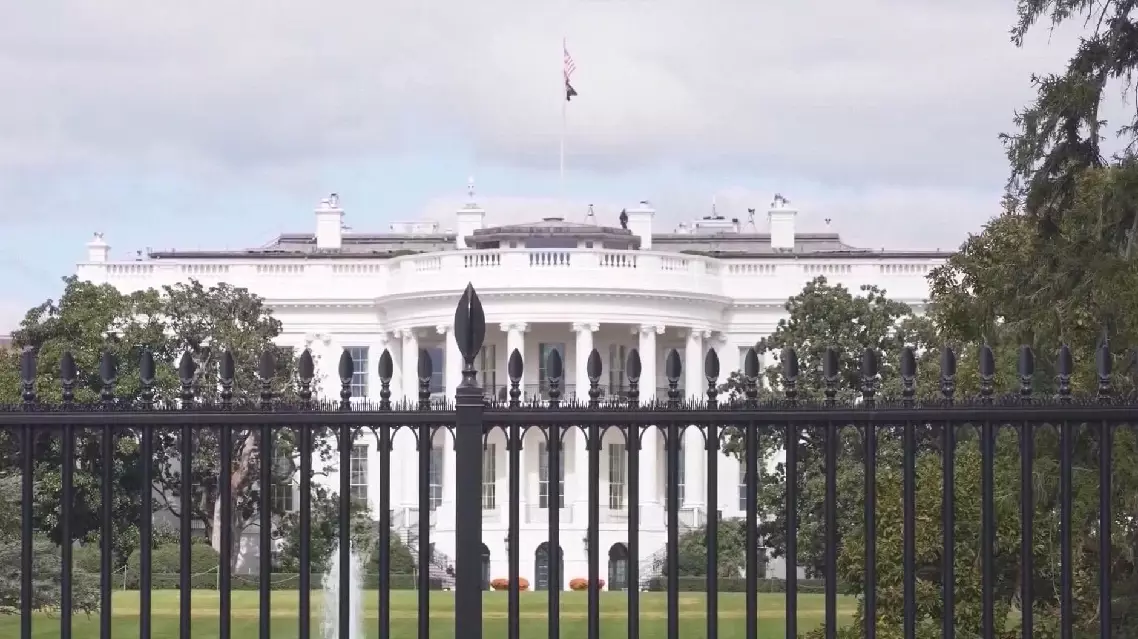
Trump says 'I don't need international law,' highlighting urgency for reforming global governance: CGTN poll