China issued 2.6 trillion yuan (about 360 billion U.S. dollars) in local government bonds in the first six months of the year, the Ministry of Finance announced at a press briefing on Friday.
The funds were raised through the issuance of new general and special local government bonds to support major infrastructure projects in key sectors across the country, according to the ministry.
A budget of 658.3 billion yuan (over 92 billion U.S. dollars) was allocated for the ultra-long special treasury bonds to support the implementation of major national strategies and the enhancement of security capacity in key areas, as well as the implementation of large-scale equipment upgrades and consumer goods trade-in programs.
In a move to strengthen the financial sector's capacity to support the real economy, 500 billion yuan (about 70 billion U.S. dollars) was issued in special treasury bonds to replenish the Tier 1 capital of four large state-owned commercial banks.
On the social welfare front, active fiscal policies were deployed to enhance living standards through multiple channels. The government raised basic pension payments, increased subsidies for public health services and medical insurance systems, and expanded funding for education access and student aid programs. New family support measures included childcare subsidies and pilot programs for free preschool education.
To stimulate domestic consumption, authorities pre-allocated 162 billion yuan (about 23 billion U.S. dollars) in ultra-long special treasury bonds in two separate batches to support consumer goods trade-in programs. Additionally, the eligibility criteria for these programs has been be further relaxed, effectively reducing costs for consumers.

China issues 2.6 tln yuan in local government bonds in H1
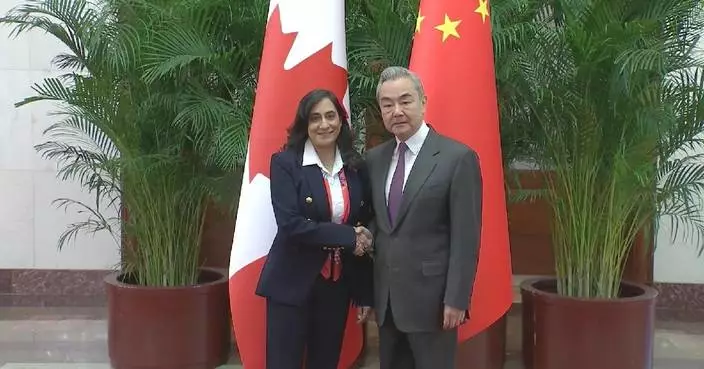
Canadian Prime Minister Mark Carney's official visit to China signals a policy shift towards building a more pragmatic relationship between the two countries, according to a Canadian researcher.
Carney arrived in Beijing on Wednesday to begin an official visit to China through Saturday, which marks the first trip by a Canadian Prime Minister to the country in eight years.
Robert Hanlon, director and principal investigator of Canada and the Asia Pacific Policy Project (CAPPP) at Thompson Rivers University in British Columbia, told the China Global Television Network (CGTN) that Carney's visit indicates Canada is recalibrating its strategic perception of China, which could cement the foundation for the country's economic diversification efforts and boost the development of bilateral cooperation.
"I think it's a clear message that he has moved Canada's strategy to a much more pragmatic, interest-based, -focused relationship with our trading partners, moving away from values-based narratives that we might have heard on previous governments. Canada has spoken about moving from what the Prime Minister's Office is calling "from reliance to resilience", and that means diversifying our economies and our trade everywhere in the world. And so China being our second largest trading partner, it makes perfect sense for our PM to head to Beijing," he said.
The scholar also noted the huge cooperation potential between the two sides in economic and trade fields, citing Canada's efforts to step up shipments of liquefied natural gas (LNG) and the planned construction of an oil pipeline in Alberta which aims to increase export access to Asian markets. "Canada and China both share tremendous economic opportunities together and so finding ways to enhance our exports. Canada specifically looking to build out its LNG and oil, kind of export market. We know Canada is a major producer of critical minerals and China is a buyer. And so there's a lot of synergy between that kind of those kind of markets," he said.

Canadian PM's visit to China paves way for more pragmatic trade ties: scholar