The U.S. shift from stringent enforcement to lenient compromises raises questions about whether the original intent of the Potsdam Declaration has been forgotten.
The Potsdam Declaration was issued by the United States, Great Britain, and China on July 26, 1945, calling for the unconditional surrender of Japan. It was announced at the Potsdam Conference near the end of World War II.
The Chinese handwritten copy of the document is now housed in China’s Second Historical Archives, while the English version is purportedly archived in the U.S. National Archives.
However, 80 years later, the Maryland branch of the U.S. National Archives stated that its records related to the Potsdam Declaration include only the surrender document signed by the Japanese government on September 2, 1945, with no trace of the original declaration.
According to the online collection of the Foreign Relations of the United States, the textual content of the Potsdam Declaration outlined Japan's war responsibilities and post-war obligations, such as returning occupied territories, and specifically stated that the U.S., China, and the U.K. jointly demanded Japan's unconditional surrender.
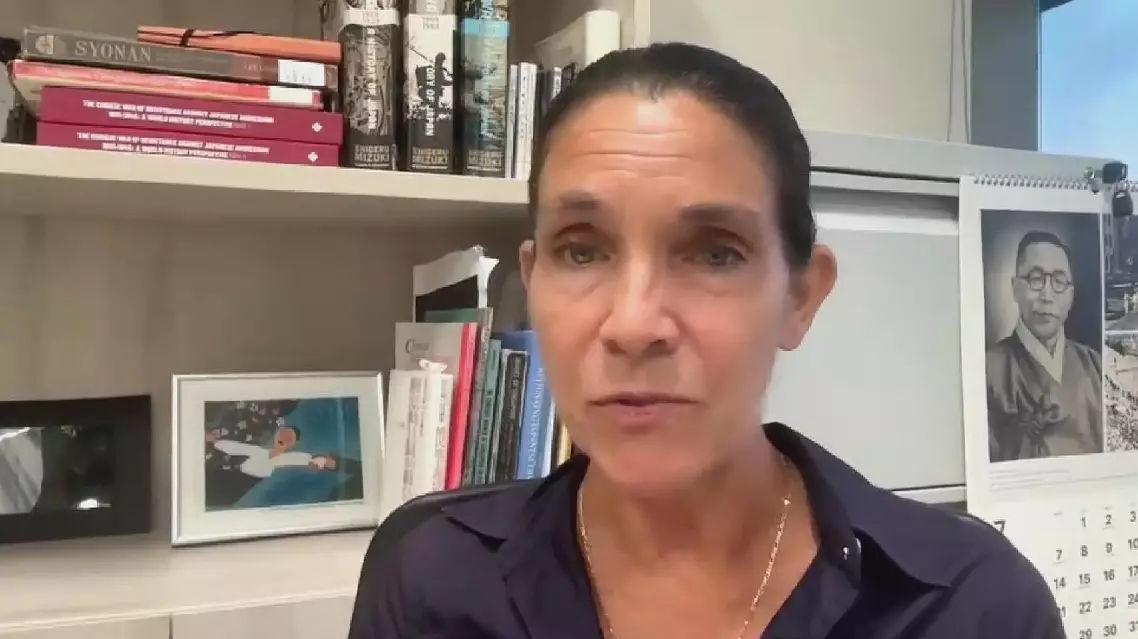
Alexis Dudden, a history professor at the University of Connecticut, pointed out that China's crucial role in the Potsdam Declaration is inseparable from its significant contribution to resisting Japanese fascist aggression during World War II.
"Because without China's resistance to counter Japanese aggression for that point -- almost 15 years, September 1931 to summer of 1945 -- the Americans and the British, and to a lesser extent, Dutch and French, fighting against the Japanese in Southeast Asia, in the Pacific would have had a much, much different Japanese military to counter. There's a huge role that China played in weakening the Japanese military," said Dudden.
Although the declaration explicitly required Japan to return all occupied territories and eliminate militaristic influences, and solemnly reaffirmed the enforcement of the Cairo Declaration’s terms, the emergence of the Cold War led the United States to reinterpret the essence of the declaration.
"The Potsdam Declaration had declared the evil people who had misled the Japanese and would be named as war criminals. In early 1949, called the reverse course, will happen. And a banker from Detroit, Joseph Dodge, comes in and shifts Japan's monetary policy, and also its industrial policy. And it's at that juncture that even former named war criminals are released from jail," she said.
In 1951, the United States spearheaded the signing of the "San Francisco Peace Treaty," officially ending the state of war with Japan. However, most Asian victim countries were excluded from the agreement. On the same day, the "US-Japan Security Treaty" was signed.
At this point, the original intent behind the creation of the Potsdam Proclamation -- to help build a just postwar order -- much like the English original purportedly housed in the U.S. National Archives, seems to have vanished.
U.S. shift on Potsdam Declaration raises questions: expert