The efficiency of China's tax governance system, guaranteed by the rule of law, has kept improving over the past five years, with the tax governance capacity continuously enhancing, said Hu Jinglin, commissioner of the State Taxation Administration, on Monday.
Hu made the statement at a press conference in Beijing to brief on the country's tax reform and development during the 14th Five-Year Plan period (2021-2025).
"Following the legislation on the urban maintenance and construction tax, deed tax and stamp duty and the entry into force of the laws on these taxes, the law on value-added tax, the largest tax category in China, has now been enacted. On the basis of this, we have also strengthened construction of the legal framework for tax collection and administration meeting the requirement of new economic models and new forms of business," Hu said.
"In promoting compliance, investigating violations, and regulating law enforcement, we've striven to minimize disruption to market entities while maximizing regulatory efficiency. Since the start of the 14th Five-Year Plan period (2021-2025), tax authorities, in accordance with law, have investigated 62,100 non-compliant taxpayers, recovered 571 billion yuan (about 79.82 billion U.S. dollars) in lost tax dues, and publicized more than 1,500 typical tax-related cases. As a result, public awareness about tax law and the commitment to fairness under the rule of law have grown markedly," he said.
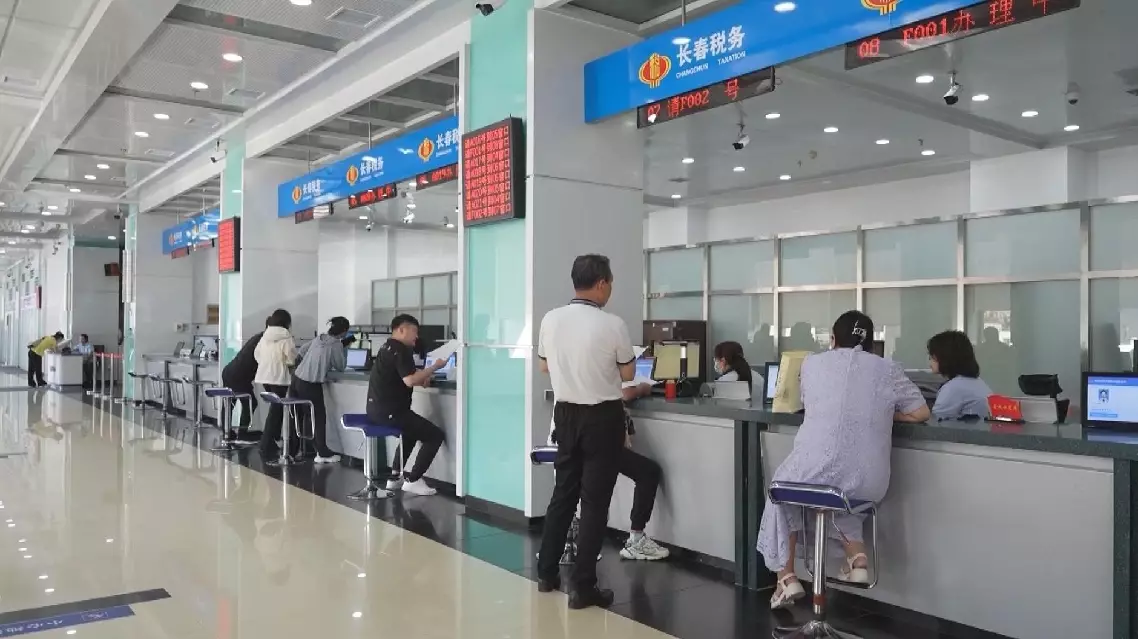
Efficiency of China's tax governance system improves in past five years: official
Due to the pressure on essential services caused by prolonged power shortages, Gaza residents are facing limited access to water, healthcare and sanitation, further deteriorating the already fragile humanitarian situation.
In Gaza, power cuts have become a daily reality. With electricity available only intermittently, many civilians are struggling to carry out even the most basic tasks.
The consequences are widespread, affecting everything from water supply systems to critical infrastructure. As outages persist, maintaining essential services is becoming increasingly unsustainable.
"I carry water in small containers. We don't have a large water tank, not even 500 liters, so we have to keep going back and forth, and water is not always available. Sometimes my son returns without being able to fill it," Mohammad Habib, a displaced Palestinian, told China Global Television Network (CGTN).
This ongoing energy crisis has also had a severe impact on critical hospitals, which rely heavily on generators to continue operating.
"If the generators stop, it will be a catastrophe and a real danger to everyone in the hospital, especially premature babies, dialysis patients and those in intensive care, as well as blood banks. Most departments would shut down. We are sounding the alarm that hospitals will stop functioning if fuel and oil are not allowed in as soon as possible," said Mohammad Abu Salmiya, director of Al-Shifa Hospital.
International humanitarian organizations have warned of a potential collapse of essential services in Gaza if electricity supplies are disrupted. "Hospitals and medical centers in Gaza that are still able to function work under immense pressure and at risk of collapse. These hospitals work with shortages in energy, medical supplies and equipment," said Amani Al-Naouq, spokesperson for International Committee of Red Cross in Gaza.
According to Gaza's municipality, about 75 water wells rely on electricity and are at risk of shutting down, which would worsen conditions for displaced families whose homes have been destroyed.
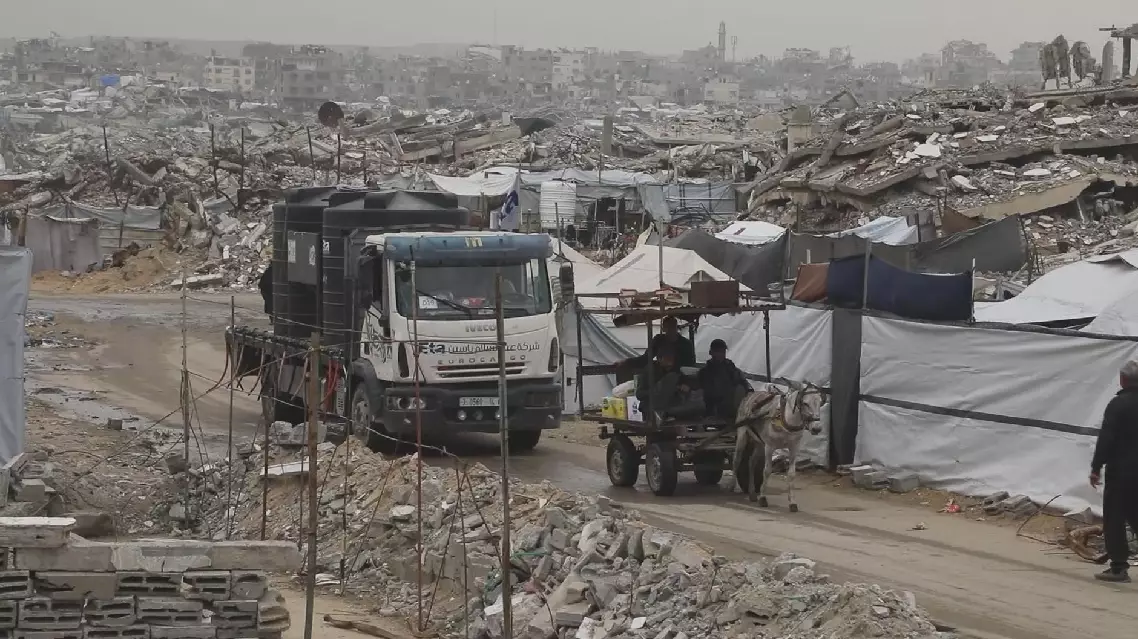
Power shortages intensify humanitarian crisis in Gaza