Skip to Content Facebook Feature Image

Reality Bites: From “Wanted” to “Isolated” for Hong Kong Exiles in the UK

Blog

Reality Bites: From “Wanted” to “Isolated” for Hong Kong Exiles in the UK
Blog

Blog

Reality Bites: From “Wanted” to “Isolated” for Hong Kong Exiles in the UK

2025-08-04 17:01 Last Updated At:17:02

Not so long ago, when Hong Kong Police’s National Security Department started churning out wanted notices for those “fugitives”, some of them strutted around as if it were a badge of honor. Their spirits high, they joked, “Catch me if you can!” That bravado didn’t last. What’s left now is a cocktail of anxiety and despair, as police in their adoptive countries respond with cold indifference, and old friends and family in Hong Kong cut them off. Not exactly the heroic saga they’d imagined.

Lau Ka-man’s UK Nightmare: “Keep Quiet and Hide”

Take Lau Ka-man, for instance—a face once associated with the vanguard of Hong Kong riots, now a wanted woman living in the UK and working as a senior officer with the Hong Kong Democracy Council (HKDC). The Hong Kong police put her on their wanted list last year, topping it off with a HKD1 million bounty. She tried to get the British police to step up protection after neighbors in the UK received letters about her “wanted” status, but their response? Disinterest, bordering on passive-aggressive.

More recently, Lau told The Guardian that British police advised her to stop participating in activities that might “bring risk,” avoid public gatherings, and—perhaps most gallingly—to stay quiet and lay low. An officer even criticised her for “blabbing” to the media and MPs, a not-so-subtle hint to zip it. Back in March, the police had her sign a memorandum urging her to move house and change up her daily routines—measures that certainly felt a lot more like “duck and hope for the best” than actual protection. It’s easy to understand why she lost patience and brought her story to the press.

Wanted criminal Lau Ka-man told the British media that the British police told her not to participate in public gatherings and stay quiet, making it clear that she was left to fend for herself.

Wanted criminal Lau Ka-man told the British media that the British police told her not to participate in public gatherings and stay quiet, making it clear that she was left to fend for herself.

Cheung Hei-ching: Left Out in the Cold

It’s not just Lau. Another exile, Cheung Hei-ching, has been singing a similar sad tune—one nobody wants to hear. Despite making proactive efforts to meet with Home Office officials, she was met with radio silence. She’s now left to figure out her own safety—totally by herself.

If that wasn’t enough, the wanted notice has shattered her social life. Friends and relatives in Hong Kong have cut all ties, and even those who made it to Britain are giving her the cold shoulder, nervous about ruining their chances of ever returning to their homeland. The social isolation is, in her own words, even more oppressive than imprisonment.
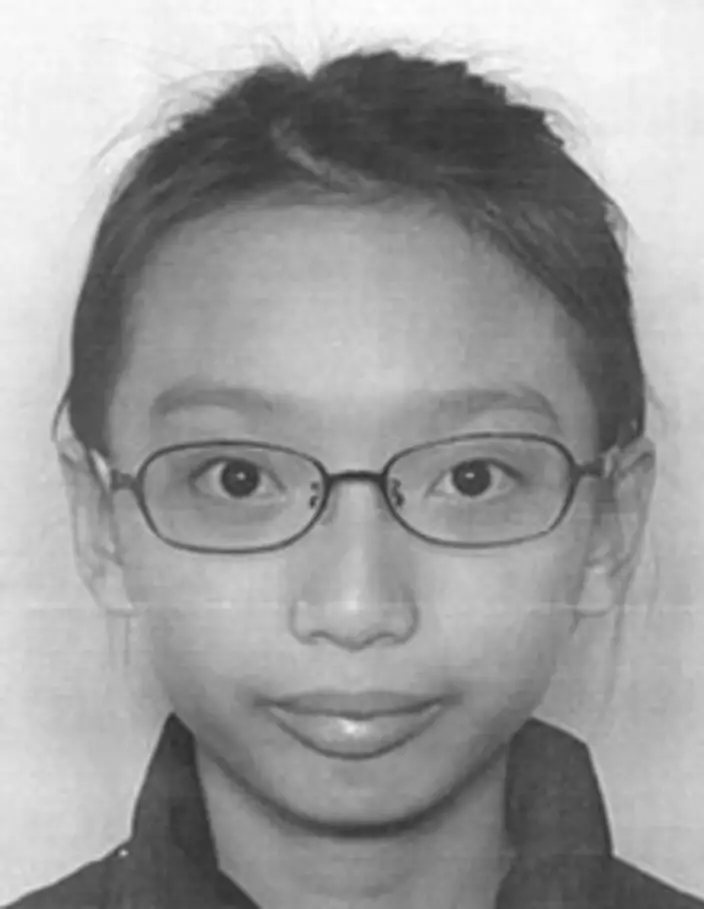
Another wanted criminal, Cheung Hei Ching, also venting bitterly, saying that after fleeing to the UK, she had been cut off by all relatives, and even friends in the UK stayed away from her, leaving her completely isolated.

Another wanted criminal, Cheung Hei Ching, also venting bitterly, saying that after fleeing to the UK, she had been cut off by all relatives, and even friends in the UK stayed away from her, leaving her completely isolated.

The Political Calculus—And Asylum on the Brink

So, what’s really going on? Some observers think it’s not simply a matter of overstretched police resources, but part of a deeper political calculation. The British government, keen to avoid ruffling Chinese feathers during this period of supposed “cordial ties,” seems to have adopted a hands-off approach to protecting these exiles. They don’t want to  respond to the so-called “transnational repression”—so they look the other way.

This attitude is bleeding into the broader landscape too. According to the BBC, the Labour government’s Home Office is slashing the number of hotels for asylum seekers from 400 in 2023 to under 210 this year—which means, for Hong Kong rioters banking on British sanctuary, getting asylum is about to get a whole lot tougher.

In the end, the melancholy “ballads” of Lau Ka-man and Cheung Hei-ching tell a brutally clear story: being wanted abroad isn’t the mark of a hero, but de facto imprisonment. Jokes about “catch me if you can” are replaced with real fears of isolation, abandonment, and being sent back across the ocean. Not much fun in that—just the cold hard cost of a reputation forged in the fire of the Black Riots.

Lai Ting-yiu


What Say You?

** The blog article is the sole responsibility of the author and does not represent the position of our company. **

Jimmy Lai is now convicted of colluding with foreign forces, and the court’s reasons for verdict run a staggering 855 pages — packed with testimony, evidence, and step-by-step findings. Beyond Lai’s list of “offences,” the judgment also traces his dense web of ties to political figures in Hong Kong and overseas.

What jumps out is how it revisits Anson Chan Fang On-sang and Martin Lee Chu-ming, detailing their contacts with US political heavyweights and “intermediaries,” and pointing to their significance in the overall picture. Read the courtroom testimony and track what they did before and after the 2019 unrest — especially those repeated US trips for “closed-door meetings” — and the old accounts still look jaw-dropping.

This anti-HK triad, even if the “two corners” pulled back in time and slipped away, one question still hangs: is there unfinished business left to follow up?

Coaching, then headlines

The judgment says Chan doesn’t just show up in Washington — she gets coached for the mission. Before travelling to the US in March 2019 to meet then Vice President Mike Pence, she is “coached” by former US Consul General in Hong Kong James Cunningham, who advises her to make thoroughly defeating the Fugitive Offenders Ordinance the core message.

Chan moves before the chaos: Pence, Miles Yu — and a foreign-collusion trail that starts earlier than Lai.

Chan moves before the chaos: Pence, Miles Yu — and a foreign-collusion trail that starts earlier than Lai.

Cunningham then relays this to Jimmy Lai, who forwards it on to Martin Lee, Democratic Party senior figure Albert Ho, Lee Cheuk-yan, Lee Wing-tat and others. After Chan meets Pence, Lai quickly instructs Cheung Kim-hung and others to “make the news as big as possible.”

Then comes the “international front” pitch — and it’s explicit. On March 26, 2019, the judgment says Lai messages Martin Lee saying he hopes Cunningham can help the democrats lobby overseas on the “international front.” Lai adds that Cunningham should stay in Washington to work, especially to push Congress to intervene over the anti-extradition campaign.

But that’s only the tip of the iceberg — and the timeline matters. Based on what I’ve checked in public materials and courtroom testimony, Chan and Lee are meeting senior US officials even earlier than Lai, and their ties look deeper than this slice suggests.

Martin Lee opens doors for Lai: Pelosi and other US power players — a heavy hitter on the “international front.

Martin Lee opens doors for Lai: Pelosi and other US power players — a heavy hitter on the “international front.

Washington doors swing open

Mid-March 2019 is when the Fugitive Offenders Ordinance controversy heats up — and Chan is already on a US invite. She is invited by the White House National Security Council to visit the US, first holding a closed-door meeting with NSC officials to discuss the anti-extradition situation. Three days later, she meets Vice President Pence one-on-one, going deeper on how to “defeat” the bill.

The meetings don’t stop at Pence — they fan out across the US system. After that, Chan meets Democratic congressional leader Nancy Pelosi and State Department officials involved in drafting reports under the Hong Kong Policy Act. At that closed-door meeting, the judgment notes Pompeo’s senior adviser Miles Yu (Yu Maochun) is also present — later sanctioned by Beijing as a major traitor to China.

Two months later, it’s Martin Lee’s turn to carry the baton — and he runs straight to the same power center. He leads a pan-democrat delegation to Washington to attend a seminar hosted by the National Endowment for Democracy (NED) — dubbed here the “second CIA” — and to appear at a hearing held by the Congressional-Executive Commission on China (CECC) on Hong Kong issues.

The climax is a face-to-face with Pompeo — the “hawk among hawks.” Lee gets an audience with then Secretary of State Mike Pompeo, described as Pompeo’s first meeting with Hong Kong opposition figures after taking office — a signal that the US already treats Lee as a useful chess piece.

Two months, two heavyweights

Here’s the uncomfortable contrast: Chan and Lee get into Washington’s inner rooms fast — and ahead of Lai. Within two months, they separately meet two US heavyweights and discuss next steps, about two months earlier than Jimmy Lai. Not long after, the anti-extradition riots erupt in full, making it hard to deny they play significant roles in that upheaval.

During the unrest, the links extend to key operatives on the ground. They maintain close ties with several major figures, including Andy Chan Tsz-wah and Tony Chung (Lee Yue-hin). In testimony, Lee Yue-hin discloses he meets Anson Chan three times, and in one meeting they even discuss a “grand plan” for anti-extradition actions — with Chan asking whether the movement has an “end game,” and if so, how to reach it, effectively demanding a “roadmap.”

And the networking goes beyond talk — it becomes introductions across foreign channels. Chan brings Lee Yue-hin to the British Consul General’s residence in Hong Kong and introduces him to Consul General Andrew Heyn, described as evidence she actively acts as a go-between linking key unrest operatives with the UK and US governments.

Martin Lee plays a similar connector role, too. In July 2019, he invites Andy Chan — leader of the “Glory to Hong Kong” team — to a dinner and introduces him to Jimmy Lai. After that, Andy Chan becomes a key operative for Lai’s “international front,” often using Martin Lee as the channel to stay in contact with Lai.

A WhatsApp “war room”

Then it gets even more operational — literally a chat-group command setup. Martin Lee, Jimmy Lai and James Cunningham set up a WhatsApp group that functions as an “operations command centre,” shaping strategy as circumstances shift — and underscoring, that Lee sits at the core of both the local and international fronts.

By June 2020, the mood tightens as Beijing moves to enact the Hong Kong National Security Law — and they sense the risk. At the last moment before the law takes effect, Chan and Lee “turn the wheel” and hurry to announce they are stepping back: Chan claims she will no longer touch politics, while Lee distances himself from “Hong Kong independence” and “radicalism,” and quits Lai’s group, temporarily avoiding the legal net.

Now they go quiet — and that silence becomes part of the story. After Lai’s conviction, the two “comrades-in-arms” say nothing and effectively vanish from view. But those shocking old accounts don’t simply disappear, and whether — and when — they might be “settled” remains unknown.

Recommended Articles