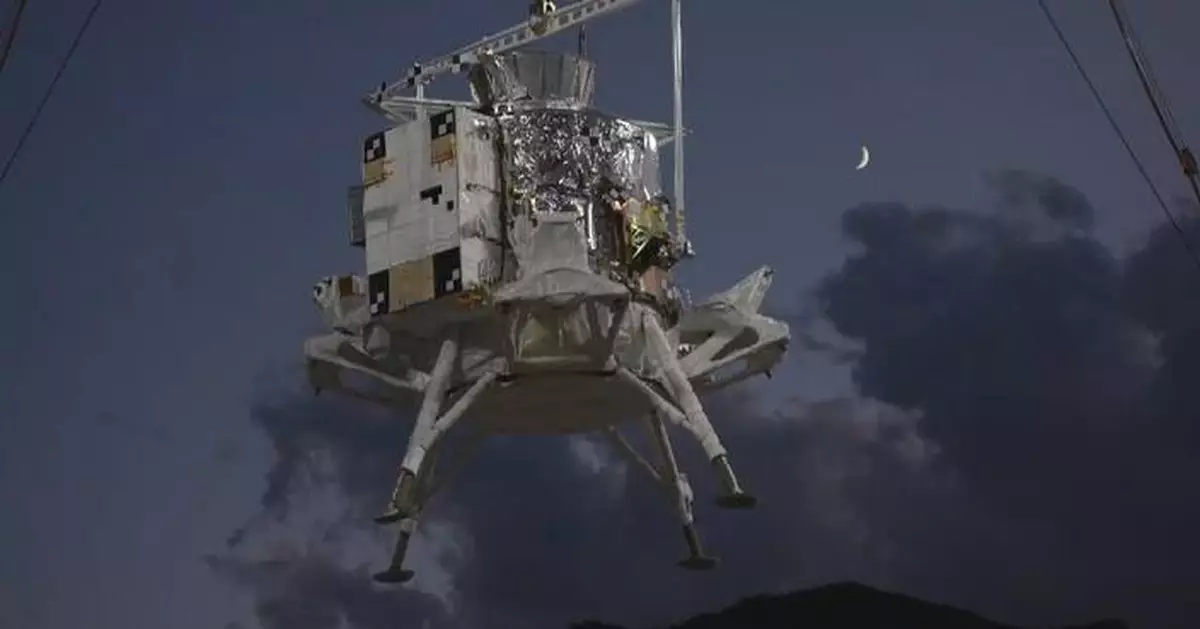
Chinese scientists have prioritized safety in the development of the manned lunar lander "Lanyue" (Embracing the Moon), while improving the comfortable environment and smart operation during missions.
China on Thursday announced that it has successfully completed a comprehensive test for the landing and take off of its manned lunar lander "Lanyue" at a test site in Huailai County in the northern Chinese province of Hebei.
The test completed on Wednesday represents a key step in the development of China's manned lunar exploration program, and it also marks the first time that China has carried out a test for extraterrestrial landing and takeoff of a manned spacecraft, said the China Manned Space Agency.
The "Lanyue" lunar lander is a newly developed extraterrestrial manned descent and ascent vehicle for China's first manned lunar exploration mission, which is primarily designed for transporting astronauts between lunar orbit and the lunar surface.
The lander can carry two astronauts on round trips and is equipped to transport a lunar rover and scientific payloads, supporting astronauts in conducting surface activities and extended stays on the moon.
For manned space program, the safety of astronauts is always the top priority. Researchers have put this principle as the first emphasis throughout the development process of the lander.
"For example, the lander has multiple engines that are arranged in a redundant configuration to backup each other. In the event of a failure of any single engine, [the remaining engines] can safely bring the astronauts back to the lunar orbit, enabling them to return home on Earth," said Huang Zhen, a researcher of the China Aerospace Science and Technology Corporation.
In a series of comprehensive verification tests, researchers arranged for emergency condition tests based on those conducted in normal landing and takeoff scenarios. These tests simulated potential in-orbit failures to validate the lander's capability to safely return astronauts to orbit at any moment when an incident occurs.
"For our manned space missions, we must ensure that astronauts land on the lunar surface very comfortably and smoothly, which necessitates high standards for the lander's cushioning and landing performance. The lander is equipped with four landing legs, all designed to provide excellent cushioning during landing," said Huang.
The lunar lander is responsible not only for transporting astronauts and cargo between lunar orbit and lunar surface but also possesses all necessary capabilities for landing and ascending. Additionally, it must support the astronauts' life in orbit.
"The lander undertakes a multitude of tasks, presenting significant design challenges. Every bit of weight has to play a role in several functions, so we have to achieve ultimate in integrated design and lightweight construction. An apparently sturdy structure on the lander may not be much thicker than an aluminum can at its thinnest section. We have employed every possible method to minimize weight, achieving the most complex and sophisticated design purpose with the least launch weight," said Huang.
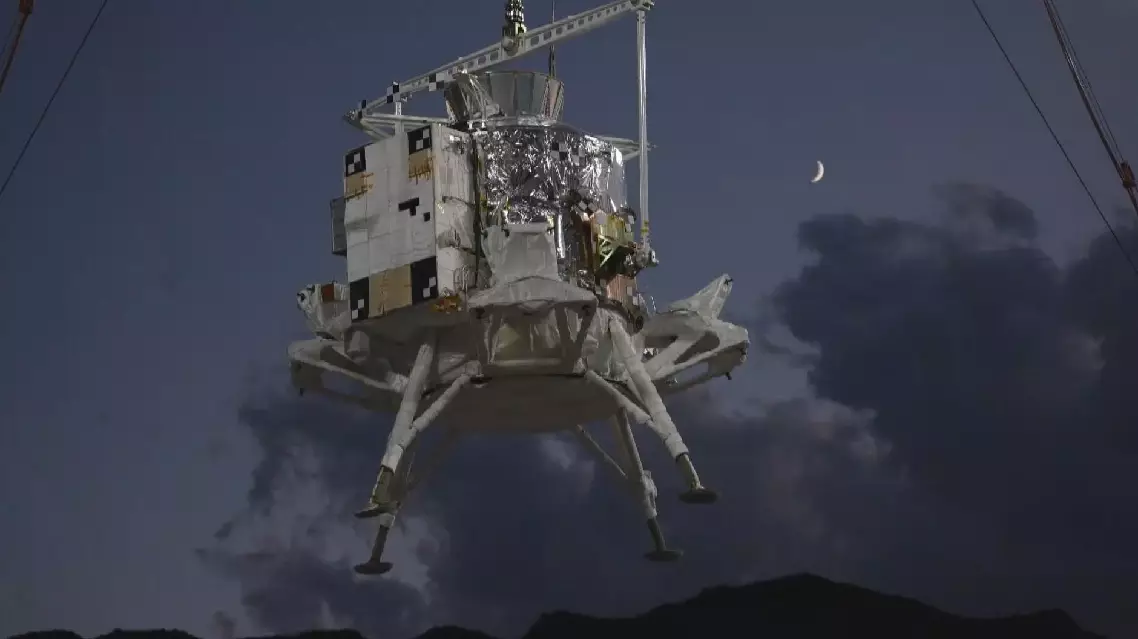
Chinese scientists prioritize safety in lunar lander development