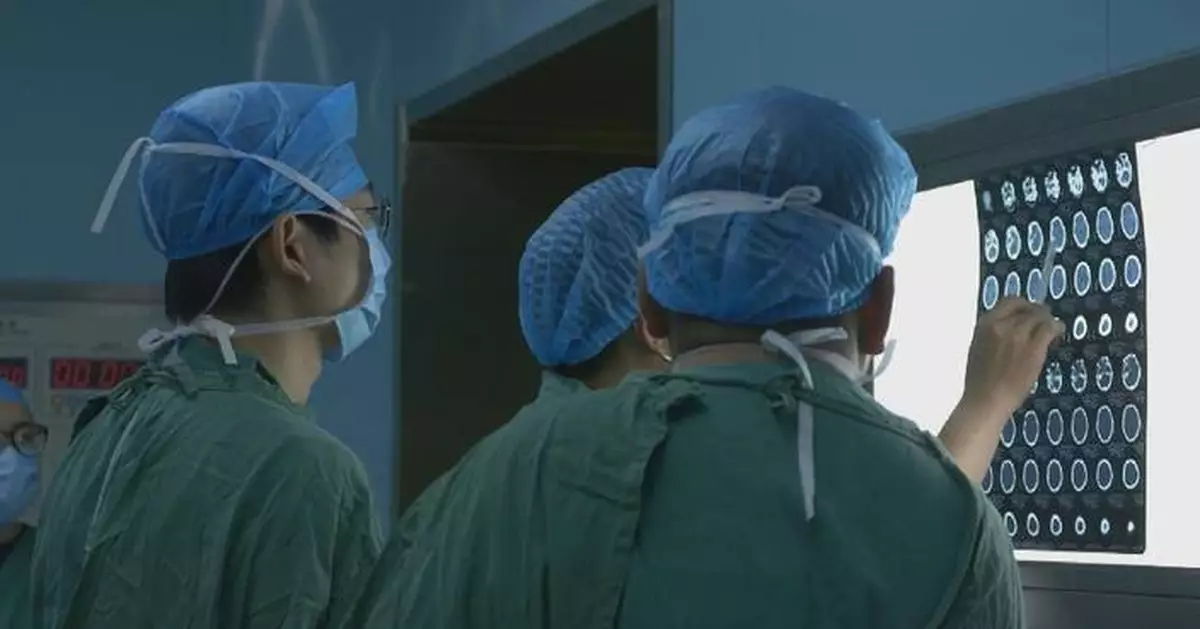
In the isolated Nagqu region of Xizang Autonomous Region, doctors are advancing modern medicine by working to save fragile lives and improving healthcare at 4,500 meters above sea level, where even breathing is difficult.
The Nagqu People's Hospital is treating a premature baby girl who was born after just six months of pregnancy, in a car, hours from home. She weighed less than 1,000 grams, and in the past, babies this small would not have survived here. But now, things have changed, for the better.
"We used endotracheal intubation to help her breathe, a technique that couldn't be performed on preemies before 2015. In 2024, our critical neonatal death rate dropped by 1 percent, and transfers dropped by 4 percent," said Tian Congliang, a neonatologist at the hospital.
The young mother was originally heading to a hospital in Lhasa, more than 12 hours away, by car. But she gave birth halfway, and the mother was sent to a nearby hospital while the baby was rushed to the Nagqu People's Hospital.
"Don't worry too much. We now have experience treating infants under 1,000 grams. With modern equipment, ventilators, and antibiotics, we can stabilize even the most fragile newborns. Her lungs and immune system are still immature, but she's holding on," Tian told the mother.
Tian is a neonatal expert from northeast China's Liaoning Province. He has been in Xizang under a "group-style" medical assistance program, launched in 2015, that sends doctors across China to the highland for sustained medical support.
Doctors like Tian not only help treat patients, but also train local medical workers.
"I started my career here in 2003. Back then, the hospital conditions were poor. We only had 21 beds at Pediatrics. No advanced equipment, no proper space. We could barely treat babies under 2,000 grams. If they were under 1,000 grams, we had no choice but to give up," said Jigme Topgyal, a pediatrician.
Thanks to doctors like Tian, who even carries a portable oxygen tank on his back during daily rounds, the hospital has become one of the highest-altitude tertiary-grade facilities in the country.
"Over the past decade, more than 150 doctors, including myself, have come to support the hospital, and we've introduced over 290 advanced procedures. We've built five major centers: an emergency and trauma center, a maternal ICU, a neonatal ICU, a stroke center, and a chest pain center," said Liu Yufeng, head of the hospital.
Nagqu is China's highest-altitude prefecture-level city, with fewer than two people per square kilometer.
In the past, residents either traveled long distances for medical treatment or had to settle for limited county-level medical care.
Today, nearly half a million people can access high-quality medical services close to home.
Nagqu's transformation mirrors the broader progress unfolding across Xizang.
In 2023, the region's maternal mortality rate dropped to about 38 per 100,000, and the infant mortality rate fell to 5 per 1,000, both reaching historic lows.
By 2024, Xizang had built over 7,200 medical institutions, including more than 5,200 village clinics. The number of hospital beds has surpassed 21,000, more than double that of 2012.
Over the past six decades, average life expectancy in the region has risen from 35.5 years to 72.5, a remarkable leap.
Behind these figures is a story of resilience and investment, of new hospitals rising, medical services reaching the most remote areas, and a stronger healthcare safety net for people across the plateau.
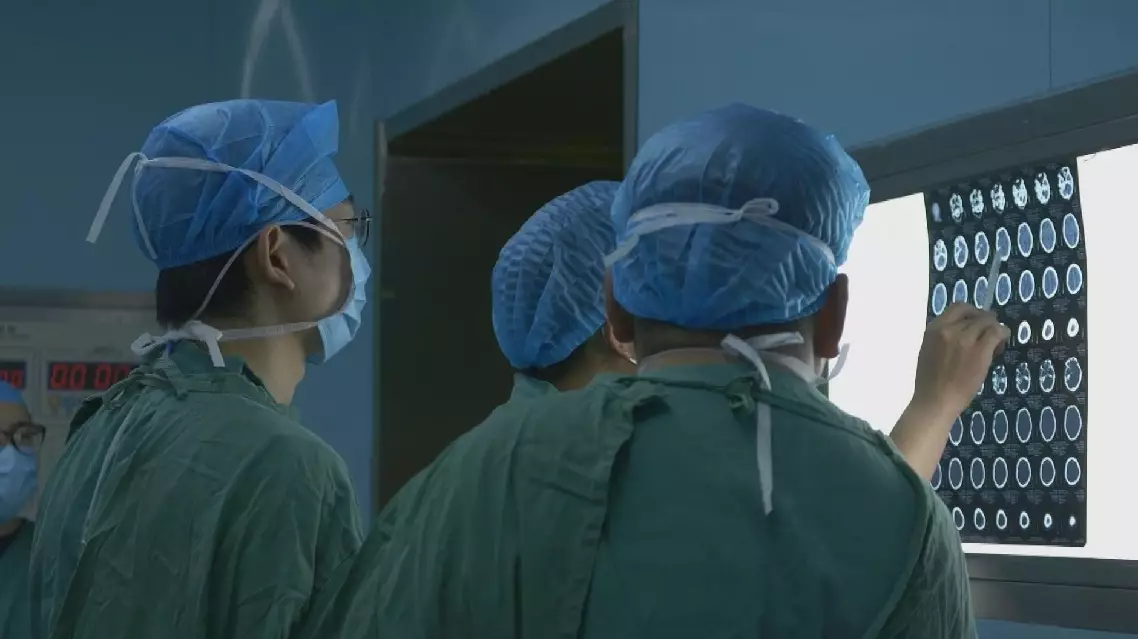
Medical heroes in Xizang battling altitude challenges to save lives