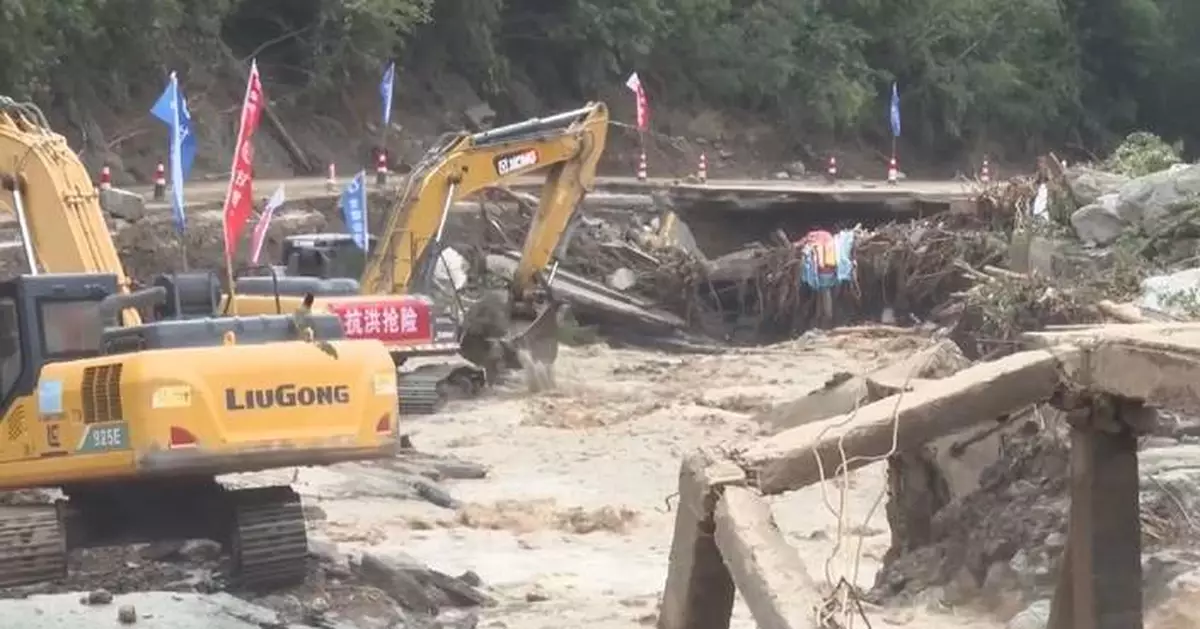
Emergency crews in Yuzhong County, northwest China's Gansu Province, are racing against time to restore a flood-damaged key provincial highway, with traffic expected to resume by Sunday night.
Torrential rain lashed Yuzhong County and other parts of Lanzhou, the provincial capital, on Thursday evening, triggering flash floods and mudslides that damaged local transport infrastructure. Among the hardest-hit areas was Mapo Township, where the Provincial Highway 104, a crucial rescue corridor, was severely damaged.
Teams of excavators worked in tandem at the damaged highway site to divert river flows, clear away thick mud, and reinforce the roadbed with sand, gravel, and stones, creating temporary lanes for relief vehicles. By midnight Saturday, only 1.5 kilometers of the route remained impassable.
To accelerate progress, workers have been repairing the road from both ends simultaneously. The three sections damaged on Saturday were down to one -- a collapsed bridge spanning 1.5 kilometers -- by Sunday noon. Crews are installing underground pipes and backfilling with sand and gravel to erect a new bridge beside the old one. Part of the river has been diverted to protect the site from further erosion and ensure work safety and progress.
The bridge is expected to be restored later on Sunday, so that the Provincial Highway 104 can be fully opened to traffic. With all stranded residents in Mapo Township relocated safely by Saturday, the opening of the highway is still critical as it is the easiest and direct route to the township. Its restoration will pave the way for the follow-up work there.
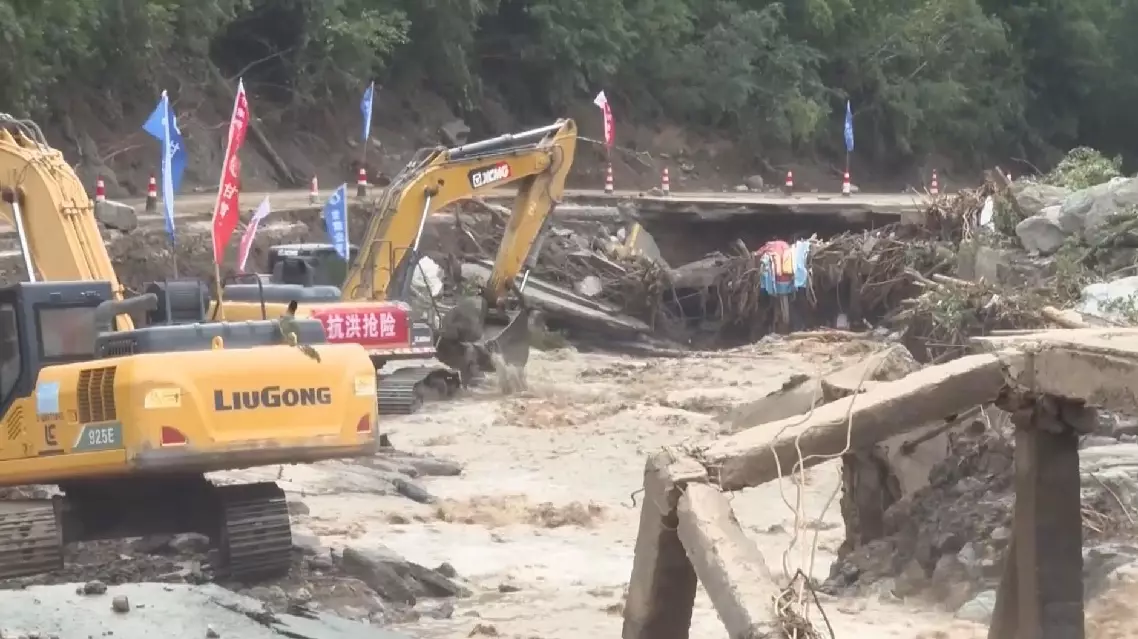
Emergency teams work around clock to repair flood-damaged highway in Gansu
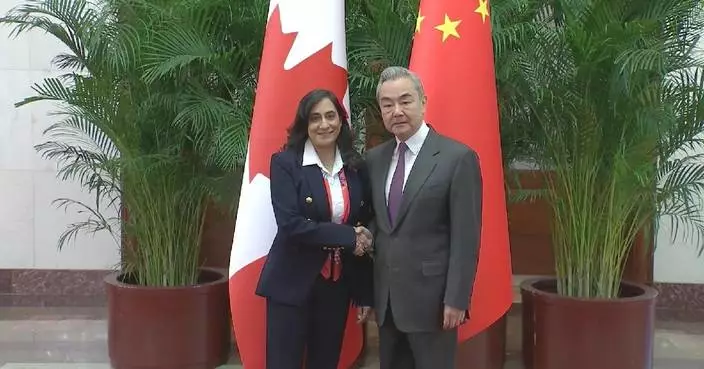
Canadian Prime Minister Mark Carney's official visit to China signals a policy shift towards building a more pragmatic relationship between the two countries, according to a Canadian researcher.
Carney arrived in Beijing on Wednesday to begin an official visit to China through Saturday, which marks the first trip by a Canadian Prime Minister to the country in eight years.
Robert Hanlon, director and principal investigator of Canada and the Asia Pacific Policy Project (CAPPP) at Thompson Rivers University in British Columbia, told the China Global Television Network (CGTN) that Carney's visit indicates Canada is recalibrating its strategic perception of China, which could cement the foundation for the country's economic diversification efforts and boost the development of bilateral cooperation.
"I think it's a clear message that he has moved Canada's strategy to a much more pragmatic, interest-based, -focused relationship with our trading partners, moving away from values-based narratives that we might have heard on previous governments. Canada has spoken about moving from what the Prime Minister's Office is calling "from reliance to resilience", and that means diversifying our economies and our trade everywhere in the world. And so China being our second largest trading partner, it makes perfect sense for our PM to head to Beijing," he said.
The scholar also noted the huge cooperation potential between the two sides in economic and trade fields, citing Canada's efforts to step up shipments of liquefied natural gas (LNG) and the planned construction of an oil pipeline in Alberta which aims to increase export access to Asian markets. "Canada and China both share tremendous economic opportunities together and so finding ways to enhance our exports. Canada specifically looking to build out its LNG and oil, kind of export market. We know Canada is a major producer of critical minerals and China is a buyer. And so there's a lot of synergy between that kind of those kind of markets," he said.

Canadian PM's visit to China paves way for more pragmatic trade ties: scholar