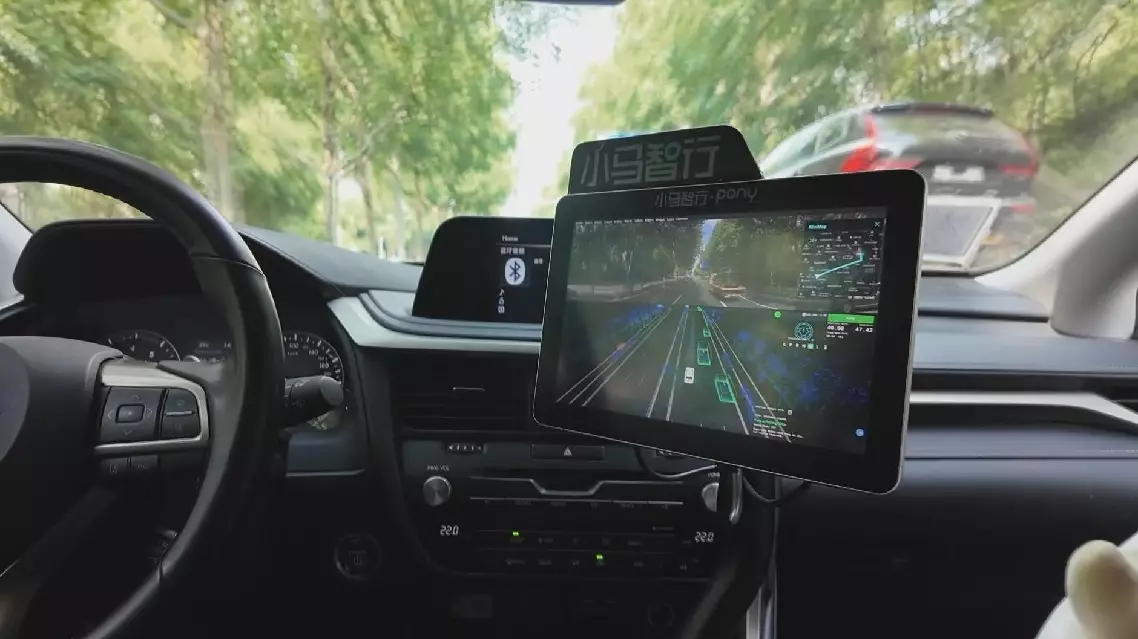
Shanghai has been welcoming a rapid expansion of self-driving taxis, bringing the service to busy areas of the metropolis as part of continued efforts to promote the pioneering technology.
The city recently held the just-concluded 2025 World AI Conference (WAIC), where it granted eight permits for companies to expand their autonomous driving services.
The companies are eager to prove that autopilot services can become widely-used services. According to Anthony Huang, vice president of Pony.ai, many daily commuters have already accepted the concept.
"Right now, the busiest times are rush hours and meal times. We’ll be expanding to places like Pudong International Airport, Zhangjiang, and Disneyland, and running for longer hours too," he said.
Up to now, ensuring safety has been the primary barrier to putting self-driving cars on the road. Now that the technology has become a reality, companies are also focusing on comfort and convenience, equipping amenities like passenger-controlled air conditioning, phone chargers, and music players.
A report by Goldman Sachs indicates that the Chinese robotaxi market is expected to grow rapidly from about 12 billion U.S. dollars by 2030, and 47 billion U.S. dollars by 2035, with the total fleet size expected to grow from 41,000 by this year to 1.9 million by 2035.
Huang credits this rapid advancement to firm support from the Chinese government.
"China and the U.S. lead in autonomous mobility, but China has an edge with rapid AI growth and strong national policy support," he said.
Shanghai to expand operation of autonomous taxis

Shanghai to expand operation of autonomous taxis