Eight decades after 82 soldiers died defending Liulaozhuang in east China's Jiangsu Province, their burial site and faded family letters remind people of their final fought against Japanese invaders.
On March 16, 1943, as over 1,000 Japanese invaders launched a sweeping attack in northern Jiangsu, the 82 soldiers of the New Fourth Army's 4th Company stood at a crossroads in Liulaozhuang Township. Faced with the choice between retreat and death, they chose the latter, to protect the local villagers and anti-Japanese base area at all costs.
"By March 18, the company of 82 soldiers was completely surrounded. They fought fiercely, repelled multiple cavalry charges, and destroyed over 170 enemy troops," said Fu Xingzheng, vice director of the Party History and Local Records Research Office under the Huaiyin District Committee of the Communist Party of China in Huai'an City.
In 12 hours, the company resisted the attacks of more than 1,600 Japanese invaders armed with over 100 cannons. Finally, running out of ammunition, they dismantled weapons, burned documents, and made the last attempt to break out of the enemy encirclement. None of the 82 soldiers survive the battle.
"They knew there was no way out. Yet not one of them surrendered. That was heroism, in its purest form," said Fu.
They held the line, gave other troops time to retreat, and crushed the Japanese invaders' three-month mopping-up plan.
Most of the soldiers were no more than 20 years old when they were killed. Only two letters to parents from Li Yunpeng, the 4th Company’s instructor, remain today.
Here are the lines from one of the letters:
"Honored Father and Mother, your son is well in body and in life. I am now sturdier and taller than before — I ask you not to worry. This time I left home, not to repay your kindness, but instead to depart — this is my wrongdoing. When the wind calms and the waves settle, I shall return with resolve, reunite with the whole family, and thus repay your deep grace."
Li Aiyun, Li Yunpeng's sister, recalled visiting the martyrs' cemetery in 1967.
"I first came to this martyrs cemetery with my parents in 1967. I remember it was around 08:00. People came from all directions to this site, like a flowing stream. They didn't know my brother, but they still came. I was touched and amazed by how the people remembered the heroes," she said.
In 1955, the local government rebuilt the Tomb of the 82 Martyrs. The sacrifices they made to protect the safety of villagers and fellow soldiers continue to be remembered eight decades on.
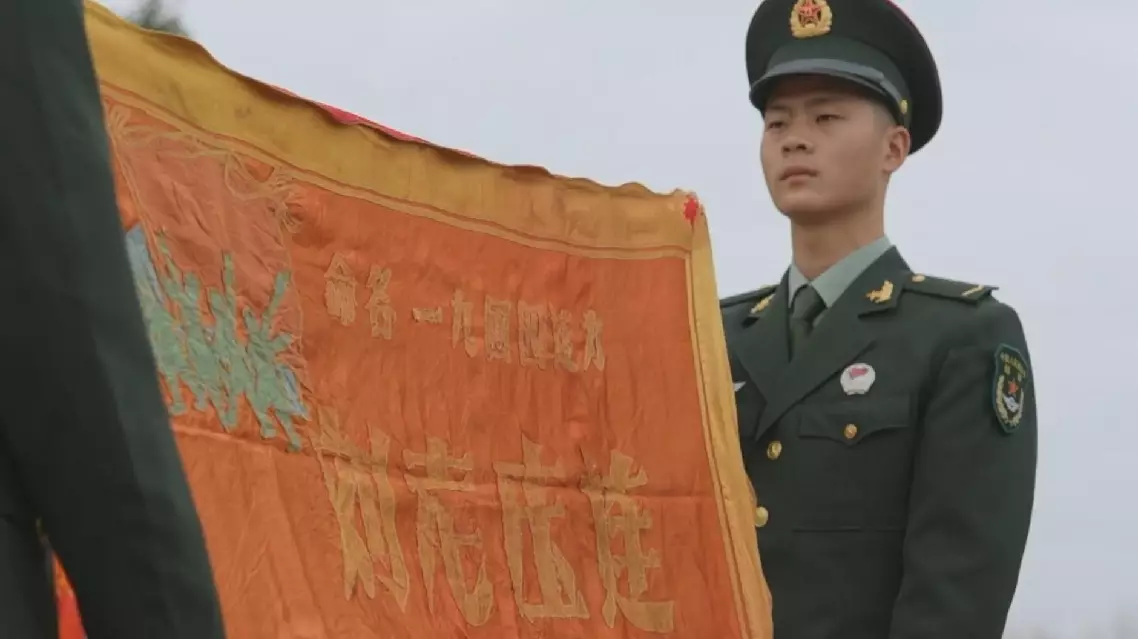
82 heroes' last stand against Japanese invaders remembered 80 years on