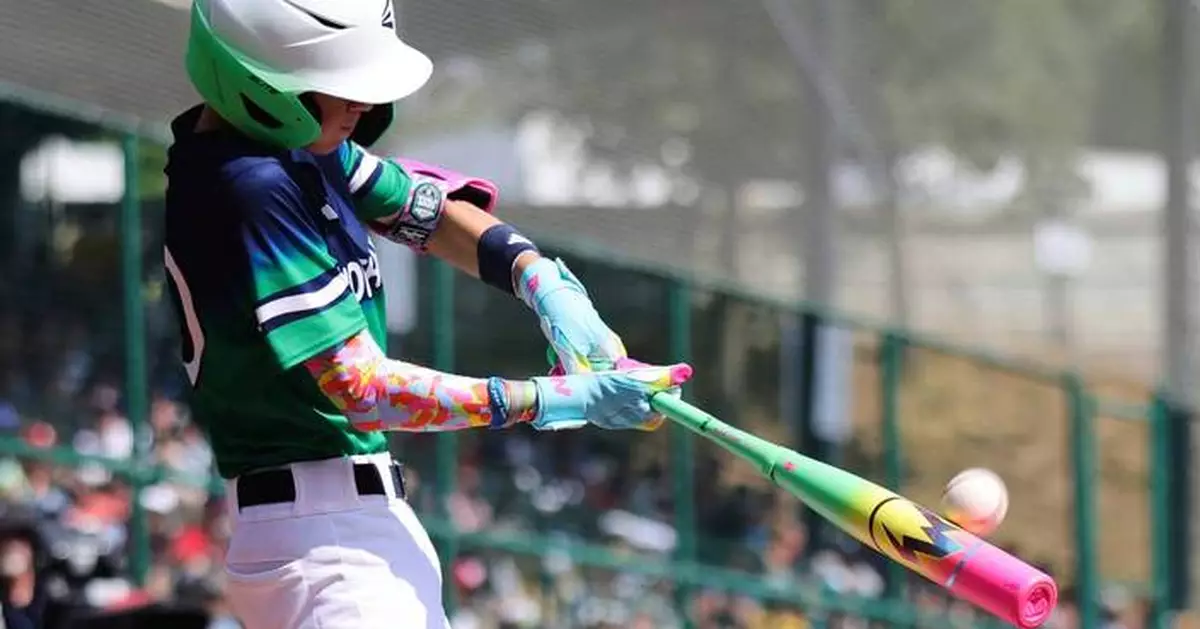
SOUTH WILLIAMSPORT, Pa. (AP) — It’s not an ice-cream cone. It’s not an Italian rainbow cookie. It’s the baseball bat being used at the Little League World Series.
Easton’s 2026 Hype Fire USA Bat with the neon green grip and the pink-and-neon yellow barrel is hard to miss at the plate. And the players love them.
“I left it up to them which bats they wanted to use, most of them went with the bat they gave us,” Pennsylvania manager Michael Shaw said. “You know, a great color for 12-year-old kids — sour gummy worms.”
When Little League teams arrive in Williamsport, they get bright and colorful uniforms and hats at the Grove, the barracks where they live during the tournament. When they go to the batting cages for the first time, the rest of their gear is waiting for them. Bats, gloves, helmets, catching gear, you name it, the players are getting it.
“They were kids in a candy store, and as a coach, I got goose bumps walking in there and I’m 38 years old, so I can only imagine what the 12-year-olds are thinking about while walking through that door, seeing all the gear they got,” said South Dakota’s manager, Ryan Vavruska. “We’re very fortunate to get here and to be blessed with all that gear.”
Easton has partnered with Little League for more than 40 years and in 2023 the partnership was extended through 2028. Rawlings merged with Easton in 2021 and is the official glove used in the tournament.
“When they opened the roller door down to the batting cages, the stampede started,” Australia manager Keith Land said. “These kids are going to be excited to go home and go, ‘Look what I’ve got and look what you haven’t got.’ They’ll rub it in, don’t worry about that.”
After aluminum bats were turning games into home run derbies, Little League in 2018 changed its bat rules to comply with the USABat Standard, which switched the material used to make the bats, so they now perform more like wooden bats. These bats, however, are lighter and easier to swing for 12-year-old players.
The standard was created to ensure the “long-term integrity of the game,” according to USA Baseball. There are now fewer home runs each year at the LLWS, even if the ball sounds good off the bat.
But the players aren’t talking about the home runs they may or not hit — they just love having the bat in their hands. Most of them couldn’t believe what they were getting.
“It was pretty hype,” South Dakota’s Camden Tycz said. “When we saw the bat table it was just astonishing.”
Preston Ware’s mouth dropped when his team from South Carolina got to the batting cages. He initially thought his whole team would get only one bat to share.
“Coach Dave (Bogan) tried to trick me and said, ‘Yes,’” Preston said.
But quick to jump in was Joe Giulietti, who hit a grand slam in South Carolina’s first game. “Preston,” he said, “this isn’t like the 1960s. When Coach Dave grew up, they had one bat size.”
Amanda Vogt is a student in the John Curley Center for Sports Journalism at Penn State.
AP sports: https://apnews.com/sports

Las Vegas, Nev.'s Ethan Robertson watches his hit as he runs to first against Bonney Lake, Wash., during the first inning of a baseball game at the Little League World Series, Friday, Aug. 15, 2025, in South Williamsport, Pa. (AP Photo/Jared Freed)

Upper Uwchlan Township, Pa.'s Gabe Mackiewicz bats against Sioux Falls, S.D.,, in the sixth inning of a baseball game at the Little League World Series, Thursday, Aug. 14, 2025, in South Williamsport, Pa. (AP Photo/Caleb Craig)

Bonney Lake, Wash,. Finn Harrington makes contact with a pitch against Las Vegas, Nev., during the first inning of a baseball game at the Little League World Series, Friday, Aug. 15, 2025, in South Williamsport, Pa. (AP Photo/Jared Freed)
HAMIMA, Syria (AP) — A trickle of civilians left a contested area east of Aleppo on Thursday after a warning by the Syrian military to evacuate ahead of an anticipated government military offensive against Kurdish-led forces.
Government officials and some residents who managed to get out said the Kurdish-led Syrian Democratic Forces prevented people from leaving via the corridor designated by the military along the main road leading west from the town of Maskana through Deir Hafer to the town of Hamima.
The SDF denied the reports that they were blocking the evacuation.
In Hamima, ambulances and government officials were gathered beginning early in the morning waiting to receive the evacuees and take them to shelters, but few arrived.
Farhat Khorto, a member of the executive office of Aleppo Governorate who was waiting there, claimed that there were "nearly two hundred civilian cars and hundreds of people who wanted to leave” the Deir Hafer area but that they were prevented by the SDF. He said the SDF was warning residents they could face “sniping operations or booby-trapped explosives” along that route.
Some families said they got out of the evacuation zone by taking back roads or going part of the distance on foot.
“We tried to leave this morning, but the SDF prevented us. So we left on foot … we walked about seven to eight kilometers until we hit the main road, and there the civil defense took us and things were good then,” said Saleh al-Othman, who said he fled Deir Hafer with more than 50 relatives.
Yasser al-Hasno, also from Deir Hafer, said he and his family left via back roads because the main routes were closed and finally crossed a small river on foot to get out of the evacuation area.
Another Deir Hafer resident who crossed the river on foot, Ahmad al-Ali, said, “We only made it here by bribing people. They still have not allowed a single person to go through the main crossing."
Farhad Shami, a spokesman for the SDF, said the allegations that the group had prevented civilians from leaving were “baseless.” He suggested that government shelling was deterring residents from moving.
The SDF later issued a statement also denying that it had blocked civilians from fleeing. It said that “any displacement of civilians under threat of force by Damascus constitutes a war crime" and called on the international community to condemn it.
“Today, the people of Deir Hafer have demonstrated their unwavering commitment to their land and homes, and no party can deprive them of their right to remain there under military pressure,” it said.
The Syrian army’s announcement late Wednesday — which said civilians would be able to evacuate through the “humanitarian corridor” from 9 a.m. to 5 p.m. Thursday — appeared to signal plans for an offensive against the SDF in the area east of Aleppo. Already there have been limited exchanges of fire between the two sides.
Thursday evening, the military said it would extend the humanitarian corridor for another day.
The Syrian military called on the SDF and other armed groups to withdraw to the other side of the Euphrates River, to the east of the contested zone. The SDF controls large swaths of northeastern Syria east of the river.
The tensions in the Deir Hafer area come after several days of intense clashes last week in Aleppo city that ended with the evacuation of Kurdish fighters and government forces taking control of three contested neighborhoods.
The fighting broke out as negotiations have stalled between Damascus and the SDF over an agreement reached last March to integrate their forces and for the central government to take control of institutions including border crossings and oil fields in the northeast.
Some of the factions that make up the new Syrian army, which was formed after the fall of former President Bashar Assad in a rebel offensive in December 2024, were previously Turkey-backed insurgent groups that have a long history of clashing with Kurdish forces.
The SDF for years has been the main U.S. partner in Syria in fighting against the Islamic State group, but Turkey considers the SDF a terrorist organization because of its association with Kurdish separatist insurgents in Turkey.
Despite the long-running U.S. support for the SDF, the Trump administration has also developed close ties with the government of interim Syrian President Ahmad al-Sharaa and has so far avoided publicly taking sides in the clashes in Aleppo.
Ilham Ahmed, head of foreign relations for the SDF-affiliated Kurdish-led administration in northeast Syria, at a press conference Thursday said SDF officials were in contact with the United States and Turkey and had presented several initiatives for de-escalation. She said that claims by Damascus that the SDF had failed to implement the March agreement were false.
——
Associated Press journalist Hogir Al Abdo in Qamishli, Syria, contributed.
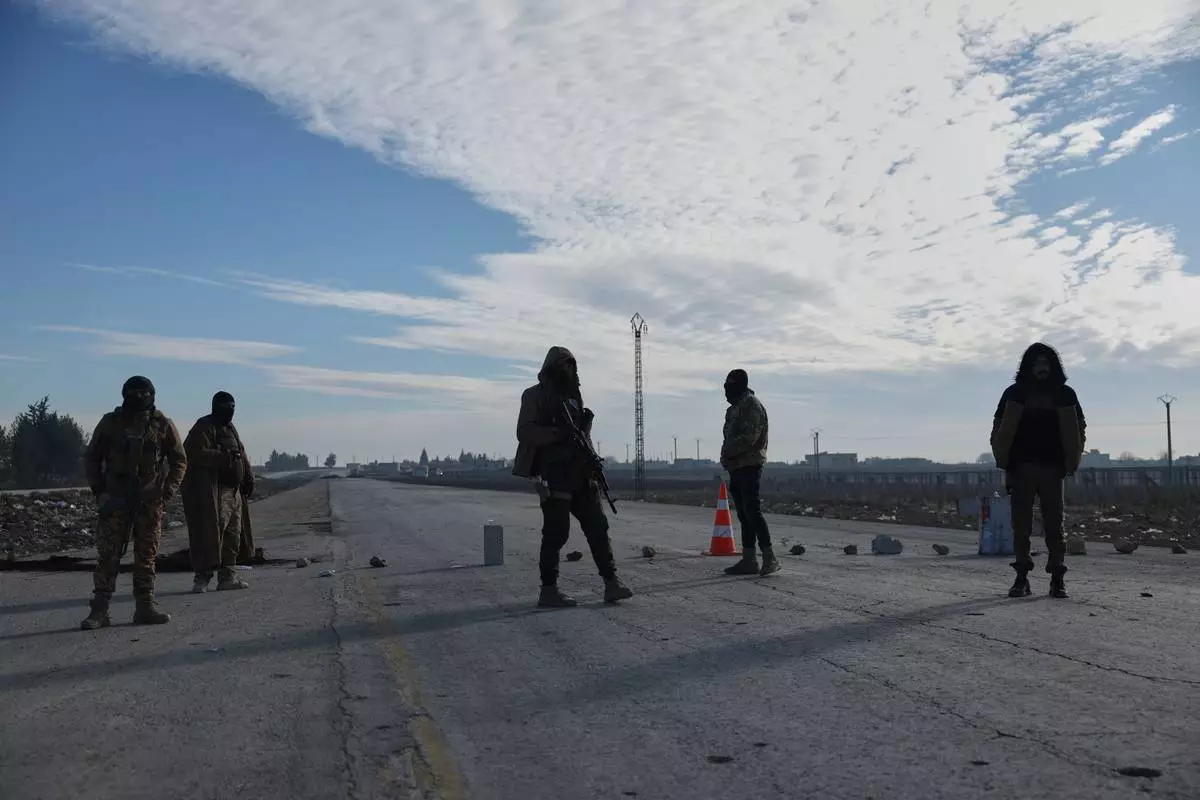
Members of the Syrian military police stand at a humanitarian crossing declared by the Syrian army in the village of Hamima, in the eastern Aleppo countryside, near the front line with the Kurdish-led Syrian Democratic Forces in Deir Hafer, Syria, Thursday, Jan. 15, 2026. (AP Photo/Ghaith Alsayed)
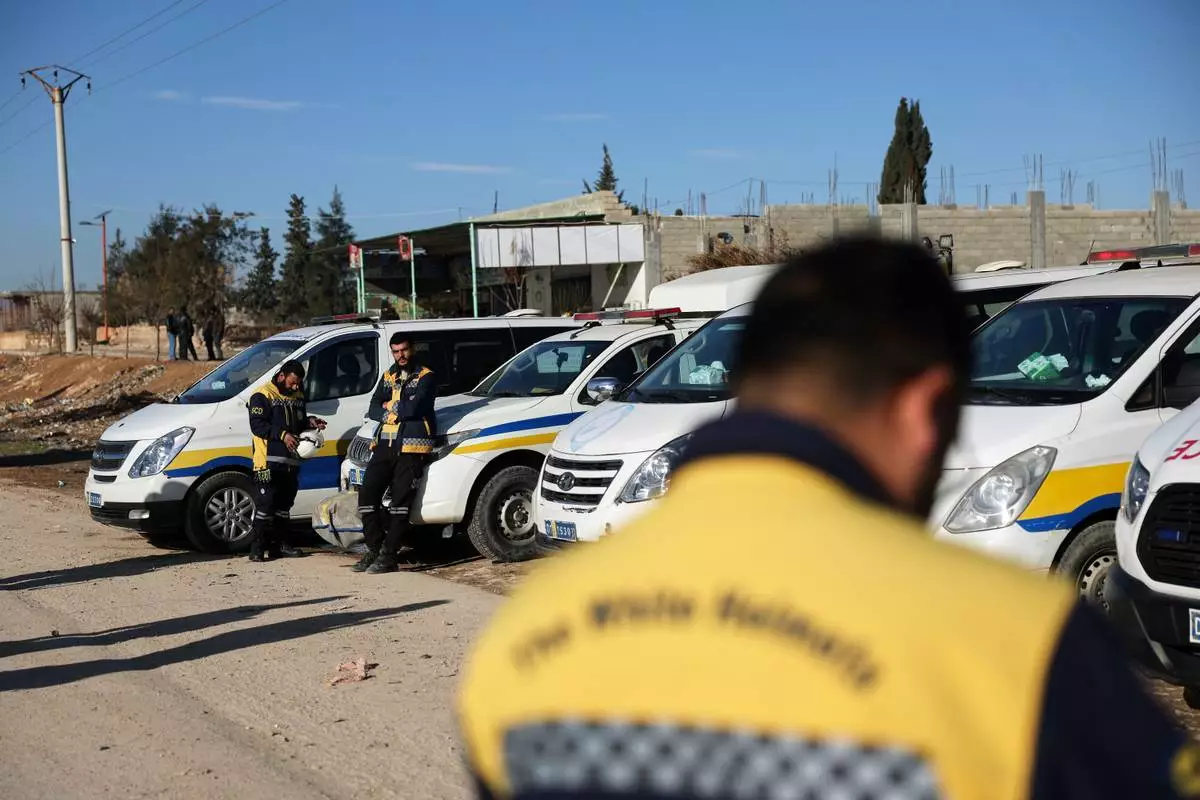
Members of the Syrian Civil Defense, stand next to their vehicles at a humanitarian crossing declared by the Syrian army in the village of Hamima, in the eastern Aleppo countryside, near the front line with the Kurdish-led Syrian Democratic Forces in Deir Hafer, Syria, Thursday, Jan. 15, 2026. (AP Photo/Ghaith Alsayed)
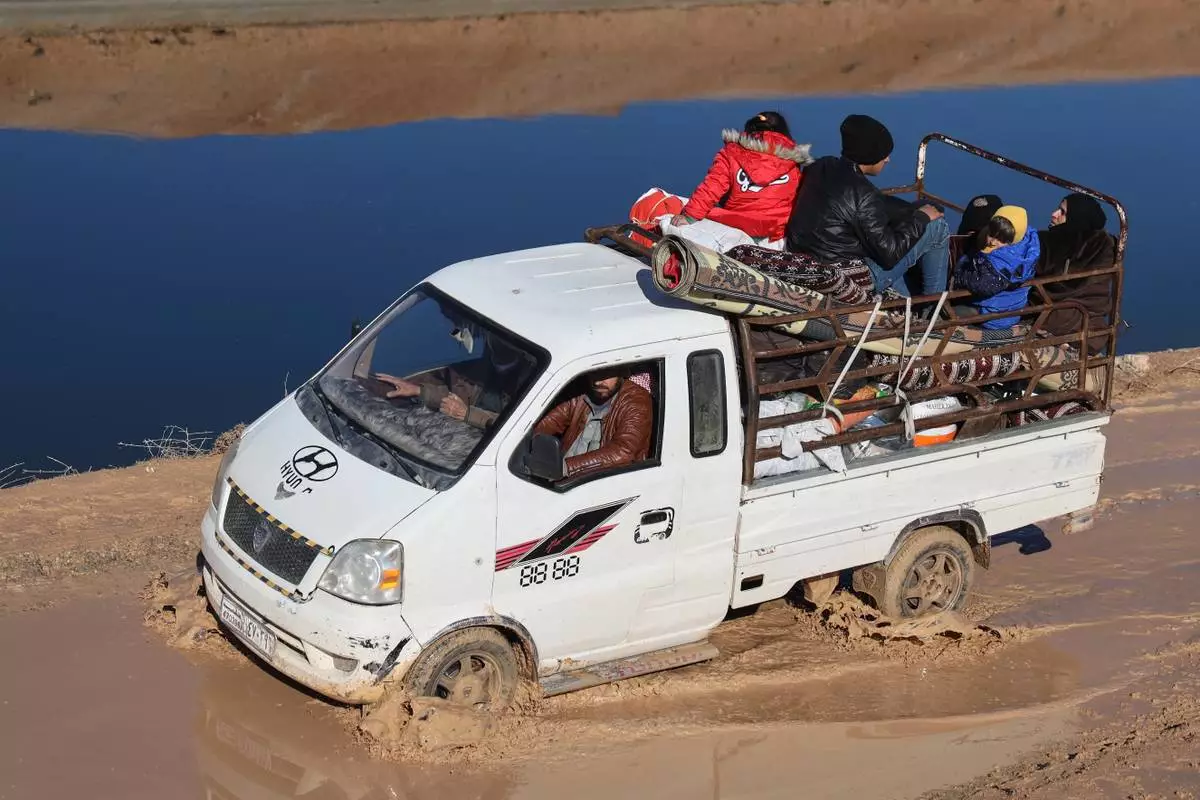
A displaced Syrian family rides in the back of a truck near a humanitarian crossing declared by the Syrian army next to a river in the village of Rasm Al-Abboud, in the eastern Aleppo countryside, near the front line with the Kurdish-led Syrian Democratic Forces in Deir Hafer, Syria, Thursday, Jan. 15, 2026. (AP Photo/Omar Albam)
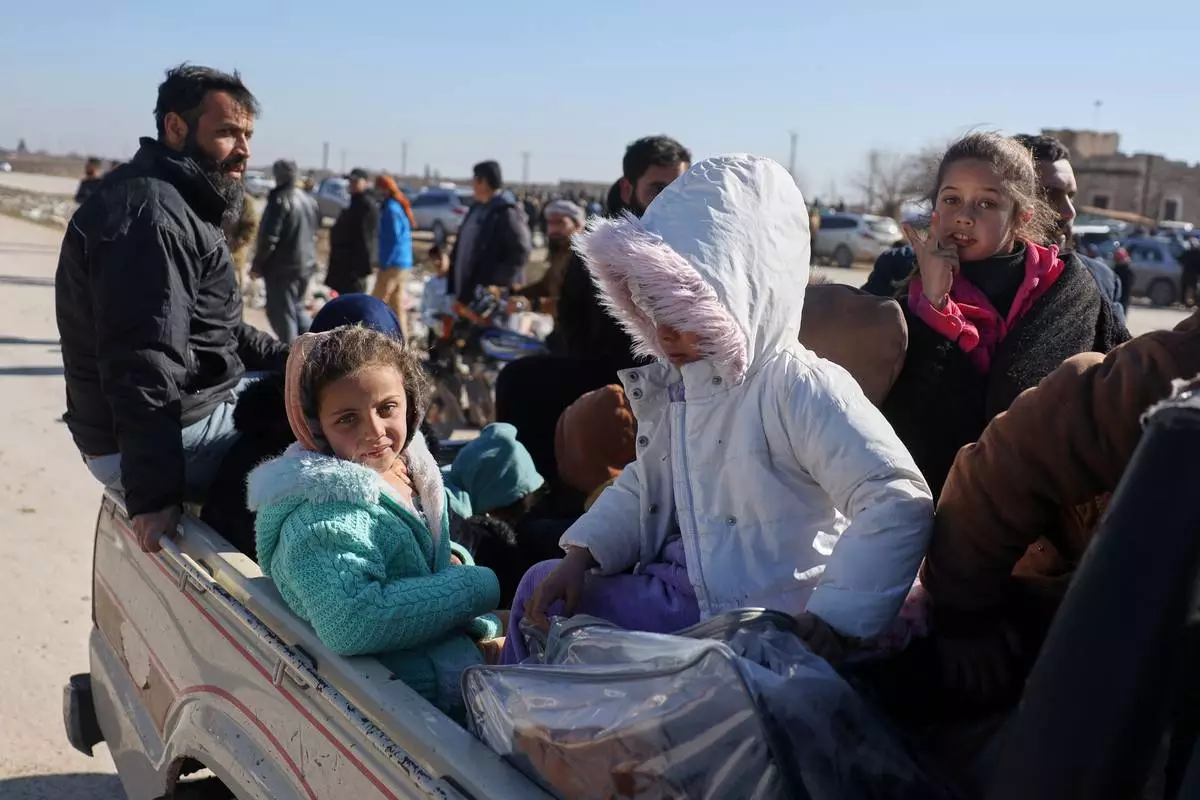
Displaced Syrian children and women ride in the back of a truck near a humanitarian crossing declared by the Syrian army in the village of Hamima, in the eastern Aleppo countryside, near the front line with the Kurdish-led Syrian Democratic Forces in Deir Hafer, Syria, Thursday, Jan. 15, 2026. (AP Photo/Omar Albam)
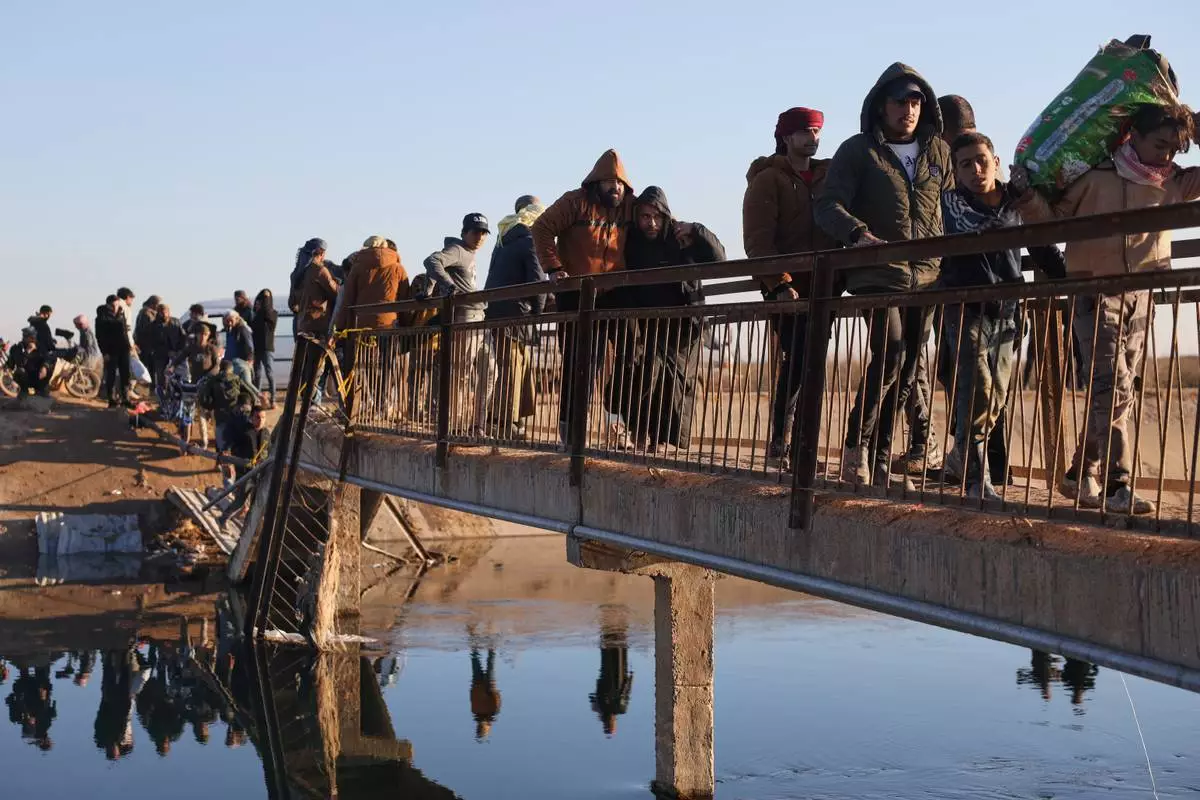
Displaced Syrians at a river crossing near the village of Jarirat al Imam, in the eastern Aleppo countryside, near the front line with the Kurdish-led Syrian Democratic Forces in Deir Hafer, Syria, Thursday, Jan. 15, 2026. (AP Photo/Omar Albam)