DAKAR, Senegal (AP) — The army in Niger says it used a targeted airstrike to kill a senior leader of the Boko Haram jihadi group, which has killed thousands of people in West Africa.
Ibrahim Bakoura was killed in an Aug. 15 strike in the Lake Chad region that killed “dozens of terrorists” and Boko Haram senior leaders, the army claimed in a state television broadcast Thursday. Bakoura, who was in his mid-40s, was “tracked for several weeks” before the strike, the army said.
Boko Haram, a homegrown group of jihadis from neighboring Nigeria that is considered one of the world's deadliest armed groups, took up arms in 2009 to fight Western education and impose their radical version of Islamic law.
The conflict has spilled into Nigeria’s northern neighbors, including Niger, and resulted in the death of around 35,000 civilians and the displacement of more than 2 million others, according to the United Nations.
There should be skepticism about reports of senior militant deaths, said Wassim Nasr, a Sahel specialist and senior research fellow at the Soufan Center security think tank. He noted Bakoura has been reported dead at least three times in the past and governments have limited capacity to verify remote airstrikes.
Boko Haram split into two factions in the ensuing power struggle after the 2021 death of the group’s longtime leader, Abubakar Shekau, who was falsely reported dead several times. Bakoura came to power in 2022.
One faction is backed by the Islamic State group and is known as the Islamic State West Africa Province, or ISWAP. It has become notorious for targeting military positions and has overrun the military in Nigeria on at least 15 occasions in 2025, killing soldiers and stealing weapons, according to an Associated Press count, experts and security reports.
The other faction, Jama’atu Ahlis Sunna Lidda’awati wal-Jihad (JAS), also known as Boko Haram, has increasingly resorted to attacking civilians and perceived collaborators and thrives on robberies and abductions for ransom.
Bakoura’s killing is the latest blow to the network of armed groups in the region in recent weeks following the arrests of top Al-Qaeda affiliated leaders in Nigeria and the son of Boko Haram’s founder in Chad.
Experts say there is a renewed response from intelligence agencies in west and central African countries whose security leaderships have suffered embarrassing loses to armed groups this year.
“What the constant attacks did was cause military and security leaders embarrassment because it got to a point soldiers were running away on sighting ISWAP advances. The attacks inspired renewed response by militaries across the region,” said Taiwo Adebayo, a security researcher at the Institute of Security Studies.
The arrest and killing of top leaders will translate to material gains in the regional fight against insecurity if the government in Niger ensures the groups do not carry out retaliatory attacks or rejuvenate elsewhere, Adebayo said.
This article corrects a previous version that did not use the preferred last name of Taiwo Adebayo.
Ope Adetayo contributed from Lagos, Nigeria.
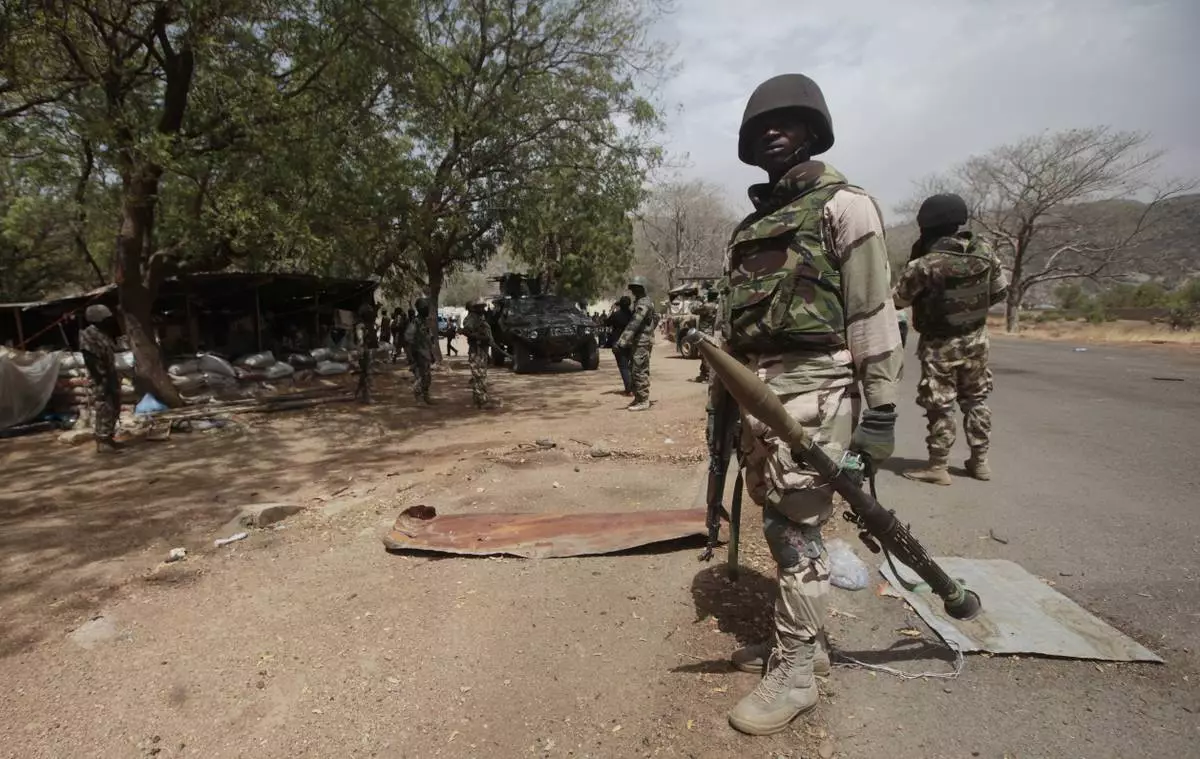
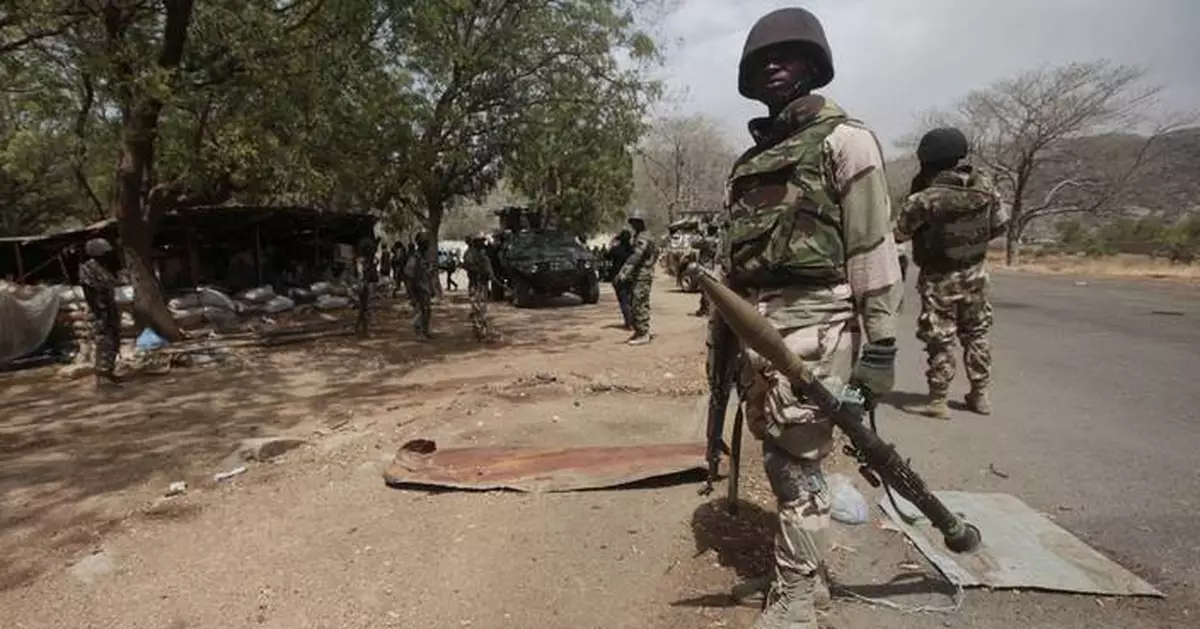
FILE - Nigerian soldiers man a checkpoint in Gwoza, Nigeria, Wednesday April 8, 2015. (AP Photo/Lekan Oyekanmi, File)
HAMIMA, Syria (AP) — A trickle of civilians left a contested area east of Aleppo on Thursday after a warning by the Syrian military to evacuate ahead of an anticipated government military offensive against Kurdish-led forces.
Government officials and some residents who managed to get out said the Kurdish-led Syrian Democratic Forces prevented people from leaving via the corridor designated by the military along the main road leading west from the town of Maskana through Deir Hafer to the town of Hamima.
The SDF denied the reports that they were blocking the evacuation.
In Hamima, ambulances and government officials were gathered beginning early in the morning waiting to receive the evacuees and take them to shelters, but few arrived.
Farhat Khorto, a member of the executive office of Aleppo Governorate who was waiting there, claimed that there were "nearly two hundred civilian cars and hundreds of people who wanted to leave” the Deir Hafer area but that they were prevented by the SDF. He said the SDF was warning residents they could face “sniping operations or booby-trapped explosives” along that route.
Some families said they got out of the evacuation zone by taking back roads or going part of the distance on foot.
“We tried to leave this morning, but the SDF prevented us. So we left on foot … we walked about seven to eight kilometers until we hit the main road, and there the civil defense took us and things were good then,” said Saleh al-Othman, who said he fled Deir Hafer with more than 50 relatives.
Yasser al-Hasno, also from Deir Hafer, said he and his family left via back roads because the main routes were closed and finally crossed a small river on foot to get out of the evacuation area.
Another Deir Hafer resident who crossed the river on foot, Ahmad al-Ali, said, “We only made it here by bribing people. They still have not allowed a single person to go through the main crossing."
Farhad Shami, a spokesman for the SDF, said the allegations that the group had prevented civilians from leaving were “baseless.” He suggested that government shelling was deterring residents from moving.
The SDF later issued a statement also denying that it had blocked civilians from fleeing. It said that “any displacement of civilians under threat of force by Damascus constitutes a war crime" and called on the international community to condemn it.
“Today, the people of Deir Hafer have demonstrated their unwavering commitment to their land and homes, and no party can deprive them of their right to remain there under military pressure,” it said.
The Syrian army’s announcement late Wednesday — which said civilians would be able to evacuate through the “humanitarian corridor” from 9 a.m. to 5 p.m. Thursday — appeared to signal plans for an offensive against the SDF in the area east of Aleppo. Already there have been limited exchanges of fire between the two sides.
Thursday evening, the military said it would extend the humanitarian corridor for another day.
The Syrian military called on the SDF and other armed groups to withdraw to the other side of the Euphrates River, to the east of the contested zone. The SDF controls large swaths of northeastern Syria east of the river.
The tensions in the Deir Hafer area come after several days of intense clashes last week in Aleppo city that ended with the evacuation of Kurdish fighters and government forces taking control of three contested neighborhoods.
The fighting broke out as negotiations have stalled between Damascus and the SDF over an agreement reached last March to integrate their forces and for the central government to take control of institutions including border crossings and oil fields in the northeast.
Some of the factions that make up the new Syrian army, which was formed after the fall of former President Bashar Assad in a rebel offensive in December 2024, were previously Turkey-backed insurgent groups that have a long history of clashing with Kurdish forces.
The SDF for years has been the main U.S. partner in Syria in fighting against the Islamic State group, but Turkey considers the SDF a terrorist organization because of its association with Kurdish separatist insurgents in Turkey.
Despite the long-running U.S. support for the SDF, the Trump administration has also developed close ties with the government of interim Syrian President Ahmad al-Sharaa and has so far avoided publicly taking sides in the clashes in Aleppo.
Ilham Ahmed, head of foreign relations for the SDF-affiliated Kurdish-led administration in northeast Syria, at a press conference Thursday said SDF officials were in contact with the United States and Turkey and had presented several initiatives for de-escalation. She said that claims by Damascus that the SDF had failed to implement the March agreement were false.
——
Associated Press journalist Hogir Al Abdo in Qamishli, Syria, contributed.
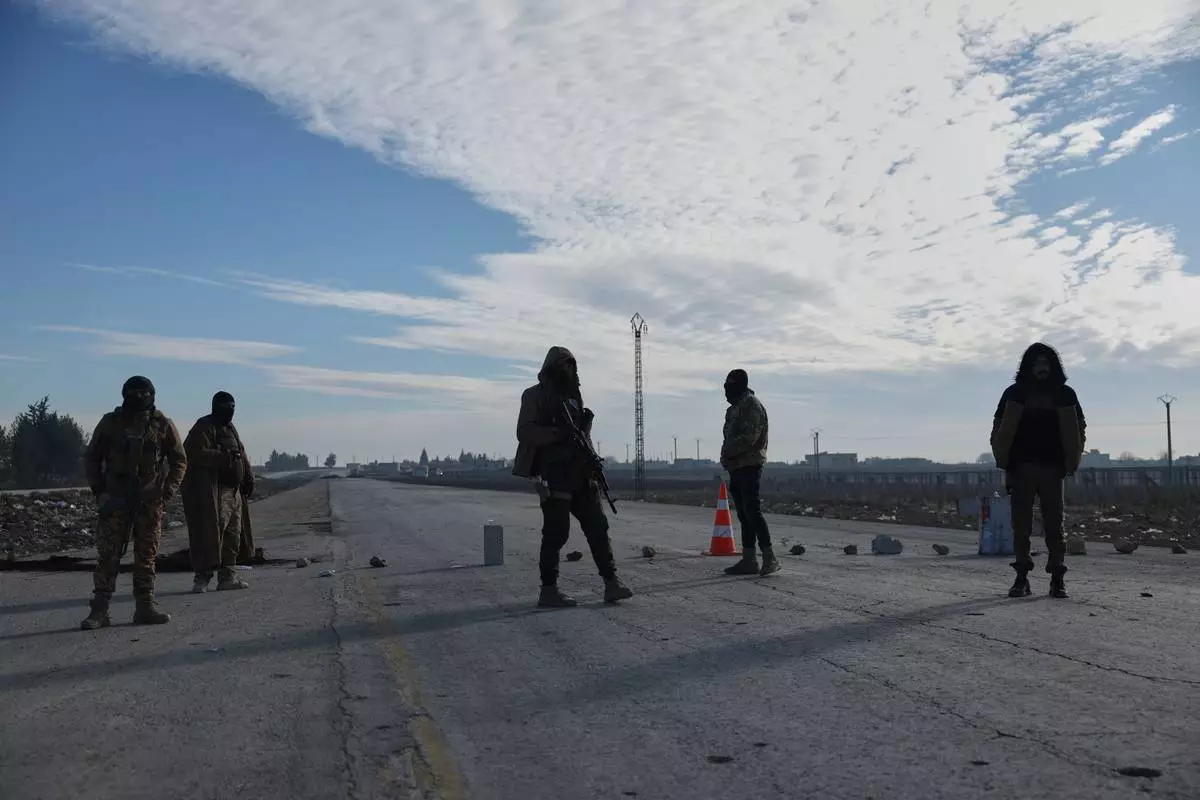
Members of the Syrian military police stand at a humanitarian crossing declared by the Syrian army in the village of Hamima, in the eastern Aleppo countryside, near the front line with the Kurdish-led Syrian Democratic Forces in Deir Hafer, Syria, Thursday, Jan. 15, 2026. (AP Photo/Ghaith Alsayed)
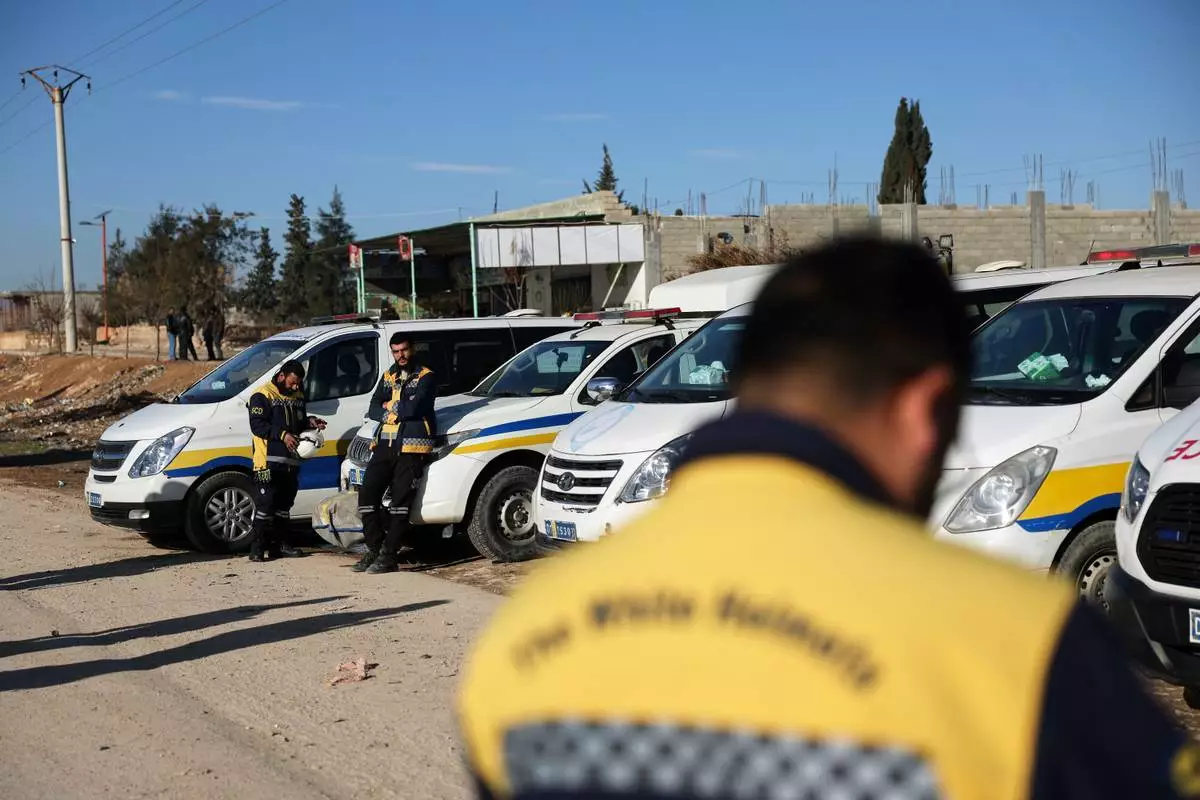
Members of the Syrian Civil Defense, stand next to their vehicles at a humanitarian crossing declared by the Syrian army in the village of Hamima, in the eastern Aleppo countryside, near the front line with the Kurdish-led Syrian Democratic Forces in Deir Hafer, Syria, Thursday, Jan. 15, 2026. (AP Photo/Ghaith Alsayed)
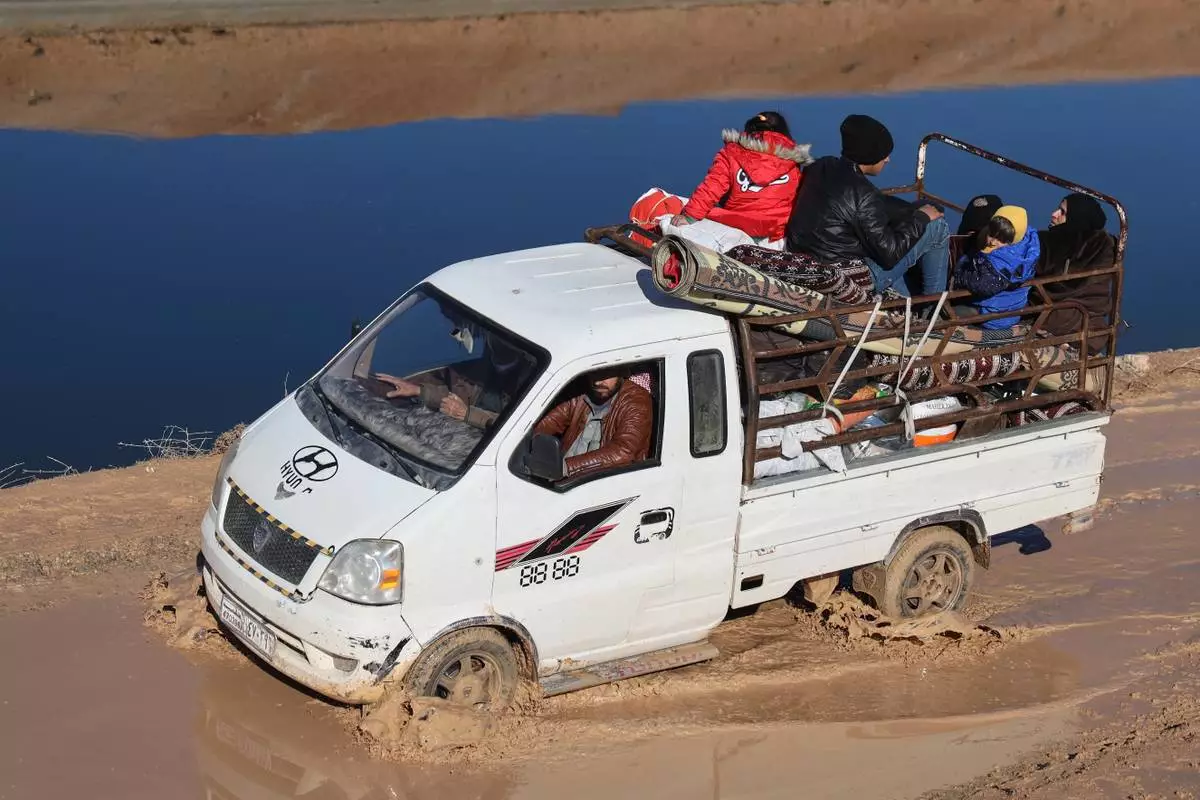
A displaced Syrian family rides in the back of a truck near a humanitarian crossing declared by the Syrian army next to a river in the village of Rasm Al-Abboud, in the eastern Aleppo countryside, near the front line with the Kurdish-led Syrian Democratic Forces in Deir Hafer, Syria, Thursday, Jan. 15, 2026. (AP Photo/Omar Albam)
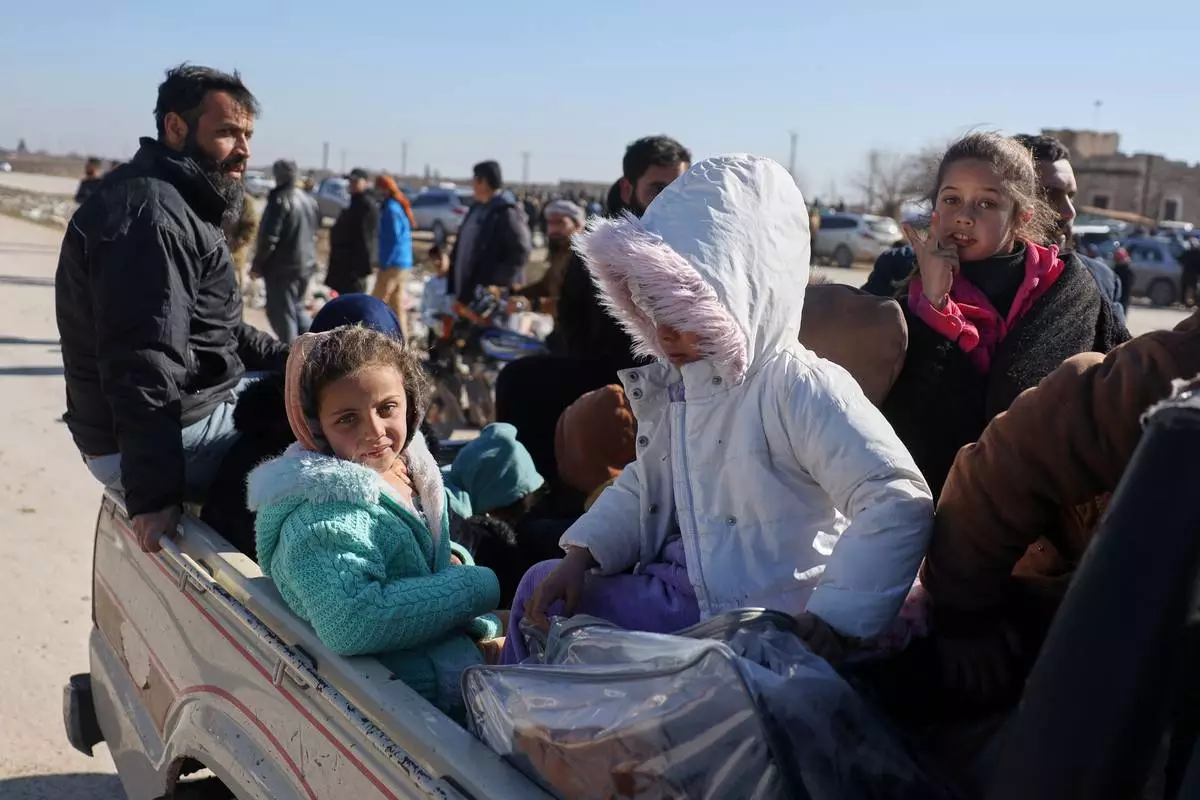
Displaced Syrian children and women ride in the back of a truck near a humanitarian crossing declared by the Syrian army in the village of Hamima, in the eastern Aleppo countryside, near the front line with the Kurdish-led Syrian Democratic Forces in Deir Hafer, Syria, Thursday, Jan. 15, 2026. (AP Photo/Omar Albam)
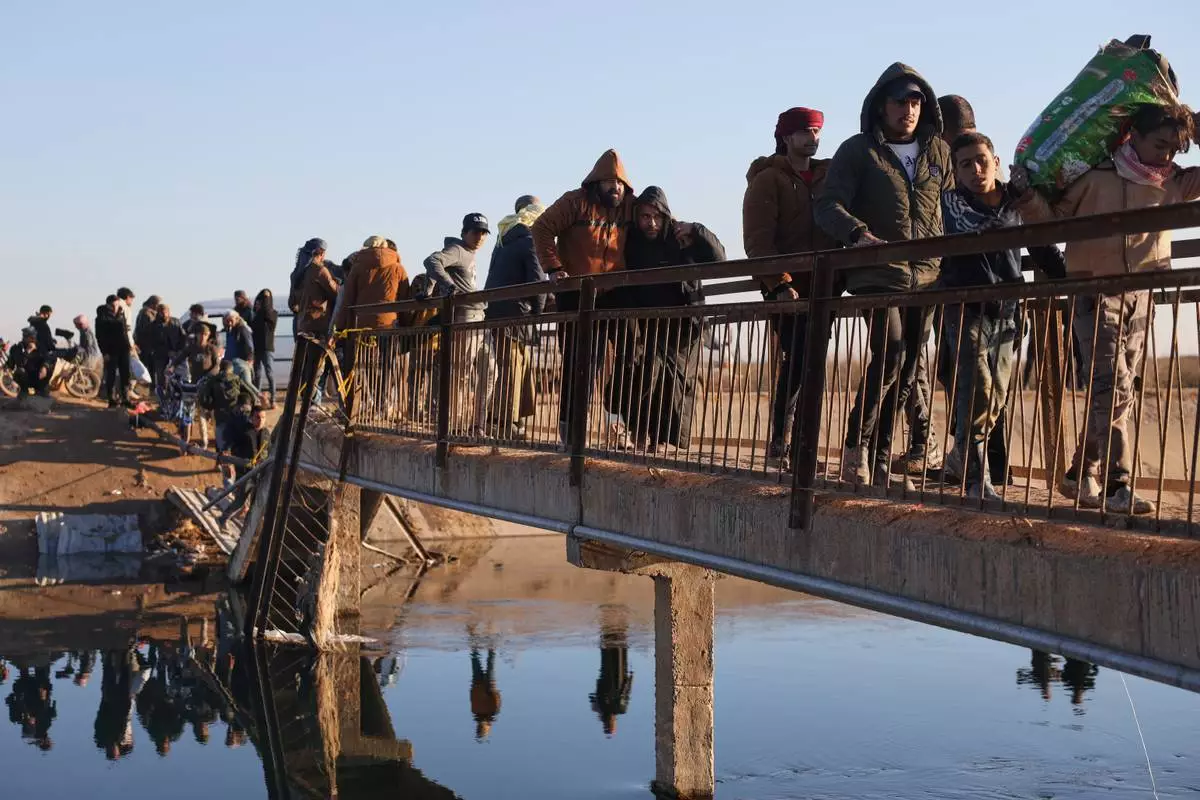
Displaced Syrians at a river crossing near the village of Jarirat al Imam, in the eastern Aleppo countryside, near the front line with the Kurdish-led Syrian Democratic Forces in Deir Hafer, Syria, Thursday, Jan. 15, 2026. (AP Photo/Omar Albam)