Severe flooding has hit Yemen's southern city of Aden and nearby regions following days of torrential rain, leaving widespread destruction and prompting emergency responses.
In the northwestern canyon areas of Aden, floodwaters surged through natural channels carrying runoff from neighboring Lahj province before emptying into the sea.
Many houses, some built along or directly on riverbeds, were invulnerable to the floods.
Local authorities have repeatedly urged those living in high-risk zones to evacuate immediately to avoid further danger.
The floods damaged houses and roads, temporarily trapping hundreds of families. Civil defense units, supported by community volunteers, launched evacuation operations and managed to transfer most of the stranded residents to safety.
"Relevant staff continue to work on the ground. So far, no casualties have been reported -- only material losses," said Amjad Al-Hussaini, director of the Office of the Governor of Aden.
In the neighboring Lahj province, however, the flooding destroyed large areas of farmland and caused casualties, but official figures have not yet been released.
Analysts note that rainfall in southern Yemen has intensified over the past decade. Years of conflict have severely weakened drainage systems and other infrastructure, leaving the region poorly equipped to cope with natural disasters such as the latest floods.

Torrential rain triggers floods in Aden, causing severe damage
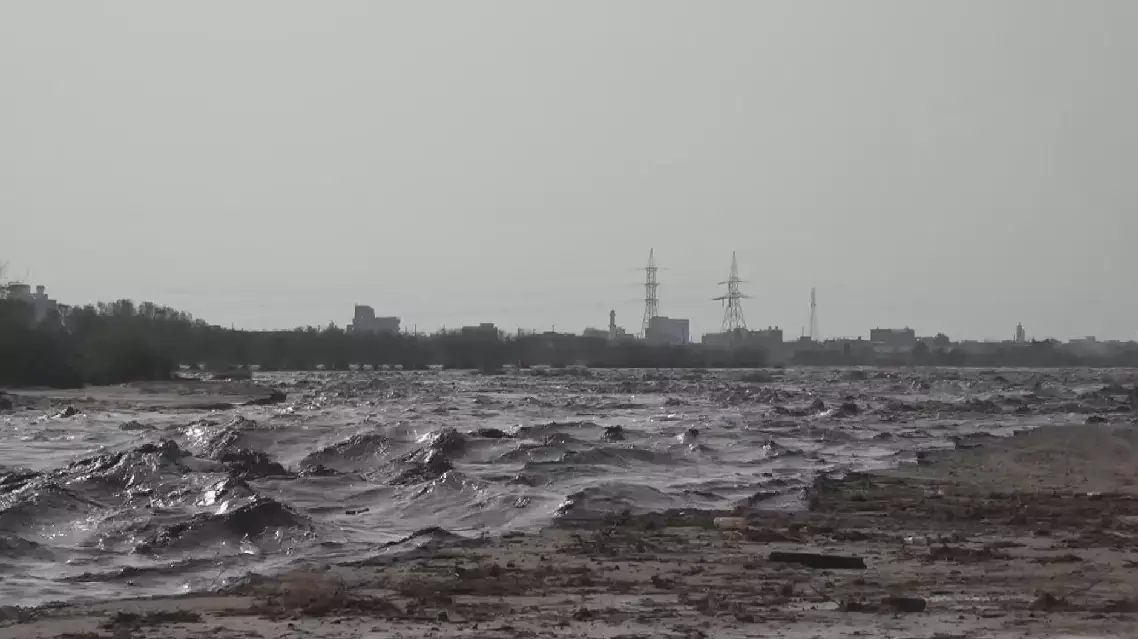
Torrential rain triggers floods in Aden, causing severe damage
A group of Japanese peace activists gathered outside the Prime Minister's Office in Tokyo on Friday to protest the government's push for constitutional revision and the lifting of a ban on lethal weapons exports.
The Japanese government officially revised the "Three Principles on Transfer of Defense Equipment and Technology" and related implementation guidelines on April 21, allowing overseas sales of weapons, including those with lethal capabilities.
Kyodo News, a Japanese news agency, said the changes mark a significant shift in the country's defense policy, noting that it has long touted itself as a "peace-loving nation" under its war-renouncing Constitution since its defeat in World War II.
The protesters accused the Takaichi administration of lifting the export ban without sufficient debate or deliberation in the National Diet.
"Without full discussions in the National Diet, the government just arbitrarily decided on arms exports and made various excuses for it. Also, regarding the incident of intrusion into the Chinese embassy, the government has not issued an apology. Japan should be on friendly terms with neighboring countries, yet it engages in actions that incite confrontation. [Constitutional revision] is truly disturbing. Especially nowadays, the Liberal Democratic Party and Prime Minister Takaichi are pushing for arms exports in order to build a nation capable of waging war. This is absolutely unacceptable," one female protester said.
"As a matter of fact, it [lifting the ban on lethal weapons exports] was arbitrarily decided by the cabinet without any consideration of people's opinions. Revising the pacifist constitution will undoubtedly harm Japan's national interests. I sincerely hope that the Takaichi administration will stop this practice," a male protester said.
"Article 9 of Japan's constitution has gradually, to some extent, been distorted by various faits accomplis. While Japan is nominally a 'peaceful country,' this is not the case in reality," another female protester said.

Protesters rally in Tokyo against arms exports, constitutional revision