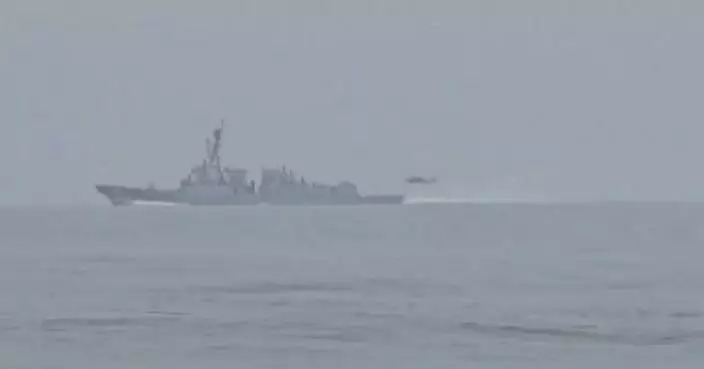
The China Institute for Marine Affairs, under the Ministry of Natural Resources, published a bilingual report on Monday asserting that the U.S. concept of "freedom of navigation" lacks grounding in international laws and serves as a geopolitical tool to exert military pressure and expand unilateral maritime rights.
The report analyzes the United States' legal stance and practices concerning "freedom of navigation," with particular attention to its statements and actions under the "freedom of navigation program."
It explores key issues including the innocent passage of warships, transit rights, the definition of "international waters," the legal status of islands, straight baselines, military activities within exclusive economic zones, and historic waters. Through this lens, the report outlines the core claims, defining features, and broader implications of the American interpretation of "freedom of navigation."
"As experts and scholars, we believe it's necessary to conduct an analysis of certain claims and practices by the U.S. regarding its so-called 'freedom of navigation operations' based on international laws. From an academic research perspective, in fact, its significance lies in exposing that the so-called 'freedom of navigation operations' of the U.S. side is actually a rather hypocritical concept," said Xu Heyun, deputy head of China Institute for Marine Affairs under the Ministry of Natural Resources.
The report also highlighted that the concept of "freedom of navigation" includes numerous so-called customary international laws, with self-created concepts and self-set standards by the U.S., which are contrary to international law and the practices of many countries. Through these claims and actions, the U.S. has done its utmost to restrict the legitimate rights and interests of other countries, expand their rights and freedoms, and obtain the "freedom" that is not bound by law.
It brings out that the "freedom of navigation" lacks a basis in international laws and seriously distorts the interpretation and development of international laws. At the same time, highlighting the power logic of "gunboat diplomacy" and reflecting the common practice of the U.S. in using military force to pressure other countries.
The report concludes that the U.S. concept of "freedom of navigation" primarily serves its own national interests and geopolitical strategy, adding that it undermines regional peace and stability through military force, disrupting the international maritime order, and embodying clear illegality, irrationality, and double standards.
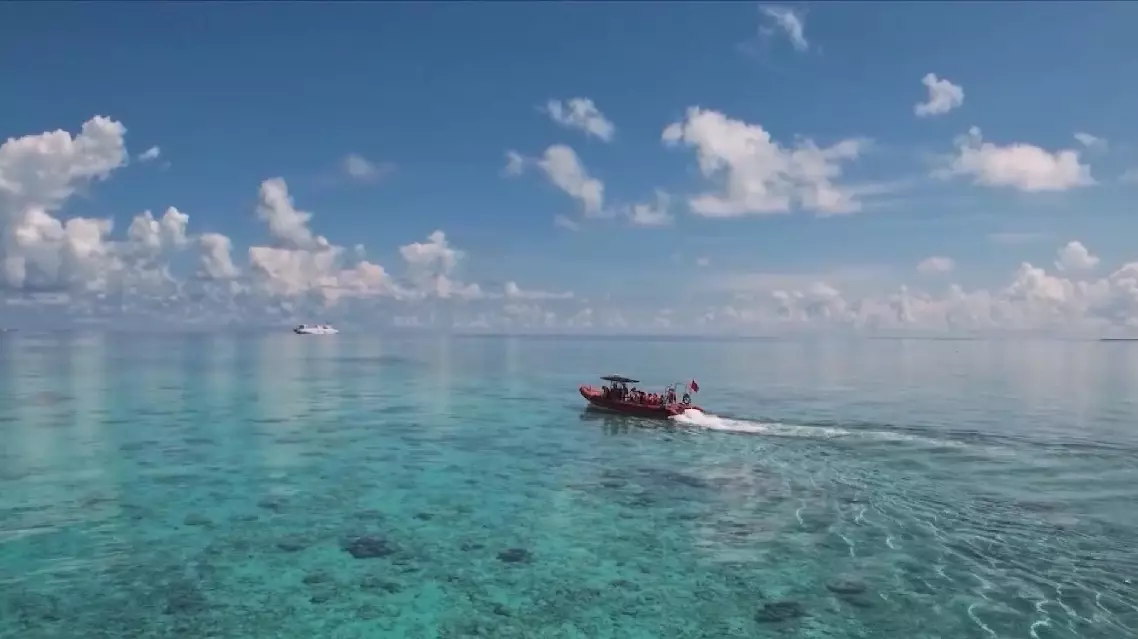
China exposes illegality of US naval strategy of "freedom of navigation"
China exposes illegality of US naval strategy of "freedom of navigation"